A toilet that smells like sewage is letting sewer gas escape into the room. In almost every case one of four things has failed: the water seal in the trap has dried out, the wax ring under the bowl has broken, the vent pipe is blocked, or the waste line is slow to drain. Start by finding out where the smell is strongest, because that narrows the cause faster than any amount of scrubbing the bowl.
Scrubbing is where most people get stuck. Cleaning the inside of the bowl does nothing if the odor is coming up through the floor, and it can make things worse by adding harsh fumes to an already unpleasant room. Work the problem from the outside in instead.
Table of Contents
- What Causes a Sewage Smell From a Toilet?
- A dry P-trap with no water seal
- A failed wax ring under the toilet
- A blocked or broken vent pipe
- A slow-draining toilet or waste line
- Bacterial biofilm in the bowl, rim and cistern
- Hard water deposits and mould behind the base
- Is the Smell Coming From the Toilet Trap?
- Why Does My Toilet Smell Like Sewage After Flushing?
- Can a Clogged Drain or Vent Make the Toilet Smell Like Sewage?
- How to Fix a Sewage Smell From a Toilet
- When Should You Call a Plumber?
- Is sewer gas dangerous to be around?
- Frequently Asked Questions
- Is a sewage smell from a toilet dangerous?
- Why does my toilet smell worse at night?
- Can I flush the toilet if it smells like sewage?
- Does bleach get rid of a sewage smell in the toilet?
- Why does the smell return after I flush the toilet?
- When does a toilet smell require a plumber?
- What to Do First
What Causes a Sewage Smell From a Toilet?
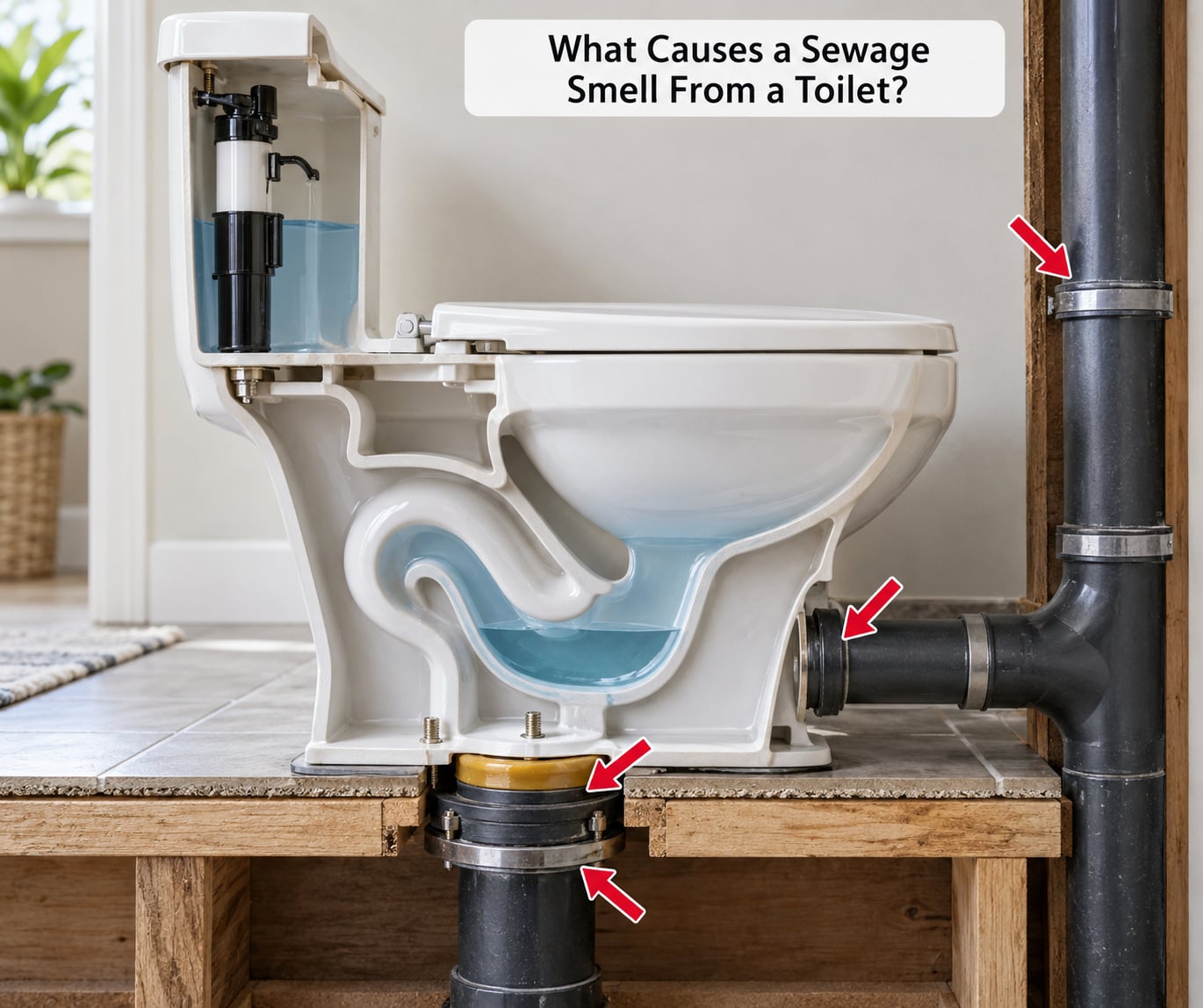
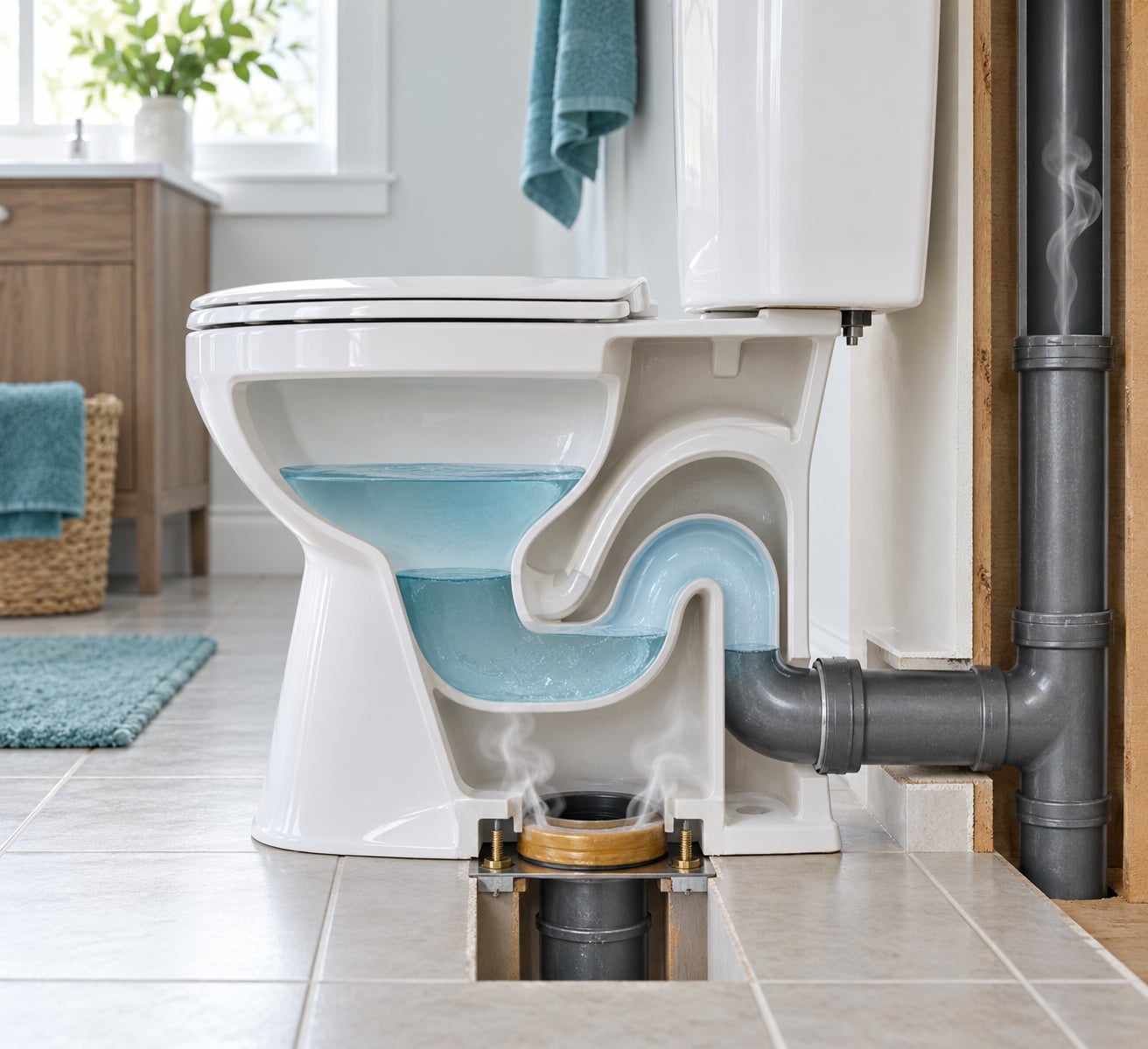
Three barriers normally keep sewer gas out of a bathroom. The first is water sitting in the trap. The second is the airtight wax ring where the toilet bolts down to the drain. The third is the vent pipe, which lets air move freely so the drain never gets siphoned dry.
Break any one of them and the smell arrives. Here are the causes in the order I would check them.
A dry P-trap with no water seal
The trap is the U-shaped bend in the pipe under your toilet. Water sitting in that bend blocks sewer gas, and it is the reason a toilet does not smell all the time. A bathroom that sits unused for weeks or months loses that water to evaporation, and once the bowl traps air instead of water, the gas comes straight up.
Guest bathrooms, rental properties and toilets in rooms closed up over winter are the usual suspects. One plumbing forum has a running theme on this: owners keep replacing the wax ring, twice in some cases, and the smell stays put because the real culprit was a dry trap the whole time.
A failed wax ring under the toilet
The wax ring is a donut of wax sealed between the toilet’s horn and the floor flange. It compresses into a gas-tight joint when the bolts go down. Over decades it hardens and cracks, and a toilet that rocks even slightly will break it a lot faster.
This is the cause when the odor is strongest right at the base of the toilet, when there is a damp or stained patch on the floor, or when the fixture shifts when you lean on it. A plumber replacing the ring with a rubber no-seal ring instead of wax solves this one more permanently than re-waxing, according to owners on r/Plumbing who have tried both.
A blocked or broken vent pipe
The vent runs from the drain up through the roof and lets air in behind the moving water. Block it with leaves, debris or a bird nest and flushing starts pulling gas instead of air, which is how you end up with a strong smell every single time someone flushes. A vent that was never connected or does not extend above the roofline does the same thing permanently.
Odors in more than one bathroom, or odors that show up when a washing machine drains, point here rather than at the toilet itself.
A slow-draining toilet or waste line
Waste sitting in the line ferments and smells, and it keeps re-smelling every time the toilet is flushed and stirs it up. Gurgling as the toilet empties, water bubbling at the top of the bowl, and a flush that takes twenty seconds are the tells. Tree roots crushing the line is the usual reason it starts suddenly in an older home.
Bacterial biofilm in the bowl, rim and cistern
A slimy film under the rim and inside the cistern is bacteria and mould feeding on the trace of waste and moisture that always sits there. It smells musty or faintly rotten on its own. Pink or black streaks in the bowl are the classic sign, and the cistern overflow tube is where people forget to look.
Hard water deposits and mould behind the base
Mineral scale around the inlet and the bowl traps odour in the nooks and crannies, so a toilet that never gets scrubbed can hold a smell even when the plumbing is fine. Mould behind a loose base or under a leaking tank adds a musty note on top of the sewer smell, which confuses a lot of diagnosis.
Is the Smell Coming From the Toilet Trap?
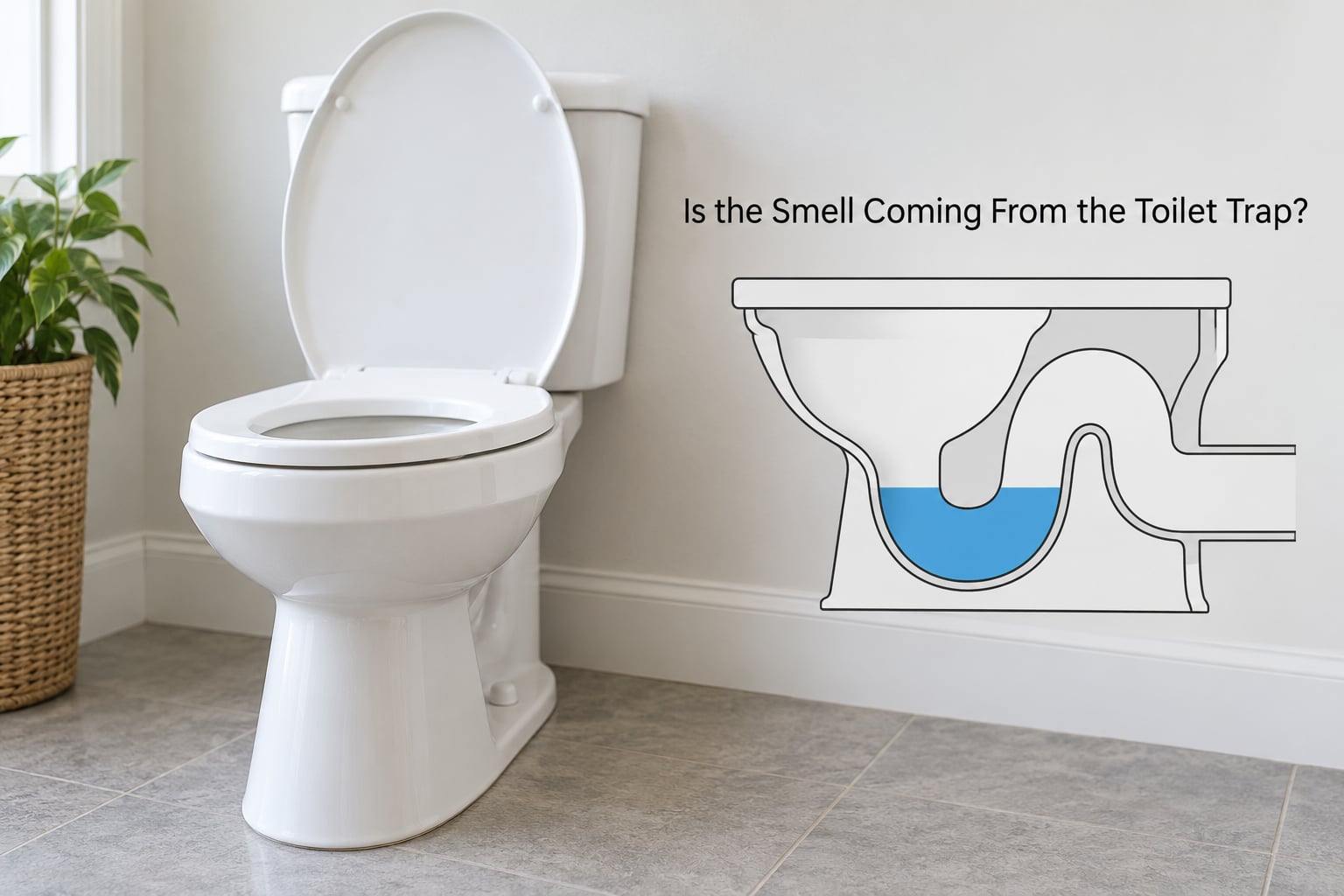
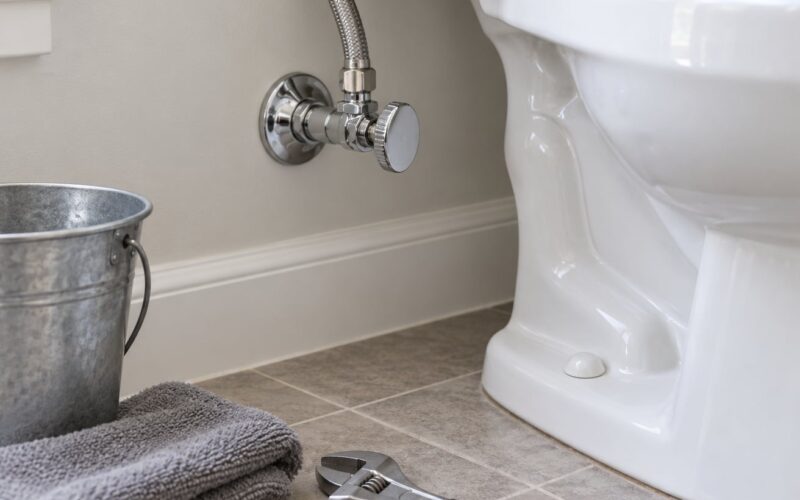
Test it in under a minute. Pour a bucket of water down the toilet without flushing and wait five minutes. If the odor thins out noticeably, the trap was dry and the water you added restored the seal. If the smell is unchanged, the trap was not the problem and you should move to the wax ring, the vent or the drain line.
A second test catches the floor drain. Every bathroom has one, usually behind or beside the toilet, and it has its own smaller trap. That trap dries out faster than the toilet’s because it gets no use at all. Pour a litre of water into the floor drain and see whether the room smells better.
If the smell is in the bathroom but not in the toilet bowl, walk away from the toilet with a bathroom light. The odor will thin out the further you get from the source, and the closest fixture is the one to work on first.
Why Does My Toilet Smell Like Sewage After Flushing?
Why does my toilet smell like sewage after flushing? Because flushing pushes water down the pipe, which pulls air (and gas) behind it, and a vented system supplies that air through the roof. When the smell lands on the flush and not at other times, the vent or the base seal is the place to look.
Check four things in this order:
- Does the toilet rock? Movement breaks the wax seal. Put a coin under the front edge and see if it rocks when you push it.
- Is the base damp? Look for a dark stain around the flange or a bead of water under the bolts.
- Is the floor flange cracked? Turn off the water, pull the tank, and look at the plastic or cast iron ring. Hairline cracks let gas through.
- Is the supply connector loose? A dripping flexible connector under the tank will smell in the room too, though it smells mustier than sulphur.
If the toilet was installed in the last year or two, treat the flange as prime suspect. Flange set too low on the finished floor or a connector crushed under the bowl both produce a smell that looks like a plumbing failure but sits at the base.
Can a Clogged Drain or Vent Make the Toilet Smell Like Sewage?
Yes, and the two look different in practice. A drain problem makes the smell follow flushing and comes with slow drainage, bubbling water or gurgling. A vent problem makes the smell appear right after a flush and also affects other fixtures, because the whole stack is starved of air.
The case that confuses everyone is the smell that shows up after a shower. That is negative pressure, not a leak. Water rushing down the shower or the sink changes the air pressure in the drain network, and if a trap in the room has already dried out, the pressure change pushes sewer gas out through it. Running the shower and then watching the toilet bowl is a quick way to tell whether the trap is holding water.
On a septic system, add one more cause: a full tank. Slow drains throughout the house, gurgling in the tub, and a sewer smell across several rooms are the pattern, and the tank needs pumping rather than cleaning.
How to Fix a Sewage Smell From a Toilet
Work down this list in order. Steps one through four cost nothing and fix the majority of cases, so stop as soon as the smell goes.
- Restore the water seal. Flush the toilet a few times, or pour a bucket of water into any unused floor drain, tub or sink trap in the room. Do this weekly in bathrooms that get little use.
- Clean the biofilm. Turn off the water, remove the tank, scrub under the rim and inside the overflow tube, and clean the cistern. A stiff brush and a bathroom-safe disinfectant beat a soak overnight every time.
- Clear a partial clog. Plunge with a toilet plunger, then use a toilet auger if the plunger does not shift it. Skip chemical drain cleaner. It eats older pipe and kills the bacteria a septic system needs.
- Try baking soda and vinegar. Half a cup of baking soda followed by a cup of white vinegar clears mild biofilm and odour. Let it sit thirty minutes before flushing. Use this for smell, never as a substitute for fixing a blockage.
- Check the vent from outside. If you can safely reach the roof, look for leaves and debris over the vent pipe. Do this only from a stable ladder on a dry day, and call someone else if the roof pitch is steep.
- Have the base seal replaced. Replacing a wax ring means removing the toilet, and a flange that is cracked or set below the floor needs new hardware rather than new wax. Once the fixture is off, this is a plumber’s job in most homes.
If none of that works, ask for a smoke test or a sewer camera inspection. A smoke test found the unsealed joint that years of guesswork had missed for plenty of people who posted about it on plumbing forums.
When Should You Call a Plumber?
Stop using the toilet and book a licensed plumber when any of these show up:
- The odor comes back within hours of a flush, every time.
- There is a sewage backup, water pooling around the base, or a low gurgling sound in the wall.
- The toilet rocks, or the flange or surrounding floor is visibly damaged.
- More than one fixture smells, or the whole house smells when the washing machine drains.
- You live on a septic system and the drains are slow throughout the house.
- You are in a condo or rental and the smell sits in a shared stack. That belongs to the building, not to you.
Is sewer gas dangerous to be around?
Sewer gas is a mix of hydrogen sulfide, methane, ammonia and carbon dioxide, and the rotten egg smell you notice is hydrogen sulfide. In normal household amounts the health risk is low, and the gas disperses quickly in a ventilated room. Brief exposure usually causes nothing more than a headache or nausea that clears when you leave.
Long exposure in a confined space is a different matter. Symptoms worth taking seriously are dizziness, shortness of breath, confusion, and irritation of the eyes, nose and throat. If anyone in the house has asthma, be more careful, since hydrogen sulfide can trigger attacks at low concentrations. Ventilate the bathroom, use the fan, and if symptoms persist after the smell is gone, contact poison control or urgent care.
Nobody should work inside a drain, a septic tank or a confined sewer space without proper equipment and training. That work belongs to licensed professionals.
Frequently Asked Questions
Is a sewage smell from a toilet dangerous?
Usually not for short periods. Sewer gas is mostly hydrogen sulfide, methane and ammonia, and in a ventilated bathroom it disperses quickly. Watch for headache, nausea, dizziness or eye and throat irritation, and treat those as a reason to ventilate and leave the room. Anyone with asthma should avoid a room with a persistent sewer odor.
Why does my toilet smell worse at night?
Two reasons. Night is when the house is quietest and you notice the smell more, and cool night air can cool the trap water and slow evaporation. Air pressure also drops slightly at night, which pulls gas out of a trap that has already gone dry. A half-used bowl that never quite dries will smell after a few evening flushes.
Can I flush the toilet if it smells like sewage?
In most cases yes, because the smell is gas escaping past a failed seal, not waste sitting in the water. Flush normally and watch the trap refills. Stop using the toilet if water is pooling around the base, if a flush brings waste back up, or if you hear gurgling in the wall. Those signs point to a backup, and adding water makes the situation worse.
Does bleach get rid of a sewage smell in the toilet?
Bleach only handles biofilm on surfaces. A sewer smell comes from gas moving through a failed trap, wax ring or vent, and bleach cannot reach any of those. It also mixes badly with ammonia cleaners and other bathroom products, producing toxic fumes. Clean the ceramic with a bathroom disinfectant, then fix the plumbing cause instead.
Why does the smell return after I flush the toilet?
Flushing restores the water seal, so a dry trap that you refilled will smell clean again until the water evaporates or gets siphoned out. A bad wax ring will fail within minutes of the first flush because the flush moves gas toward the leak point. If the odor returns within an hour every time, the trap is not your problem.
When does a toilet smell require a plumber?
Call a licensed plumber when the odor returns within hours of every flush, when several fixtures smell, when the toilet rocks or sits in damp flooring, when you hear gurgling in the walls, or when you notice pooling water around the base. Repairing a wax ring or replacing a damaged flange means removing the fixture, which is beyond a safe do-it-yourself job.
What to Do First
Pour water down the toilet and into the floor drain, wait five minutes, and see if the smell fades. That single test separates a dry trap, which you can fix yourself, from a failed wax ring or a blocked vent, which you cannot.
If the odor is strongest at the base of the toilet or the fixture rocks, book a plumber for the seal. If it hits every time you flush or affects more than one drain, it is a drain or vent problem and the same call applies.