If your toilet keeps clogging, the cause is almost always one of seven things: too much or the wrong kind of paper, a stuck object in the trap, an older low-flow toilet that can’t generate a strong siphon, a partial blockage in the branch line, a blocked plumbing vent, a failing tank component, or a sewer line problem. Most of those are fixable in an afternoon.
The reason toilets repeat is that plunging clears the symptom and leaves the cause behind. A clog that comes back within a few days usually means something is stuck further down, or the toilet itself is underpowered. This guide walks through how to tell those apart before you start taking things apart, then how to clear a blockage without cracking the porcelain or blowing out the wax ring.
Table of Contents
- What You Need
- Step-by-Step: How to Fix a Toilet That Keeps Clogging
- Why Your Toilet Keeps Clogging: Common Causes and Symptoms
- Clear a Simple Blockage Without Damaging the Toilet
- Check the Toilet Tank and Water-Supply Problems
- Know When a Repeated Clog Is a Drain or Sewer Problem
- What Not to Do
- When to Call a Plumber
- Prevention
- Common Mistakes That Make a Recurring Clog Worse
- Frequently Asked Questions
- Is toilet paper the most common cause of a toilet that keeps clogging?
- Does pouring hot water in a toilet help unclog it?
- Why does one toilet clog while the others in the house work fine?
- My toilet is still clogged after plunging. What do I do?
- Can plunging a toilet make the clog worse?
- Why is my toilet clogged but the water still drains slowly?
- Conclusion
What You Need
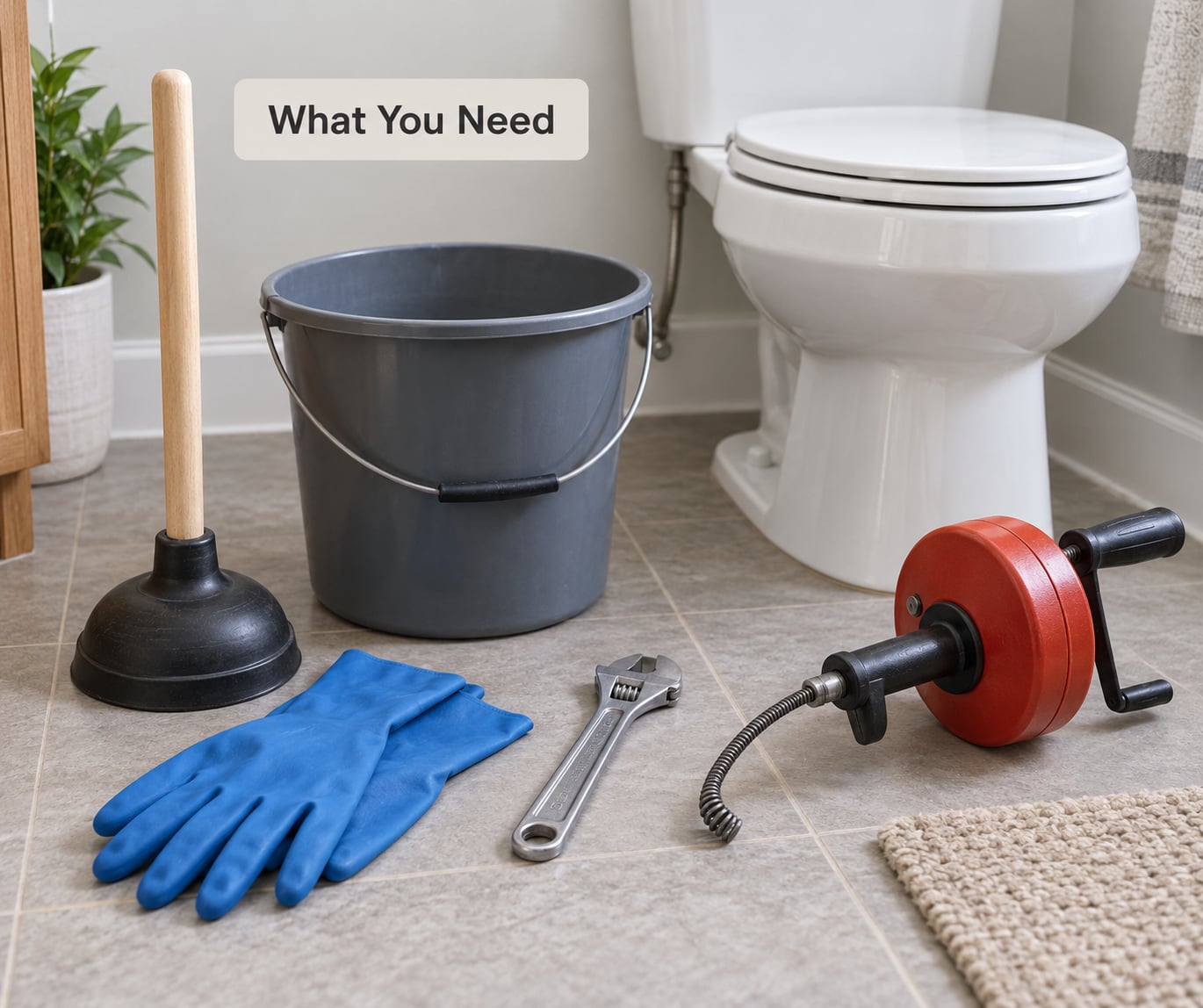
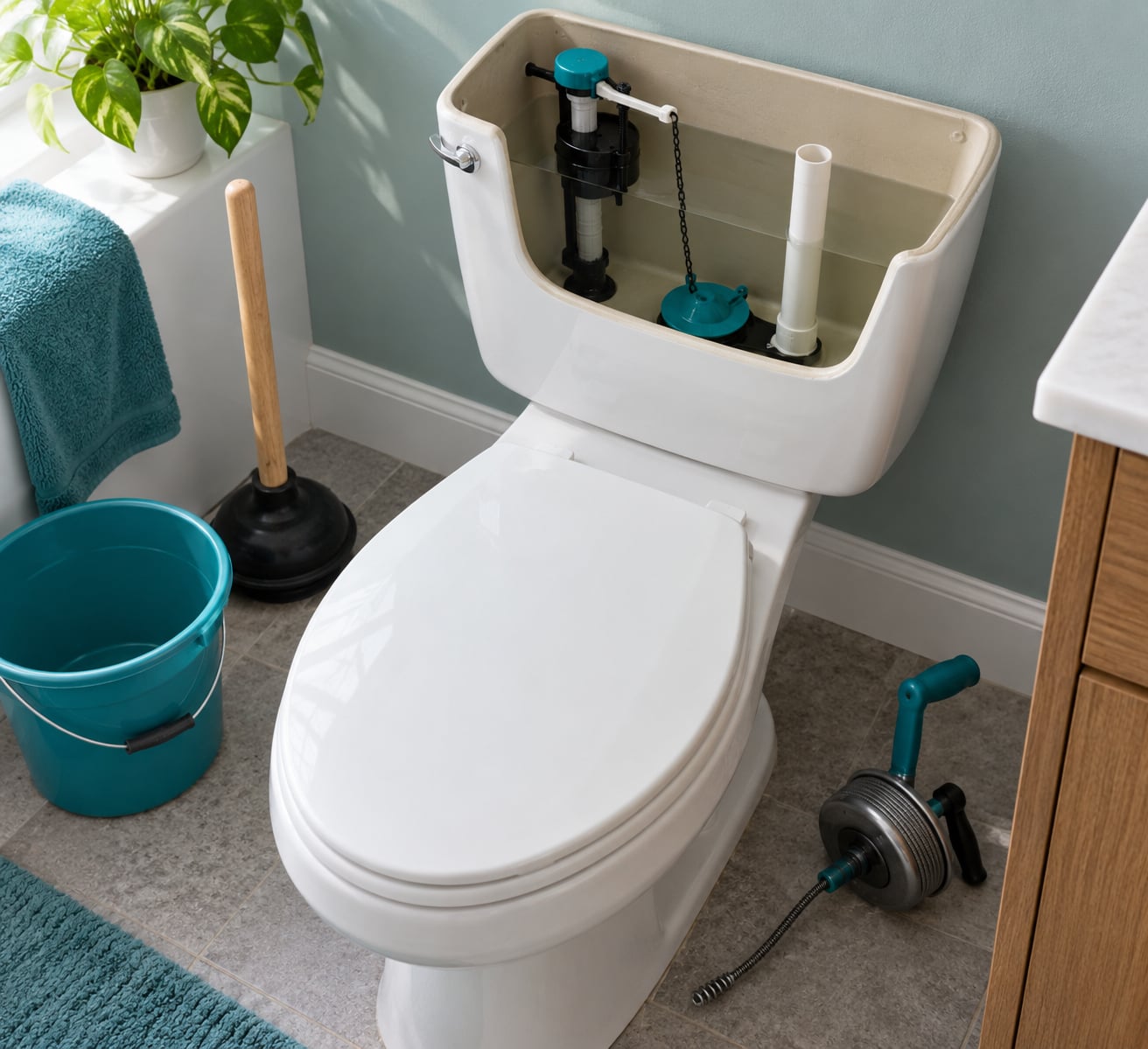
You need very little, and most of it you already have in a garage or a closet. A flanged plunger is the single most useful tool here, and the flanged part matters, because a cup plunger will not form a seal on a toilet bowl.
- Flanged plunger — the rubber flange folds up into the bowl’s drain opening. A cup plunger is for sinks.
- Toilet auger — a short-handled crank snake sized for toilets. A basin snake is too small to clear a trap.
- Bucket — 5 gallon, for the reset trick and for catching overflow water.
- Dish soap — dishwashing liquid, for the hot water method.
- Rubber gloves and old towels. You will mean it.
- Adjustable wrench and a flat screwdriver — for the tank work later on.
- Flashlight — for looking down the bowl and into the tank.
- Replacement flapper and fill valve — only if your toilet’s model calls for them. Match the diameter to the flush valve seat.
Skip the chemical drain cleaner. It is the one item on any DIY list for this job that can damage the toilet and the pipes.
Step-by-Step: How to Fix a Toilet That Keeps Clogging
Work in this order. Each step assumes the one before it did not fully solve the problem, and each step gives you a way to tell whether it worked.
Why Your Toilet Keeps Clogging: Common Causes and Symptoms
Before you plunge anything, run two quick diagnostics. They take about two minutes together and they tell you whether you are dealing with the toilet or with the line.
The bucket swirl test. Pour about five gallons of water into the bowl in a steady stream. If the water swirls and pulls down, the bowl and trap are clear and the restriction is downstream in the branch line. If the water sits there or rises, the clog is in the toilet’s own trap.
The solids test. Flush with nothing but liquid, then flush with paper. Paper-only problems point at paper choice or quantity. Liquid-only problems plus trouble with solids usually mean something is lodged in the trap or caught in the line. A toilet that flushes perfectly with no paper and clogs every time paper goes down is a classic stuck-object case, and plunging usually just bounces it back down.
Here is the diagnostic table most guides skip:
| What you see | Likely cause | What to do |
|---|---|---|
| Clogs on almost every flush with paper | Too much paper, or multi-ply that does not break down | Switch to 1-ply, use less per flush, plunge properly |
| Clogs only on solid waste, liquids are fine | Object stuck in the trap, or a narrowed trap | Toilet auger, then pull the toilet if it keeps happening |
| Clog clears, then returns within days | Partial blockage in the branch line | Auger, then a hand snake. Call a plumber if it returns twice |
| Slow draining but never fully stops | Partial blockage or slow drain line slope | Auger first, then enzyme cleaner overnight |
| Gurgling in a sink or shower when the toilet flushes | Blocked or failed vent | Plumber. This one is not a DIY job |
| Water backing up into the tub or shower | Main sewer line blockage | Stop flushing. Call a plumber now |
| Sewage smell near the toilet that comes and goes | Failed wax ring or a dry trap | Check the wax ring and the water level in the bowl |
| Clogs in two bathrooms at once | Shared branch line or main line | Plumber with a drain camera |
| Tank fills but the flush is weak and short | Low water level, stuck flapper, failing fill valve | Adjust the float or replace the flapper |
| Clog started right after a new toilet went in | Offset flange or an outlet too close to the wall | Plumber to reset the toilet on the correct flange |
Two more causes deserve naming because they get missed. A toilet sitting on an offset flange, where the rough-in outlet is not centered under the bowl, funnels waste into a narrow channel instead of straight down, and it will clog forever until the toilet is reset on the right flange. And a low tank water level means there is simply not enough water released at once to start the siphon, which is the whole mechanism a toilet relies on.
Clear a Simple Blockage Without Damaging the Toilet
Plunging works about half the time, and it works far less often when people do it wrong. The failure mode is usually a broken seal, not too little force.
- Seal the drain. Fold the rubber flange of the flanged plunger up into the bowl’s drain hole so it sits below the rim. If air escapes around the edge, you are pushing air, not water.
- Start slow. The first few strokes should be gentle, to equalize pressure and let the plunger grip. If you hear a gurgle and it pops loose, start over and reseat.
- Then use steady force. Push down, then pull up sharply, about 10 to 15 strokes. You want the water in the bowl to move as one mass.
- Watch the bowl, not the plunger. The clog clears when the water level drops noticeably after a pull, not when the plunger feels loose.
- Stop if water rises. If the bowl fills to the brim while you plunge, stop. Repeated plunges at that point push debris deeper and can blow the wax ring, which waters the subfloor and the floor below it.
Yes, plunging can make it worse. Plunging too hard or too many times moves a partial blockage downstream, and the pressure spike can fail the wax seal. Ten considered strokes beat two hundred panicked ones.
The auger step. When a proper plunge fails, the toilet auger is the next tool up.
- Fill the bowl with water to about two inches below the rim. That water gives the cable something to carry debris back up.
- Feed the cable into the bowl through the drain opening, past the trap curve.
- Crank slowly as you push. You will feel it stop against the obstruction. Keep cranking and pulling at the same time to wind the cable around the object.
- Pull the cable out while cranking. Whatever was caught comes out with it, and the water level should drop.
- Stop immediately if the cable meets hard resistance. That means you have hit a root, a collapsed pipe joint, or a foreign object. Forcing it just wraps the cable.
The hot water and dish soap method. Hot, not boiling. Pour a squirt of dish soap in, then a kettle’s worth of water heated to about 140 degrees, and let it sit for 15 to 20 minutes. The soap loosens the grease holding the clog together and the heat thins it. Boiling water is the mistake here, because sudden temperature shock can crack porcelain and, in older homes, shift a joint in cast iron pipe. People on plumbing forums report this method working often enough that it is worth trying before a plumber visit.
The bucket reset. A 5 gallon bucket of water poured in fast from about waist height adds enough mass and velocity to move a mass that has settled in the trap or just past it. Combine it with a few plunges right afterward. It is crude and it works more often than people expect.
Verify each attempt the same way: flush, watch the bowl empty completely, then watch the tank refill to its normal line and stop on its own. If the bowl empties and the tank refills and stops, that attempt worked. If the bowl empties slowly or the toilet runs afterward, you have moved the problem rather than fixed it.
Check the Toilet Tank and Water-Supply Problems
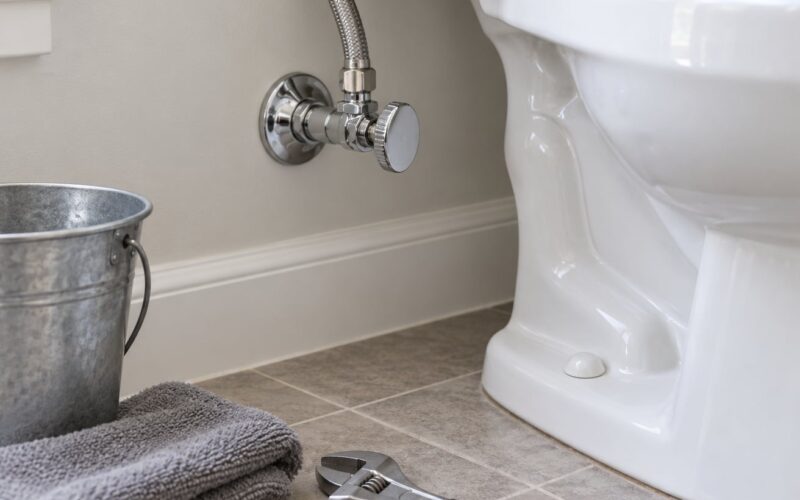
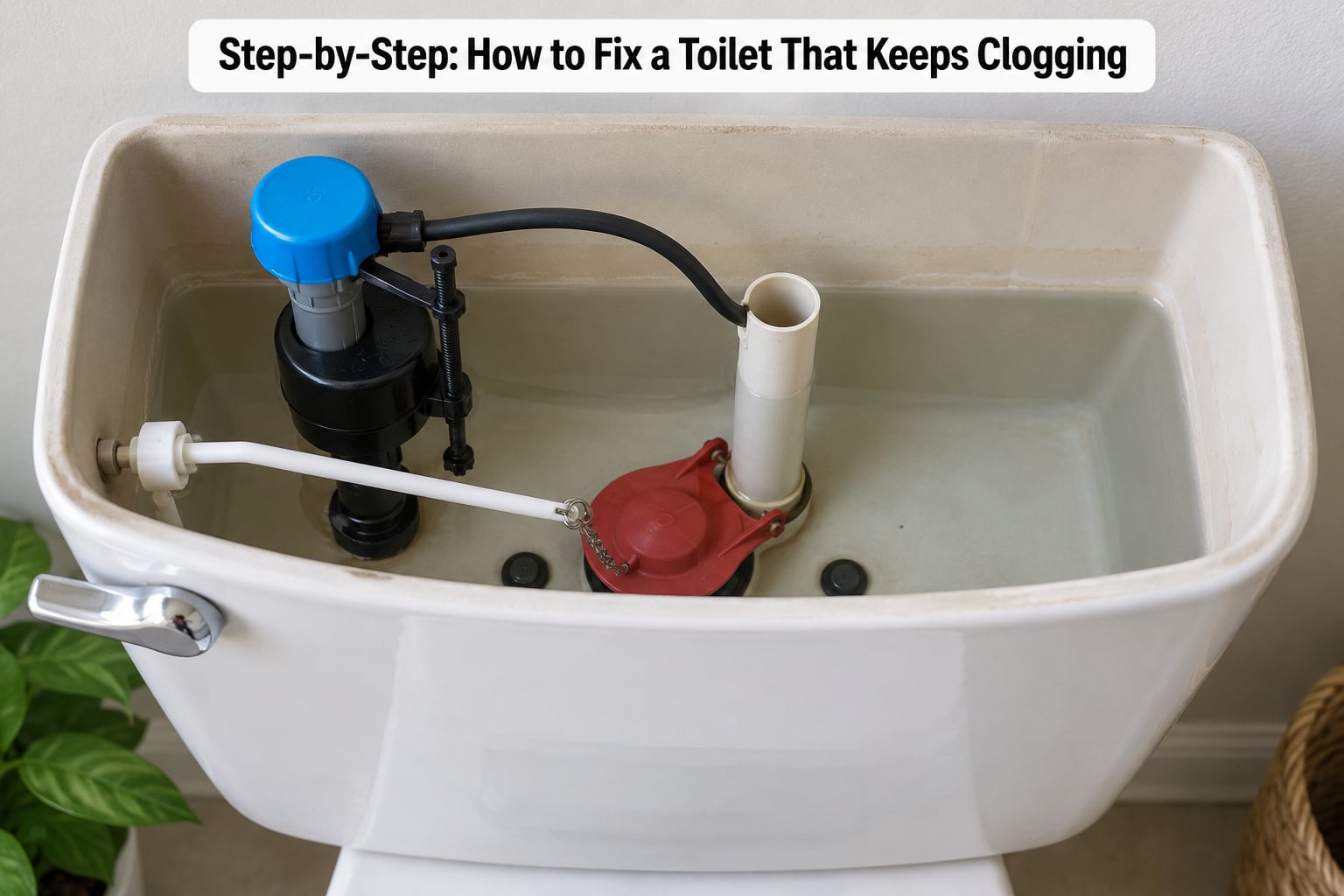
A toilet that flushes weakly or refuses to flush at all is a tank problem, not a drain problem, and swapping the flapper costs very little. Put a towel down, turn the supply valve off, then lift the tank lid.
Look at three things. The fill valve is the tall column on one side of the tank, and it should shut off cleanly when the float reaches its set height. The flapper is the rubber or plastic piece at the bottom of the tank that lifts to release water into the bowl, and if it is warped, misaligned, or mineral-crusted it will let water leak past it. The overflow tube is the vertical pipe, and its top should sit higher than the tank’s normal water line. Water that fills the tank to the top of the overflow tube means the fill valve is not shutting off.
A common DIY mistake is setting the float too low. The tank needs enough water for the bowl to refill completely after a flush, and a bowl that comes back short is a bowl that has to work harder on the next solid flush. Adjust the float so the water stops about one inch below the overflow tube.
Run a flapper test before buying anything. Drop a few drops of food coloring into the tank. If color appears in the bowl without a flush, the flapper is leaking and the toilet is running constantly. Running toilets waste water and, more to the point here, they mean the bowl water level is inconsistent, which changes how every flush behaves.
Also check the supply valve itself. A partly closed stop valve on the cold feed starves the tank and produces exactly the weak, incomplete flush that clogs on solids. Open it fully and see whether the flush improves.
Know When a Repeated Clog Is a Drain or Sewer Problem
If a thorough plunge and a full auger session clear the toilet and it clogs again within a few days, the restriction is downstream. That is the point where DIY tools run out.
Warning signs that the drain line or sewer main is involved:
- The toilet stays slow even after a good auger run.
- Other fixtures drain slowly or gurgle when the toilet flushes.
- Water backs up into the tub or shower when you flush.
- More than one bathroom clogs, especially at the same time.
- A sewage odor appears near the toilet and the bowl water stays high.
- Clogs started right after new planting, tree work, or a heavy rain.
The gurgle is the tell. A gurgling sink during a flush means air that should be leaving through the plumbing vent is coming back through the trap instead, which happens when the vent is blocked or when the main line is holding a vacuum. A blocked vent can also show up as a toilet that drains fine but gurgles, with no obvious clog at all, which is why that symptom confuses so many people.
If you live in an apartment or a multi-unit building and a shared stack is the problem, your toilet may be fine and so may your neighbors. Clogs on the same floor at the same time, or clogs that appear in units above and below yours, are a building issue rather than yours, and it is worth saying so plainly before paying for any work.
What Not to Do
Some of these are more than a bad idea.
- Chemical drain cleaners. The caustic ones generate heat as they dissolve a clog, and that heat damages toilet seals, PVC and older metal pipe. They also kill the bacteria that a septic system needs. If you use one, ever, it is the one time to call a plumber instead.
- Boiling water. It cracks porcelain and can shift a joint. Hot tap water is hot enough.
- Mixing cleaners. Bleach and ammonia together make chlorine gas. Never.
- Using a cup plunger on a toilet. It cannot seal the drain opening, so you get bubbles and no movement.
- Plunging until the bowl overflows. That pressure is what fails wax rings.
- Replacing parts before locating the problem. A new flapper on a toilet whose problem is 20 feet down the branch line changes nothing.
When to Call a Plumber
Call someone when any of these are true, and stop trying to plunger through them.
- The toilet clogs more than once a week, even after a good auger run.
- Water backs up into the tub, shower, or floor drains.
- More than one fixture in the house is affected.
- You feel resistance with the auger that will not give.
- The toilet clogs immediately after plunging, every single time.
- You see gurgling at other drains whenever you flush.
Ask for a drain camera inspection. It is the difference between guessing at a recurring clog and seeing the obstruction and its location, and it is usually worth it on a problem that has already defeated a plunger and an auger.
Prevention
Once the immediate problem is solved, a few habits keep it from coming back.
- Use 1-ply paper, or a thicker-but-quicker-dissolving brand, and use less of it than the roll suggests.
- Keep wipes, paper towels, tampons, condoms, dental floss, kitty litter and cotton buds out of the toilet. Nothing labeled flushable dissolves fast enough to be safe in a drain line.
- Once a month, pour a few gallons of hot tap water down the bowl with no paper in it.
- Watch the tank. A toilet that runs or refills short gets a flapper or fill valve check before it gets a blockage.
- In an older home with a toilet over about 20 years, consider the toilet itself. Many 1990s low-flow models were rated at or barely above the 1.28 gallon per flush federal maximum that applies to new toilets, and they deliver well under what a 1980s 3.5 gallon model moved. A replacement with a higher gallon rating sometimes fixes recurring clogs that no amount of plunging ever will.
Common Mistakes That Make a Recurring Clog Worse
Two mistakes account for most failed attempts. The first is plunging with a cup plunger or with a bad seal, which pushes air instead of moving water. The second is repeating the same failed method twenty times instead of escalating to the next tool.
A toilet that is clogged but still draining slowly is the one people handle worst. They assume a partial blockage means partial success and keep flushing. Every flush adds solids to a line that cannot clear them, and a slow drain is often the early stage of a backup.
The other costly mistake is replacing parts before diagnosing. Swapping a flapper on a toilet whose issue is a blocked vent fixes nothing and costs you a part and an afternoon.
Frequently Asked Questions
Is toilet paper the most common cause of a toilet that keeps clogging?
It is one of the most common, but it is not the only one. Excess paper and multi-ply paper that breaks down slowly are frequent culprits, especially in older homes with narrower drain lines. A toilet that flushes fine with no paper but clogs with paper points to paper volume or a stuck object. If reducing paper does not fix it, look at the trap, the branch line and the toilet’s flushing power instead.
Does pouring hot water in a toilet help unclog it?
Hot tap water, yes. Boiling water, no. A squirt of dish soap followed by about a gallon of hot water left to sit for 15 to 20 minutes loosens grease and thins the clog enough that a plunge can finish the job. Boiling water risks cracking porcelain and, in cast iron drain lines, expanding a joint. Never mix hot water with a chemical drain cleaner.
Why does one toilet clog while the others in the house work fine?
If the other toilets work, the main sewer line and the vent are probably fine, and the problem is local to that toilet. A stuck object in the trap, an underpowered old low-flow model, or a partial blockage just past that toilet’s branch is the likely cause. If the clog started soon after that toilet was installed, an offset flange is the first thing to have checked.
My toilet is still clogged after plunging. What do I do?
Stop using the plunger and switch to a toilet auger. Fill the bowl to about two inches below the rim, feed the cable past the trap, then crank and pull together to wind the obstruction onto the cable. If the auger hits hard resistance that will not give, you have found a root, a collapsed joint, or a foreign object, and that is a plumber job.
Can plunging a toilet make the clog worse?
Yes, in two ways. Forceful plunging can push a partial blockage further down the branch line, turning a simple toilet clog into a line problem. And repeated hard plunges build pressure that can fail the wax ring, which leaks water into the subfloor and can damage the floor below. If the bowl rises to the rim while you plunge, stop immediately.
Why is my toilet clogged but the water still drains slowly?
A slow-draining toilet usually means a partial blockage rather than a solid one. Run the bucket swirl test: pour five gallons in fast. If the bowl swirls and empties, the toilet and trap are clear and the restriction is in the branch line. If it does not, the obstruction is still in the trap. Either way, do not keep flushing, because each flush adds load to a line that cannot clear it.
Conclusion
Start with the diagnostic, not the plunger. Pour five gallons in fast and see whether the bowl swirls, then flush once with no paper. Those two tests tell you whether you are working on the toilet or on the line.
If the clog is in the toilet, plunger correctly with a flanged plunger, then try a toilet auger, then hot water with dish soap. If it clears and stays clear, the fix worked. If it keeps clogging, find out why rather than repeating the fix, because a toilet that keeps clogging every few days means the cause is downstream. Gurgling at other drains, water backing into the tub, or clogs in more than one bathroom mean the sewer line is involved, and that is where a plumber with a drain camera earns the call.