Learning how to shut off water to a house in an emergency takes five minutes of prep and about forty seconds of actual work. The main shut-off valve sits where the water service line enters the building, so find that valve, turn its handle clockwise (to the right) until it stops moving, and open a cold faucet to relieve the pressure still trapped in your pipes. Do that before you call a plumber, not after.
A burst pipe is an emergency the moment water is running where it should not be. At typical household flow rates, a fully open quarter-inch line can put out several gallons a minute, and that is enough to soak a ceiling, ruin flooring, and reach an electrical outlet in the time it takes to find your phone. Shutting the main stops new water and, in most cases, limits the damage to whatever is already trapped in the lines.
There is one rule that comes before the valve: if water is near electricity, make the power safe first. Standing water, a wet outlet, or a sparking appliance means you switch off the breaker or call your utility before you touch a metal valve in a wet space.
Table of Contents
- What You Need
- Step-by-Step: How to Shut Off Water to a House in an Emergency
- 1. Identify the emergency and check for electrical hazards
- 2. Locate the main water shutoff valve
- 3. Turn off the main water supply valve
- 4. Open a faucet to confirm the water is off
- 5. Protect the property and arrange repairs
- Common Mistakes When Shutting Off Water
- Frequently Asked Questions
- Where is the main water shutoff valve usually located?
- Should I turn off water before calling a plumber?
- Which direction do I turn the main water shutoff valve?
- Why is water still coming out after I closed the main valve?
- What should I do if the main shutoff valve is stuck?
- Is it safe to turn off water during a flood or electrical leak?
- Conclusion
What You Need
Most of what you need is already in the house. Gather it before the emergency rather than during it.
- A flashlight. Main valves hide in crawlspaces, garages, and unlit basements, and the meter box at the curb is often a pit lid in the dark.
- Your phone, already charged. You will need it for the plumber and the water utility, and a flashlight on it saves you carrying two things.
- An adjustable wrench. Only for a stubborn valve nut or an angle stop that will not turn by hand. Never for the main valve itself.
- A towel or bucket. Turning off the main releases water from the pressure relief and from whatever fixture is open, and some will drip for a moment.
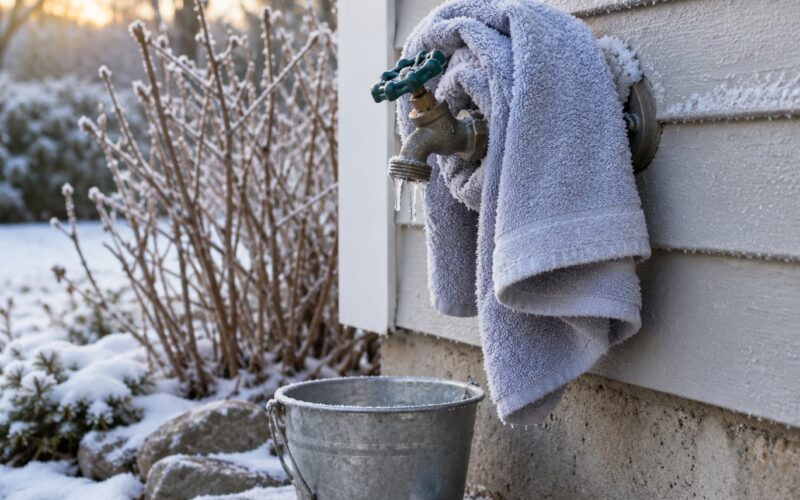
- Clear access to the valve. Move stored boxes, clear snow, and cut back vegetation around the meter box now, not at 2 a.m.
- Your utility’s emergency number. Almost every water district will shut off at the meter for you, sometimes for free, sometimes for a fee. Save it in your phone next to the plumber’s number.
- Knowledge of where your water heater is. If it is electric, find the breaker that serves it. An empty electric heater can be damaged by switching power back on while the tank is cold.
Step-by-Step: How to Shut Off Water to a House in an Emergency
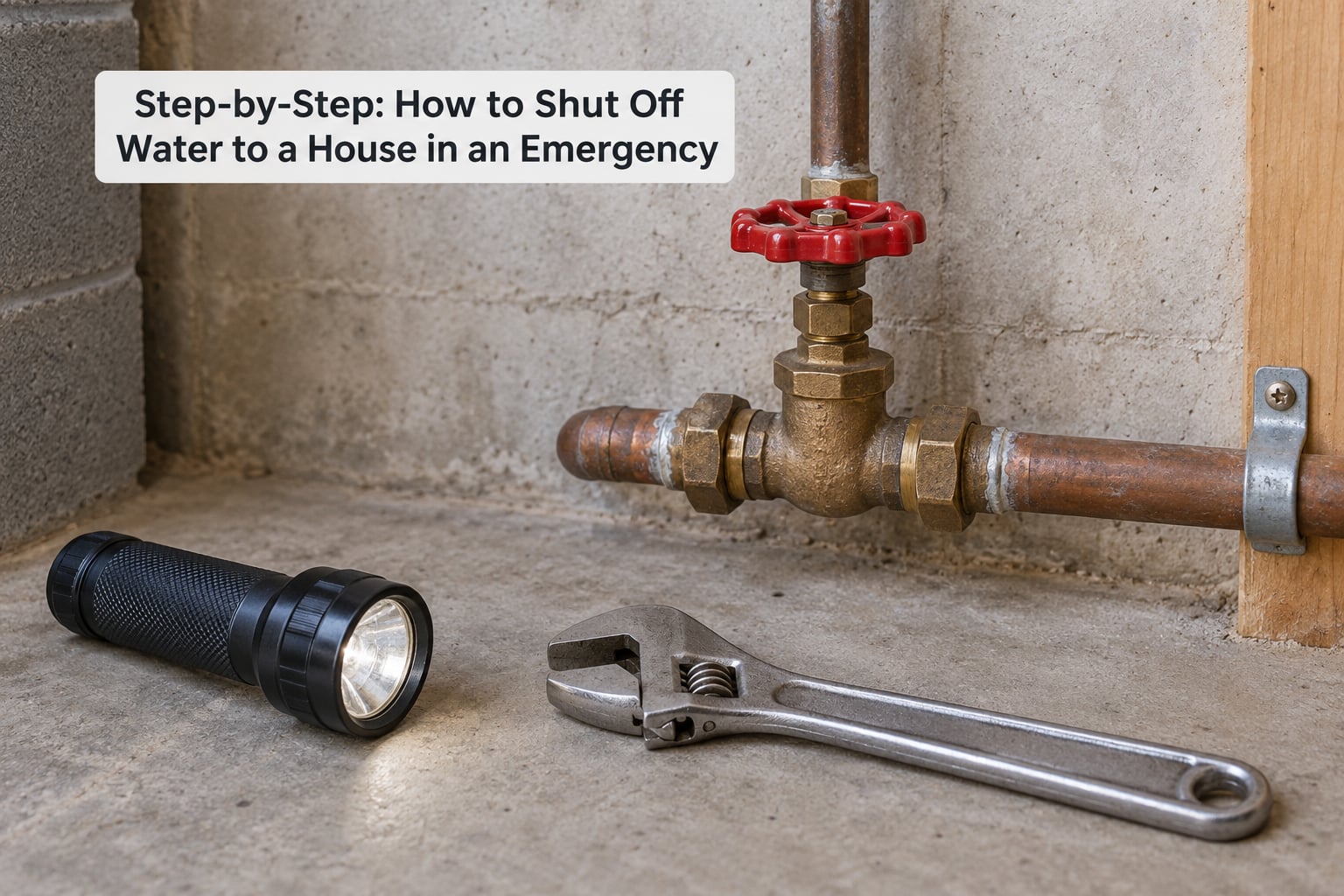
1. Identify the emergency and check for electrical hazards
Shut off the whole house for a burst pipe, water spilling through a ceiling, a flooding basement, a leaking water heater tank, or a washing machine hose that let go. A slow drip under one sink does not need the main, because that fixture has its own local valve.
Before you touch anything, look at the electricity. If water is within several feet of an outlet, a light fixture, a power strip, or a breaker panel, cut power to that area at the breaker. If you are standing in water, wading, or the panel itself is wet, step out and call your utility or the fire department non-emergency line. Metal valves and wet hands and concrete floors make a poor combination.
2. Locate the main water shutoff valve
Trace the water service line back to where it enters the house. On most homes that is in one of a handful of places, and you can usually narrow it down in under a minute.
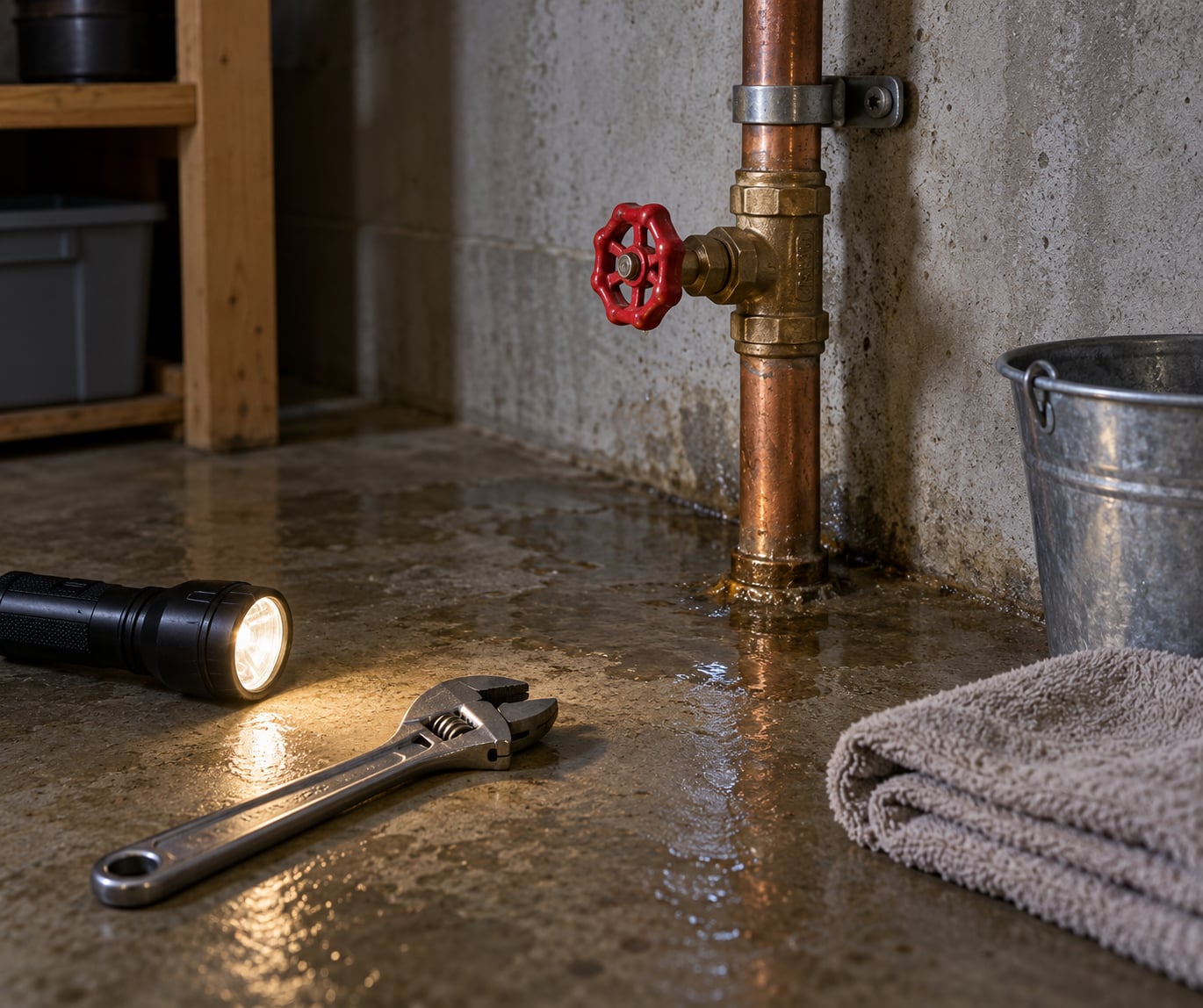
- Basement or crawlspace, on the wall where the pipe comes through, often six to eight feet above the floor and near the water heater or furnace.
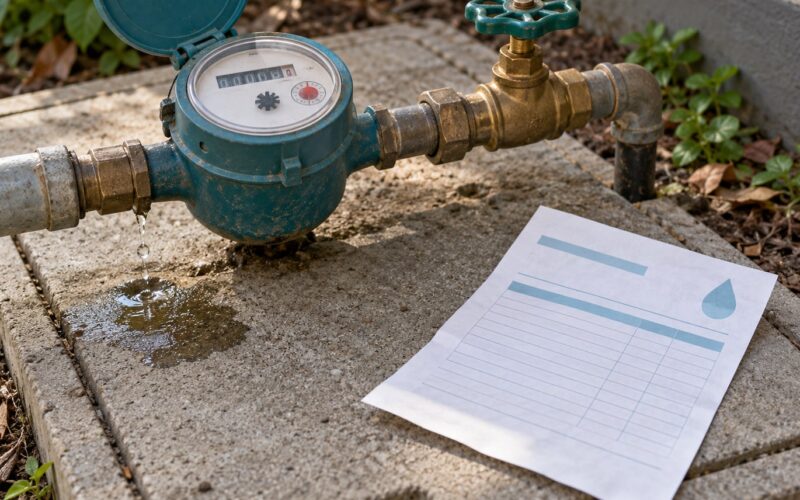
- Slab-on-grade homes with no basement, usually in a garage, a mechanical closet, or outside in a small box by the foundation. Some of these homes only have the meter valve, which needs a special tool.
- Warm climates where the service line runs outside: the shutoff is in a ground-level box near the foundation, or at the meter at the curb.
- Older homes often have a second shutoff on the riser pipe, the vertical metal or copper pipe feeding the building, sometimes painted red or yellow.
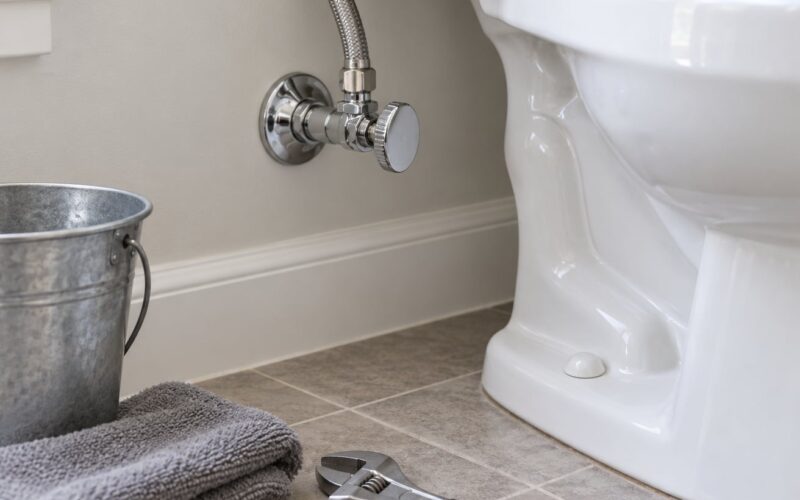
Do not confuse the main with an angle stop, the small oval-handled valve under a sink, behind a toilet, or on the wall feeding a washing machine. Those stop one fixture. The main is the largest one, closest to where the water enters the building or the meter.
3. Turn off the main water supply valve
Know what you are turning before you turn it. There are two common shapes, and they behave very differently.
- Ball valve (quarter-turn) has one lever handle. When the handle runs parallel to the pipe, water is on. Rotate it a quarter turn so the handle sits across the pipe, and it is off. That is the whole motion, and it needs no tool.
- Gate valve has a round handwheel and takes several slow full turns to the right, tightening the handle as it seats. Stop the moment it stops turning. It should not be forced past that point.
Use steady, even pressure on the wheel rather than a burst of strength. If a gate valve will not move at all, do not put a pipe wrench on the handle and do not use a cheater bar. You will snap the stem, and a snapped stem on a pressurized line is a far worse problem than the leak you started with.
If you have a well instead of city water, the equivalent is at the pump and pressure tank: switch off the pump breaker at the electrical panel, then close the valve at the well head if there is one. That stops the pump from burning out while it runs dry against a closed system.
4. Open a faucet to confirm the water is off
Open a cold faucet on the lowest floor of the house, ideally a laundry or utility sink. If the water slows to a trickle and stops, the shutoff worked. If it runs at full pressure, you closed the wrong valve, or the meter-side valve is still open.
Expect a little more water after the main is closed. The supply line between the meter and the house stays full, and gravity drains it into the building. On a two-story home that can take several minutes and a few gallons. This is normal, and it is why a burst pipe sometimes looks worse for the first minute than it really is.
Leave a faucet open during the shutdown. It relieves pressure in the lines and stops fittings from weeping or a toilet from continuing to fill into a bowl with no supply.
5. Protect the property and arrange repairs
With the water off, the clock stops. Use the next few minutes to limit what you have to dry out.
- Take photos of the source, the damage, and any valve positions before you move anything. Insurers want documentation, and it takes ten seconds now.
- Move what you can: rugs, furniture, electronics, boxes of paper, anything that absorbs water or holds heat against a wall.
- Shut off the breaker for an electric water heater if the tank is empty, and do not restore power to it until the tank is full again.
- Call a licensed plumber for anything involving a burst, cracked, or disconnected pipe. Call your water utility too if you used the meter valve, so they can record the shutoff and confirm the service is sealed.
- Tell everyone in the house that the water is off, including anyone who might have been about to run the dishwasher.
Common Mistakes When Shutting Off Water
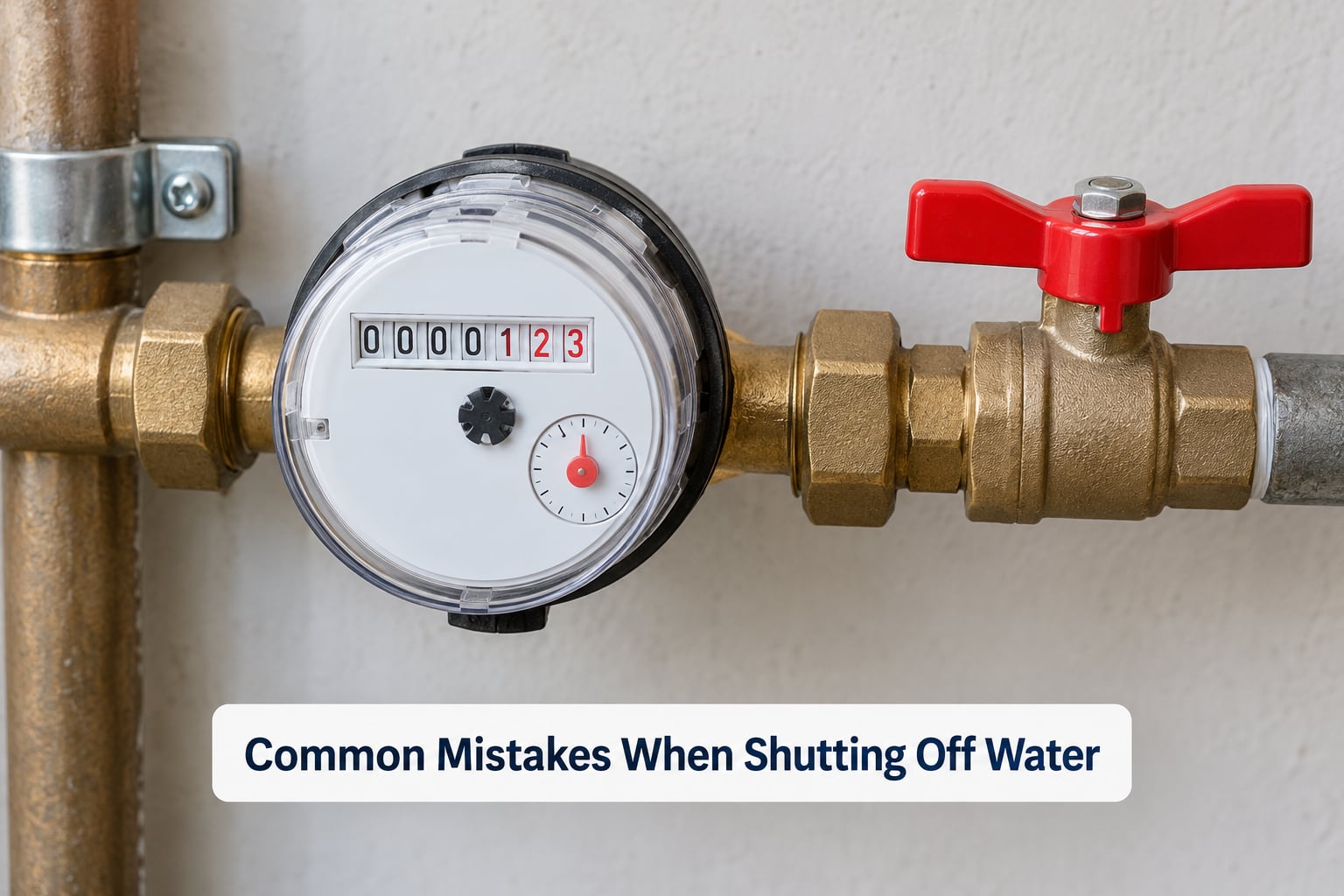
Turning a fixture valve and assuming that is the main. The angle stop under the sink stops the sink, not the burst pipe in the wall behind the washing machine. If the water is still running after you close a small valve, you have not reached the main yet.
Forcing a valve that will not turn. Corroded gate valves seize after a few years of disuse. Force them and the stem snaps. Spraying the stem with penetrating oil, then waiting ten minutes and trying again by hand, works more often than people expect.
Standing in water near live electricity. Floodwater conducts. Get out, cut power at the breaker only if it is safe to reach, and call the utility or emergency services for a wet panel.
Assuming the leak stopped because the flow slowed. A line can drip steadily for minutes after a valve is closed while the pipe drains. Watch it for a full minute before you relax, and check the ceiling above the next morning too, since water travels.
Forgetting the water heater. If the heater is electric and the tank has drained, an empty heating element can fail within minutes of power being restored. Leave that breaker off until the tank is full.
Not telling anyone. A housemate, sitter, or neighbour with a key who does not know the water is off can turn a contained problem back into a flood. Say it out loud, and leave a note on the valve itself.
The best preparation is dull and takes one weekend: find the valve, turn it gently open and closed so it does not seize, photograph it, and tape a card next to it with the date and the direction to turn. Do the same for the curb key. Exercise the meter valve every year or two if you can find it, and keep the meter box clear of plants, mulch, and snow. Knowing where the valve is and having a working key are what separate a bad night from a ruined floor.
Frequently Asked Questions
Where is the main water shutoff valve usually located?
It sits where the water service line enters the building, so trace the pipe back from the water meter. In most homes that is in a basement or crawlspace on the wall, often six to eight feet up and near the water heater. Slab homes put it in a garage, closet, or exterior box, and some only have the curb valve. Apartments share a riser valve that building management controls.
Should I turn off water before calling a plumber?
Yes, always. Every minute between the burst and the shutoff adds water to your ceiling, floors, and walls, and it keeps the meter running while you wait. Turn the main off first, then call, and give the plumber the valve location when you call so they arrive knowing where things stand. The shutoff takes under a minute and costs nothing.
Which direction do I turn the main water shutoff valve?
Clockwise, to the right, until it stops. A quarter-turn ball valve needs only a 90-degree lever move, with the handle ending up perpendicular to the pipe. A gate valve with a round handwheel takes several slow full turns to the right until the handle stops turning. Righty-tighty, lefty-loosey, and never force it past the point where it seats.
Why is water still coming out after I closed the main valve?
The supply line between the meter and your house stays full, and gravity drains it into the building, so a faucet can run for a few minutes after the shutoff. On a two-story home that might be several gallons. If full pressure continues for more than a couple of minutes, you closed a fixture valve by mistake, or the curb-side valve is still open.
What should I do if the main shutoff valve is stuck?
Do not put a pipe wrench on the handle and do not use a cheater bar, because a snapped stem on a pressurised line is far worse than the leak. Spray the stem with penetrating oil, wait ten minutes, and try again slowly by hand. If it still will not move, call your water utility to close the curb valve, and a plumber to replace the seized valve.
Is it safe to turn off water during a flood or electrical leak?
Only if the power is already safe. If water is near an outlet, light fixture, or breaker panel, get out of the wet area first and cut power at the breaker if you can reach it without standing in water. Never touch a metal valve while wading or with wet hands. If the panel is submerged or the water is near energised equipment, call your utility or the fire department.
Conclusion
Know where your main shut-off valve is before anything goes wrong, because the shutdown itself is simple: right, until it stops, then open a faucet to confirm. Make sure the power is safe before you touch anything metal, never force a valve that will not budge, and call a licensed plumber for any burst or damaged pipe. If you rent or live in a condo, the riser valve usually belongs to building management, so keep the emergency number where you can find it fast.