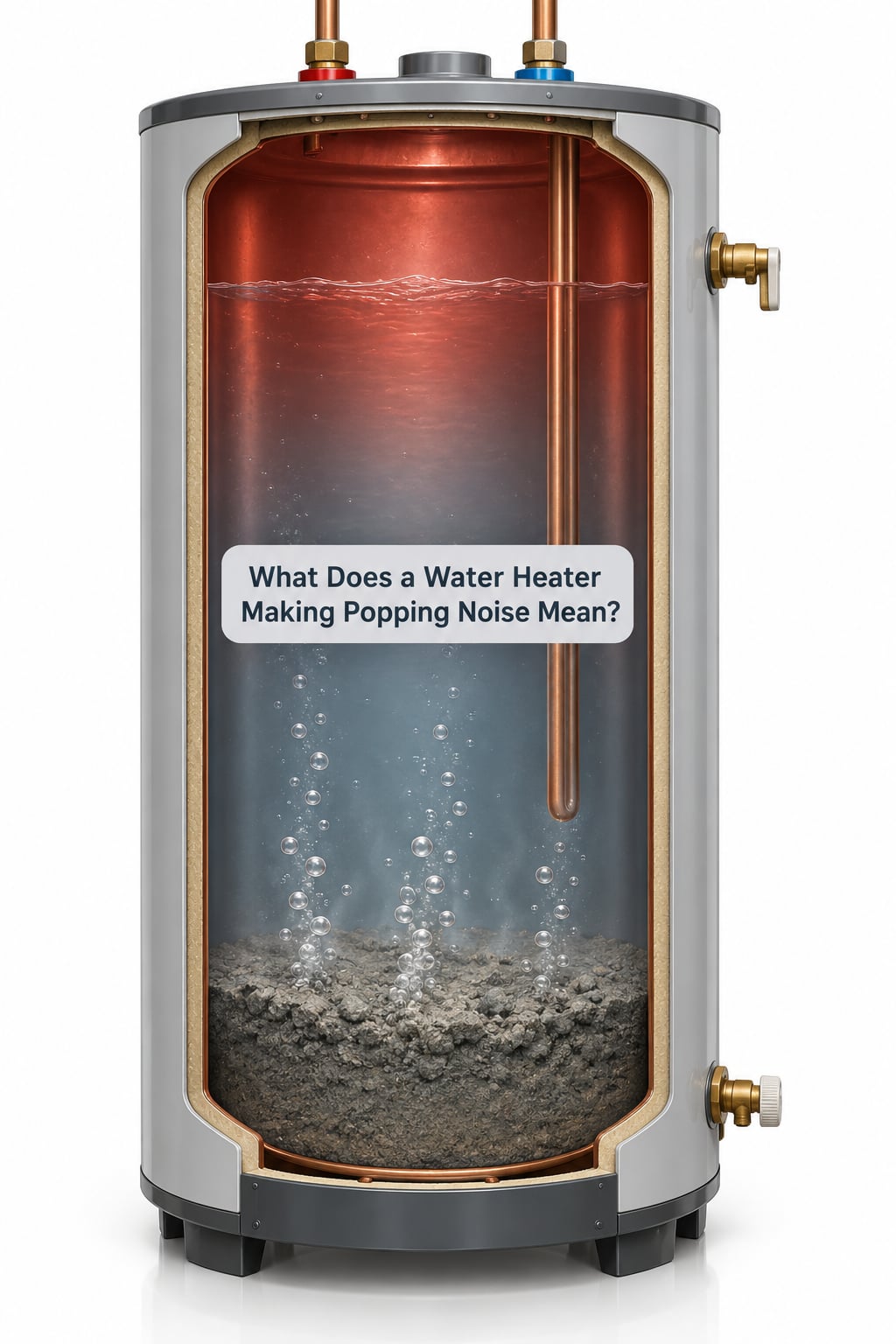
A water heater making popping noise is usually water flashing to steam underneath a layer of sediment on the bottom of the tank. It is a maintenance signal, not an instant failure, but it needs attention before it turns into a tank that will not heat properly or one that starts weeping from the relief valve.
Getting the popcorn sound from a gas tank in a utility room is one thing. Getting it loud enough to hear from the kitchen, or hearing it every time a shower closes, is a different problem. Here is how to tell those two apart, and what to do about each.
This guide covers tank-style gas and electric heaters plus tankless units, updated for 2026. Every check below is something a homeowner can do without opening the tank, and the flush steps assume you read your model’s manual first.
Table of Contents
- What Does a Water Heater Making Popping Noise Mean?
- Is a Popping Water Heater Normal?
- What Causes a Water Heater to Pop?
- Sediment on the tank bottom
- Overheating from a bad thermostat or element
- Mineral scale on the tank walls and heating surfaces
- Water pressure and expansion problems
- Water heater making popping noise with no water running
- Tank metal expanding against the restraining strap
- Scale and flow sensors in a tankless heater
- How to Tell If the Popping Noise Is Dangerous
- How to Safely Check and Fix a Popping Water Heater
- Can You Fix Sediment Buildup in a Water Heater?
- When Should You Call a Plumber or Water Heater Technician?
- Frequently Asked Questions
- Why is my electric water heater making popping noises?
- Do gas water heaters make a popping sound when they work?
- Can a tankless water heater make popping noises?
- What temperature should a residential water heater normally reach?
- Is a loud pop followed by cold water always an emergency?
- What to Do First
What Does a Water Heater Making Popping Noise Mean?
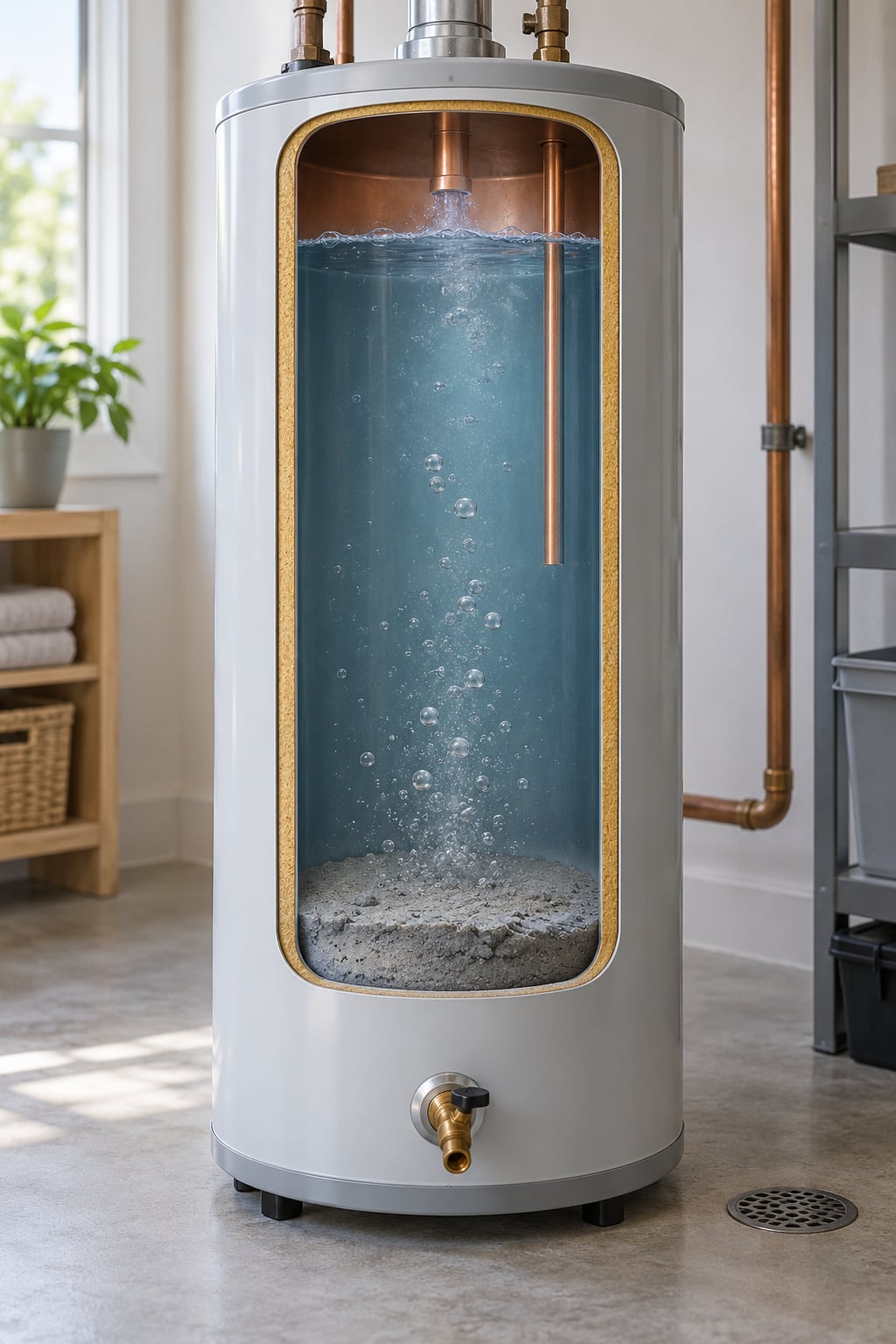
The pop is a thin layer of water trapped under settled grit superheating, turning to steam, and bubbling up through the tank. The burner or element heats from below, the sediment sits between the flame and the water like a blanket, and the water underneath gets far hotter than the rest of the tank. Steam forms, escapes with a pop, and repeats.
That trapped-steam action is also why a popping heater costs you more to run. The heater has to stay on longer to deliver the same water temperature, and a tank buried under scale works harder every cycle. Left alone, scale can eat into the inner tank lining until you get rust-coloured water or a leak.
| Sound you hear | Likely cause | How urgent |
|---|---|---|
| Popping or crackling, like popcorn | Water flashing to steam under sediment on the tank bottom | Routine. Flush it and plan the flush on a schedule |
| Low rumbling or thunder | Thick sediment layer, often a few gallons of settled grit | Routine soon. A thick bed insulates the tank |
| Popping only when hot water runs | Dip tube rattling, or a heat trap nipple knocking as flow changes | Low. Both parts are cheap to replace |
| Popping while nothing is running | Thermal expansion cycling, burner or thermostat cycling, or expanding tank metal | Low unless it is loud or constant |
| Ticking at the wall or tank, water running | Heat trap nipple inside the cold inlet fitting | Low. Normal on many models |
| Humming or a fan sound | Electric fan or recirculation pump | Normal while heating |
| Sizzling or spitting near a burner | Vapour contacting the burner assembly, or a burner not seated right | Watch it. Stop and ventilate if it smells |
| Whistling or squealing | T&P relief valve or pressure relief valve weeping | Act soon. Never cap or plug it |
| Banging on hot water start or shower shutoff | Water hammer, expansion tank problem, or tank expansion against a restraining strap | Moderate. Repeated banging needs a plumber |
| Any sound plus water on the floor | Leak from the tank, drain valve, or relief valve | Now. Shut off power or gas and call out |
Is a Popping Water Heater Normal?
A few isolated pops while the heater works are normal on most units. Gas heaters are simply louder than electric ones, and a sound that shows up at startup, right after the burner fires, or the moment a shower closes is usually the tank metal expanding and contracting. Think of a kettle that ticks as the coil heats and cools, only slower and hollow.
Forum threads on this question split hard, mostly because nobody ever defined a line. Here is one: if the noise is occasional, the water reaches temperature normally, and there is no water on the floor, you are dealing with maintenance noise rather than a failure. You do not need to shut anything off tonight.
Worry when the popping becomes louder or more frequent over weeks, when it runs for 20 minutes at a time with nobody using water, or when it comes with a symptom that has nothing to do with sound. Popping plus rust-coloured water, popping plus a leaking valve, or popping plus a sudden jump in your energy bill is a different conversation.
Gas units deserve one extra note. People comparing an old quiet electric tank with a new gas heater often assume something is wrong. It is not. Combustion heaters make more mechanical noise by design, and manufacturers and service techs treat that as normal far more often than not.
What Causes a Water Heater to Pop?
Sediment on the tank bottom
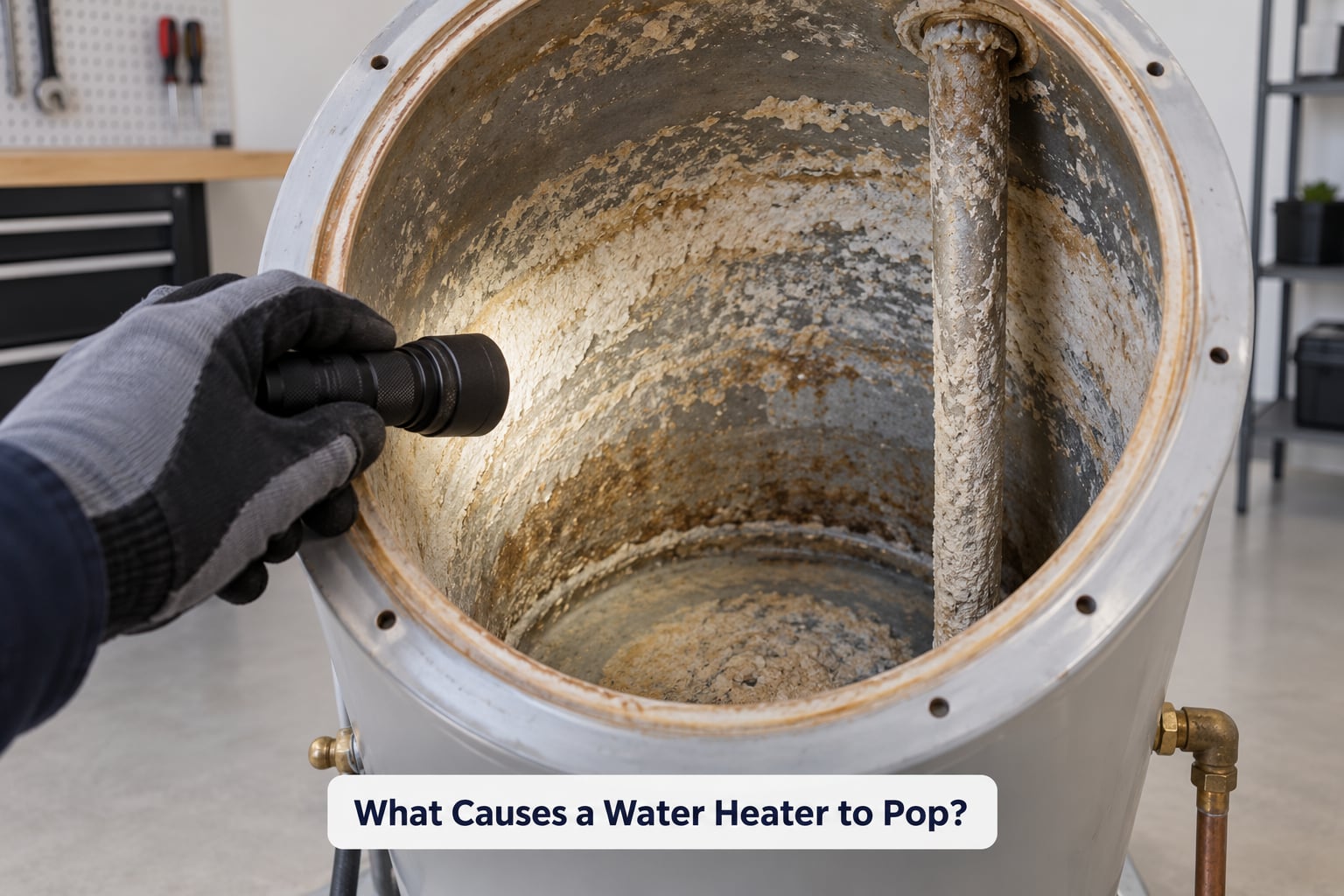
This is the cause behind the large majority of pops, and the one everything else gets confused with. Sediment is what falls out of the water over time: calcium carbonate, iron oxide, and grit from supply lines. It collects in a layer that can go from a thin dusting to several inches.
The fix is a flush. How often depends on your water: annually in hard water areas, every two to three years elsewhere.
Overheating from a bad thermostat or element
If the thermostat fails high or the upper heating element runs constantly, the water keeps climbing past the set temperature until it flashes in bulk. That gives you hard popping, or popping that runs long after everyone stopped using hot water. On a gas heater, a thermocouple that will not hold a flame produces a similar pattern, with the burner clicking on and off.
Leave element and thermostat work to a technician unless your manual and your skill level support it. These are live circuits.
Mineral scale on the tank walls and heating surfaces
Scale is the same mineral story as sediment, except it sticks to steel and heating elements instead of settling. A tank in a hard water region can show scale a few years in. Scale insulates the tank walls from the burner, forces longer burn cycles, and makes popping louder over time because the trap of water under the deposit grows deeper.
Water pressure and expansion problems
Check where the noise lands in the cycle. Ticking that appears only when a fixture is running points at the heat trap nipple, the plastic insert inside the cold inlet fitting that stops cold water from siphoning the tank empty. Banging that lands exactly when a shower shuts off is water hammer, and a household expansion tank that has lost its air cushion is a common culprit.
Both are hardware problems, not sediment problems, and both can be resolved without draining anything.
Water heater making popping noise with no water running
This is the question that comes up most often, and it has a straightforward answer. With no fixtures open, the heater is cycling on its own: the burner or elements heat the tank, the thermostat cuts out, the metal contracts, and the water at the bottom flashes against a hot surface. Expansion and contraction alone can produce an audible knock or pop.
Constant popping at idle for 15 to 20 minutes at a stretch points at a thermostat or burner that is not cutting out cleanly. A sound every few seconds with nothing else happening usually means metal expansion, which is more of an annoyance than a hazard.
Tank metal expanding against the restraining strap
Tank steel flexes with every cycle. In a unit that has settled or lacks a proper restraining strap, that expansion can hit the studs or the wall behind it and pop. It is the cause some homeowners on r/homeowners worry about most, and the rare one where an internal problem is genuinely possible, so it deserves an honest look if the noise is sharp rather than bubbly.
Scale and flow sensors in a tankless heater
Tankless units pop for different reasons. Internal scale in the heat exchanger flashes water to steam, producing the same popcorn sound in a fraction of a second. Flow sensors that are partly blocked by debris can also chatter. Descaling with the manufacturer’s specified procedure is the remedy, and it is one of those jobs where calling a tech whose descaling is their everyday work costs less than a repeat visit.
How to Tell If the Popping Noise Is Dangerous
Sound on its own is rarely the emergency. It is the company it keeps. Shut down and call for help if you notice any of these:
- Water on the floor or in the drip pan, anywhere around the tank base or the drain valve.
- A hissing sound near the relief valve or the gas supply line.
- The smell of gas, or a rotten-egg odour that appears when the burner fires.
- Rust-coloured or metallic-tasting hot water.
- A relief valve that drips constantly, or drips when the heater is off.
- A pilot light that goes out on its own, or a burner that cycles far more than it used to.
- A breaker that trips, or water that never reaches temperature any more.
For gas: close the shutoff valve on the gas line, leave the room, and call the gas utility from outside. For electric: trip the water heater breaker before you touch anything near water. Do not open, cap, or tamper with the T&P relief valve, and never put a hand on the tank to test for heat when the breaker is live.
How to Safely Check and Fix a Popping Water Heater
Read your model’s manual first. The steps below are the common tank flush, and a manual will tell you where your specific drain valve and breaker are.
- Turn the thermostat to its lowest setting and let the water cool for several hours. Hot water scalds, and you are about to work under the tank.
- For an electric heater, trip the water heater breaker and confirm it stays off. For a gas heater, close the gas shutoff valve on the unit.
- Open a hot faucet somewhere in the house and leave it running so air can enter the tank as it drains.
- Connect a garden hose to the drain valve, run the hose outside or into a floor drain, and open the cold water supply briefly to push air through the tank.
- Open the drain valve. The first water out is usually cloudy and warm; let it run for several minutes and watch what comes out.
- Close the drain valve, disconnect the hose, remove the hose from the drain, and open the cold supply to refill the tank.
- Open a hot faucet until water flows steadily with no sputtering, then restore power or gas and return the thermostat to your normal setting.
Step five tells you everything. A few flecks of grit are fine. Grit that keeps coming, chunks of rust, or scale as thick as eggshell means a professional flush with more thorough equipment, and probably a look at the anode rod while the tank is open.
A few moves to skip: chemical tank flushers with no active ingredient listed on the label, energizing an electric heater while water is standing around the unit, and opening the relief valve to see what comes out. Each of those has turned a small job into a callout.
Can You Fix Sediment Buildup in a Water Heater?
A simple flush handles a light layer, and it is the right first move on any tank under about eight years old in a soft-water area. Flush more often when you have hard water, and expect a tank in a hard water region to need attention sooner.
When a flush does not fix it, the choice is between a sediment trap, a thorough clean and descale with the tank opened, and replacement. A heavily obstructed tank that will not drain fully holds water against the burner area, and that is a job for someone who can open the unit safely.
Gas work, electric work, and opening a tank all belong to a licensed technician. So does anything involving a corroded drain valve, because those threads fail more often than people expect.
When Should You Call a Plumber or Water Heater Technician?
Call someone when the popping keeps coming back after a proper flush, when it is loud enough to hear from another room, when it runs constantly at idle, or when the heater no longer holds temperature. Add any of the red flags above and that becomes a same-day call.
Two thresholds are worth naming outright. A tank past its warranty window, where most manufacturers cover the vessel for six to twelve years, is worth a repair-versus-replace conversation rather than another flush. And if the unit sits in a hard water region and is already a decade old, replacement with a sediment trap or a softener upstream often beats a third flush.
To speed things up, have the model and serial number, the tank age, the water hardness if you know it, and a note on when the noise happens: at startup, during use, or at idle. That one detail answers most of the questions before the tech opens the panel.
Frequently Asked Questions
Why is my electric water heater making popping noises?
On an electric unit, popping almost always means water trapped under sediment on the tank bottom superheating and flashing to steam. It happens more often on older tanks because scale and grit build up faster without maintenance. A burner issue does not apply here, but a failed thermostat or element that keeps the water too hot can make the popping much worse. If the tank is under eight years old, a manual-guided flush usually clears it.
Do gas water heaters make a popping sound when they work?
Yes. Combustion heaters are noisier than electric ones by design, and a light popping or rumbling while the burner runs is usually normal. Steam bubbles forming under sediment give the popcorn sound, and the tank metal ticking as it heats and cools adds to it. What is not normal is popping that runs for long stretches with no water being used, or popping paired with a pilot that will not stay lit.
Can a tankless water heater make popping noises?
Yes, though the cause is different from a tank unit. Tankless models have no sediment to settle, but mineral scale inside the heat exchanger traps water that flashes to steam almost instantly, producing the same popcorn sound. Partly blocked flow sensors can also chatter. A descaling service using the manufacturer’s procedure is the standard fix, and it is worth doing before the unit starts cycling on and off.
What temperature should a residential water heater normally reach?
The Department of Energy recommends about 120 degrees Fahrenheit for household use, which is hot enough for most washing and safe against scalding. Many people set theirs in the 130 to 140 range for more hot water at the tap. Scald risk rises sharply above 140. If your heater is running well past its set temperature, that points to a thermostat or element fault rather than a sediment problem.
Is a loud pop followed by cold water always an emergency?
No. A single pop while the burner is running and the hot water then arrives is the tank cycling, not a rupture. Treat it as an emergency when the pop is followed by water on the floor, a hissing relief valve, a gas smell, or a burner that will not stay lit. Shut off the gas valve or trip the breaker first, leave the room if you smell gas, and call from outside.
What to Do First
Walk to the heater and listen while nobody is using water. Note whether the popping happens at startup, during a shower, or only when the unit is idle, and check the floor around the tank base for water.
No water and no other symptoms means a flush is your next step, using your model’s manual. Any water, hissing, gas smell, or rust-coloured hot water means you trip the breaker or close the gas valve and make the call.