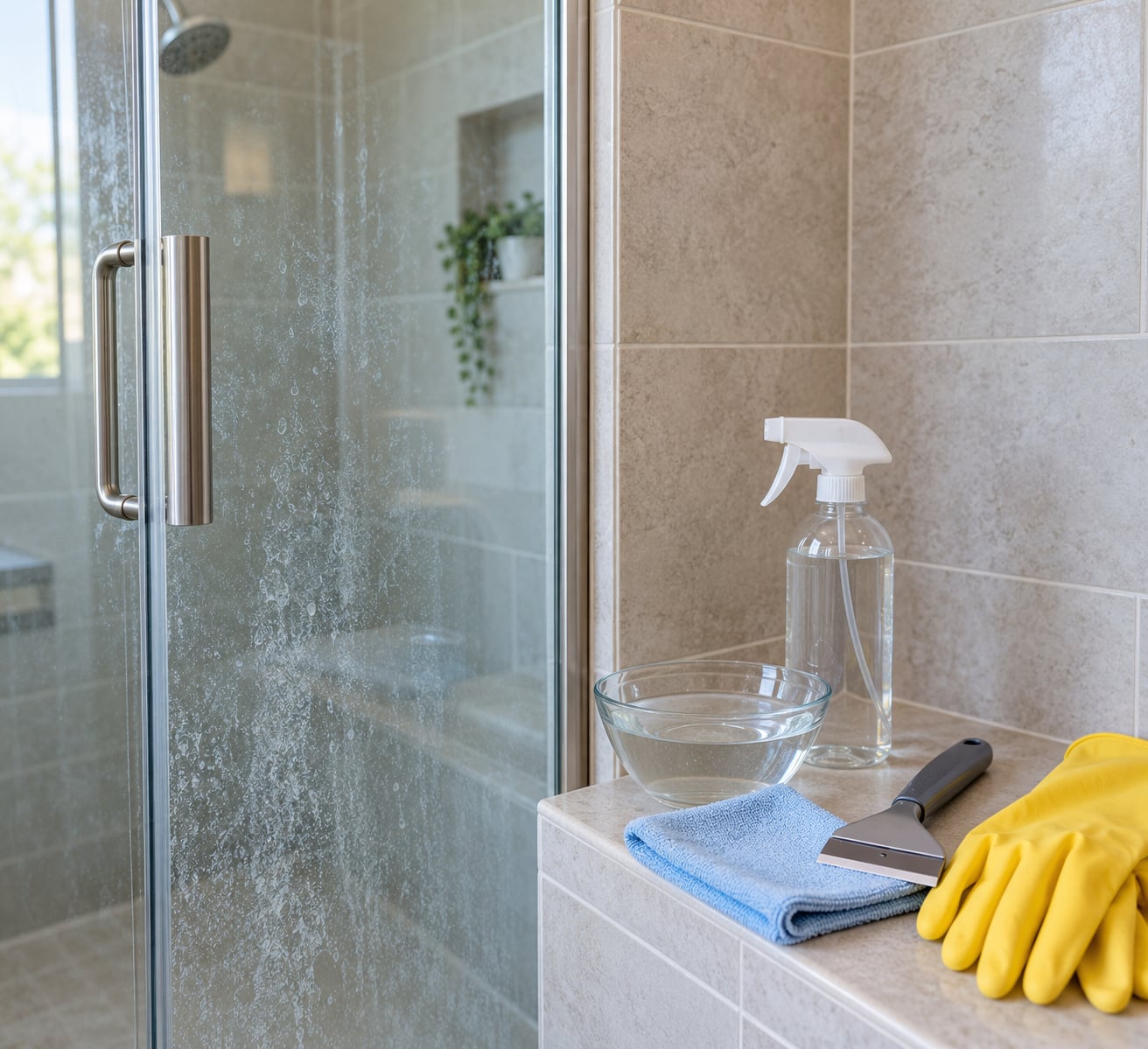
If you want to know how to remove hard water stains from glass, the answer is an acid that dissolves the mineral deposits. Mix equal parts distilled white vinegar and warm water, spray or soak the stained glass, let it sit 10 to 15 minutes, scrub gently with a non-scratch pad, then rinse and dry. Most light water spots disappear in a single pass; decades-old crust on a shower door needs longer dwell time, a paste, or a plastic scraper.
Below is the order I work in, gentle to aggressive, so you escalate only as far as the stain actually requires.
Table of Contents
- What You Need
- Step-by-Step: How to Remove Hard Water Stains from Glass
- Step 1: Test the Glass and Identify the Stain
- Step 2: Start with Warm Water and Dish Soap
- Step 3: Use Vinegar or a Mineral-Acid Cleaner for Hard Water Stains
- Step 4: Lift Stubborn Deposits with a Plastic Scraper
- Step 5: Rinse, Dry, and Prevent New Stains
- Common Mistakes
- Frequently Asked Questions
- What is the best way to remove hard water stains from glass?
- Will vinegar damage shower glass or windows?
- How do you remove hard water stains from glass without scratching it?
- Can baking soda remove hard water deposits on glass?
- Why do hard water stains keep coming back on shower doors?
- What should I do if hard water stains remain after cleaning?
What You Need
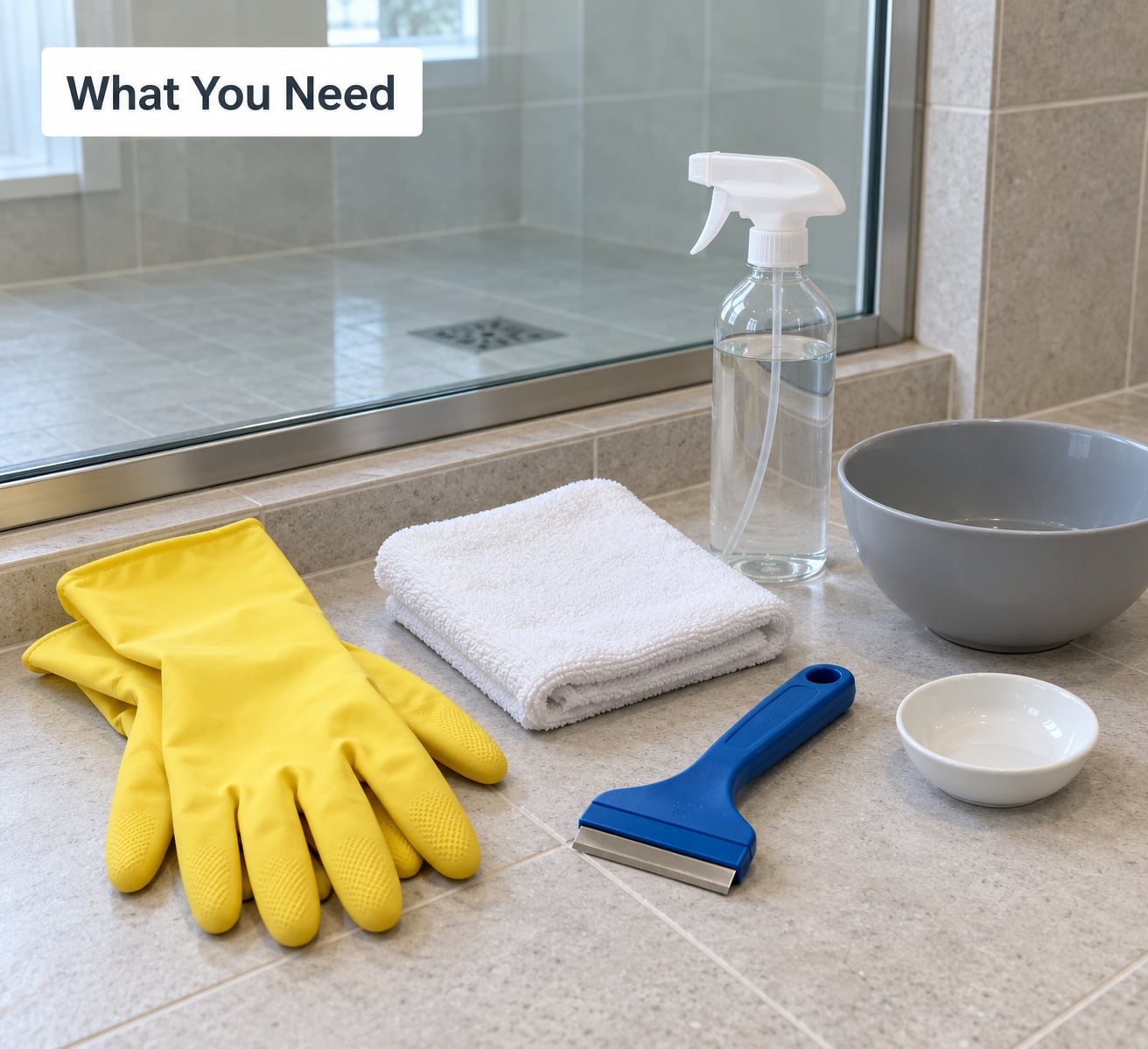
Gather everything first. It turns a 20-minute job into a 45-minute one when you stop halfway to find a cloth.
- Distilled white vinegar or plain white vinegar, for the acid.
- Warm water and a spray bottle or bowl for the mix.
- Dish soap, the plain kind, a couple of drops in the solution so it clings to vertical glass.
- Microfiber cloths, one for solution and one for drying.
- A non-scratch pad or melamine foam sponge for the scrub.
- A plastic razor scraper for thick crust that acid alone will not shift.
- Paper towels for soaking patches on shower doors.
- An old toothbrush for the rubber gasket channel and the bottom track.
- Rubber gloves and a window or ventilation fan if you use a commercial acidic remover.
Step-by-Step: How to Remove Hard Water Stains from Glass
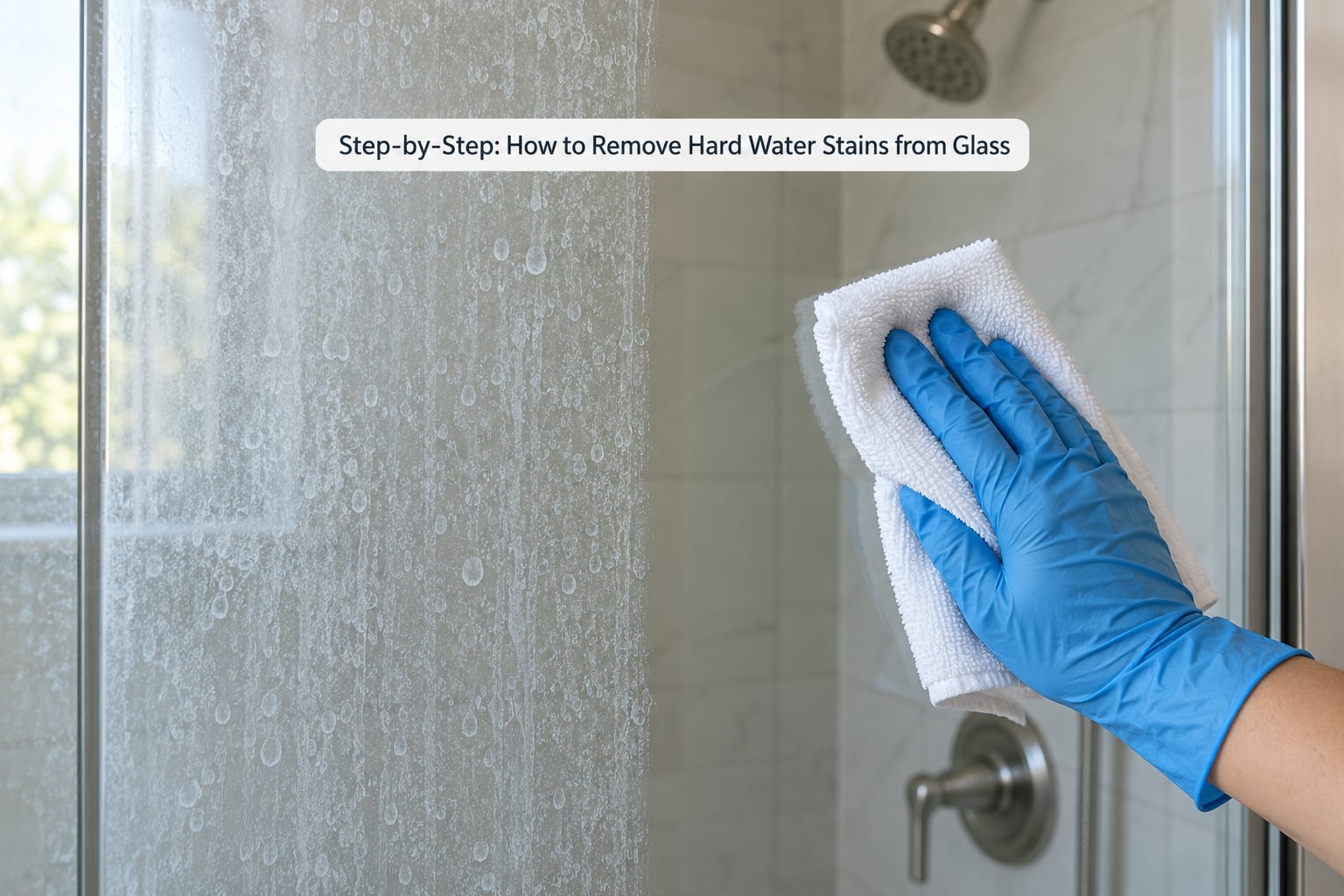
Here is how to remove hard water stains from glass in the order that costs you the least effort. Stop as soon as the glass looks clear. Going harder than the stain needs is how people scratch shower doors.
| Method | Best for | Mix ratio | Dwell time | Tool | Scratch risk |
|---|---|---|---|---|---|
| Warm water and dish soap | Fresh film, weekly maintenance | A few drops of soap per gallon | 1-2 minutes | Microfiber cloth | None |
| White vinegar solution | Light to moderate spotting | Equal parts vinegar and warm water | 10-15 minutes | Non-scratch pad | None |
| Vinegar paper-towel soak | Vertical glass, shower doors | Straight vinegar on the towel | Overnight | Paper towel | None |
| Baking soda paste | Scattered spots after wetting | Three parts soda to one part water | 5-10 minutes | Soft cloth | Low |
| Bar Keeper’s Friend or CLR | Years-old crust | Use as directed, undiluted | 10-30 minutes | Melamine foam | Low |
| Plastic razor scraper | Hard crust in corners and tracks | Not a liquid | Work in small strokes | Plastic blade at 45 degrees | Medium, keep it wet |
Step 1: Test the Glass and Identify the Stain
Run a fingertip across the stain before you mix anything. Soap scum wipes off and feels greasy; mineral deposits feel dry and gritty, sometimes like fine sand. That distinction decides your method, and soap scum needs a degreaser rather than acid.
Then work out whether the deposit is sitting on the glass or has become part of it. Spray the spot with vinegar, wait two minutes, and wipe with a damp cloth. If it clears, it was a deposit. If a faint haze stays and you can feel the surface with your fingertip, that area is etched, and cleaning will improve the look without fully restoring it.
Check the glass type too. Acrylic and polycarbonate shower panels scratch more easily than tempered glass, and aftermarket panels often carry a thin factory sealant that acids can dull. Test any new product in a bottom corner first.
Step 2: Start with Warm Water and Dish Soap
Warm water with a few drops of dish soap handles new film in about a minute. The soap is what matters on vertical glass: it gives the solution grip so it stops running down to the floor before it has done any work.
Wipe in short overlapping strokes rather than circles, rinse with clean warm water, and dry immediately with a clean microfiber cloth. Water left to evaporate is what turned a small spot into a deposit in the first place.
Step 3: Use Vinegar or a Mineral-Acid Cleaner for Hard Water Stains
Mix equal parts distilled white vinegar and warm water, add two or three drops of dish soap, and shake or stir. Spraying runs off a shower door too fast, so on vertical glass soak a paper towel in the solution and press it flat against the stain instead. Let the towel stay put for 10 to 15 minutes, then re-wet it if it dries out.
Scrub with a melamine foam sponge or a soft cloth, using light pressure in the direction the deposit has built up. The acid does the dissolving; the pad only takes off what has softened. Rinse and dry right away, because if the solution is allowed to dry on the glass it leaves a fresh film.
For crust that vinegar will not shift, move up to an oxalic or limescale remover such as Bar Keeper’s Friend or CLR, used undiluted as the label directs, with 10 to 30 minutes of dwell. Wear gloves and run a fan. Never combine an acidic product with bleach, ammonia or vinegar, and skip acids entirely on natural stone, grout, acrylic and any coated glass.
Step 4: Lift Stubborn Deposits with a Plastic Scraper
A plastic razor scraper moves crust that acid has only softened. Keep the glass wet, hold the blade around 45 degrees so the edge shaves rather than gouges, and work in short strokes pulling toward you. Rinse often and stop the moment the deposit goes, because repeated scraping on dry glass is where scratches start.
Melamine foam works the same way without a blade, though it wears out after a few minutes of heavy scrubbing. I skip both on tinted windows, windshields, antique or etched glass, and anything with a rainbow or mirror finish.
Step 5: Rinse, Dry, and Prevent New Stains
Rinse with clean water until nothing runs off carrying a smell or a film, then dry with a squeegee or a microfiber cloth buffed until it is dry to the touch. Hold the glass at an angle to the light afterward; a leftover haze shows up there long before it shows up in the room.
Prevention does more than any cleaner. Squeegee or wipe the shower door and screen after each use, keep the door ajar to let it air out, run the shower a few seconds after your last rinse to clear the nozzles, and add a little dish soap to the squeegee blade so it clears rather than smears. Once a year, apply a water-repellent glass treatment to exterior windows and car glass. Check your local water hardness report while you are at it, and if the number is high, a whole-house water softener removes the source rather than the symptom.
Common Mistakes
Scrubbing dry deposits. A dry crust will not budge under a cloth and the friction is what scratches. Wet it first, let the acid work, then scrub.
Leaving the solution to dry on the glass. This is the most common way people think a cleaning failed. A surface that dried with vinegar on it can come out worse than when you started.
Using steel wool or scouring pads. Metal leaves visible scratches that catch dirt faster than the original stain did. Use melamine foam or a plastic scraper.
Reaching for the magic eraser on coated glass. It works well on tempered shower doors and is a bad idea on tinted, coated or aftermarket panels, where it dulls the finish and leaves a matte patch.
Trying WD-40. It is a lubricant and it will not dissolve calcium or magnesium. It smears, traps dust, and makes the next real cleaning harder.
Mixing cleaners. Bleach with vinegar releases chlorine gas. Ammonia with bleach makes chloramine. If you switch products, rinse the glass thoroughly in between.
Believing the haze is still a stain. If the mark no longer wipes off, it is etching, and repeating the same routine will never clear it. Cover it with a water-repellent treatment to cut the glare, or plan on replacement.
Frequently Asked Questions
What is the best way to remove hard water stains from glass?
Equal parts distilled white vinegar and warm water, sprayed or applied as a soaked paper towel, left for 10 to 15 minutes, then scrubbed with a non-scratch pad and rinsed. For vertical glass the paper towel method beats a spray, because the towel keeps the acid on the stain instead of letting it run to the floor. Add two drops of dish soap so the solution clings. Rinse and dry the same session, since dried-on solution leaves its own film.
Will vinegar damage shower glass or windows?
Vinegar is safe on standard tempered shower glass and single-pane windows. It dulls acrylic and polycarbonate panels, tinted and coated glass, mirror finishes, and any window with a factory sealant, and it etches marble, travertine, grout and some metals, so keep it off those. Test a new product in a bottom corner for two minutes first. If the area etched, changes color or looks hazy, stop and rinse right away.
How do you remove hard water stains from glass without scratching it?
Keep the glass wet the whole time you work. Acid first, abrasion second: let the solution dwell, then use light pressure with a melamine foam sponge or a clean microfiber cloth. Skip steel wool and scouring pads entirely. If you need a razor, use a plastic blade held at about 45 degrees on wet glass, in short strokes toward you. Changing direction repeatedly and scrubbing a dry crust are what leave fine scratches behind.
Can baking soda remove hard water deposits on glass?
Partly. Baking soda is a mild alkali, so it does not dissolve calcium the way vinegar does. It works as a gentle abrasive once the deposit has been softened with acid: mix three parts baking soda to one part water into a paste, leave it 5 to 10 minutes, then rub in small circles and rinse. Used on its own against years-old limescale it will disappoint most people, which is usually why the vinegar step comes first.
Why do hard water stains keep coming back on shower doors?
Because every shower puts more dissolved minerals on the glass, and they harden as that water evaporates. In a high-hardness area new spots can appear within hours. Squeegee the door and screen after every use, leave the door ajar to dry, wipe the rubber gasket channel with an old toothbrush weekly, and add a water-repellent treatment once or twice a year. A water softener addresses the supply instead of treating each deposit.
What should I do if hard water stains remain after cleaning?
Work out which it is. Wipe the spot with a damp cloth: if it lifts, it was a deposit and you can repeat with a longer dwell time, an overnight paper towel soak, or a limescale remover such as Bar Keeper’s Friend. If the mark stays and you can feel it with your fingertip, it is etched into the glass and no cleaner will restore it. Cover etched areas with a water-repellent treatment to reduce glare, or budget for a replacement panel.
Start with warm water and dish soap, then move to equal parts vinegar and warm water with a 10 to 15 minute dwell time. If the deposit will not lift, soak a paper towel against it overnight before you reach for anything harsher, and check the glass in good light afterward to see whether what is left is a deposit or an etch.