To clean a washing machine drum, empty it, wipe down the rubber door seal and detergent drawer, then run an empty hot tub-clean cycle with one cleaning agent. The whole job takes 30 to 60 minutes, most of it waiting, and you can do it with things you already have at home.
A drum collects more than laundry residue. Detergent film builds up in the rubber gasket on front-loaders, powder cakes into the corners of a top-load agitator, and lint plus skin cells settle at the bottom of the tub. That film holds moisture, and moisture is what breeds the musty smell people notice first, usually on towels and bedding.
Here is the process I use, in the order that avoids wasted work. Scrubbing first and cleaning the filter second keeps you from re-dirtying a tub you just finished.
Table of Contents
- What You Need
- Step-by-Step
- 1. Unplug the washing machine and check the manual
- 2. Remove loose items and wipe down the door seal
- 3. Clean the detergent drawer and dispenser
- 4. Wipe the drum and accessible interior surfaces
- 5. Run the appropriate cleaning cycle
- 6. Check the drain and filter if accessible
- 7. Dry the drum and leave the door open
- Common Mistakes
- Frequently Asked Questions
- What is the best thing to run through a washing machine to clean it?
- Should I put anything in my washing machine for a drum clean?
- How do you clean the drum of a washing machine with vinegar?
- Is a front-load or top-load machine harder to clean?
- Why does my washing machine still smell after I cleaned it?
- How often should I clean the drum?
- Conclusion
What You Need
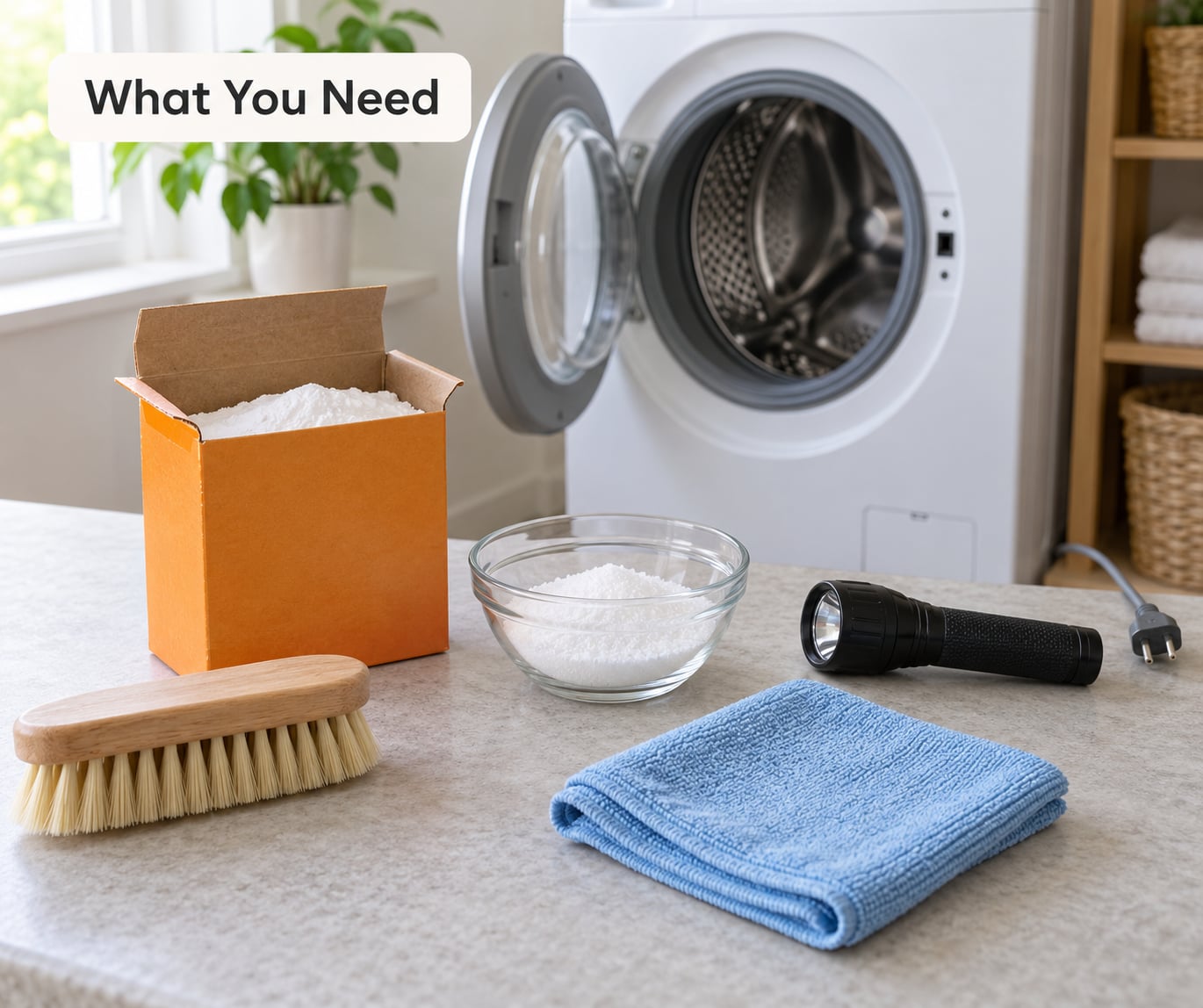
Gather these before you start, because a mid-task trip to the store is how cleaning jobs get abandoned.
- Rubber gloves for the gasket, the drawer and the filter housing.
- A soft brush — an old toothbrush is ideal for the folds in a door seal.
- A microfiber cloth or old towels for wiping surfaces dry.
- One cleaning agent, which is the important part: citric acid powder, baking soda, white vinegar, or a purpose-built washer cleaning tablet.
- A flashlight so you can see behind the gasket lip and inside the detergent housing.
- A flat-head screwdriver, only if your owner’s manual says the filter housing or drawer is user-removable.
- A shallow tub and a rag if your model has a user-accessible drain filter, because water will come out.
Pick one cleaner, not three. Citric acid powder dissolves the film and the mineral scale in one pass. Baking soda is gentler and better suited to deodorizing. White vinegar handles hard water scale but does not lift heavy soap buildup, and used often it can shorten the life of a rubber gasket. Bleach kills odor and mildew, though it will not remove scale.
Never combine bleach with vinegar, ammonia or any other cleaner. The mixture releases toxic gas. This is the single most common way people turn a routine cleaning job into a trip to the emergency room.
Step-by-Step
1. Unplug the washing machine and check the manual
Unplug the machine before your hands go anywhere near the gasket or the filter. A front-loader holds a charge for the lock even when it is off, and water inside the tub is hot enough to scald.
Then open the owner’s manual. It tells you which cleaners the manufacturer approves, whether the drum has a dedicated tub-clean cycle and what it is called on your model, whether the drain pump filter is user-accessible, and whether the drum is stainless steel or porcelain enamel. That last point matters, because some manufacturers warn against bleach on certain finishes.
2. Remove loose items and wipe down the door seal
Run a hand through the drum and pull out coins, hairpins, screws, bobby pins and lint. Small metal objects rattle against the drum and score the surface over time. Check under the door glass on front-loaders, where coins collect without anyone seeing them.
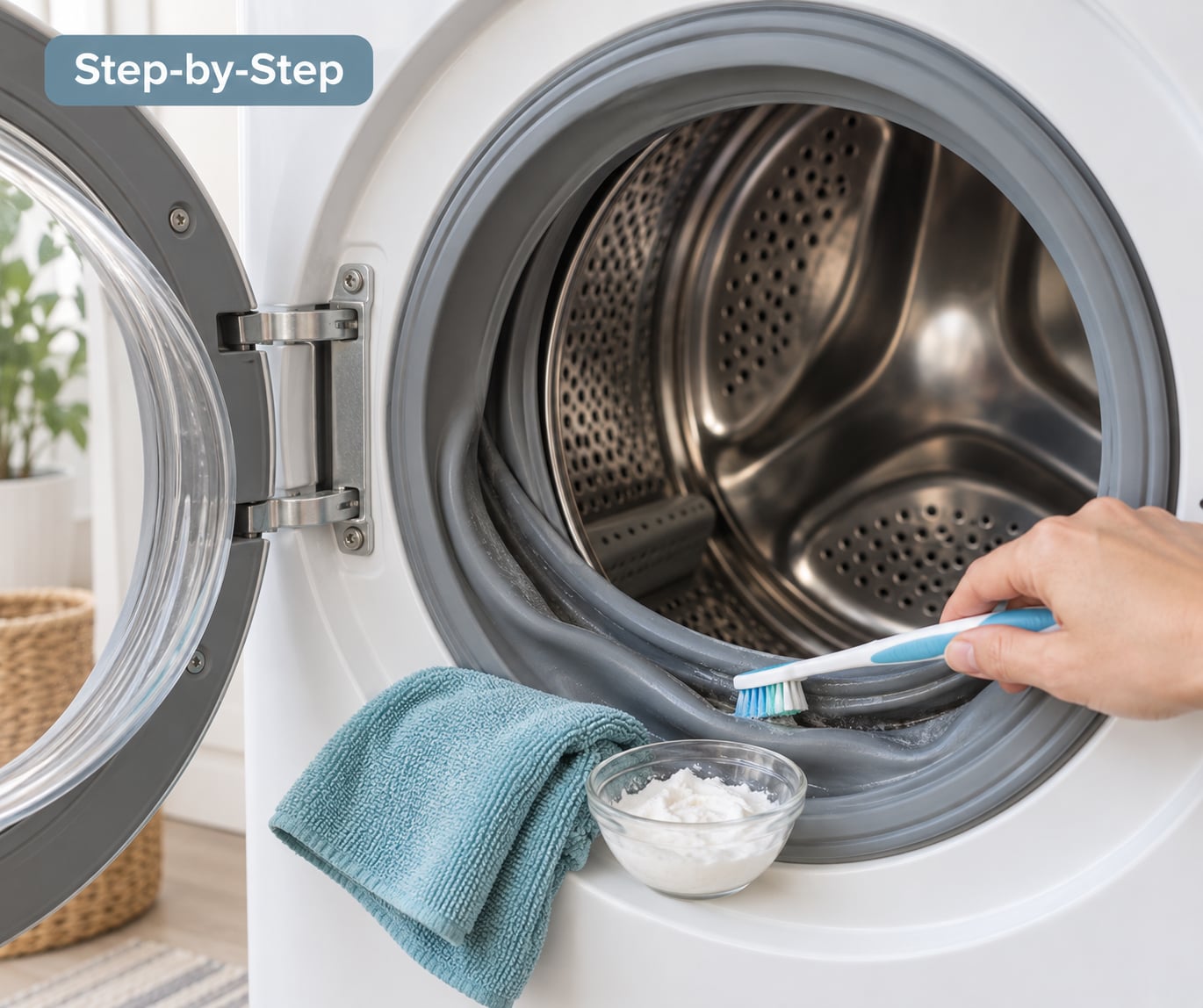
Fold back the rubber gasket and wipe every pleat. The seal is the single most important surface in the whole job: it holds water after each cycle, it hides from view, and on a front-loader it is where black mold usually starts. Mix warm water with a drop of dish soap, dip the toothbrush in it, and scrub the folds from the inside out, then repeat around the entire circumference. Wipe with a clean damp cloth and finish with a dry one.
If you see black spotting that does not lift, that is mold. A paste of baking soda and water left on the spot for 15 minutes helps; a diluted bleach solution helps more. Never pour bleach into the tub at the same time as vinegar.
3. Clean the detergent drawer and dispenser
Hardened detergent in the drawer is a common source of both odor and residue. On most machines you press a release tab or lever at the front of the tray and slide the whole insert out. Check the manual first, since the mechanism is not universal.
Soak the removed tray in warm water with a drop of dish soap for 15 to 30 minutes, then work the hardened blocks out with an old toothbrush. Wipe the empty housing in the machine, because residue usually cakes in the corners below where the tray sits. On top-loaders the compartment for liquid bleach often has a removable cap and a built-in spray arm — rinse that cap separately.
4. Wipe the drum and accessible interior surfaces
Mix two parts baking soda with one part water into a thick paste and spread it over the visible residue inside the drum. Work it in with the soft brush and let it sit for 10 to 15 minutes, then wipe it off with a damp cloth. On stainless steel, always scrub with the grain and use a non-abrasive pad; steel wool leaves scratches that trap the next layer of film.
Top-loaders with an agitator need extra attention. Lift the agitator and clean underneath it, where debris hides for years, and check between the two-piece and one-piece styles, which come apart differently. Newer impeller machines have no agitator at all, so instead run a finger along the vanes and clean the gaps at the base.
Push a rag into the fold of the gasket and around any baffle, and pull it back out. Never force a screwdriver or a knife into the drum or near the door lock.
5. Run the appropriate cleaning cycle
Put in only the amount the cleaner calls for, usually half a cup to a cup of powder, or one tablet. Add nothing else and add no laundry. Then run the longest and hottest cycle your machine offers, or the dedicated tub-clean or sanitize cycle if it has one.
If your model has no cleaning cycle, run an empty hot main wash with extra rinse. Many machines only reach their full water temperature on the sanitary or heavy-duty setting, which is why sanitizing cycles are so much better at dissolving scale. Reviewers on appliance forums frequently report that switching to a hot or heavy-duty cycle, rather than a normal warm load, is what finally broke through years of buildup on their machines.
Stop the drum before it starts the rinse if you added vinegar, so it soaks longer. Then let the machine finish all the way through, including the rinse and the spin.
6. Check the drain and filter if accessible
Many front-loaders have a small access flap at the bottom corner that opens the drain pump filter. Put a shallow tub and a rag underneath first, and expect water to come out — this is the step that floods laundry rooms when people skip that part. Turn the filter counterclockwise, let it drain, and pull it out.
Clean lint, coins, hairpins and whatever else is packed in the housing, then refit the filter and close the flap. On models with an inlet screen at the hose connection, unscrew the hose, pull the small mesh screen out with pliers, rinse it under the tap and refit it.
Stop and call an appliance technician if water sits in the drum and will not drain, if the filter will not turn, or if you hear grinding when it spins. Those are not cleaning problems. Standing water can also mean a stuck drain pump or a kinked drain hose, and pushing harder on the filter rarely helps.
7. Dry the drum and leave the door open
Wipe the gasket, the drawer and the drum lip with a dry cloth. Leave the door or lid open, and the detergent drawer out, until everything is bone dry. On a dry day, an open door for a few hours does more than any product you can buy.
The single most useful habit in this whole article is leaving the door open between loads. People who do it report the musty smell stops coming back. Dryness is the actual fix; the cleaner only removes what already grew.
Common Mistakes
Mixing cleaners. Bleach plus vinegar, bleach plus ammonia, or bleach plus an acidic commercial cleaner makes a gas that will irritate your lungs in a small laundry room. Run one agent per cycle and, if you use bleach, rinse the drum by hand first with plain water.
Overloading the drum with cleaner. More paste does not mean more clean. Excess residue ends up on the next load of clothes. Measure it.
Using abrasive pads on a stainless steel drum. Steel wool and scouring pads scratch the surface permanently, and the scratches hold residue better than the original finish.
Ignoring the door seal. Wiping the drum and skipping the gasket means the mold colony survives and reappears in a few weeks. Most odor complaints trace straight back to that fold of rubber.
Running a cold or warm cycle. Warm water barely dissolves detergent film or scale. If your machine will not heat the water, use a citric acid cleaner rather than more scrubbing.
Assuming a smell will clear itself. If the odor returns a week after a clean cycle, the source is somewhere the cycle does not reach — a clogged filter, a moldy drain hose, a soaked door frame, or a wet washer left shut. Clean the filter before you buy another cleaner.
Wiping detergent in and sealing it up. Damp detergent trays grow mold fastest. Rinse, dry and leave the drawer out until it is fully dry.
A monthly clean cycle, a monthly wipe-down of the gasket on front-loaders, and an open door between loads will keep most machines in good shape. Twice a year, run the full process including the filter. In hard water areas, add a citric acid cycle every month or two, since scale is what eventually blocks heating elements and drains.
Frequently Asked Questions
What is the best thing to run through a washing machine to clean it?
For most machines, a citric acid powder is the single best option because it dissolves detergent film and hard water scale at the same time. Add about half a cup to one cup to an empty drum and run a hot tub-clean or sanitize cycle. Baking soda works well for odor, white vinegar for scale, and purpose-made washer tablets if you want a no-scrub option. Pick one per cycle and never mix bleach with vinegar.
Should I put anything in my washing machine for a drum clean?
Yes, and using nothing is the reason many machines stay dirty. An empty cycle with plain water moves the residue around rather than dissolving it. Put in one cleaning agent at the measured amount, add no laundry, and run the hottest or longest cycle your machine offers, or the dedicated tub-clean setting if it has one.
How do you clean the drum of a washing machine with vinegar?
Pour two cups of white vinegar into the empty drum and run a hot cycle with an extra rinse. Stop the machine once it fills so the vinegar soaks instead of rinsing away immediately. Vinegar is best on mineral scale and hard water, less effective on heavy soap buildup, and best used occasionally rather than every month since it can wear out a rubber gasket over time.
Is a front-load or top-load machine harder to clean?
Front-loaders need more attention because the rubber door gasket traps moisture after every cycle and hides mold from view. Top-loaders need more attention on the agitator or impeller, where debris collects underneath and in the gaps. In both cases the same routine applies: clean the soft seal or agitator by hand, then run the hot cleaning cycle to reach what your hand cannot.
Why does my washing machine still smell after I cleaned it?
Usually the smell is coming from somewhere the cycle never reaches. Check four things: the drain pump filter, which traps lint and debris; the drain hose, which grows a biofilm; the door frame and gasket folds; and the machine itself, if it stays damp and closed. If the odor returns within days, open the filter housing and clean it before trying any other product.
How often should I clean the drum?
Run a cleaning cycle roughly once a month, wipe the door seal or agitator by hand at the same time, and leave the door open between loads. Do the full process, filter included, twice a year. Homes with hard water, pet owners and anyone using liquid detergent in a top-loader generally need it more often, because each of those adds residue faster.
Conclusion
Start by unplugging the machine and checking the owner’s manual, since it decides which cleaner and which filter you are allowed to touch. Then work in this order: debris, door seal, detergent drawer, drum, hot cleaning cycle, filter, and a full dry-out with the door open.
Make it a monthly routine and most odor and mold problems never start. If residue keeps coming back, the odor returns within days, or the machine will not drain, stop and call an appliance service professional rather than adding more chemicals to a problem that lives in the pump or the drain hose.