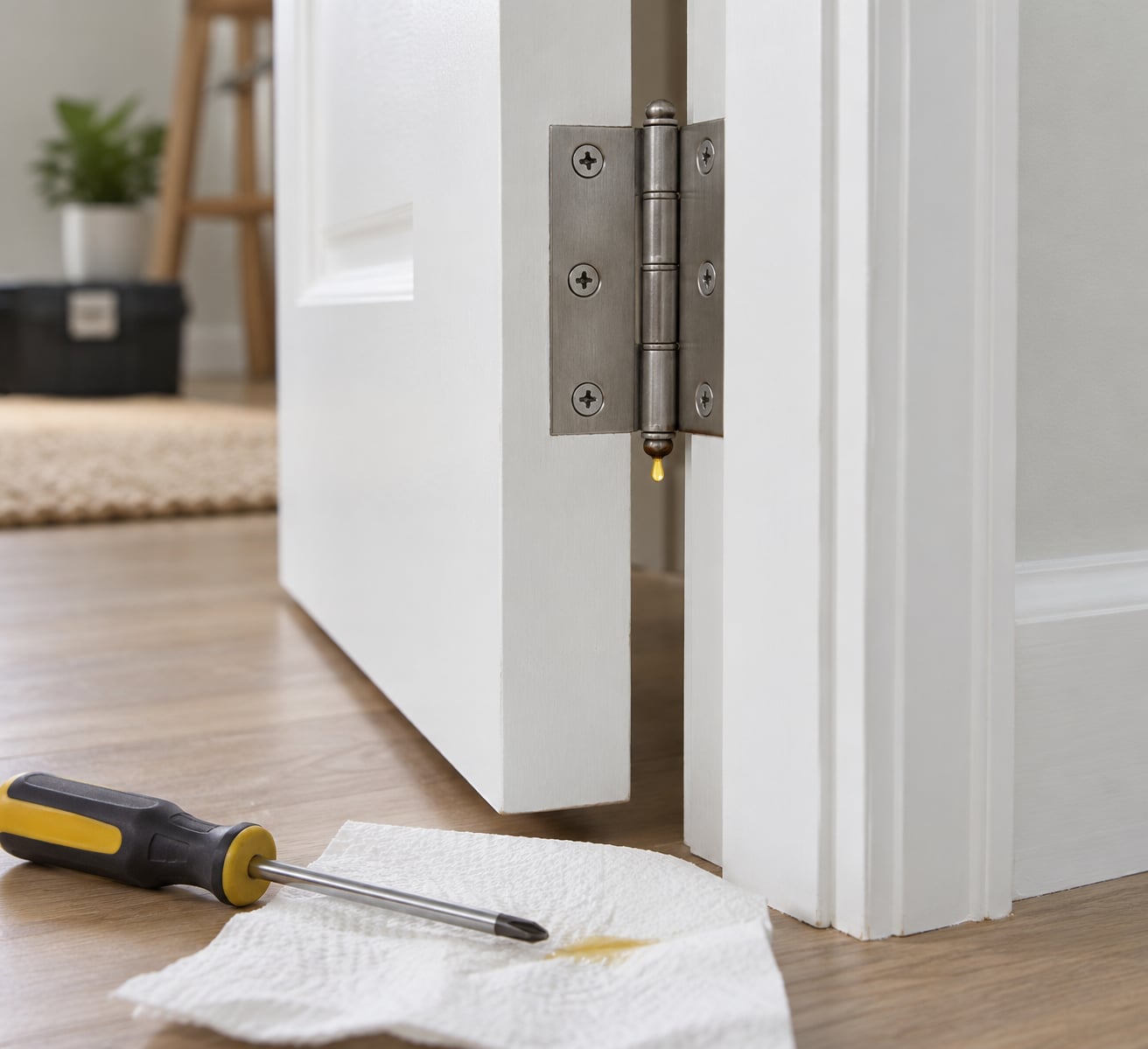
A squeaky door hinge is almost always metal rubbing on metal inside the hinge barrel, and learning how to fix a squeaky door hinge takes about ten minutes with a screwdriver and a tube of white lithium grease. Open the door slowly, find the hinge that makes the noise, drop a little lubricant on the pin where it enters the barrel, and swing the door a few times to work it in. Most squeaks disappear right there.
What you will not get from a ten-minute fix is silence that lasts. A solvent such as WD-40 clears the noise for a few weeks and then leaves the hinge drier than it was, which is why the squeak comes back louder. The order of repairs below matters, so work through it and stop as soon as the door swings quiet.
Doors, tools and hardware are straightforward DIY work. Anything involving a warped frame, structural damage or an antique door is a job for a carpenter.
Table of Contents
- What You Need
- Step-by-Step: How to Fix a Squeaky Door Hinge
- 1. Find the Source of the Squeak
- 2. Tighten Loose Hinge Screws
- 3. Lubricate the Right Parts of the Hinge
- 4. Remove and Clean a Sticky Hinge Pin
- 5. Correct Alignment or Replace a Damaged Hinge
- Common Mistakes
- Frequently Asked Questions
- What is the best lubricant for a squeaky door hinge?
- Can you use WD-40 to fix a squeaky door hinge?
- How do you fix a squeaky painted door hinge?
- Why does my exterior door hinge still squeak after oiling?
- Can I use a temporary fix if the hinge pin will not come out?
- When should I replace a squeaky door hinge instead of repairing it?
- Conclusion
What You Need
Almost everything on this list is already in a junk drawer. A spray can of lubricant is the only item you might need to buy.
- Lubricant: white lithium grease, silicone spray or a multipurpose oil. Dry graphite powder works too, with one big caveat below.
- Phillips or flat screwdriver for the hinge screws. A cordless drill with a nut driver is faster if you have one.
- Flat-head nail or punch and a hammer to drive the hinge pin out. A purpose-made hinge pin tool does the same job.
- Old toothbrush or stiff nylon brush plus a rag or paper towel.
- Fine steel wool or 120-grit sandpaper for rust and flaking paint inside the barrel.
- Wooden toothpick and wood glue for repairing a stripped screw hole.
- Putty knife and clean water if you also plan to touch up the paint around the hinge.
No lubricant at all? Sewing machine oil and bicycle chain oil are the DIY choices people recommend most often on homeowner forums, because they run thin and penetrate the pin instead of sitting on top of it.
Safety note: prop the door with a wedge or a stack of books before you loosen anything on a heavy solid wood door. Never let the weight of the door hang on a single hinge screw while you work, and support the door from below before you lift the pin.
Step-by-Step: How to Fix a Squeaky Door Hinge
1. Find the Source of the Squeak
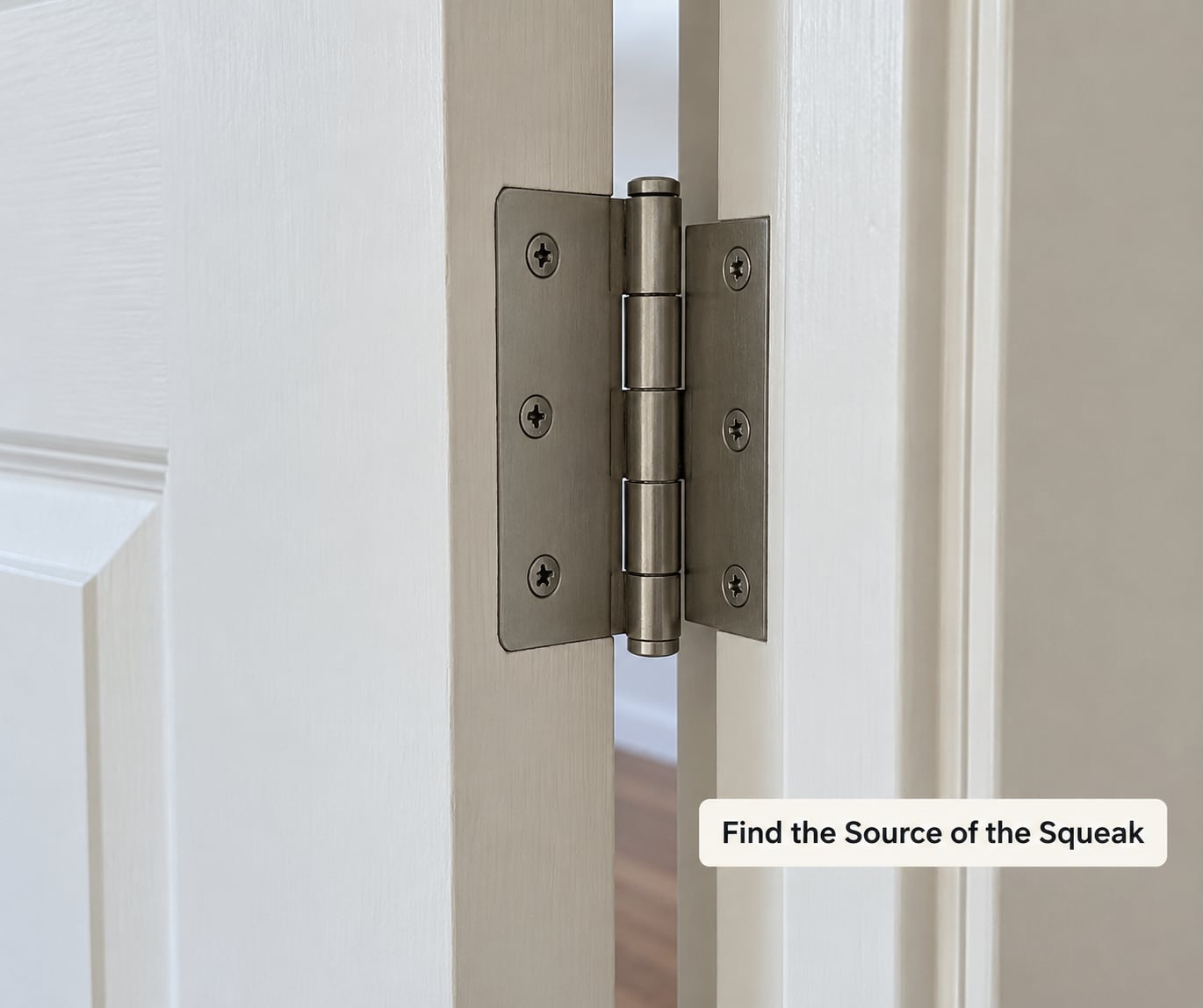
Work hinge by hinge rather than spraying all three at once. Open and close the door slowly, stopping at the point where the noise is loudest, and note which hinge takes the load at that moment. On a typical door that is the middle hinge on the handle side, the one carrying the most weight through the swing.
Before you reach for a lubricant, make sure the noise is actually coming from the hinge. A few things sound identical and none of them are fixed by oil:
- Door rubbing the jamb: wood swells across a humid summer and shrinks in winter, so the door edge scrapes the frame. You will feel the drag as much as hear it.
- Loose strike plate: the latch knocks or rattles as the door closes, and the sound happens at the latch, not at the hinge side.
- Hinges at the wrong angle: on a self-closing or push-to-open door, two hinges mounted on the same side of the door push the leaf against the jamb.
- Floor or threshold drag: the noise follows the bottom of the door, not the swing.
- Cabinet or car doors: a self-closing cabinet hinge needs its arm and cup lubricated, not the barrel. A car hinge usually just needs the factory grease renewed at the pivot.
How to test: run a finger along the barrel of each hinge as the door moves. The hinge that feels rough, gritty or tight is your target. The others get left alone.
2. Tighten Loose Hinge Screws
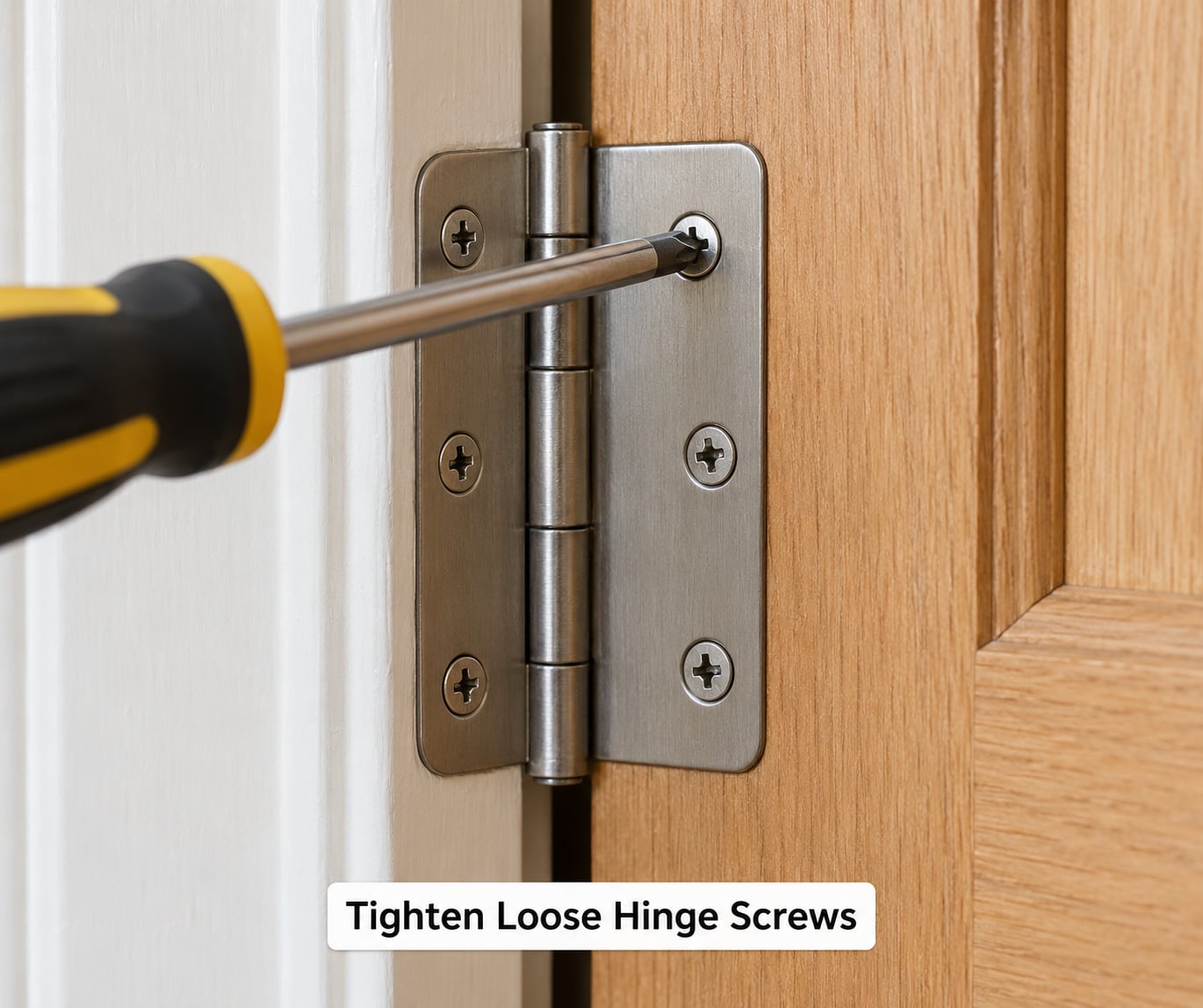
A loose screw lets the whole leaf shift, which changes how the pin sits in the barrel. That shift is a common cause of a squeak that returns every few weeks no matter how much oil you use, so tightening comes before lubricating.
Set the screwdriver and snug each screw firmly, no need to go beyond firm. Over-tightening crushes the wood and creates a dimple under the screw head that pushes the leaf out of plane, which makes the alignment worse rather than better. If a screw keeps spinning without biting, stop before you enlarge the hole.
To repair a stripped hole, dab wood glue into the hole, push in a clean toothpick or two, let it dry, clip the protruding ends flush with a utility knife and re-drive the screw. For a hole too damaged to hold a toothpick, fill it with wood filler or epoxy putty, let it cure, then drill a fresh pilot hole.
One more upgrade worth doing on a heavy exterior door: replace one screw in the leaf side of the hinge with a three-inch screw long enough to reach the wall stud behind the jamb. That pulls the entire frame toward the stud and stops the door from sagging, which is the usual reason a front hinge squeaks year after year.
3. Lubricate the Right Parts of the Hinge
Lubricating a squeaky door hinge means getting lubricant onto the pin, not onto the outside of the barrel where it will never reach the friction point. Two methods work without removing anything.
The drop method: swing the door so the hinge is exposed, tap the top of the pin a few millimetres with a hammer to lift it, and drop oil onto the exposed shaft. Close and swing the door five or six times to work the lubricant down into the barrel, then wipe the pin and the leaves with a paper towel so nothing drips onto the floor or the paint.
The spray method: aim silicone spray or a light machine oil into the gap at the top of the hinge where the pin disappears. Stop when you see it bead, then open and close the door to distribute it.
Which lubricant to reach for:
- White lithium grease is the general-purpose answer and holds for months. A pea-sized amount is plenty.
- Silicone spray is cleaner, will not attract dust, and suits a painted or finished door where grease would show.
- Multipurpose oil or sewing machine oil runs thin, reaches deep into the barrel and suits an interior door you will never service again.
- Graphite powder is the best choice for a hinge near a heat source or a garage door that sees wide temperature swings, since it will not melt or wash away. The catch is that graphite is a dry lubricant: it permanently stains light carpet, pale flooring and painted door edges in black, and it leaves dust on everything below the hinge. Keep it on the pin, not on the leaf.
How much is enough: one drop on the pin, or a one-second spray. Over-lubricating makes the hinge sticky and attracts grit, which turns a silent hinge into a grinding one.
And skip the household shortcuts if you can. Olive oil and cooking oils oxidise into a gummy film in about three weeks, often making the squeak worse than when you started. Petroleum jelly, bar soap and candle wax work for a few days, then melt, harden or turn into a dust magnet. WD-40 is a solvent and water displacer rather than a lubricant: it will quiet the hinge for two to four weeks, and it strips any oil already in there, so the fifth attempt at this problem makes it a spray-on fix forever. If you use it, use it as a cleaner to flush rust and old grease, then follow up with lithium grease or silicone.
Test now. Open and close the door slowly. If it is quiet, you are done. If the noise is gone but the door swings stiffly, you used too much: wipe the barrel and the leaves again.
4. Remove and Clean a Sticky Hinge Pin
If the hinge still squeaks after lubricating, the barrel has hardened lubricant, paint overspray or rust inside it. Removing the pin is the way to clean it properly, and you only have to lift the pin, not take the door off.
Support the weight of the door with a wedge under the door edge. Then open the door to about 90 degrees, place a flat-head nail or punch against the top of the pin and tap it upward with a hammer until roughly half the pin is proud of the barrel. Grab the exposed shaft with pliers and slide the pin straight out. Some people bend the pin very slightly with pliers first to load it and stop the door shifting.
Scrub the pin and the inside of the barrel with a stiff brush and a degreaser, and work the rust off the pin with fine steel wool or 120-grit sandpaper until it is shiny. Rinse, dry fully, then coat the pin with a fresh layer of lithium grease or a few drops of oil before you slide it back down. Push it in with the punch and hammer it flush with the barrel top.
Test the swing again. If the door closes under its own weight too fast, you have gone too far with lubricant; wipe and adjust rather than removing the pin entirely.
5. Correct Alignment or Replace a Damaged Hinge
Sometimes the pin and barrel are clean and the noise is coming from the geometry of the hinge itself. Three signs point here: the hinge leaves have visible daylight behind them, the door binds at one point in the swing rather than throughout, or the screws keep loosening within a week.
Loosen the hinge screws and shim behind the leaf with a thin cardboard or a strip of wood veneer so the door sits square in the frame, then retighten. On a door that swings wide or slams, swapping the top hinge for a self-closing or spring-loaded hinge stops the leaf slamming against the stop. If the barrel itself is bent, deeply pitted or thinning from rust, no lubricant will help and the hinge needs replacing.
Replacing a hinge is a straightforward job: mark the hinge position, back out the screws, transfer the new hinge into the same opening, and drill fresh pilot holes rather than forcing screws into the old holes. Take the old hinge with you when you shop so you match the height, thickness and finish. Pre-finished or painted hinges get wiped down with a clean cloth and touched up to keep the finish continuous.
Call a carpenter instead if the door frame itself has moved away from the wall, if the door is a heavy solid wood or antique unit, if the strike plate no longer lines up with the latch, or if you have already tried tightening, cleaning and lubricating twice with no change. A warped frame is not a hinge problem and no amount of oil will quiet it.
Common Mistakes
- Spraying the outside of the hinge. The friction happens between the pin and the barrel. Open the hinge and get the lubricant onto the pin itself.
- Using far too much lubricant. The excess squeezes out, picks up dust and can make the door stick in its swing. Wipe the barrel and leaves after every application.
- Reaching for WD-40 as the fix. Fine as a cleaner for a rusty pin, poor as a lubricant. Follow it with lithium grease or silicone.
- Over-tightening the screws. You can crush the wood under the head and push the leaf out of alignment. Firm is enough.
- Forcing a stuck pin. Stop, soak it in penetrating oil for 15 to 30 minutes, and try again. Hammering harder chips the barrel.
- Spraying the hinge and leaving it wet. Wipe it down, or the door finish ends up with a greasy ring around the hinge.
- Ignoring a deeper alignment problem. If a quiet hinge goes back to squeaking within a month, check for a rubbing jamb and loose screws before adding more lubricant.
Frequently Asked Questions
What is the best lubricant for a squeaky door hinge?
White lithium grease is the best all-round choice for an interior door, because it clings to the pin and holds for months without attracting dust. Silicone spray is cleaner and better on a painted or finished door, and multipurpose or sewing machine oil suits a lightweight interior door. Use a pea-sized amount on the pin and wipe off the excess.
Can you use WD-40 to fix a squeaky door hinge?
Only as a cleaner, not as a lubricant. WD-40 is a water displacer and solvent that dissolves existing grease, so it silences a hinge for two to four weeks and then leaves it drier than before. If you use it, spray it on a rusted pin, clean the barrel, then apply white lithium grease or silicone spray on top.
How do you fix a squeaky painted door hinge?
Tighten loose screws first, then tap the pin up a few millimetres and drop a little silicone spray or oil onto the exposed shaft. Silicone is the better choice on a painted door because it will not smear the finish. Swing the door several times and wipe the hinge leaves with a clean cloth so no greasy ring is left on the paint.
Why does my exterior door hinge still squeak after oiling?
Exterior hinges take rain, road salt and wide temperature swings, so they rust and the lubrication washes out quickly. Loosen the hinge, remove the pin with a nail and hammer, scrub the barrel and pin clean, remove rust with fine steel wool, and reapply lithium grease. If the barrel is pitted or thinning, replace the hinge with a stainless steel or bronze one.
Can I use a temporary fix if the hinge pin will not come out?
Yes. You do not need the pin out to fix most squeaks. Tap it up a few millimetres with a hammer and drop lubricant onto the exposed shaft, then swing the door repeatedly to work it into the barrel. If the pin is seized, soak it with penetrating oil for 15 to 30 minutes and try again rather than hammering harder and chipping the barrel.
When should I replace a squeaky door hinge instead of repairing it?
Replace the hinge when the barrel is visibly thinned, bent or deeply pitted with rust, when the screws loosen again within a week of being tightened, or when tightening, cleaning and lubricating have each failed twice. Call a carpenter if the frame has moved, the strike plate no longer lines up, or the door is a heavy solid wood or antique unit.
Conclusion
Start with the three moves that solve most squeaks: find the hinge that actually feels rough, snug up any loose screws, and put a drop of white lithium grease or silicone on the pin. Test the door after each one, because there is no point pulling a pin when tightening a screw was the whole problem.
If it is still noisy after that, pull the pin, scrub out the hardened grease and rust, and put it back. Beyond that you are looking at alignment or a damaged hinge, and that is where the job stops being ten minutes of DIY. A bent or pitted barrel, a frame that has moved away from the wall, or a door that keeps coming back after two honest attempts is worth handing to a carpenter rather than attacking again.