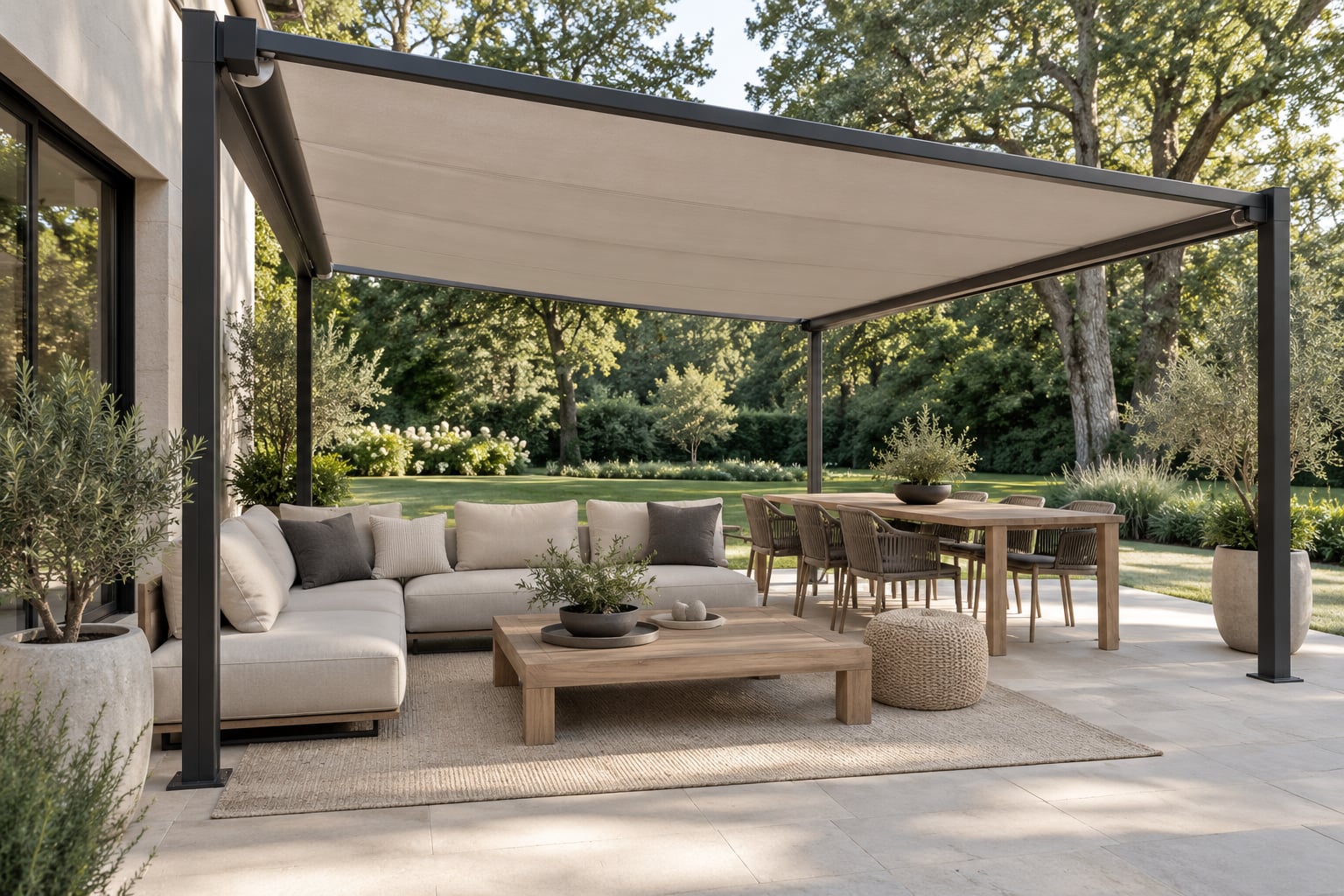
The best outdoor shades for a patio are the ones matched to your sun, your wind and your freedom to build. A wall-mounted retractable awning fits most attached patios, a roll-down solar screen handles wide openings, and a shade sail or cantilever umbrella covers spaces where nothing can be fixed in place. Those are the three questions that decide it: where the sun lands, how hard the wind blows, and whether drilling is an option.
Table of Contents
- Outdoor Shades for a Patio: Quick Guide
- Coverage: partial shade or full shade
- Permanence: fixed, retractable or portable
- Wind performance
- Fabric and operation
- Which Type of Patio Shade Is Best?
- Retractable awnings
- Outdoor roller shades
- Pergolas
- Shade sails and shade cloth
- Cantilever umbrellas, lattice covers and pop-up canopies
- How to Choose Outdoor Shades for a Patio
- What Size Shade Does Your Patio Need?
- How to Choose Shade Fabrics and Materials
- What the openness number actually means
- The main fabric families
- Frames and hardware
- Wind, Rain, and Sun Performance
- Manual, Motorized, or Smart Controls
- Installation and Safety Considerations
- Frequently Asked Questions
- What is the best outdoor shade for a patio?
- Are patio shades waterproof or only water-resistant?
- How much wind can a patio awning withstand?
- What shade is best for a patio in full sun?
- Can I install an outdoor shade if I am renting?
- How do I maintain a retractable patio shade?
- Conclusion
Outdoor Shades for a Patio: Quick Guide
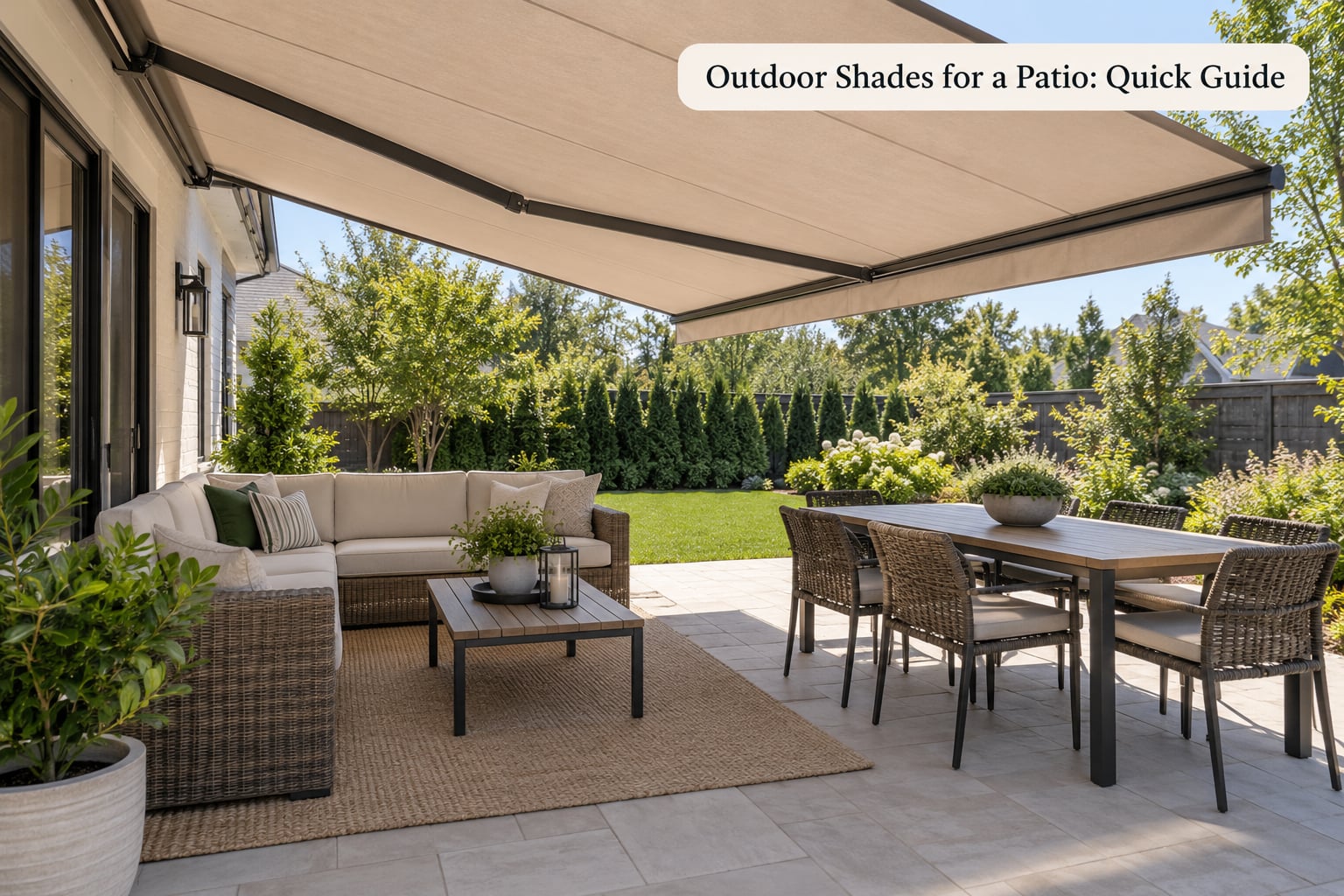
There are about seven shade categories worth knowing, and they differ less in how they look than in how they behave in wind and how much of the sky they actually block. Before you shop, weigh four things.
Coverage: partial shade or full shade
An open lattice pergola or an HDPE sail lets light through in patches and still moves air. A solid roof, a louvered roof or a high-UV-blocking fabric screens out nearly all direct sun. Patchy shade looks softer and cooler in summer; full shade protects furniture and lets you use the space at midday.
Permanence: fixed, retractable or portable
Fixed structures are the most permanent and usually need footings and possibly a permit. Retractable systems fold away into a cassette when you are not using them. Portable products need no tools at all and suit renters or anyone who may move.
Wind performance
Any fabric that catches air is a sail. Manufacturers publish wind thresholds and some retail sensors that retract a shade automatically when gusts pass a set speed. Coastal and open-plain patios need more attention here than anything else.
Fabric and operation
Solution-dyed acrylic and polyester mesh behave differently from vinyl and from woven HDPE cloth, and the operating system changes daily life more people expect. Crank systems work; motorized systems are the ones you stop thinking about.
Which Type of Patio Shade Is Best?
There is no single winner, because each category solves a different problem. The table below sets the seven main options against the criteria that actually separate them, including the drawback nobody sells you on.
| Shade type | Coverage | Permanence | Best for | Main drawback |
|---|---|---|---|---|
| Retractable awning | Full, projecting | Fixed mount, retracts away | Attached patios with a wall or header | Needs a solid header beam to mount to |
| Outdoor roller shade | Full, drops down | Fixed mount | Wide openings, screened rooms, porches | Light bleed and visibility after dark |
| Pergola | Dappled to full | Permanent | Decks and patios you use year-round | A bare lattice gives shade stripes, not shade |
| Shade sail or shade cloth | Partial, filtered | Portable or lightly fixed | Renters, odd shapes, quick wins | Acts like a kite if anchors are light |
| Cantilever umbrella | Full, offset | Portable | Small patios with no wall to use | Must be closed in a gust, no matter where it is |
| Lattice or solid patio cover | Dappled to full | Permanent | Full-year outdoor rooms | Footings, permits and drainage problems |
| Pop-up canopy | Partial | Portable | Temporary shade, events, rentals | Degrades in a couple of seasons |
Retractable awnings
A retractable awning is a wall-mounted fabric canopy on folding arms that extends over the patio and rolls back into a cassette. It is the most popular answer for a rectangular patio attached to a house, because it gives full shade on demand and disappears in winter.
The drawback is the mount. Awnings need a header beam, joist run or other structural member to hang from, not a thin fascia board, and a poor mount is how awnings fail in the first storm. They also must be retracted before high wind, which is exactly the moment nobody remembers.
Outdoor roller shades
An outdoor roller shade is a roll-down solar screen fabric hung on a track, zipper-track or cable-guided edge system outside the opening. It is the answer forum users reach for when an opening is too wide for anything else, because several units can sit side by side.
The drawbacks are honest ones: fabric can wrinkle or bow outward in high heat, coverage stops where the hardware stops, and a light-colored or open-weave screen becomes a lantern after dark with the patio lights on. Replacement fabric is a real cost if it sags.
Pergolas
A pergola is a roofed frame, usually four posts and beams with either open slats, adjustable louvers or a retractable canopy. Does a pergola give shade? A bare open-lattice pergola gives dappled shade only, which many people mistake for a mistake.
Full shade needs louvers you can angle, a canopy that closes, or vines that mature over a few seasons. The other drawback is construction: footings, possible permits and a structure that stays on your patio all year whether you use it or not.
Shade sails and shade cloth
A shade sail is a tensioned fabric triangle or rectangle, usually HDPE mesh, anchored at corners to posts or the house. It is the cheapest way to cover a shape nothing else fits, and it is genuinely renter-friendly with clamped or weighted anchors.
The disadvantage is wind. A sail with light anchors catches air and acts like a kite, which is the most common real-world shade failure people report. Fabric also bags and pools water after rain, and UV degrades HDPE faster than most buyers expect, often in three to seven seasons.
Cantilever umbrellas, lattice covers and pop-up canopies
A cantilever umbrella puts an offset canopy over a table with no central post, which matters on a small patio where a pole would block movement. A lattice cover is a fixed roof structure that filters light while letting air move through; a solid patio cover blocks everything and is the most year-round capable option.
Umbrellas must be closed and tied off before a gust arrives, which makes them a poor fit for an unattended patio. Lattice and solid covers bring footings and drainage to the project, and a solid roof traps heat unless it is vented or high enough above the ceiling.
How to Choose Outdoor Shades for a Patio
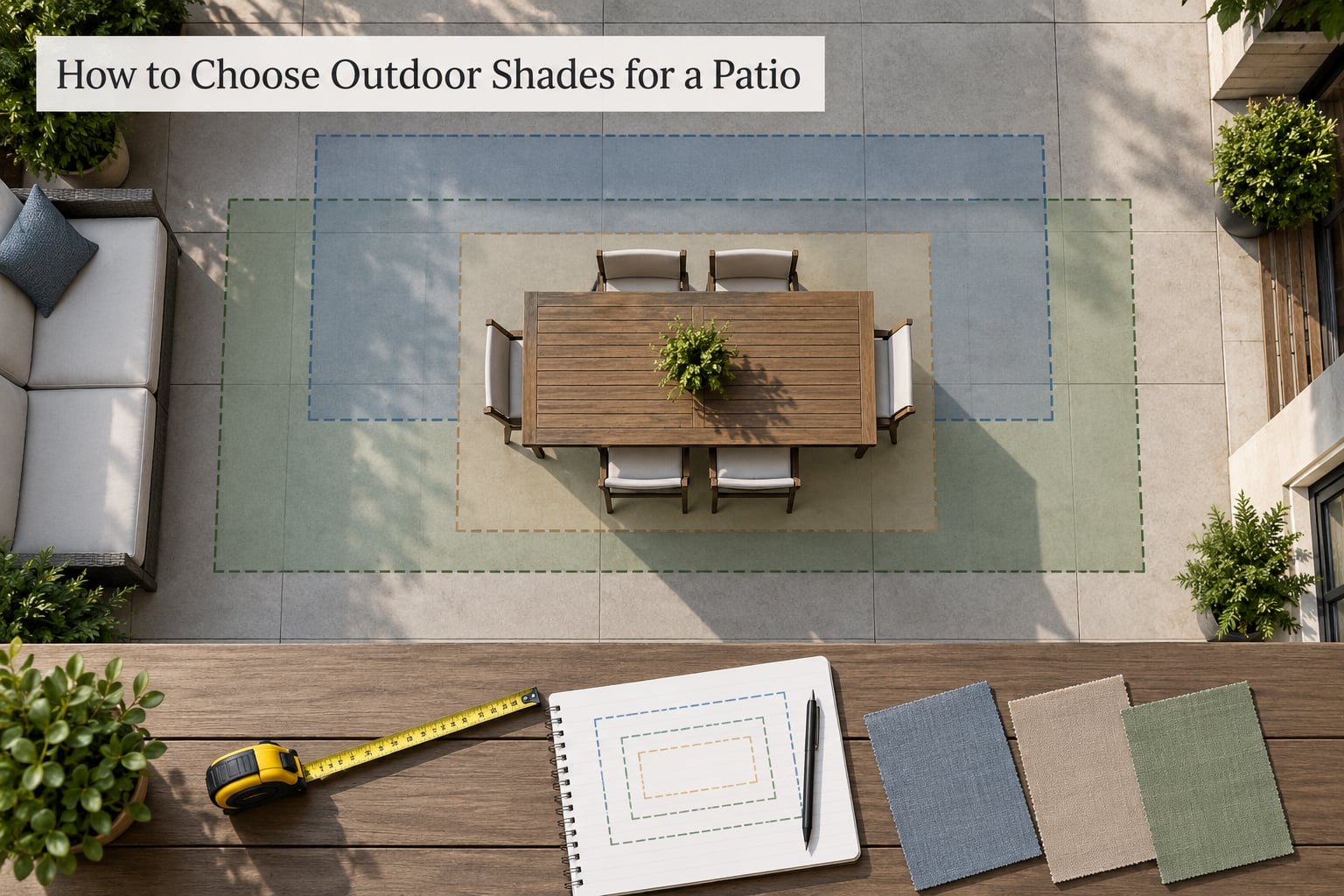
Work through these in order. The early answers eliminate most of the catalog before you get attached to a look.
- Decide what the patio is for. Dining for six, a lounge with two chairs, or an outdoor kitchen changes everything about size and coverage. A cooking zone needs headroom and airflow; a lounge needs wide, low shade in the afternoon.
- Find out when the sun arrives. Note the direction the patio faces and roughly the hours it gets direct light. West-facing patios are hit hardest between midafternoon and sunset, and they are where motorized shades earn their money.
- Measure the opening and the patio. Two measurements matter: the opening you can mount to, and the ground area you want shaded.
- Check the wind. Look at what is downwind. An unobstructed lot, a corner house or a coastal location pushes you toward retractable-and-retract options with wind sensors; a sheltered courtyard handles almost anything.
- Think about drainage. A canopy that slopes away from the house should shed water into a drain or a planted bed, not onto the deck surface or the foundation.
- Match the architecture. A flat-roof modern house and a 1920s bungalow want very different structures. A pale fabric will read as an addition; a dark frame disappears.
- Set your permanence. Fixed to the house, fixed to the ground, or free to take with you when you leave.
- Then look at budget last. Once you know the type, comparing costs within a type is a fair fight. Comparing a pop-up canopy to a motorized pergola is not.
What Size Shade Does Your Patio Need?
Size to the seating you actually have, not to the patio footprint. A common rule of thumb is roughly 12 by 14 feet as a practical minimum for six to eight seated people, and every extra chair needs about 24 inches of clearance around the table.
Measure along two axes and write both down: the width of the area you want covered, and how far out from the wall it should project. Add about two feet of buffer beyond the seating on each side so late-day sun does not rake across the edge of the group. An undersized shade is the most common purchase mistake, and it is not fixed later.
Rectangular and square coverage are not interchangeable. A square shade centered over a round table works well; a long narrow one over a rectangular dining table is what you want. For fabric estimate, multiply width by projection and add roughly 10 percent for folds, hems and tensioning.
How to Choose Shade Fabrics and Materials
Fabric choice is where most of the durability question gets decided, and the vocabulary is confusing because openness percentages get quoted out of context.
What the openness number actually means
Solar screen fabrics are rated by openness: the share of the fabric’s surface that is hole. A 1 to 3 percent openness screen is dark and blocks around 95 to 98 percent of UV, which suits south-facing exposure and furniture you care about. A 90 to 95 percent open HDPE mesh blocks far less, on the order of 80 percent, and trades UV protection for airflow and price.
The main fabric families
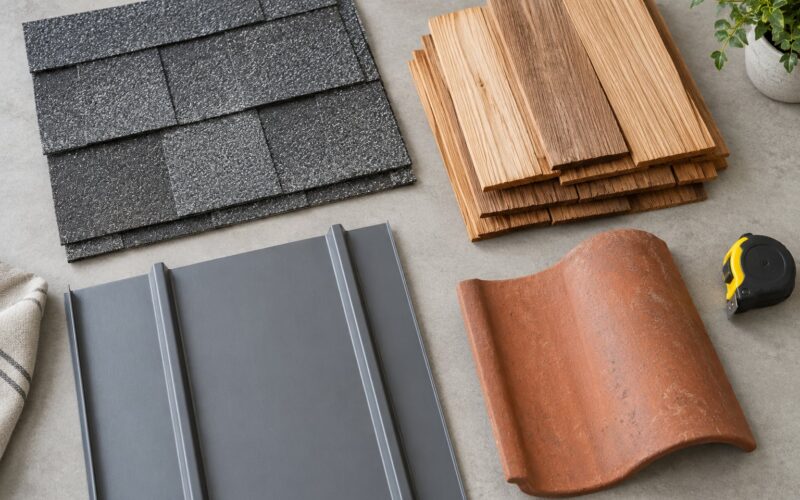
Solution-dyed acrylic holds colour for a decade or more, resists mildew and UV, and handles being wet. Solution-dyed polyester is lighter and cheaper with a shorter colour life. Vinyl and coated fabrics block the most light and shed water but get brittle in cold weather and can tear once creased. HDPE mesh is the lightest and the most vulnerable to UV and wind damage.
Frames and hardware
Powder-coated aluminum outlasts everything here and needs nothing. Cedar looks the best and needs sealing every couple of years, typically giving 10 to 15 years. Vinyl needs no maintenance but goes brittle in hard cold. Expect a fabric service life of three to seven years against twenty to thirty for an aluminum frame.
Wind, Rain, and Sun Performance
These are three separate ratings and shoppers routinely confuse them. UV protection describes how much ultraviolet radiation the fabric blocks. Water resistance describes whether beads roll off. Waterproofing describes whether it can hold standing water, and almost no patio shade fabric is truly waterproof.
Wind tolerance is about geometry more than material. A slack sail, a hanging roller screen with no bottom bar, and an extended awning on a still day all create lift. Flapping is what actually destroys fabric, because UV-degraded material snaps at the folds first.
Most manufacturers publish a wind threshold for extending, often in the region of 20 to 25 mph, and many motorized systems include a sensor that retracts automatically when gusts exceed it. Trust the rating for your specific unit, retract fabric before storms rather than testing it, and give any roof structure enough slope and a drainage path that water never sits in a pocket.
Manual, Motorized, or Smart Controls
Manual systems come in three forms: a hand crank on awnings, a pull chain on roller shades, and a spring-assisted system that rolls the screen back up for you with less effort. They cost less, need no wiring, and are the right choice on a small patio where the shade goes up once a day.
Motorized systems add a tube motor inside the cassette or roller. They matter most where the patio is large, the opening is high, or the shade is used several times a day, which is the pattern forum users describe. Plan for a weatherproof receptacle, a switch or control pad in the right code-compliant location, and an electrician if any wiring is involved.
Smart control is the same motor with an app, a remote, or compatibility with an existing automation system. Homeowners with an installed shade or lighting ecosystem consistently care more about integration than about the motor itself, so check what protocol the unit speaks before buying, not after.
Installation and Safety Considerations
Mounting options define difficulty. Surface-mount plates work on concrete and are quick. Concrete footings are what a pergola needs. Awnings and roller shades mount to a wall, a soffit or a header beam, and only a proper structural member will hold one safely.
Renters and HOA-constrained homeowners are usually excluded from most advice because every ranking page assumes permanent construction. The portable category is real: weight-anchored umbrellas, clamp-mounted sails, tensioned fabric between trees, pop-up canopies, and roll-down screens that hook onto existing railing without a single hole.
Check with your local building department before you build. Many jurisdictions require a permit for a freestanding structure above a threshold around 200 square feet, and almost always for anything attached to the house, plus footings and a code threshold for guardrails and clearances. Structural work, electrical work and anything at height belong with qualified professionals, and the manufacturer’s instructions are the specification you install against.
Frequently Asked Questions
What is the best outdoor shade for a patio?
It depends on your sun and your freedom to build. A wall-mounted retractable awning suits most patios attached to a house, a roll-down outdoor roller shade handles wide openings and screened rooms, and a pergola suits decks you use year-round. Renters and anyone without a wall to mount to should look at shade sails, cantilever umbrellas or railing-mounted screens. Match the type to the hours of direct sun before you match it to a style.
Are patio shades waterproof or only water-resistant?
Almost all patio shade fabrics are water-resistant, not waterproof. Solution-dyed acrylic and polyester bead water and dry quickly, and a canopy pitched at a slope will shed rain into a drain or planting bed. Vinyl blocks more but becomes brittle in cold weather. Standing water on a slack sail or a flat roller shade bags the fabric, so pitch and drainage matter more than any waterproof claim.
How much wind can a patio awning withstand?
Manufacturers usually publish a wind threshold around 20 to 25 mph for extending an awning, and the number falls once the fabric has been out for a few seasons. Wind ratings describe extension, not survival, so retract fabric before storms rather than testing it. Motorized units with a wind sensor retract automatically when gusts pass the set speed. In exposed coastal or open-plain locations, treat wind as the deciding specification, not the colour.
What shade is best for a patio in full sun?
Full sun calls for high UV blocking rather than dappled light. A low-openness solar screen fabric rated around 1 to 3 percent openness blocks roughly 95 to 98 percent of UV and is the strongest option for furniture and flooring protection. A louvered or retractable-canopy pergola performs similarly across a larger footprint. Open HDPE mesh blocks far less, closer to 80 percent, and works best where airflow matters more than UV protection.
Can I install an outdoor shade if I am renting?
Yes, if the shade needs no holes. Weight-anchored cantilever umbrellas, pop-up canopies, shade sails clamped to existing railing or posts, and tensioned fabric between trees all come down without damage. A deck umbrella with a base, or a clamp-mounted sail on a handrail, covers most renter situations within an afternoon. Anything that needs a wall anchor, a footing or a header beam will cost you a deposit unless your landlord agrees in writing.
How do I maintain a retractable patio shade?
Clean the fabric a couple of times a season with mild soap and a soft brush or a low-pressure hose, then let it dry fully before rolling it back in. Rinse the arms and the cassette, and check the mounting bolts each spring. Never fold or roll damp fabric, since mildew sets into the crease and stains become permanent. Retract before wind rather than leaving it out, and clear debris off the fabric after storms.
Conclusion
Measure the patio before you fall for anything. Write down the width you want covered, the projection you need, the hours of direct sun, and whether drilling is allowed, and that short list will eliminate half the options on its own.
Then compare one permanent choice against one portable or retractable choice on the same three criteria: wind, fabric UV rating, and mounting. Most people end up with a retractable system on an attached patio and a sail or umbrella for a second space, and stop shopping.