Most fabric Roman shades clean fine at home: check the care label, vacuum the folds while the shade hangs, blot stains with a cloth dampened in lukewarm water and a mild detergent, and only wet clean the whole shade if the label says it is washable. The whole job takes 20 to 40 minutes and the risk is low as long as you skip hot water and never soak.
The reason people get stuck is that shades are usually installed high, sometimes outside a deep recess, and the lift cord makes them feel permanently attached. You do not need to take them down for a routine clean.
Table of Contents
- What You Need
- Step-by-Step: How to Clean Fabric Roman Shades Without Shrinking Them
- How to Clean Fabric Roman Shades Without Removing Them
- Vacuum the Shade Gently
- Spot-Clean Stains Without Soaking the Fabric
- Use Wet Cleaning Only When the Label Allows It
- Dry and Reshape the Shade
- Common Mistakes That Shrink or Ruin Fabric Roman Shades
- Frequently Asked Questions
- Can you machine wash fabric Roman shades?
- What does cleaning code S mean on Roman shades?
- How do you remove water stains from fabric Roman shades?
- Will cleaning a Roman shade cause it to shrink?
- How long does a damp Roman shade take to dry?
- Should delicate or lined Roman shades be professionally cleaned?
- Conclusion
What You Need
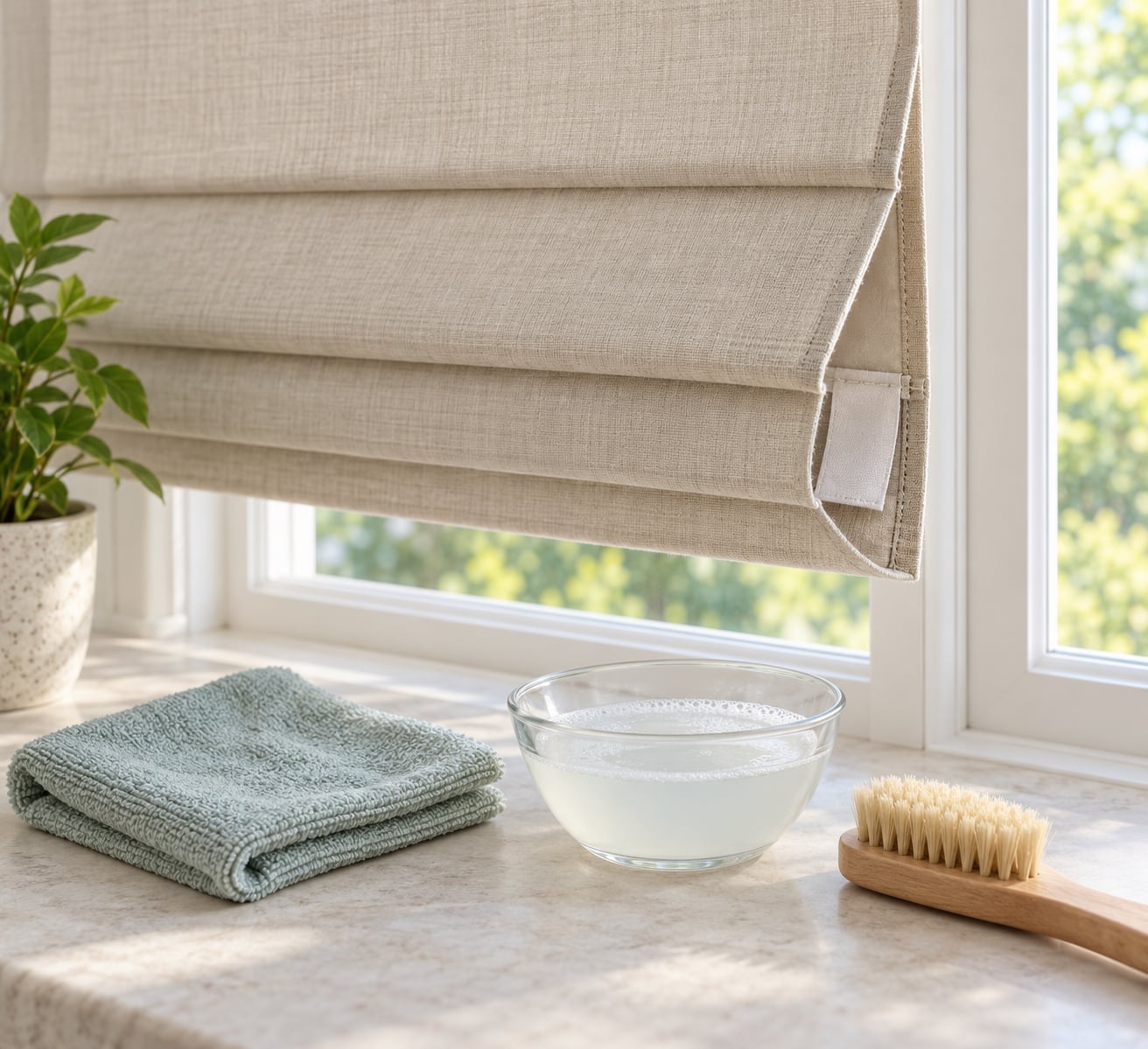
Gather everything before you lower the shade, because you will not want to climb back up with a wet cloth in your hand.
- The care label, usually stitched into the top hem or printed on the headrail
- An upholstery or soft brush attachment for your vacuum, or a lint roller for pet hair
- Mild detergent, roughly one teaspoon per cup of lukewarm water
- Two clean microfiber cloths or a couple of plain white cotton towels
- A soft-bristled brush for working dust out of the folds
- A small bowl and a spray bottle for mixing and transporting solution
- Optional: white vinegar for odors and mildew, cornstarch for grease, and a mesh laundry bag if the label permits machine washing
Two rules travel with everything else. Use lukewarm or cool water, never hot, because heat plus agitation is what makes natural fibers shrink. And keep cleaning solution off the window glass, since it can strip the coating and leave you with a frame of clean shade around a spotless-looking streak.
Step-by-Step: How to Clean Fabric Roman Shades Without Shrinking Them
How to Clean Fabric Roman Shades Without Removing Them
The cleaning code on the label decides everything, and it takes 20 seconds to read. Code W means water-based cleaning is fine. Code S means a solvent or dry-cleaning product only, no water at all. Code V asks for vacuuming and light dry cleaning. Code X means professional cleaning, hands off. If the label is missing, assume the most conservative option, which is vacuum and spot cleaning, and never run a burn test on a shade hanging over your floor.
For codes W and V, spot test first. Dampen a white cloth, dab it in the exact solution you plan to use, and press it into the least visible corner of the shade for about a minute. If color transfers to the cloth, stop and move to dry methods. If nothing happens, go ahead.
Support the fabric with one hand while you work. Roman shades are top-heavy when lowered, and the weight of a wet cloth on one fold can stretch the seam or pull the rings out of the headrail.
Vacuum the Shade Gently
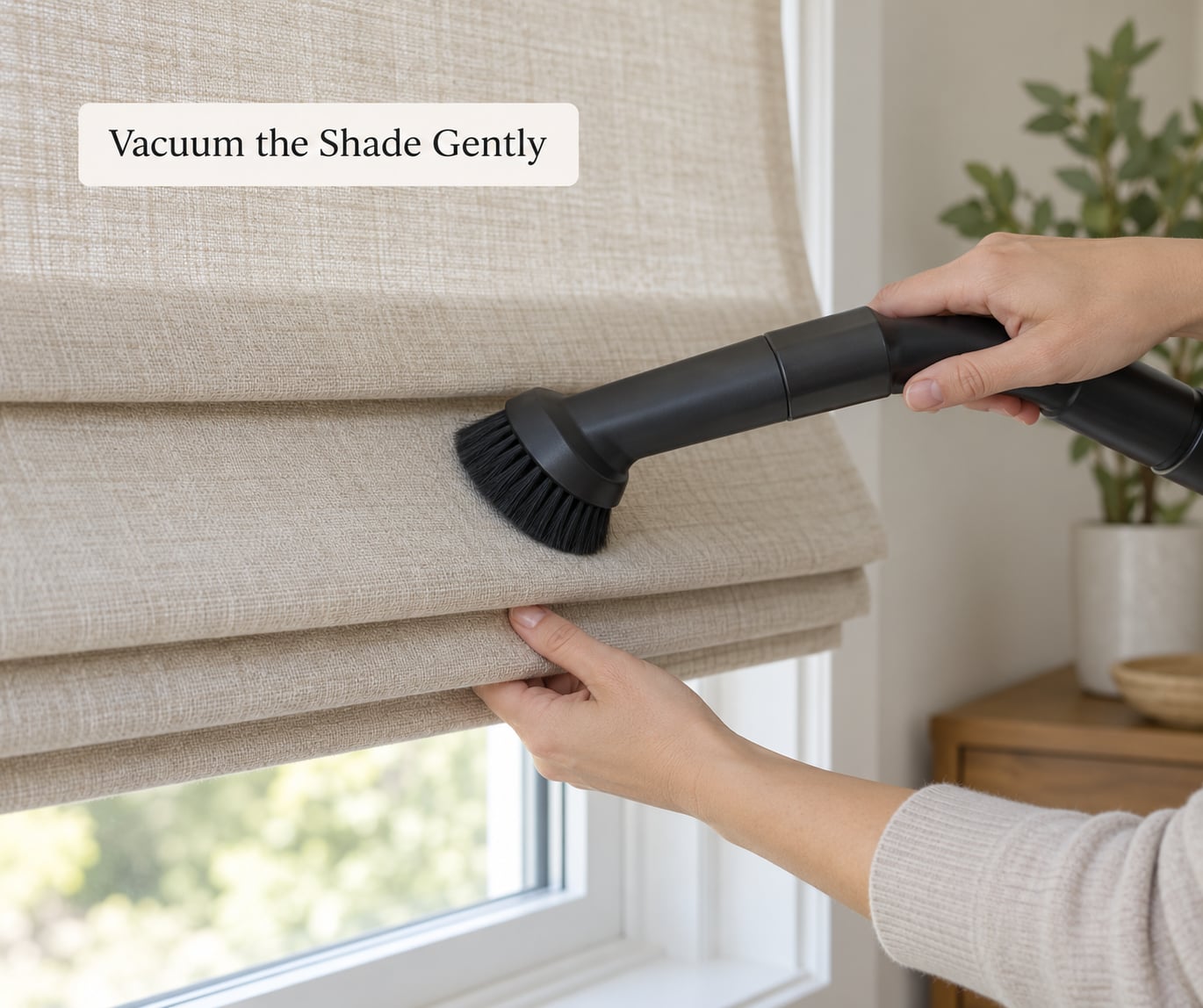
Vacuuming is the right first move and it solves more problems than people expect, even though plenty of people report that vacuuming does nothing. That usually comes down to three things: the wrong attachment, too much suction, or a single pass.
Run the hose at the lowest suction setting your machine has, fit the soft upholstery or brush head, and hold it a couple inches off the fabric. Work from the top hem downward in short overlapping strokes so you are not dragging dirt down the panel. Go back over each area a second time at the same setting; the first pass loosens what is bound to the fibers and the second pass actually picks it up.
Pay attention to where dust hides. The inside of each fold, the side edges, and the bottom hem collect far more than the flat face. For pet hair, run a lint roller over the folds first so the hair is on the surface instead of wrapped around the brush.
On silk or viscose, skip the vacuum entirely and use a cool-setting hairdryer held at least 12 inches away, or a soft brush used by hand. Those fibers can snag and fuzz when you pull a machine across them.
Spot-Clean Stains Without Soaking the Fabric
Blot, never rub. Rubbing pushes the stain deeper into the fibers and leaves you with a bleached halo around a still-dirty center.
Mix one teaspoon of mild detergent into a cup of lukewarm water and stir it until it disappears. Dip a clean cloth in the solution and wring it out until it only drips. Press it against the outside edge of the stain and work inward about an inch at a time, changing to a clean section of the cloth often so you are not lifting the soil and putting it right back.
Repeat until the cloth comes away clean. Then blot with a second cloth dipped in plain lukewarm water to pull the detergent out, and blot with a dry cloth to remove moisture. Do not rinse by pouring water onto the panel.
Three ingredients cover most of what shows up on fabric shades. Equal parts white vinegar and lukewarm water handles musty odors, pet accidents, and light mildew. Plain cornstarch or talc, left on grease for 15 to 30 minutes and brushed off, absorbs fresh cooking splatter before it sets. A cloth barely dampened with isopropyl alcohol takes ink off, but only on cotton and polyester, never on rayon or viscose, which dissolve rather than clean.
Use Wet Cleaning Only When the Label Allows It
There are three wet methods, and they are not interchangeable. A sponge wipe with the detergent solution above suits most code W shades and keeps the water where you put it. A low-moisture extraction method, where you spray a small section and blot it back out within a minute, works on larger panels that a sponge will not cover evenly. Full immersion in a tub or washing machine is only for shades whose label explicitly permits machine washing.
If the label allows machine washing, take the shade down by releasing the rings or hooks from the headrail one at a time while noting their order. Leave the lift cord, cord lock, and any battens in place if they are not detachable. Put the shade in a mesh laundry bag, use cold water on a gentle cycle with mild detergent, then take it out and lay it flat or hang it fully extended to dry. Never put a shade in the dryer unless the label allows it, since heat and tumbling cause the shrinkage people are trying to avoid.
Send silk, viscose, anything lined or blackout, and any motorized shade to a drapery specialist. Interlined and bonded shades can delaminate when soaked, and water near a motor housing is a bad trade for the cleaning you were after. A professional can also take the shade down, clean it, and rehang it, which removes the part people find most intimidating.
Dry and Reshape the Shade
Press dry cloths into the damp areas to pull out the water, then let the shade air-dry fully lowered and away from direct sun or any heat source. Drying high and flat is what causes puckering, so keep it extended the whole time.
Once it is dry, run your hand down each fold and reshape it. Check for stiffness or a faint water line, and treat any remaining mark by blotting the whole damp area evenly rather than re-cleaning the stain spot alone. Reinstall only when the shade is completely dry, then run the lift cord through a full up and down cycle to confirm the rings ride the track and the folds stack cleanly.
Common Mistakes That Shrink or Ruin Fabric Roman Shades
Almost every ruined shade I have seen trace back to one of these.
- Using hot water. Heat lets natural fibers relax, then contract as they dry. Fix: lukewarm or cool water every time, and rinse with the same temperature you washed with.
- Soaking the panel. Water migrates along the fabric and pools in the hem and the fold pockets. Fix: work with damp cloths, not a running tap.
- Scrubbing in circles. That is how fuzzing, bald spots, and permanent light patches happen. Fix: short blots, straight strokes, change cloths often.
- Ignoring the care label. Solvent codes get water damage and natural fibers get stiffened by the wrong cleaner. Fix: read the code before you mix anything.
- Drying in direct sun. West-facing windows bleach fabric while it is wet, and the fade shows up unevenly. Fix: dry indoors, out of direct light.
- Rehanging a damp shade. Trapped moisture in the folds leads to mildew and rust at the rings. Fix: full dry time first, no exceptions.
- Spraying glass cleaner on the window and wiping downward onto the shade. Solvents streak the fabric and can bleach it. Fix: clean the glass separately with the shade protected.
The bathtub soak with dish soap and bleach that circulates for hard vinyl blinds is worth ruling out for fabric. That combination is fine for plastic slats and harsh on fabric faces, blackout linings, and any motorized hardware.
A few habits prevent most of the above. Run the vacuum every month, and do a quick lint roller pass in homes with pets or seasonal allergies. Wipe cooking splatter while it is fresh. And when the label is unreadable, start with vacuum and dry methods, which cannot shrink anything.
Frequently Asked Questions
Can you machine wash fabric Roman shades?
Only when the care label says so, which is uncommon on pre-made shades. If it is permitted, remove the rings or hooks in order, leave the cord lock and battens attached, place the shade in a mesh laundry bag, and use cold water on a gentle cycle with mild detergent. Lay it flat or hang it fully extended to dry, and skip the dryer unless the label specifically allows it. Any shade that is lined, blackout, silk, or motorized belongs with a drapery specialist.
What does cleaning code S mean on Roman shades?
Code S means the fabric can only be cleaned with a dry solvent or taken to a dry cleaner, and water is not allowed. Solvent-based cleaning lifts dust and light grease without introducing moisture into the fibers, which is why it suits materials like rayon, acetate, and silk blends. If your shade carries an S code, skip sponges, wet cloths, steam, and any wet extraction method. Vacuuming and gentle dry brushing are still safe maintenance.
How do you remove water stains from fabric Roman shades?
Water rings form when a damp patch dries faster or darker than the surrounding fabric. Work on the whole area rather than the mark itself. Dampen a clean white cloth with plain lukewarm water and press it across the entire sunlit panel, feathering outward from the center until the wetness is even. Blot dry, let the shade dry fully lowered and out of direct sun, then check again. Repeating the even dampening is usually enough on polyester; silk and viscose may need a professional.
Will cleaning a Roman shade cause it to shrink?
Not if you avoid heat and agitation. Shrinkage in natural fibers such as cotton, linen, rayon, and viscose comes from hot water, soaking, dryer heat, and scrubbing. Polyester and polyester blends barely shrink at all. Wet cleaning is what causes the problems that look like shrinking but are not: puckered seams, stiffened fabric from detergent left in, and delamination where a bonded blackout backing separates from the face fabric. Stick to lukewarm water, blot rather than rub, and air-dry extended.
How long does a damp Roman shade take to dry?
A spot-cleaned shade usually dries in two to four hours in a well-ventilated room. A fully washed shade needs 12 to 24 hours laid flat or hanging fully extended. Keep it lowered the entire time so the weight of the fabric can flatten the folds naturally, and stay away from radiators, vents, and direct sun, all of which dry the top of a fold before the bottom and leave puckers. If you can still feel coolness in the hem the next morning, it is not dry enough to rehang.
Should delicate or lined Roman shades be professionally cleaned?
Yes, for silk, viscose, anything interlined or bonded, and any motorized shade. Water can delaminate a blackout or thermal backing and leave the face fabric puffy, and no amount of careful blotting fully removes the detergent residue that stiffens a lined shade. A drapery specialist can also handle the take-down and rehang, which is the step most people avoid. Ask for a fabric-safe solvent process, whether the take-down and rehang is included, and what happens if the shade shrinks during cleaning.
Conclusion
Start with the care label, because it decides the whole method. Vacuum the folds at low suction with a soft attachment while the shade hangs, then use the gentlest approved method on any stain: a cloth dampened with mild detergent and lukewarm water, applied to the cloth rather than the shade. Let the shade dry completely out of direct sun, reshape the folds, and only then rehang it.