To reduce water usage at home, start by measuring what you already use, then fix leaks, swap in low-flow fixtures, and change the handful of daily habits that quietly waste gallons. Most households can cut roughly 20 to 30 percent in the first year, and the work takes a weekend rather than a renovation. The whole job runs about two hours of active effort plus 30 days of meter reading to prove it worked.
Why bother? The average US household burns through around 300 gallons a day, leaks alone account for about 10,000 gallons a year, and heating water can represent roughly a quarter of a home’s electricity use. Cutting water cuts the water bill and the energy bill at the same time.
The order below matters. Fixing an unknown leak before buying fixtures is the difference between guessing and knowing, and it is the step homeowners on plumbing forums credit with the biggest single saving.
Table of Contents
- What You Need
- Step-by-Step: How to Reduce Water Usage at Home
- 1. Measure Your Current Water Use
- 2. Find and Fix Leaks
- 3. Install Water-Saving Fixtures
- 4. Change Everyday Water Habits
- 5. Reduce Water Heating and Appliance Waste
- 6. Track Results and Prevent New Waste
- How to Reduce Water Usage at Home: 30-Day Plan
- Common Mistakes
- Frequently Asked Questions
- Can a leaking toilet cause a high water bill?
- Why is my water bill high when I cannot find a leak?
- What uses up the most water in a house?
- Do low-flow showerheads work if the water pressure feels low?
- What is the average water usage for a two-person household?
- Is it legal to collect rainwater in a rain barrel?
- Start With the Meter and the Toilet
What You Need
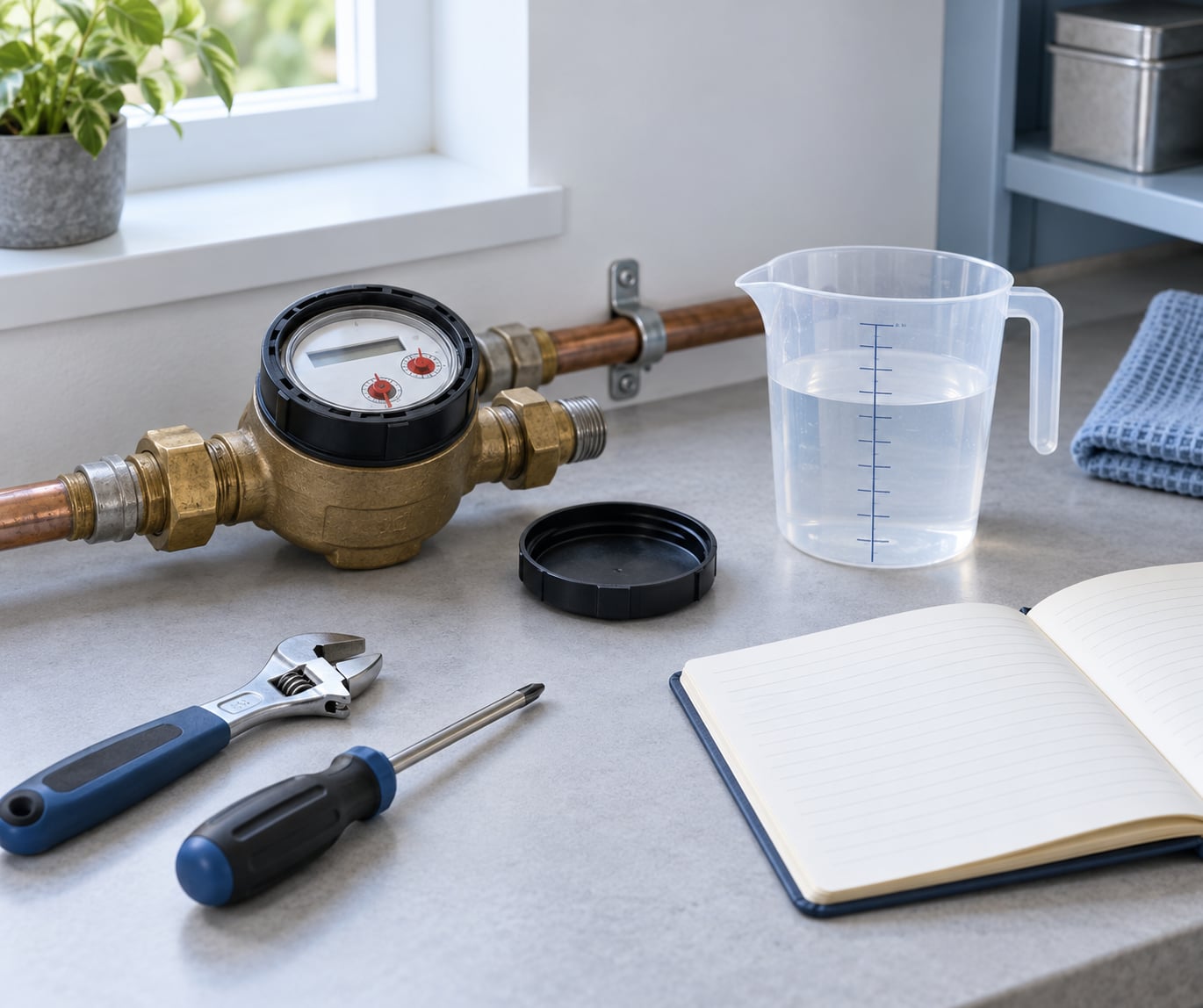
None of this needs a plumber on day one. You need a way to read your meter, a container that holds a known volume, and about ten minutes of quiet.
- Access to the water meter. Usually in the front yard box, sometimes in a basement or garage. Find it before you need it.
- A measuring container. A wide-mouth jar or a gallon jug marked with a permanent marker at known levels lets you count faucet and shower output.
- Food coloring or leak dye tablets. A few dollars for a box of dye tablets is enough to test every toilet in the house.
- A paper towel and a notebook. Meter numbers do not remember themselves, and you will want a baseline.
- An adjustable wrench and a flat screwdriver. For aerators and showerheads you can replace yourself.
- Your last two water bills. They show whether usage is rising and whether you pay per gallon or in tiered blocks.
- Appliance paperwork. The manual for your dishwasher and washing machine tells you the water-saving settings and cycles you are probably not using.
Renter note: everything in this list is fine in an apartment. Replacing a fixture permanently is not, so aim for removable upgrades, report leaks to the landlord in writing, and keep a photo record of anything you touch.
Step-by-Step: How to Reduce Water Usage at Home
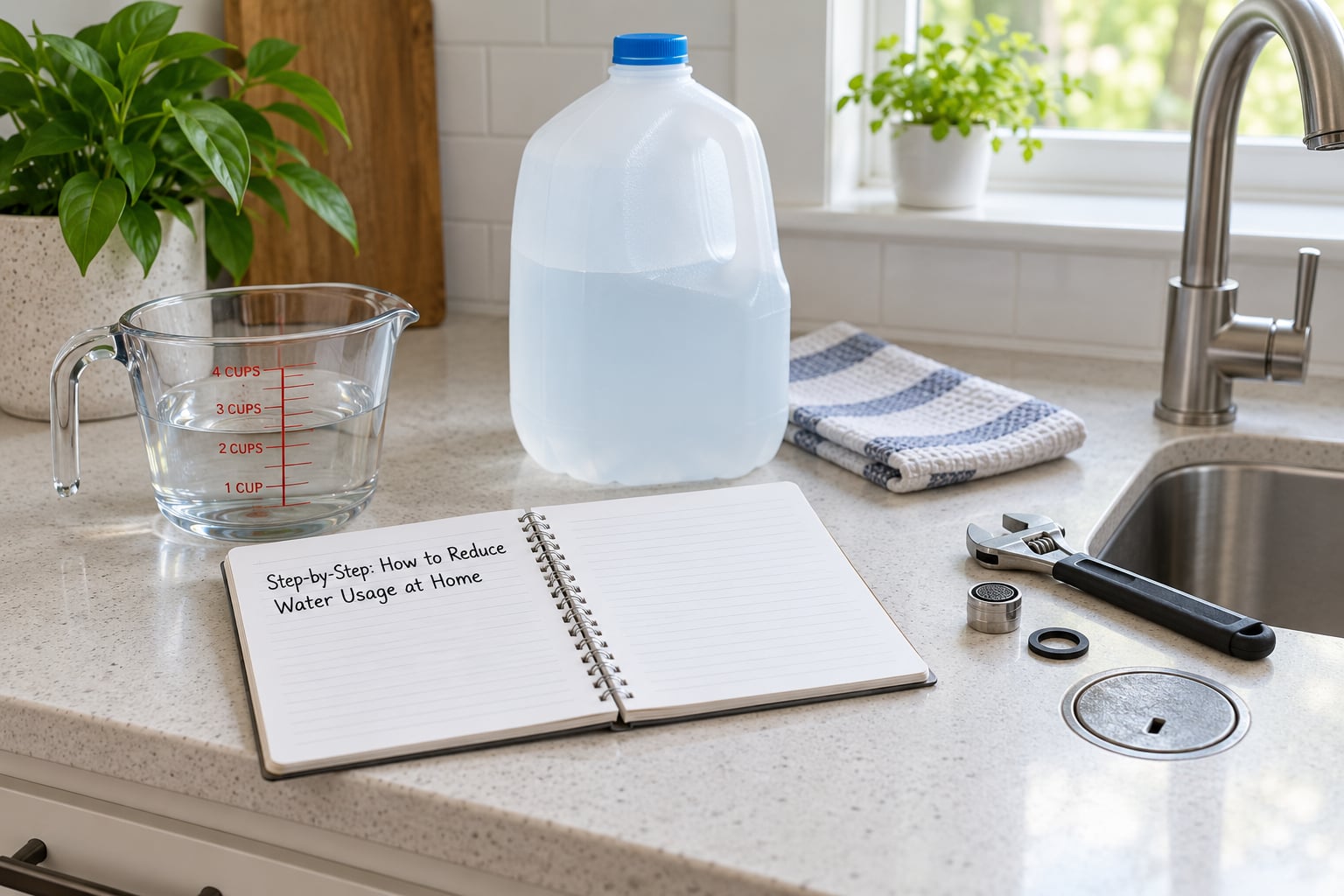
The six steps below run in the order that produces results fastest. Measure first, hunt leaks second, upgrade third, adjust habits fourth, trim appliance waste fifth, and verify last. Most people discover their biggest problem in step two, before spending anything at all.
1. Measure Your Current Water Use
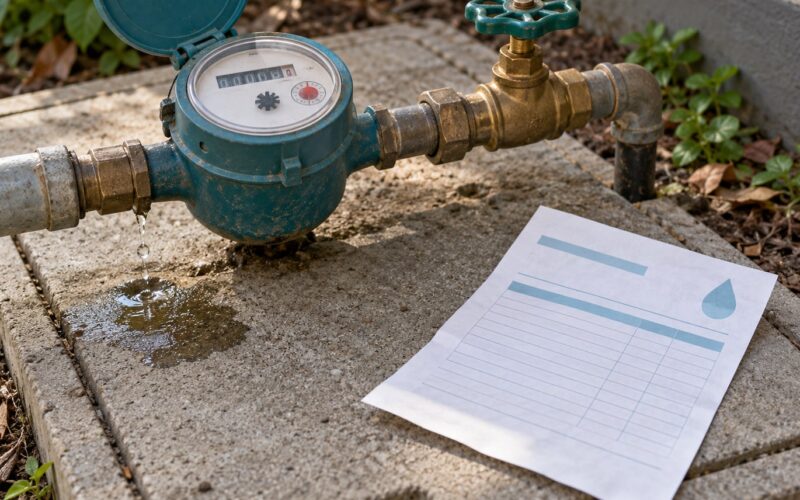
Your water meter is the only honest baseline. Find the dial or rectangular odometer showing total gallons used, read it, and write down every digit including the small red or black place counter. The small counter matters because the big dial turns slowly.
Now work out a daily figure. If your meter reads in cubic feet rather than gallons, one cubic foot equals 7.48 gallons. Divide total gallons used by days in the period to get a daily number you can compare month to month.
Next, measure the fixtures. Fill your marked container for ten seconds and multiply. Ten seconds at 2.5 gallons per minute is roughly 0.4 gallons, which tells you a five-minute shower is about 12 gallons and a ten-minute one is closer to 25.
| Fixture | Typical wasteful use | Water-wise target |
|---|---|---|
| Shower (5 min) | 20 to 25 gallons | 10 gallons at 2.0 gpm |
| Toilet flush | 3.5 to 6 gallons per flush | 1.28 gallons per flush |
| Faucet, 2 minutes | 3 to 5 gallons | 1.5 gallons at 1.5 gpm |
| Washing machine, top load | 23 gallons per load | 13 gallons per load |
| Dishwasher | Pre-rinse plus partial load | 3 to 5 gallons on a full load |
| Hose, 10 minutes | 100 gallons or more | Sweep instead |
You now have a number to beat. Write it down with the date.
2. Find and Fix Leaks
Leak hunting is the highest-value step and the cheapest. On plumbing forums, the fix that people mention most often is a toilet that refills or runs without anyone touching it.
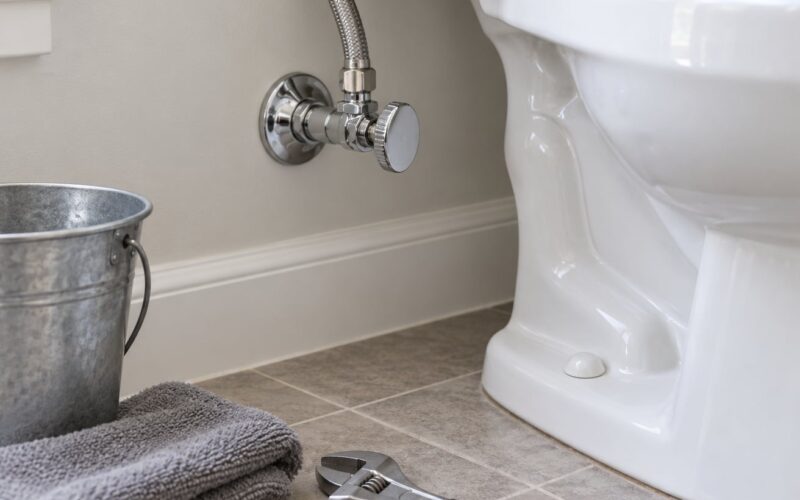
To test a toilet, drop a dye tablet or a few drops of food coloring into the tank, wait ten minutes, and look at the bowl. Color in the bowl with no flush means a leak. Check the tank-to-bowl gasket and the flapper first, since those are cheap parts, and call a licensed plumber if the fill valve or the flush valve assembly is the culprit.
For faucets, look underneath the cabinet and along the cabinet floor for staining or a damp floor. A dripping faucet at one drip per second wastes more than 3,000 gallons a year, which is why it is worth a wrench and ten minutes.
The meter test catches everything the eye misses. Turn every faucet and fixture off, then read the meter. Wait two hours and read it again. Any change in that window means water is moving somewhere you have not found, and it is most often a toilet, an irrigation line, or a water heater relief valve.
Shut off the main valve before repairing anything, and stop there if the fix involves cutting into a wall, moving a drain line, or touching anything electrical. Licensed pros handle that, and so does your home’s insurance expectations.
3. Install Water-Saving Fixtures
Most homes run fixtures built decades before current efficiency standards. That is the opportunity, and swapping to WaterSense-certified models is the single largest permanent reduction available to you.
Aerators are the cheapest upgrade and the best value. A faucet aerator screws onto the existing spout and cuts bathroom and kitchen faucet flow to 1.5 gallons per minute or less. Remove the old aerator with a wrench, wrap the threads in plumber’s tape, and hand-tighten the new one.
Showerheads are next. Swapping a 2.5 gpm head for a WaterSense model rated at 2.0 gpm or less saves several thousand gallons a year and most are a hand screw-on, though you may need a plumber to remove an old screw-on head that has seized in place.
Toilets are the biggest indoor user and the biggest decision. A 1970s home may have 3.5 to 6 gallon-per-flush toilets while a WaterSense toilet uses 1.28 gallons per flush. Replacing one saves several thousand gallons a person per year, but this is a plumbing job, so price a licensed plumber unless you have done it before.
If you rent, the renter-friendly version is a dual-flush retrofit kit or a toilet tank displacement device. Confirm nothing interferes with the flapper before you install it, and never put a weight in the tank that could shift and crack porcelain.
4. Change Everyday Water Habits
Fixture efficiency only sets a ceiling. What you do decides how close you get to it, and these are the changes that cost nothing.
- Turn off the tap while you lather, shave, and brush. Two minutes of brushing at 1.5 gpm is about 3 gallons.
- Keep showers to five minutes with a timer on your phone.
- Fill a kettle only as much as you need rather than to the max line.
- Wash dishes in a filled bowl instead of under running water, and put the dishwasher on only when it is full.
- Skip the pre-rinse. Modern detergents do not need it, and the rinse cycle is often the largest single use inside a dishwasher.
- Keep a covered pitcher of cold water in the fridge for drinking instead of running the tap until it chills.
- Sweep driveways, steps, and siding instead of hosing them, and wash cars at a facility that recycles water.
- Water plants early in the morning, deeply and less often, and mulch beds to hold moisture between visits.
The garden habit worth changing most is schedule-based watering. A rain sensor or a simple timer set to water at dawn beats an oscillating schedule running at noon, and in dry regions outdoor use can be around half of everything a household pulls.
5. Reduce Water Heating and Appliance Waste
Hot water is the expensive half of the bill because energy goes into it. Shorter showers and lower hot-water faucet flow cut that cost immediately, since every gallon you stop using never has to be heated.
Insulate the first several feet of hot water pipe running out of the heater. It costs less than a pizza, reduces the water wasted while waiting for hot water at the tap, and cuts standby losses around the tank in an unheated garage or basement. Follow the manufacturer’s instructions for any tank or tankless heater and never alter gas, electrical, or venting connections yourself.
For laundry, run full loads only and pick the right load size setting so the machine does not fill the drum for three towels. Front loaders generally use less water than top loaders, and ENERGY STAR claims about a third less water per cycle for certified machines. Clean the lint filter on every cycle; a clogged one forces the machine to run a second rinse.
Point the dishwasher at its eco cycle, use the right detergent amount for the load size, and check the filter every month or two. Dishwashers more than a couple of decades old can waste far more water per cycle than current models, so if yours is due for replacement, factor the water and energy difference into the decision rather than the sticker.
6. Track Results and Prevent New Waste
Numbers are what convince a household that the work paid off, so measure again instead of guessing from the next bill alone.
Repeat the meter test on the same schedule you used for the baseline. Read the meter at the start of a month and again 30 days later, record both in the same notebook, and divide by 30 for a comparable daily figure. A 15 percent drop on a 300-gallon-a-day household is a real, measurable 45 gallons a day.
Then run the meter test one more time with everything off, for the same two hours. If the meter still creeps, you have a hidden leak and that is where your next dollar goes, not on new fixtures.
Set two habits that keep the savings in place: a monthly meter reading in your calendar, and a written note of the baseline number so the family can see the difference. If your utility offers free shower timers, leak dye tablets, or faucet aerators through a water conservation program, take them.
How to Reduce Water Usage at Home: 30-Day Plan
If you want the sequence in one place, this is the order that works. It is the same six-step process above, spread over a month so nothing gets skipped.
- Days 1 to 3: Find the meter, record a full reading, write your daily average in the notebook.
- Days 4 to 7: Dye-test every toilet, check under every sink cabinet, run the two-hour meter test.
- Days 8 to 12: Fix the dripping faucet, replace the showerhead, fit aerators.
- Days 13 to 18: Reset shower and brushing habits, switch the dishwasher to full loads only, cut pre-rinsing.
- Days 19 to 24: Adjust the irrigation schedule, mulch beds, sweep instead of hose.
- Days 25 to 28: Set laundry load sizes, run the eco cycle, clean the lint filter.
- Day 30: Read the meter again, divide by 30, and compare with day one.
Common Mistakes
Most failed water-saving attempts come down to six predictable errors, and each has a simple correction.
Ignoring a slow drip. A faucet dripping once a second wastes more than 3,000 gallons a year, and a leaking toilet can run into the tens of thousands. Fix: dye-test every toilet monthly and treat any drip as a same-week job, not a someday job.
Shortening showers without changing the fixture. Cutting five minutes off a 2.5 gpm head saves water, but replacing the head saves more and does not require willpower every morning. Fix: do both, and start with the fixture.
Watering on a fixed schedule. Timers keep running in the rain and during a wet week, which is where a big share of outdoor waste comes from. Fix: add a rain sensor, or move to fewer, deeper waterings early in the day.
Pre-rinsing dishes. That rinse cycle can be the biggest water user inside the dishwasher. Fix: skip the pre-rinse, use the eco cycle, and only run it when the racks are full.
Overloading detergent with full loads. Excess suds force an extra rinse, which is a whole extra cycle of water. Fix: measure detergent to the load and the hardness of your water, and use the machine’s load-size setting.
Doing plumbing or gas work that is not safe as a DIY job. Cutting supply lines, replacing a toilet, adding a shutoff in a wall, or touching a water heater connection all carry real consequences if they go wrong. Fix: keep to aerators, showerheads, and leaks you can reach safely, and hand the rest to a licensed plumber.
One more common objection deserves a straight answer: low-flow fixtures feeling weak. A 1.5 gpm aerator will feel different from an unrestricted faucet, but the flow is measured at a standard pressure, and a WaterSense showerhead is designed so most people do not notice a difference. If yours feels noticeably thin, the pressure may be a house-supply issue rather than a bad fixture.
Frequently Asked Questions
Can a leaking toilet cause a high water bill?
Yes, and it is usually the single largest source of hidden waste in a home. A toilet with a worn flapper can cycle continuously or refill after every flush without anyone noticing, and a damaged tank-to-bowl gasket can leak into the bowl all day. Put a dye tablet in the tank and wait ten minutes; color in the bowl without a flush means a leak. Fixing it is the first step most plumbing forums recommend.
Why is my water bill high when I cannot find a leak?
Start with the meter test: turn off every fixture, read the meter, wait two hours, and read it again. Any movement means water is flowing somewhere invisible. Common culprits are irrigation supply lines, a water heater relief valve, a pressurized toilet tank, and outdoor hose bibs. Also compare your daily average across three months, since seasonal yard watering or a guest stay can raise a bill without any defect at all.
What uses up the most water in a house?
Toilets are typically the largest indoor user at about 30 percent of household indoor use, followed by showers at roughly 17 percent and laundry at 15 to 40 percent depending on the machine. Outdoors, irrigation can account for around a third of total use and closer to half in dry regions. That is why fixture and irrigation fixes usually deliver more savings than habit changes alone.
Do low-flow showerheads work if the water pressure feels low?
They do, and the reason they can feel thin is usually the house supply, not the showerhead. A WaterSense showerhead is rated at 2.0 gallons per minute or less under standard pressure, and most households notice little difference. If every fixture in the home runs weakly, check the main shutoff valve is fully open and look for old galvanized supply lines or a partly closed valve before blaming the new head.
What is the average water usage for a two-person household?
The widely cited national average is around 300 gallons per person per day, so a two-person household typically uses about 600 gallons a day, or roughly 18,000 gallons a month. Apartments and water-efficient fixtures sit below that, while large lots with lawns and older homes sit well above it. Your own meter reading beats any average, which is why the first step is measuring your baseline.
Is it legal to collect rainwater in a rain barrel?
In most US states it is legal, but rules vary. Check your city or county code and your homeowners association, since some areas limit volume or restrict diversion during declared drought stages. Always use a screened mesh cover to keep mosquitoes out, and avoid using collected rainwater on edible crops if you are unsure what is on your roof. It is a good backup source for the garden, not a replacement for treated water.
Start With the Meter and the Toilet
If you do only two things this week, do these. Read the water meter and record a full number with today’s date, then dye-test every toilet in the house and fix anything that shows color without a flush.
That combination costs almost nothing and tells you whether you have a hidden loss before you spend money on fixtures. If the meter keeps moving with everything turned off, you have found the problem that explains the bill, and that is a job for a licensed plumber rather than another weekend project.
Thirty days later, read the meter again and divide by 30. That one number is the honest answer to whether you learned how to reduce water usage at home, and it is the one your next bill will agree with.