If you want the short version: why do my pipes make banging noises? The noise is almost always water hammer, a pressure shock created when moving water slams into a fast-closing valve, or a pipe knocking against a loose strap or wall stud. Neither one means disaster on day one, but repeated shocks do loosen fittings over time. Telling them apart comes down to when the noise happens and where you hear it.
That is why the same question gets asked in plumbing forums every single week. Someone hears a bang behind the shower wall after a toilet flush, or the day after a new washing machine goes in, and nobody can tell whether it is nothing or the first hint of a leak. This guide walks through the causes in the order worth checking, then the ones you can safely handle yourself.
Table of Contents
- Why Do My Pipes Make Banging Noises?
- What Does the Sound Tell You?
- What Causes Banging Noises in Pipes?
- Water hammer from a fast-closing valve
- High water pressure
- A newly installed appliance
- Loose pipe straps and unsupported runs
- Mineral buildup inside the pipes
- Thermal expansion in hot water lines
- Failing valves or a failed pressure-reducing valve
- Knocking inside the water heater tank
- How to Tell Whether the Noise Is Water Hammer
- How to Check Your Water Pressure Safely
- How to Find Loose Pipes or the Noisy Area
- What Fixes Are Safe for Homeowners?
- When Should You Call a Plumber?
- Frequently Asked Questions
- How do I stop banging noises in my water pipes?
- What water pressure makes pipes bang?
- Why do my pipes knock only when hot water runs?
- Why do the pipes in my apartment bang, and whose problem is it?
- What does a pipe sound like before it bursts?
- What to Do First
Why Do My Pipes Make Banging Noises?
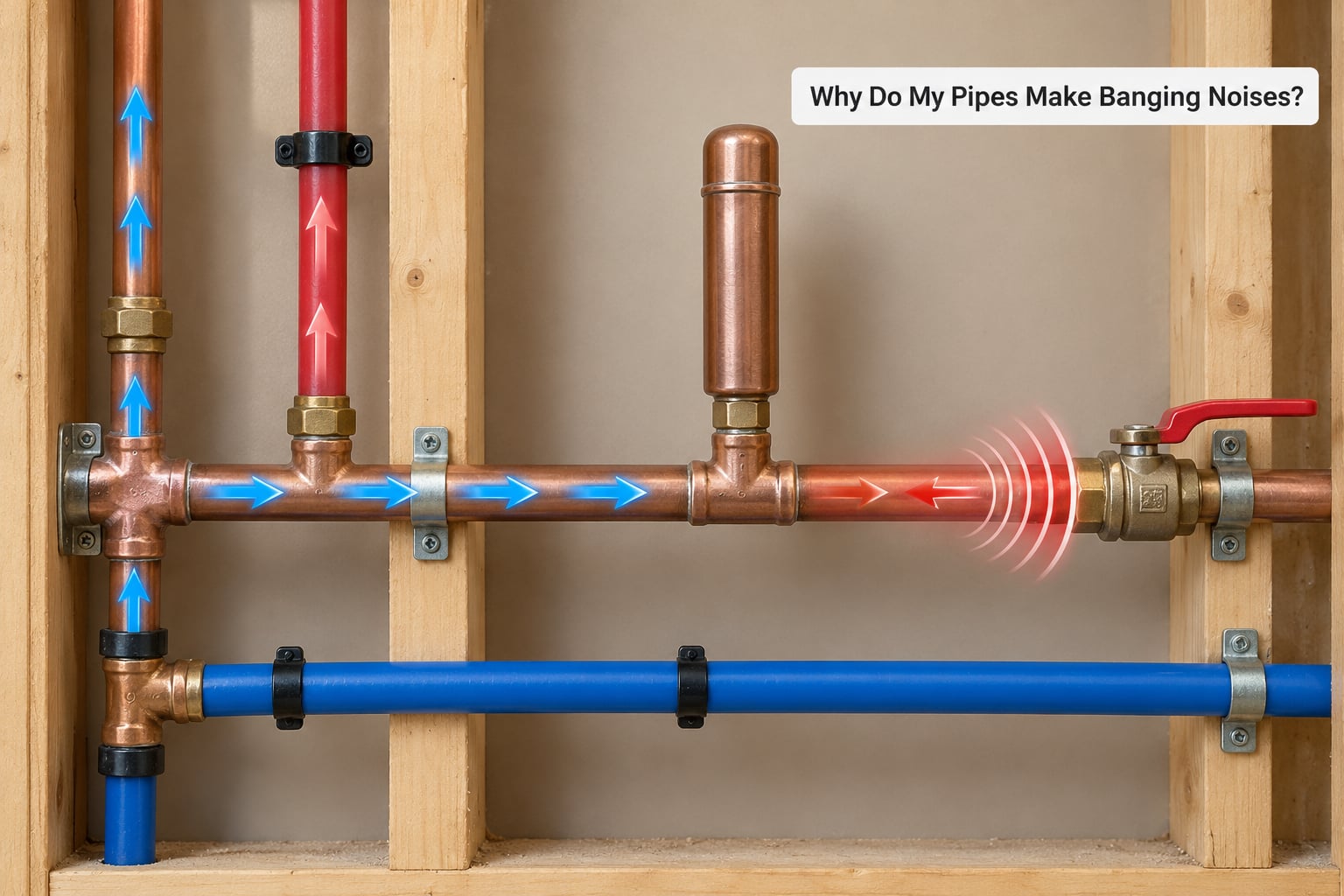
Water moves through a supply line under pressure, and pressure means the water has a strong forward momentum. When a valve slams shut in a fraction of a second, that momentum has nowhere to go, so it compresses into a shock wave. It bounces off the closed valve, races back down the pipe, and rattles the pipe against whatever holds it.
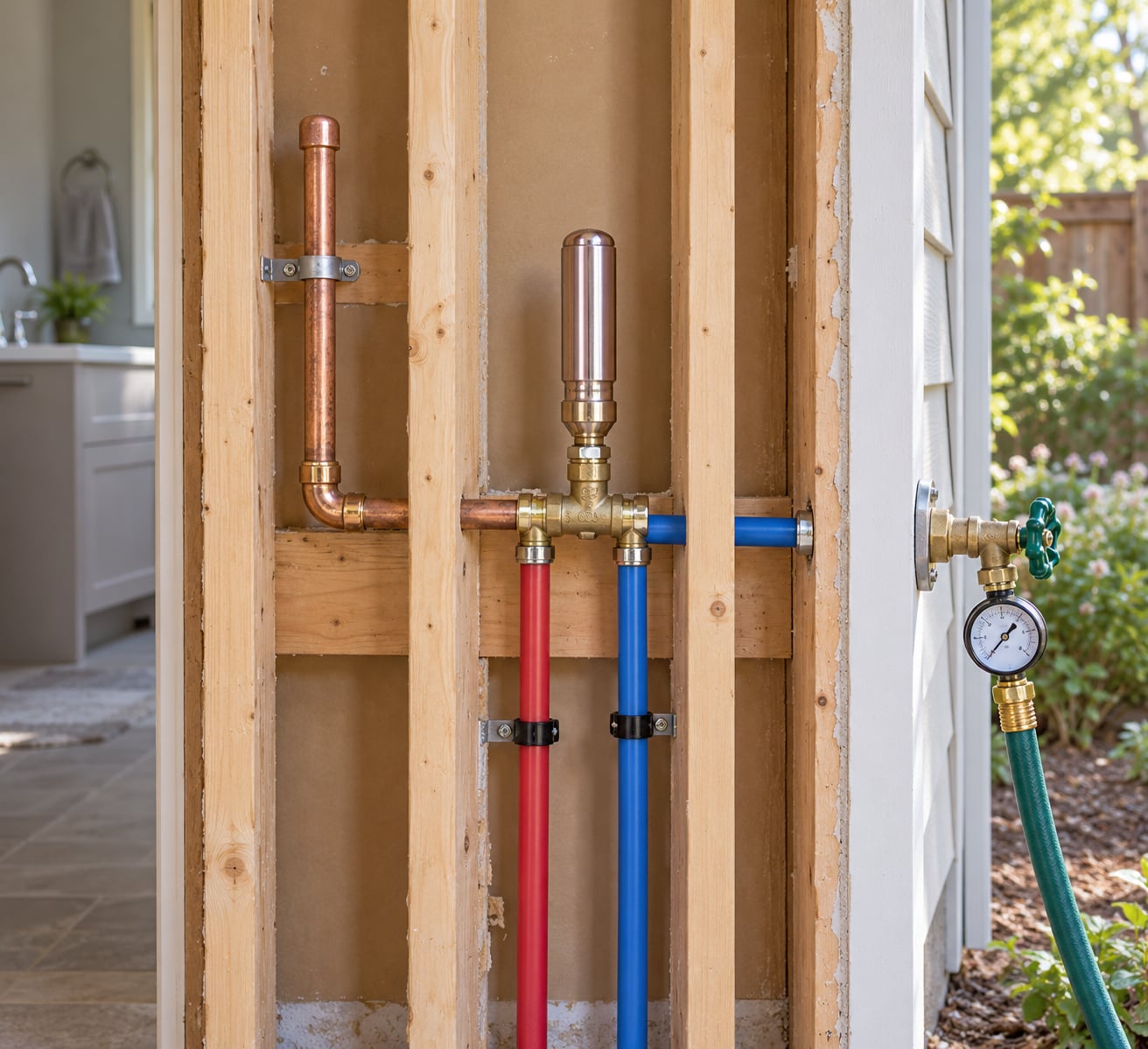
A healthy plumbing system absorbs that shock in a small pocket of air or a spring-loaded device called a water hammer arrestor. When those cushioning devices are missing, waterlogged, or undersized, the shock transfers into the pipe itself. That is the bang you hear, and it travels along the pipe and through the framing, which is why the sound often seems to come from a wall that has nothing to do with the fixture you just used.
Not every bang is water hammer, though. Pipes also knock when they are not firmly secured and physically strike a wall stud, a floor joist, or another pipe. And a pipe carrying fast-moving water at high pressure can rattle or hum while the faucet is still running, which is a different problem with a different fix.
The exact cause depends on two things: when the noise happens and where it seems to come from. Get those two answers and you have probably already narrowed it down to one cause.
What Does the Sound Tell You?
This is the table I would start with, because it turns a vague noise into a diagnosis. Listen once or twice before you start opening anything.
| What you hear | Where it seems to come from | Likely cause |
|---|---|---|
| One loud single bang right after a faucet closes | Anywhere along the run to that faucet | Classic water hammer |
| Bang when the toilet flushes | Wall behind or beside the toilet | Fast-closing toilet fill valve |
| Repeated clattering while water is flowing | Basement, crawlspace, near the water heater | Unsupported pipe striking framing |
| Rattling or vibrating while a faucet runs | Nearest the fixture, or in a wall | High pressure and fast flow velocity |
| Light tapping that starts a minute after hot water begins | Hot water line, often a ceiling or floor | Thermal expansion of copper or CPVC |
| Knocking from inside a large metal tank | At the water heater | Sediment, not a pipe problem |
| Noise on and off at random with no fixture running | Varies | Failing valve, PRV fault, or appliance on a timer |
Two extra questions narrow things down faster than anything else. Does the sound happen on hot water, cold water, or both? Cold-only usually means a pressure or flow problem, while hot-only points at thermal expansion or sediment. And is the sound worse at night? A quiet house makes everything sound louder, so many people think a problem got worse when nothing changed at all.
What Causes Banging Noises in Pipes?
Water hammer from a fast-closing valve
You hear one sharp bang the moment a faucet shuts off or a toilet stops filling. Water moves, the valve closes fast, and the shock has nowhere to go. Toilet fill valves, dishwasher solenoids, washing machine valves, and quick-close laundry faucets are the usual culprits because they all close in a fraction of a second.
High water pressure
Household pressure above roughly 80 PSI makes pipes behave like a hose. You will notice rattling while water is running, a washing machine that slams the wall, or a shower that feels like a fire hose. High pressure also amplifies every other cause on this list, which is why plumbers check it early. More on measurement below.
A newly installed appliance
If the noise started the day a new washing machine, dishwasher, or garbage disposal was hooked up, this is your answer. Those valves close almost instantly, and many installers leave the angle stop unsecured or skip the arrestor entirely. This is the single most common onset scenario homeowners report, and it is usually one of the cheapest to correct.
Loose pipe straps and unsupported runs
Copper should be strapped at intervals so it cannot move, but vibration and settling loosen those straps over years. The pipe then taps the wall stud or floor joist behind it and you get a repeating clatter rather than a single bang. Accessible runs under a sink, in a basement, or in a crawlspace can often be resecured by hand.
Mineral buildup inside the pipes
Hard water leaves scale on the inside of supply lines. As the opening narrows, water moves faster and noisier through the same volume of flow, which turns a mild water hammer into a loud one. You may also notice longer faucet lag or reduced flow at the same time.
Thermal expansion in hot water lines
Copper and CPVC grow as they heat and shrink as they cool. Over a shower or a dishwasher cycle that movement is enough for a pipe to tap against framing, which produces soft ticking that starts a minute or two after the hot tap opens. You will hear this one only on hot water.
Failing valves or a failed pressure-reducing valve
Angle stops, shutoff valves, and fill valves wear out and start to chatter or leak slowly. A pressure-reducing valve that is stuck open or fouled lets municipal pressure hammer straight through your plumbing, and it mimics water hammer closely enough that people chase the wrong fix for months.
Knocking inside the water heater tank
This one is not a pipe at all, and treating it as one sends people down the wrong path. Banging that starts when a hot tap opens and seems to come from a large metal tank is usually sediment that has settled on the tank floor and is being stirred by hot water. Draining and flushing the tank, plus descaling the heating element, usually clears it. Do not lower the water heater temperature chasing a knocking pipe noise, which is a common piece of bad advice online and can create a scalding risk and, in large tanks, a bacterial growth risk.
How to Tell Whether the Noise Is Water Hammer
Reproduce it deliberately. Open a faucet on the branch you suspect and let it run for a few seconds so water is moving steadily through the line, then close the faucet slowly while you listen at an accessible pipe nearby, such as the riser under a sink.
A single bang exactly at the moment of closure, with nothing happening before or after, points to water hammer. If you hear noise while the faucet is still open, or a continuous rattle that persists, you are probably looking at high pressure or an unsupported pipe instead.
Test the branches one at a time if you can. A bang that only follows the hot tap, or only the toilet, narrows the search to that fixture’s valve and its closest shock absorber.
How to Check Your Water Pressure Safely
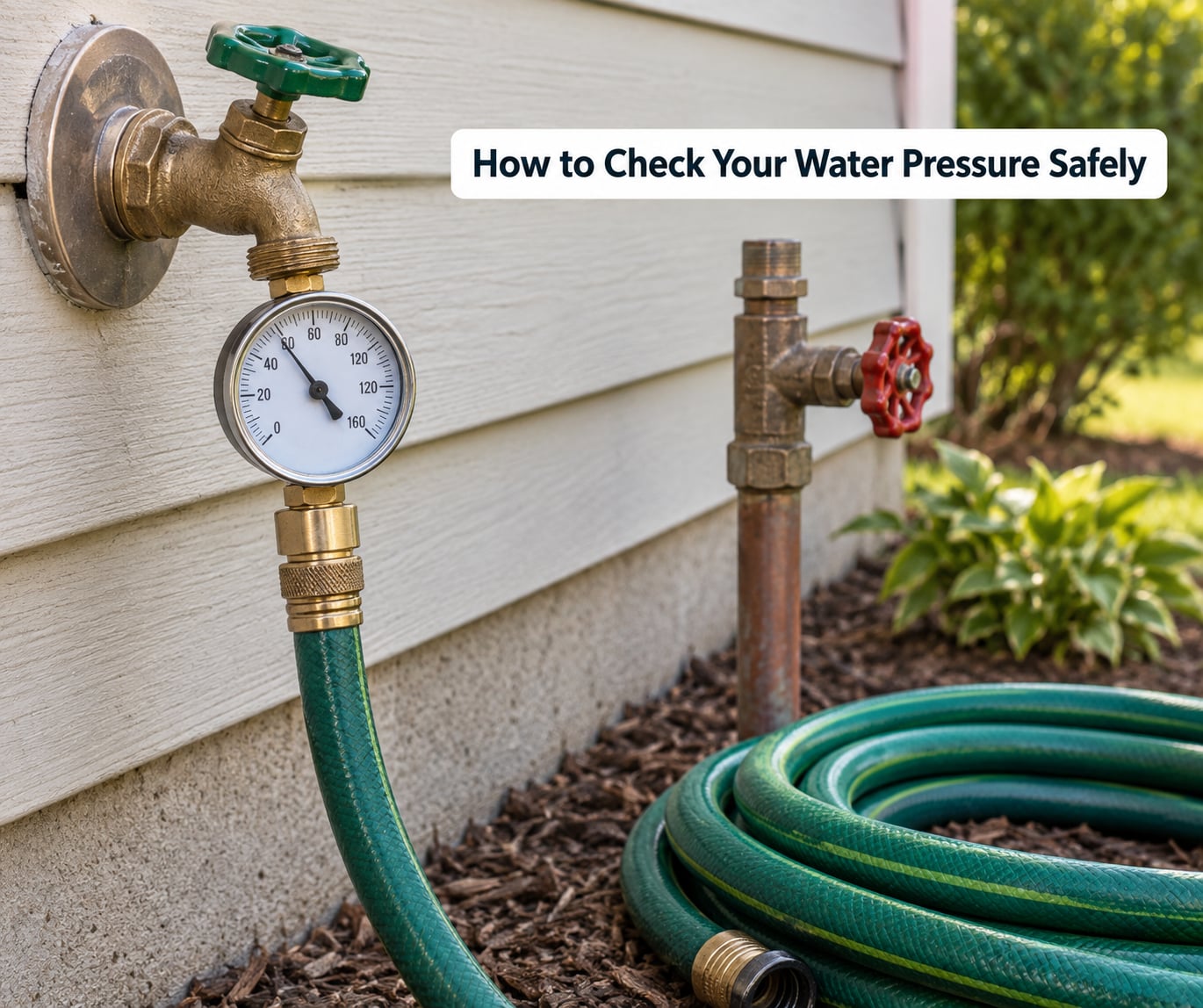
A water pressure gauge is an in-line dial you screw onto an outdoor hose bib or another accessible point, and it takes about a minute to use. Turn the hose bib on fully, read the gauge, and write the number down before you leave the house. That number is worth having on hand when you talk to anyone about the noise.
Typical US residential pressure runs 40 to 80 PSI. Below 40 you may notice sluggish showers, and above 80 pipes get more aggressive about vibrating and hammering. Treat 80 PSI as the point to act rather than observe.
The pressure-reducing valve usually sits where the municipal supply enters the house, often just after the main shutoff in a basement or garage. If you find a valve there and your gauge reads high, that device is the intended control. Adjusting or replacing one is plumber territory, not a homeowner job.
How to Find Loose Pipes or the Noisy Area
Start with what you can reach without demolition. Under every sink, in the basement, in the crawlspace, in the attic, and at exposed runs in a garage or utility room are all fair game. Run a hand along accessible pipe while a helper uses the hot and cold taps and flushes a toilet.
Where the tapping is loudest tells you where the pipe is touching something. A single loose strap in a basement can produce a startling jackhammer sound through the whole house, and it is often completely harmless in terms of damage.
In a condo or multi-unit building, noise travels through the shared riser and can come from a neighbouring unit. Check whether the sound coincides with what your own fixtures are doing before assuming it is your plumbing.
Do not drill, notch, or open a wall to chase the sound. Water hammer is the far more common culprit and it is fixable without touching the wall at all.
What Fixes Are Safe for Homeowners?
The free fix comes first, and it is the single most useful five minutes a homeowner can spend. Shut off the main water supply, then open every faucet in the house, including the tub and outdoor hose bibs, until each one runs with a smooth, sputtering-free stream. Close everything, release the main shutoff, and let the lines refill.
That works because it re-establishes the air pocket that absorbs the shock. In homes built before the 1960s that pocket is a plain air chamber, a capped vertical stub of pipe near the fixture, and decades of use can leave it waterlogged. In homes built later it is a water hammer arrestor, usually a small brass or plastic cylinder with a spring-loaded piston inside, which does not waterlog the same way.
If the reset fixes it for a few weeks and it comes back, the device is waterlogged or absent and it needs replacing rather than resetting again. That is a small part a plumber installs in minutes, typically at the angle stop of the offending valve.
Also safe: gently resecure an accessible loose pipe strap, slide rubber pipe insulation or foam padding between a pipe and the framing it strikes, and bleed air from a faucet by running it until the stream is solid. That is where I would stop.
Not safe to do yourself: anything behind a finished wall, any soldered or glued copper and CPVC work, adjusting a pressure-reducing valve, and lowering the water heater setpoint to quiet copper. If you are unsure whether a joint is yours to touch, it is not.
When Should You Call a Plumber?
Call someone when the banging repeats, worsens, or shows up in several places at once. Repeated hydraulic shock slowly loosens fittings and wears out valves, which is how a loud nuisance turns into a leak inside a wall. One bang that has not changed in five years is a different situation from a bang that is getting louder every week.
Call immediately if you see water stains, dampness, or a puddle, hear a steady hissing, notice discoloured water, or smell something burnt around the water heater. Those point at a leak, a failing valve, or an electrical issue rather than noise.
A plumber can also test pressure properly, find a concealed failing component, and replace an arrestor or a pressure-reducing valve. If you go in with the number from your gauge, the moment the noise happens, and whether it is hot or cold only, you will get a more useful answer on the first visit.
Frequently Asked Questions
How do I stop banging noises in my water pipes?
Start with the drain-and-refill reset: turn off the main supply, open every faucet until the flow is smooth with no air, then close everything and let the lines refill. That restores the air pocket that absorbs pressure shock and costs nothing. If the noise returns within a few weeks, the shock absorber is waterlogged or missing and needs replacing by a plumber.
What water pressure makes pipes bang?
Typical household pressure runs 40 to 80 PSI, and 80 PSI is the practical action threshold. Above that, pipes behave like a hose: they rattle while water runs, vibrate at fixtures, and turn ordinary water hammer into loud banging. Screw a pressure gauge onto an outdoor hose bib to check yours, then look for the pressure-reducing valve where the supply enters the house.
Why do my pipes knock only when hot water runs?
Copper and CPVC hot water lines expand as they heat and shrink as they cool. That movement makes the pipe tap against a wall stud or floor joist, and you hear soft ticking that starts a minute or two after the hot tap opens and stops once the water cools. Knocking inside a water heater tank when a hot tap opens is a different cause, usually settled sediment.
Why do the pipes in my apartment bang, and whose problem is it?
Supply lines usually run through a shared riser, so a shock anywhere in the stack can be heard in several units. Check whether the sound lines up with your own fixtures being used. If it seems to come from a neighbour or happens at random with nothing running, ask your building manager, since a riser or pressure problem is normally the building’s responsibility.
What does a pipe sound like before it bursts?
A pipe about to fail usually announces itself with escalating noise, not silence: banging that gets louder or more frequent, a metallic squeal or groaning under pressure, and repeated vibration you can see in the pipe. Treat any hissing, a wet wall or ceiling, a puddle, or discoloured water as urgent and shut off the main supply while you arrange a plumber.
What to Do First
Note when the bang happens and whether it is hot or cold water, then run the drain-and-refill reset. If that quiets it, you have water hammer and a plumber can install a shock absorber at the offending valve. If it does not quiet it, check the pressure gauge and look at accessible pipe straps in the basement or under the sinks before anyone opens a wall.