To test for mold in your home, start with a thorough visual inspection and a moisture check, then sample only what you find. Homeowners can screen for mold themselves with a flashlight, gloves and a moisture meter, but air and surface samples are best collected by a trained inspector at an accredited lab. There is no health-based mold spore standard for homeowners to measure a result against, so the water source matters more than the number.
The whole screening pass takes 30 to 60 minutes for a typical house, plus time in the crawl space or attic. The hard part is not the tools. It is resisting the urge to poke at a suspicious spot.
Below is the order I would work in: signs, then water, then readings, then the decision about whether a lab is even needed.
Table of Contents
- What You Need
- How to Test for Mold in Your Home: Step-by-Step
- 1. Check for visible signs and musty smells
- 2. Look for the moisture source
- 3. Use a moisture meter as a screening tool
- 4. Inspect hidden and high-risk areas
- 5. Decide whether professional testing is needed
- Common Mistakes
- Tips for Preventing Mold After Testing
- Frequently Asked Questions
- Can I test for mold myself?
- Is there a test to detect mold in my house?
- Does a musty smell prove I have mold?
- What are the first signs of mold in a house?
- When should I hire a professional mold inspector?
- What are signs of mold sickness?
- Conclusion
What You Need

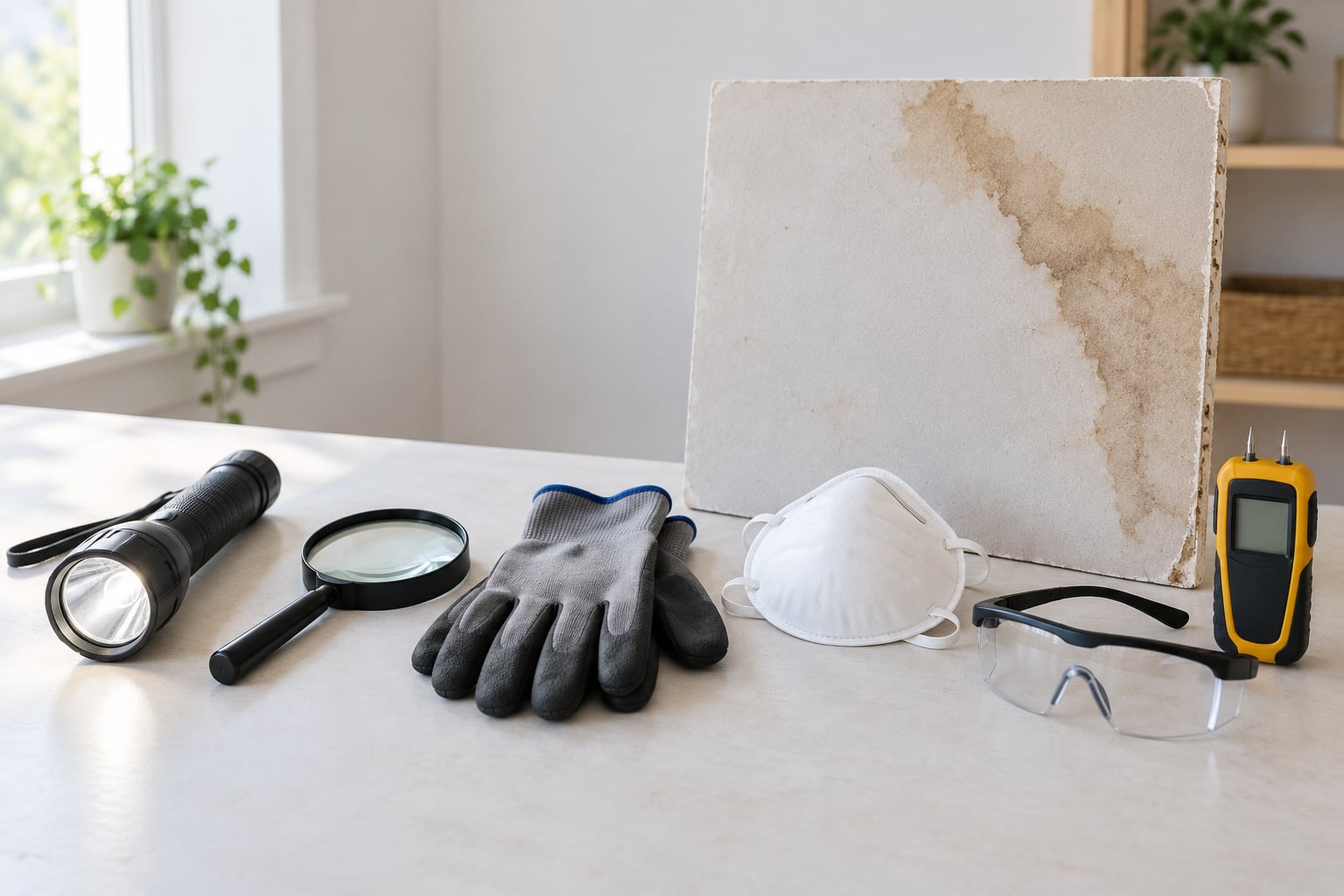
Gather this before you start walking the house, because you will want both hands free in a crawl space:
- Bright flashlight — a headlamp frees up your hands. Raking light across a wall reveals bulges and texture that overhead lighting hides.
- Magnifier or your phone camera — zoomed shots are also your dated record.
- Nitrile gloves — for touching dusty trim and handling damp insulation.
- N95 or better respirator — a standard dust mask is not a substitute when growth is suspected or you are in a crawl space.
- Eye protection — safety glasses or goggles.
- Moisture meter — a pin-type model for a numeric reading, a pinless model to scan a wall or floor without holes.
- Hygrometer, or a smart thermostat — most report relative humidity on the app.
- Moisture source checklist — plumbing, roof, windows, ventilation, appliances.
One rule matters more than the shopping list: do not sample suspected mold yourself. Pressing tape onto growth, swabbing it, or even cutting a piece out releases spores into the air you are standing in and hands the lab a sample with no chain of custody, so the species ID cannot be tied to a location or a condition of the building.
How to Test for Mold in Your Home: Step-by-Step
1. Check for visible signs and musty smells
Mold does not need a test to tell you it is there. Start outside, then work inward, room by room, looking at the places water reaches first.
What you are looking for:
- Discoloration — black, dark green, brownish, or a white powdery coating that wipes or brushes off.
- Peeling or bubbling paint, wallpaper lifting at seams, or drywall that is soft, crumbling or stained.
- Water stains with a defined edge, especially on ceilings below an upper-floor bathroom.
- Dampness you can feel on a baseboard or window sill, and musty odor that gets stronger in a closed room and fades when you open a window.
Where I start every walkthrough:
- Bathrooms: shower grout, the base of the tub, under the sink, the wall behind the toilet, the exhaust fan housing.
- Kitchens: under the sink, around the dishwasher, the back corner of the refrigerator, and the wall behind it.
- Basements and crawl spaces: the bottom of foundation walls, floor framing, stored cardboard and wood.
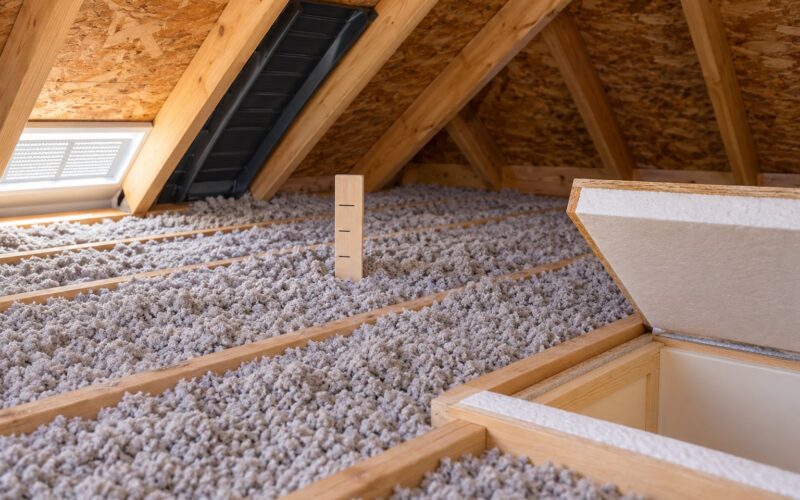
- Attics: roof sheathing near where a roof or flashing leak would drip, and any stain on the insulation.
Do not poke, scrape, scrub or pressure-wash what you find. Do not dry-sweep a dusty floor, because that puts spores into the room air. If a photo is not enough for your own peace of mind, that is the signal to bring in someone who is set up for containment.
2. Look for the moisture source
Mold is a moisture problem with a color. Find and correct the water, and the growth stops; skip that step and any amount of cleaning is temporary.
Walk your moisture source checklist:
- Plumbing: slow drip under a sink, a toilet supply line, a shower valve, a washing machine hose, a dishwasher line, a sump pump that failed.
- Roof and flashing: a stain on the ceiling that grows after heavy rain usually traces to the roof above it.
- Windows and exterior walls: failed caulk, weep holes, a window with no drip cap, missing exterior paint letting water behind the sheathing.
- Condensation: cold supply lines sweating in a basement, a single-pane window in a shower, a supply vent pushing humid air into an unheated attic in winter.
- Ventilation: a bathroom or kitchen fan ducted into the attic instead of outdoors, no fan at all in a shower, clothes dryer venting into a crawl space.
Homeowners on forums keep landing on the same point: testing before the water is fixed produces numbers that describe a problem you should have solved with a wrench. Fix the source, then re-read the area.
3. Use a moisture meter as a screening tool
A moisture meter does not detect mold. It detects water, which is the useful part, and it tells you where to look and later proves an area dried out.
Pin-type meters push two pins into wood and give a numeric moisture content reading, which is the more useful of the two for framing, subfloor and trim. Pinless meters scan across the surface with no holes, so they suit drywall, tile, baseboards and finished floors where you do not want to mark anything.
The trick is a baseline. Find a spot of the same material in the same house that has been dry for years, read it, and treat that as your zero. Then read the suspect area and compare. A baseboard at 15 points higher than the matching baseboard in the hallway is a reason to investigate, not a diagnosis of mold.
Pair the meter with a thermal camera if you already own one. A cold spot on a warm day often maps to moisture or a missing cavity of insulation, and it is a fast way to survey a whole wall or ceiling. A pin-type meter is a better tool for the job, and inexpensive enough that most households buy one and keep it.
4. Inspect hidden and high-risk areas
Some of the most common places for mold are places you cannot see without moving something or opening something up. Look at them carefully from the outside, and stop there.
- Behind and under kitchen sinks, where a slow leak often goes unnoticed for months.
- Around tubs and shower surrounds, especially the unfinished back side of the wall.
- Behind washing machines, dishwashers, and refrigerators, where a hose or a drip tray can wick water into the wall.
- Inside bathroom exhaust fan housings and their ducts, which are a leading spot for lint and moisture together.
- Crawl spaces: joists, subfloor, and the crawl space vapor barrier, or its absence.
- Attics: roof sheathing after a leak, and any insulation that has been damp.
- Exterior walls in shade, and window returns where condensation collects.
- Ductwork and plenums, especially where a condensate pan or a humidifier adds moisture to the airstream.
Do not remove drywall, cut an inspection hole in a stained wall, or pull back insulation in an area that is already showing growth. Each of those actions releases whatever is behind the surface. Note the location in your phone, move on, and let a professional with containment decide what gets opened.
5. Decide whether professional testing is needed
Here is the reframe most homeowners never hear: there is no health-based standard for mold spores in indoor air, and the CDC notes that mold is common in almost all homes and that air sampling is usually not needed as part of a general assessment. Without a threshold to compare against, a spore count is a number you will pay for and then interpret yourself.
Professional sampling earns its cost in specific situations:
- Visible growth is extensive, or the area is large enough that you would be cleaning rather than scrubbing.
- The mold is hidden, in a wall cavity, above a ceiling, or in ductwork, and a decision about what gets opened has to be made.
- You are documenting water damage for an insurance claim, a home sale, or a landlord dispute.
- Someone in the household has symptoms that keep coming back and no other explanation has been found.
- You genuinely cannot tell what you are looking at and want an answer you can act on.
A few words on the panels you will see marketed. A standard spore count reports colonies per cubic meter for the species found. ERMI, the Environmental Relative Moldiness Index, is a research tool that scores about 30 common indoor molds into one figure; it was never built as a pass or fail gauge for a house, and it tells you nothing about where the moisture is or what to do next. HERTSMI is a second index, built from the five most common molds on a standard count. Homeowners who have run all three tend to describe the same thing: the panel told them a number, not a repair.
When you do hire someone, ask for the lab accreditation (a state-accredited lab or one working to ISO 17025), a documented chain of custody, and confirmation that the person inspecting does not also sell remediation. An inspector who earns a commission from the cleanup is not an independent check on your house.
Common Mistakes
Treating a musty smell as proof. Odor means investigate. Mold spores travel in outdoor air, and a strong smell can also come from damp carpet, old cooking grease, or a dry trap. Find the water, and the answer follows.
Taking your own sample. Tape and swab kits sold to homeowners produce a species name with no location, no moisture data, and no chain of custody, and the disturbance puts spores into your air. Use the kit for a petri-dish curiosity if you like, not for a decision.
Scrubbing the growth first. Bleach on a porous surface does not remove the mycelium, and the agitation spreads spores. Dry materials need HEPA vacuuming and containment by someone trained.
Reading a moisture meter as a mold test. It is a water detector. Wet wood with no growth and dry wood with growth both exist; the reading tells you where moisture is, and only an inspection or a sample tells you what is growing.
Testing before the leak is fixed. Sample first and the number describes a condition that should not exist. Fix the water, let the area dry, then look again.
Buying the most expensive panel by default. A careful visual inspection plus a moisture meter often answers the question faster and cheaper than a broad panel, and a high-pressure ERMI add-on with a remediation quote attached is a sales pattern rather than a finding.
Tips for Preventing Mold After Testing
Once the source is corrected, keep it from coming back:
- Photograph the repair and take a second moisture reading a week later so you have a before and after.
- Run bathroom and kitchen exhaust fans while in use and for a while after, and make sure they vent outdoors rather than into the attic or a crawl space.
- Keep indoor relative humidity between roughly 30 and 50 percent, and watch a hygrometer in the seasons that push it up.
- Dry wet materials fast. Standing water in a carpet, ceiling or insulation needs a dehumidifier or fans, not patience.
- Keep the HVAC system serviced, including the condensate pan and drip lines, and change filters on schedule.
- Re-check recurring damp spots on a schedule, not when you finally notice the smell. A monthly pin-type reading on the same board is cheap insurance.
- If you rent, put dated photos and a written description in front of your landlord early, and keep copies.
Frequently Asked Questions
Can I test for mold myself?
Yes, for screening. A flashlight, gloves, a respirator and a moisture meter let you find visible growth and damp materials in a couple of hours. You cannot reliably test for hidden or airborne mold at home, and self-collected samples usually lack chain of custody, so treat DIY kits as a screening pass rather than an answer.
Is there a test to detect mold in my house?
There is no single mold test for a home. Detection is a set of tools: a visual inspection, a moisture meter and humidity readings to find the water, and laboratory analysis of air, surface or bulk samples when the situation warrants it. The sample confirms species; the inspection and meter find the reason it is there.
Does a musty smell prove I have mold?
No. A musty odor means something is damp, which may be mold, may be mildew, may be a wet carpet or a dry plumbing trap. It tells you where to look, not what you found. Follow the smell to its source, check for a water intrusion, and only then decide whether a sample is needed.
What are the first signs of mold in a house?
Water stains, peeling or bubbling paint, discoloration on walls or ceilings, a musty odor that grows in closed rooms, and dampness around tubs, sinks, windows and exterior wall penetrations. Bulging or soft drywall is a later sign. If you notice any of these, trace the water first rather than reaching for a test kit.
When should I hire a professional mold inspector?
Hire an independent inspector when growth is extensive, hidden behind a wall or ceiling, or inside ductwork, after flooding or a significant leak, when you need documentation for insurance or a property dispute, or when symptoms in the household keep returning with no other explanation. Ask for an accredited lab and confirm the inspector does not also sell remediation.
What are signs of mold sickness?
Common reactions reported to damp, moldy environments include cough, chest tightness, wheezing, runny or stuffy nose, watery eyes, skin irritation, and worsening asthma or allergy symptoms. Reactions usually track exposure and improve when the source is fixed. Only a doctor can diagnose the cause of your symptoms, so raise the mold question with them.
Conclusion
The first action is a careful walkthrough with a flashlight and a moisture meter, looking for signs and tracing them back to water. Fix that water and re-read the area. If the growth is extensive, hidden, health-related, or needed as documentation for a sale, a claim, or a dispute, then bring in an independent inspector and an accredited lab. Most of the rest is a leak, a vent, and a dehumidifier.