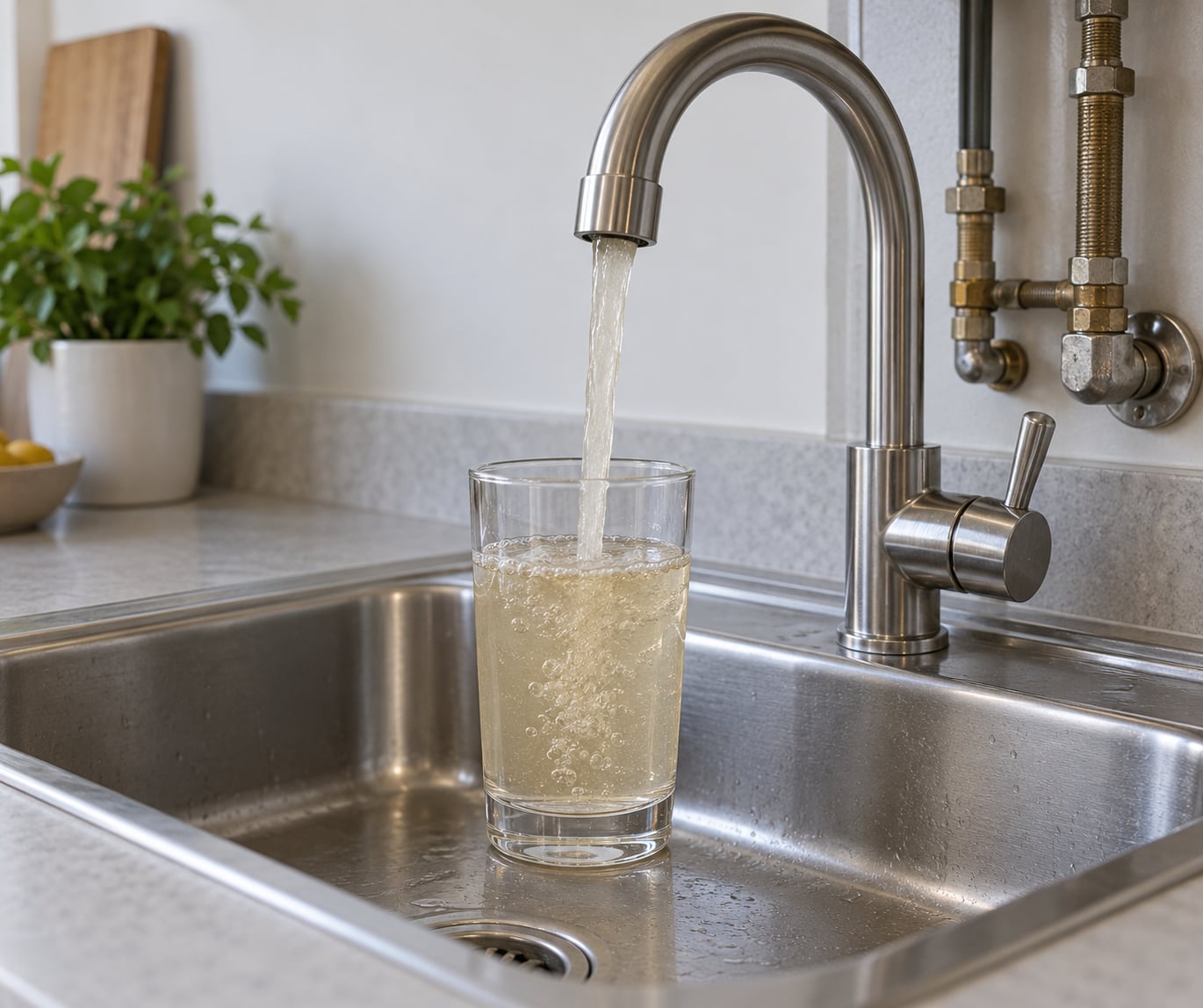
Brown water from the faucet is water carrying suspended iron oxide, mineral sediment, or organic particles. Almost always it comes from one of three places: corroding galvanized or cast iron pipes, a sediment layer inside your water heater, or a municipal supply event like a main break or hydrant flush that stirred up settled material. Identifying which one you have takes about five minutes and decides whether you need a glass of water or a plumber.
That last part matters. The same brown color covers everything from harmless rust staining to a lead service line warning, and the color alone will not tell you which one you have. Below is the diagnostic order that works, starting with the checks you can do yourself in the next half hour.
Table of Contents
- What Causes Brown Water From the Faucet?
- What actually causes brown water from the faucet
- 1. Rust and corrosion in aging pipes
- 2. Sediment buildup inside the water heater
- 3. Excess iron in the water supply
- 4. Water main break, hydrant flushing, or utility repair work
- 5. Heavy rainfall getting into a well
- 6. Construction or excavation near buried water lines
- 7. A corroded service line between the main and your house
- Is Brown Water From the Faucet Safe to Drink?
- Why Is the Water Brown Only From One Faucet?
- How to Tell Whether the Problem Comes From Your Pipes or the Water Heater
- What to Do When Brown Water Comes From the Faucet
- 1. Run both sides until it clears
- 2. Clean the aerator and showerhead screens
- 3. Flush the fixtures you rarely use
- 4. Ask two neighbors
- 5. Check for recent work and visible corrosion
- 6. Hold off on the dishwasher and the washing machine
- When Should You Call a Plumber About Brown Faucet Water?
- How to Prevent Brown Water From Returning
- Frequently Asked Questions
- Is brown water from the faucet caused by rust?
- Can flushing my water heater fix brown hot water?
- How long should I run the tap to clear brown water?
- Is brown water safe to bathe in and wash clothes with?
- When does brown water need urgent attention from a plumber?
- Conclusion
What Causes Brown Water From the Faucet?
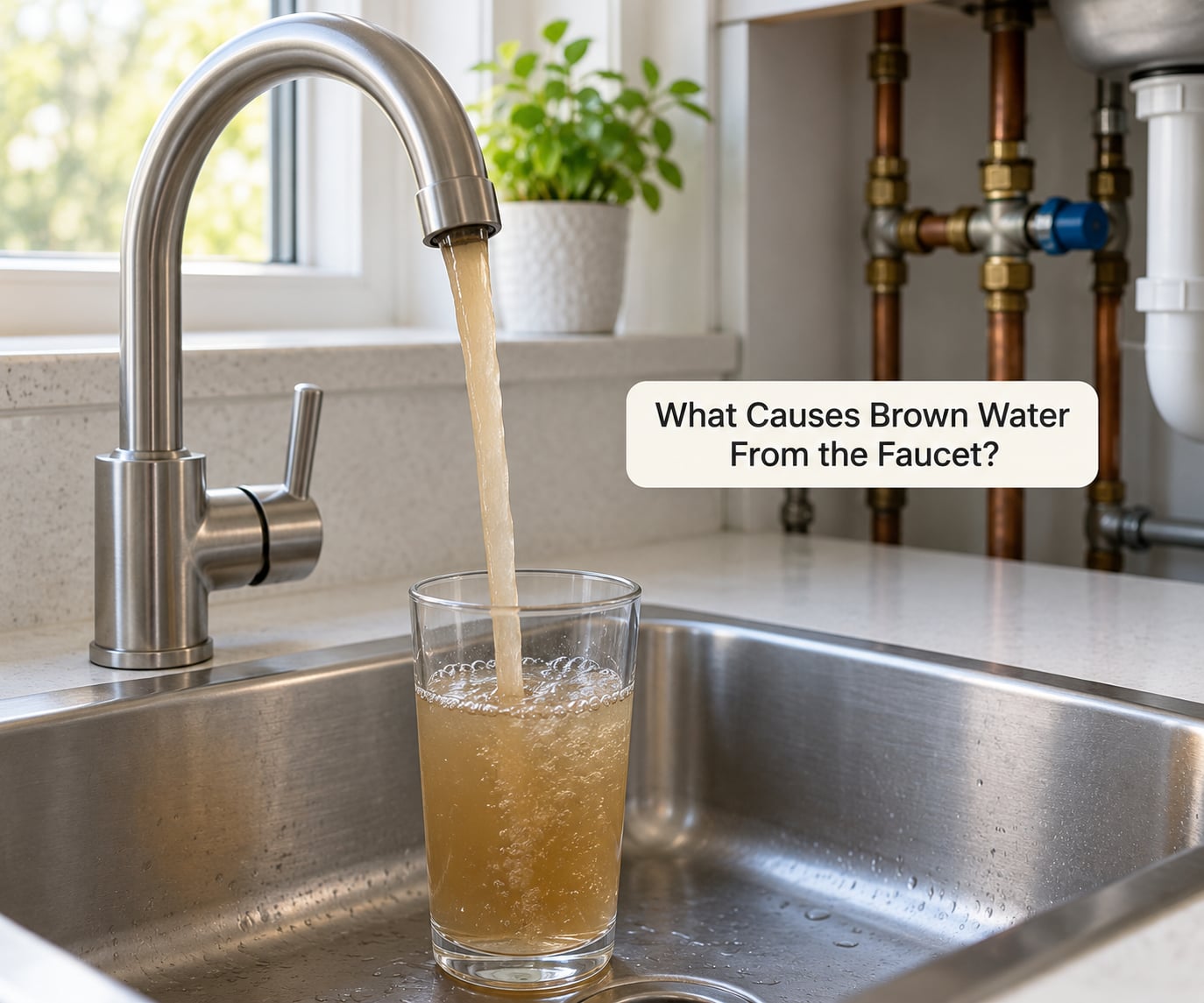
Iron and steel pipe walls react with the dissolved oxygen in water to form rust, which settles as a lining inside the pipe. Pressure changes, vibration, high flow or a temperature change knock that rust loose into the stream. Water sitting motionless overnight absorbs enough iron to discolor the first draw of the morning.
What actually causes brown water from the faucet
Here are the seven causes, in rough order of how often they turn out to be the answer.
1. Rust and corrosion in aging pipes
Galvanized steel was the standard supply line material from before the 1980s, with a functional lifespan of roughly 40 to 50 years. Once the zinc coating fails, the steel underneath corrodes. Homes built before the mid-1980s may also have a lead service line, which is a different conversation and one worth having with a plumber.
2. Sediment buildup inside the water heater
Particles that would stay suspended in cold water settle to the bottom of a tank over years. When hot water draws that layer up, it comes out orange-brown. A depleted anode rod speeds this up, because it is the part that normally eats the corrosion so the tank does not. This one shows up on the hot side only.
3. Excess iron in the water supply
Groundwater in some regions carries high dissolved iron, and iron bacteria can add a slime that discolors water even when there is no metal pipe at fault. If you are on a private well, this is one of the first things worth testing for.
4. Water main break, hydrant flushing, or utility repair work
Opening a hydrant or repairing a main creates a vortex that pulls settled sediment off the bottom of the distribution main and sends it downstream. Firefighters opening hydrants have the same effect. Neighbors usually see it at the same time, which is your fastest confirmation.
5. Heavy rainfall getting into a well
A flooded wellhead or a worn casing seal lets surface water in, and that water is often loaded with iron and manganese. After flooding or a storm, treat the discoloration as a testing question rather than a flushing question.
6. Construction or excavation near buried water lines
Digging, dewatering or soil shifting can disturb a main or a service line. Users on plumbing forums trace recurring discoloration to nearby scheduled pipe cleaning and excavation rather than anything inside the house.
7. A corroded service line between the main and your house
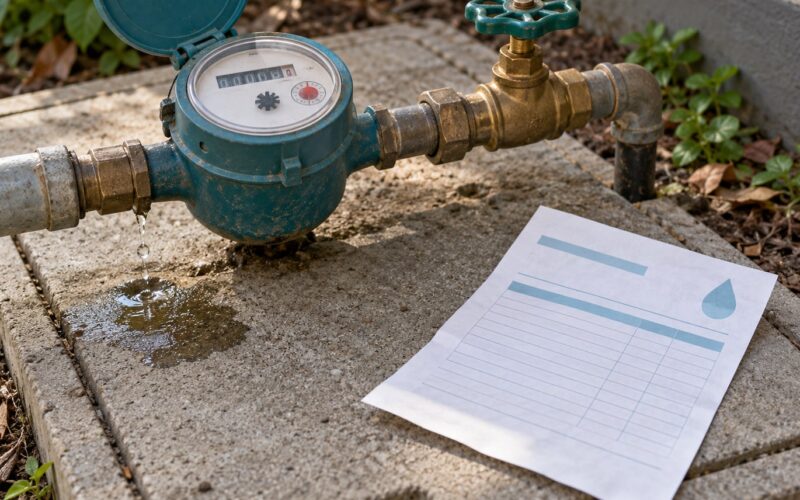
The service line is the buried run between the utility main at the street and your house, and it is easy to forget it exists. When it is the culprit, every fixture in the house tends to discolor together.
Is Brown Water From the Faucet Safe to Drink?
Do not drink visibly brown water until you know the cause. That is the short answer, and it holds whether the water is a nuisance or a warning.
Iron and manganese are secondary contaminants under the EPA secondary drinking water standards, which exist for taste, color and staining rather than for health. The secondary maximum contaminant level is 0.3 mg/L for iron and 0.05 mg/L for manganese. In other words, water can look and taste bad at concentrations below those numbers without being a health hazard, and water above them still is not automatically a health hazard. Those figures are aesthetic guidelines, not toxicity limits.
Two things are a different matter entirely. Lead is a genuine health risk with no safe exposure level for children, per the CDC, and a discoloring service line in a pre-1986 home deserves a plumber’s attention before anyone drinks from it. Bacteria from a compromised well after flooding is the other one, and color will not tell you it is there. A lab test will.
Also skip the instinct to boil it. Boiling concentrates what does not evaporate, and a brown glass is not a good reason to take that risk. Run cold water for flushing instead, and call your utility if there is a boil notice in place.
Bathing in it is usually fine once you have ruled out the well and lead scenarios. Laundry is a separate story, covered below.
Why Is the Water Brown Only From One Faucet?
One affected fixture narrows the problem to something small and usually fixable in five minutes. The discolored water is coming out of the fixture’s own parts or the short branch line feeding it.
The most common culprit is the aerator, the little screened cap on the end of the spout. It catches rust particles, and those particles darken with age. Unscrew it, soak it in vinegar overnight if it is scaled, rinse the screen and screw it back on. A showerhead works the same way, with a rubber-washer face plate or a screen that unscrews from the arm.
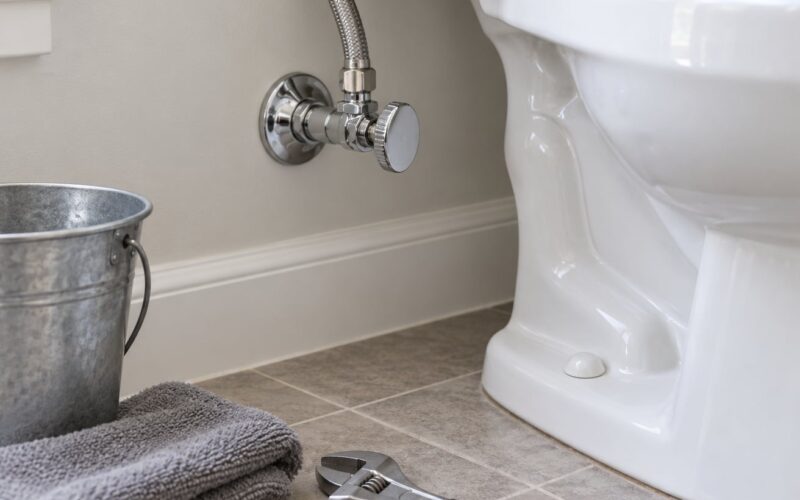
Toilets are their own case. A DIY poster found brown water in the toilets only, with showers and taps clear, and the answer is the fill valve or the supply line feeding it. Those sit behind the tank, which makes them the easiest of the single-fixture problems to reach.
If a cleaned aerator does not fix it, the next suspect is the branch line to that fixture, and that is where a plumber starts earning the call. If every tap in the house turns brown together, the source is upstream of the branches and it is not a fixture problem at all.
How to Tell Whether the Problem Comes From Your Pipes or the Water Heater
Hot or cold is the fastest split you have, and it separates most causes in one test.
If the hot side is brown and the cold side runs clear, look at the water heater. Sediment behaves this way because it settles, and only the hot draw picks it up. Follow the manufacturer’s flushing instructions and check the anode rod condition at the same time. Do not open or service a gas or electrical appliance yourself beyond what the manual describes.
If the cold side is brown and the hot runs clear, that rules out the tank and points to the supply pipes or the service line, since cold water arrives at every fixture without passing through the heater.
If both sides turn brown at the same fixtures, that is a supply-side problem, whether it is a main event, a service line or corrosion inside the house piping. If only one faucet is affected on both sides, it is the fixture. A commenter in a home maintenance forum put it bluntly: it is corrosion in the faucet, corrosion in the water heater, or corrosion coming off very old galvanized house piping.
One more pattern worth naming: water that runs brown for the first three to ten seconds and then clears, worst at the kitchen tap first thing in the morning. That is first-draw water. It has sat in the pipes since you last used them and absorbed iron from the walls, and it points at pipe corrosion rather than the heater.
What to Do When Brown Water Comes From the Faucet
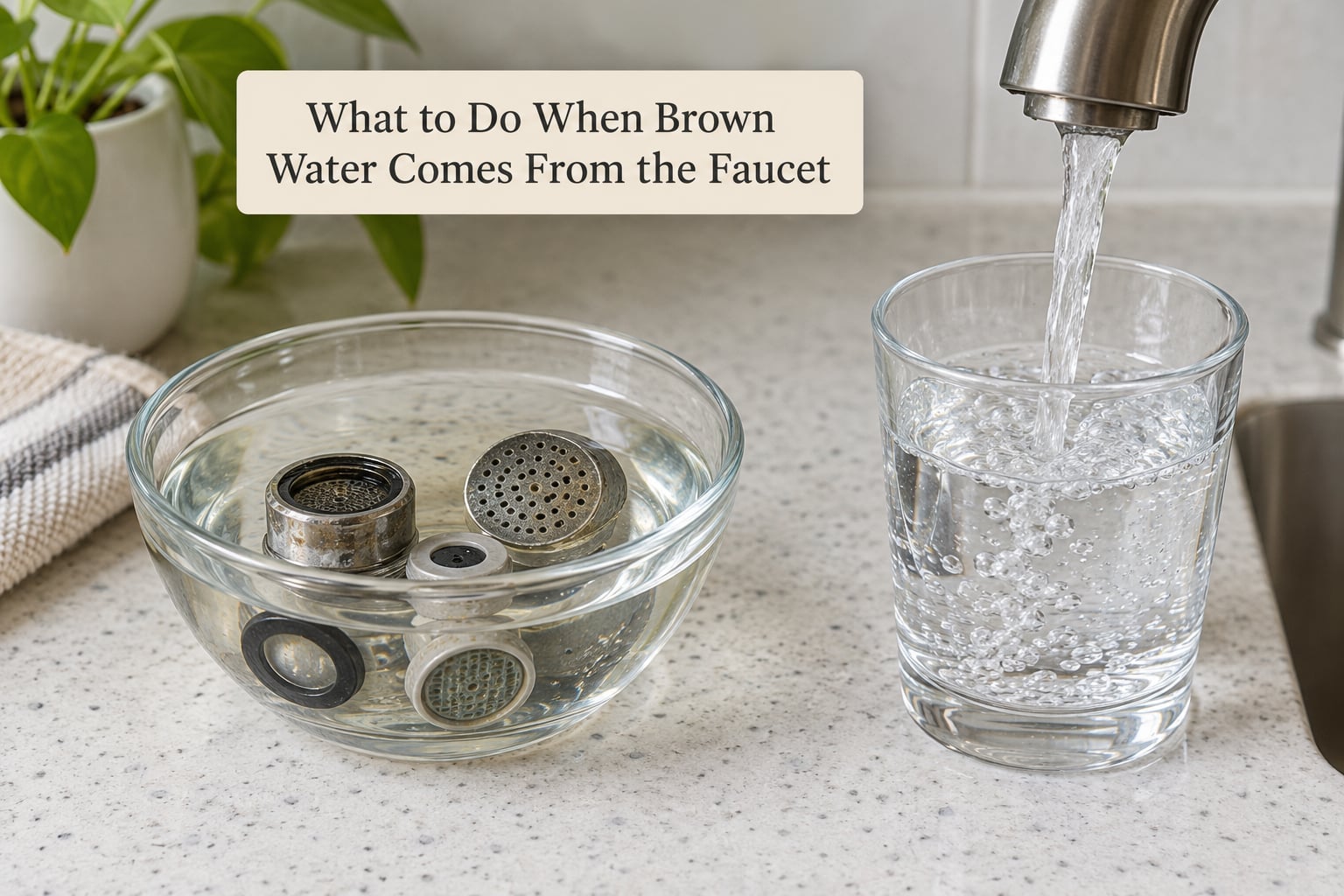
Work through these in order. Each one is homeowner-safe, and most people never get past step three.
1. Run both sides until it clears
Run the cold tap for five minutes and the hot tap for five minutes, moving from the faucet nearest the water heater outward. Flushing pushes the loose particles down the line. If it clears, note the time; that is useful information for anyone you call later.
2. Clean the aerator and showerhead screens
Unscrew the aerator, brush the screen and rinse it. If it is mineral-crusted, soak it in vinegar overnight. Check the showerhead the same way while you are there.
3. Flush the fixtures you rarely use
Guest baths, outdoor spigots, the laundry tap and the hose bibs are all dead legs where water sits. Open each one and let it run until it runs clear, then leave them open briefly on a schedule.
4. Ask two neighbors
This is the cheapest and most decisive check available. Forum threads show people doing exactly this before spending money on a call. If two homes on your street have brown water today, you are looking at the utility’s problem and a phone call to your water utility is the right move.
5. Check for recent work and visible corrosion
Ask your utility whether crews have been working mains or flushing hydrants nearby, and check whether any plumber has touched your lines recently. Look at exposed pipe in the basement, garage and crawl space for rust scale, staining or a damp spot.
6. Hold off on the dishwasher and the washing machine
Iron stains settle into dishes and white laundry permanently. And do not reach for chlorine bleach on stained laundry while the water is still discolored: bleach reacts with dissolved iron and drives the stain deeper. Air-dry what you must wash, and wash it again once the water runs clear.
Once the water runs clear, the dishwasher and washer are fine to use again.
When Should You Call a Plumber About Brown Faucet Water?
Call a plumber, rather than keep flushing, when any of these are true.
First, discoloration at every fixture in the house that does not clear within an hour of running the taps. Second, brown water that persists past 24 hours, or recurs every few days without any obvious trigger. Third, low pressure alongside discolored water, or any sign of a leak, damp foundation or a pipe that has been damaged. Fourth, a corroded or lead service line in a home built before 1986.
On a private well, recurring discoloration after rain or flooding belongs on the list too, and it needs a water quality test rather than a plumber. Test for coliform bacteria, nitrates and total dissolved solids before anyone drinks.
Before you book, collect what you have: which fixtures are affected, hot or cold or both, whether it cleared and how long it took, a photo of the discolored water in a clear glass, and whether neighbors see it. That short list lets a plumber rule out the easy causes before arriving, and it usually saves you a second visit.
How to Prevent Brown Water From Returning
There is no honest way to prevent this permanently, because the source is usually the pipe material itself. What you can do is slow it down and catch it early.
Flush the fixtures you rarely use on a schedule, and give the kitchen tap a short run after long periods away. For the water heater, follow the manufacturer’s flushing instructions and track the anode rod, since a spent rod accelerates tank corrosion from inside. Keep an eye on visible pipe in the basement and crawl spaces and note any new staining.
If you are in a home with original galvanized supply lines, a periodic whole-house inspection gives you an honest picture of how far along they are. Know roughly how old your supply lines are. Galvanized pipe installed in the 1960s and 1970s is now squarely past its 40 to 50 year functional life.
A whole-house repipe is the fix for corroded supply lines, and a sediment filter only handles what is still in the water as it passes. On galvanized plumbing, filtration treats the symptom and pipe replacement addresses the source.
Frequently Asked Questions
Is brown water from the faucet caused by rust?
Most of the time, yes. Iron and steel pipe walls react with dissolved oxygen in the water to form rust, and pressure changes, vibration or high flow knock those particles loose into the stream. That is why the water often runs brown for the first few seconds and then clears. A water heater sediment layer or a utility main event can produce the same color, so check whether the water is brown on both hot and cold before you decide.
Can flushing my water heater fix brown hot water?
Often, yes. If the discoloration appears only on the hot side, settled sediment in the tank is the likely cause, and a flush following the manufacturer’s instructions clears a surprising amount of it. If the hot water stays brown afterward, check the anode rod condition and expect a plumber. Never open or service a gas or electrical water heater beyond the steps in the manual.
How long should I run the tap to clear brown water?
Run the cold tap for about five minutes and the hot tap for five minutes, starting with the fixture closest to the water heater and working outward. After a water main break or hydrant flushing, expect discolored water anywhere from two to four hours, sometimes longer if a neighboring home is still drawing sediment. Water that stays brown past 24 hours is a plumber call, not a flushing problem.
Is brown water safe to bathe in and wash clothes with?
Bathing is generally fine once you have ruled out a compromised well or a lead service line, since iron and manganese are aesthetic contaminants under EPA secondary standards, with limits of 0.3 mg/L iron and 0.05 mg/L manganese. Laundry is where iron causes real damage: it stains white fabric permanently. Skip the dishwasher and washer while the water is brown, and never use chlorine bleach on stained laundry while the water still carries dissolved iron.
When does brown water need urgent attention from a plumber?
Call a plumber the same day if every fixture in the house is discolored and the water does not clear within an hour of running the taps, if pressure has dropped, if you see a leak or damp foundation, or if you suspect a lead service line in a home built before 1986. Do not drink the water until a cause is identified. On a private well, discoloration after flooding needs a lab test for coliform and nitrates rather than a plumber.
Conclusion
Start with one question: is the water brown at one faucet, only after the house has been quiet overnight, or at every fixture at once? That single answer tells you whether you are cleaning an aerator, flushing a heater, or dealing with the supply.
Until you know, do not drink the water, and keep the dishwasher and washing machine off. When the cause is persistent or potentially serious, contact a licensed plumber for the inside of the house and your water utility for anything on the street side of the meter.