Fruit flies clear out fast when you hit them from both sides: strip out every food source and breeding site in the kitchen, then set a closed baited trap to catch the adults already in the air. Ignore either half and the problem bounces back within a day. The full plan takes about an hour, most of it scrubbing.
One thing worth setting up front: the flies you kill today are not the last of them. Eggs laid in the fruit bowl or the drain line before you cleaned keep hatching for roughly a week, so expect a smaller second wave instead of instant silence.
Table of Contents
- What You Need
- Step-by-Step: How to Get Rid of Fruit Flies Fast
- 1. Remove and Cover Food Sources
- 2. Clean Fruit Fly Breeding Areas
- 3. Clean or Treat Drains and Sink Edges
- 4. Trap Remaining Adult Fruit Flies
- 5. Check Less-Obvious Infestation Sources
- 6. Prevent a New Infestation
- Common Mistakes That Keep Fruit Flies Around
- Frequently Asked Questions
- How long does it take to get rid of fruit flies?
- Where do fruit flies come from in the first place?
- Do fruit flies come from drains?
- Do fruit flies bite, and can they make me sick?
- Why is my fruit fly trap not catching anything?
- When should I call a pest control professional?
What You Need
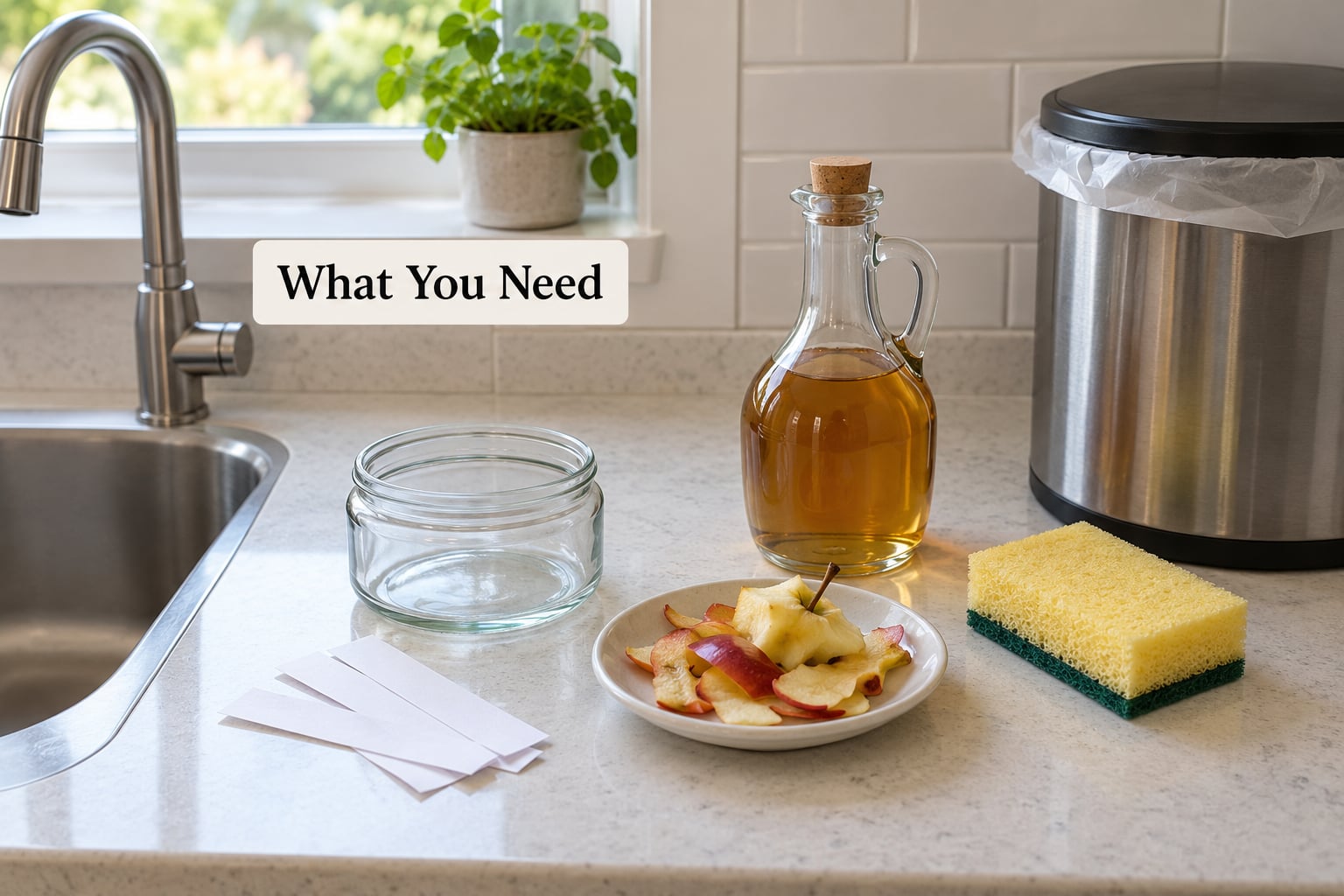
Gather everything before you start, because the cleaning steps work faster when you are not opening drawers looking for a sponge halfway through.
- Containment: a lined trash can with a tight lid, a bag of sealed produce storage, and paper towels for wiping surfaces.
- Cleaning: hot water, dish soap, a sponge or brush, and an enzyme drain cleaner for the pipes.
- Trapping: a small jar or bottle with a lid, a hammer and nail, apple cider vinegar, and a few drops of liquid dish soap.
- Prevention: fine mesh food covers, refrigerator crisper drawers, and a bottle brush for the garbage disposal.
If you have small children or pets, add a few small stones or a piece of bread to the bait so nothing laps the liquid, and put the traps somewhere they cannot be reached.
Step-by-Step: How to Get Rid of Fruit Flies Fast
1. Remove and Cover Food Sources
Everything fermenting is the target: soft berries, bruised tomatoes, bananas going amber, open bottles of wine or juice, and the leftovers in a compost caddy.
Bag overripe produce for the outdoor bin rather than carrying it to the kitchen trash, where it becomes fresh breeding material on the way out. Then rinse every container that held fruit, wipe down the counter, and empty the bins, including the recycling one. What stays on the counter goes into the refrigerator.
You will know this step worked when the counter stays bare and the fruit bowl holds nothing that is soft enough to dent under a fingertip.
2. Clean Fruit Fly Breeding Areas
A thin film of sugar on a surface is enough. Fruit flies can lay eggs in a residue you cannot see, so scrub rather than wipe.
- Take the fruit bowl and the liner out and wash both with hot soapy water.
- Wipe down counters, the refrigerator handle, the cabinet fronts near the sink, and the tops of the trash and recycling cans.
- Pull the refrigerator shelves out and wipe them, since a dropped drop of juice becomes an egg-laying site behind a container.
- Empty the compost bin or worm bin, rinse the container, and keep it closed when it is not in use.
3. Clean or Treat Drains and Sink Edges
The garbage disposal and the drain baffle are the most common hidden source, and the slime under the sink overflow hole is a favorite. It sits low and stays wet, which is exactly what the larvae need.
Run the disposal briefly with cold water, then with hot water, brushing the splash guard and the ring where the disposal meets the sink. Pour an enzyme drain cleaner down each kitchen and bathroom drain and let it sit as the label directs. Boiling water poured slowly down the drain also flushes larvae out of the pipe, though it will not cut through the biofilm on its own.
Bleach gets recommended often, and it rarely helps much. It passes through the pipe too quickly to kill accumulated slime, and it does nothing about the organic film that attracts the flies. Never pour a drain cleaner into a drain where you have used another chemical, and skip boiling water in a porcelain sink that may crack from a thermal shock.
4. Trap Remaining Adult Fruit Flies
The trap catches adults; it does nothing for eggs or larvae. That is still the fastest way to thin out a swarm while the cleaning takes effect.
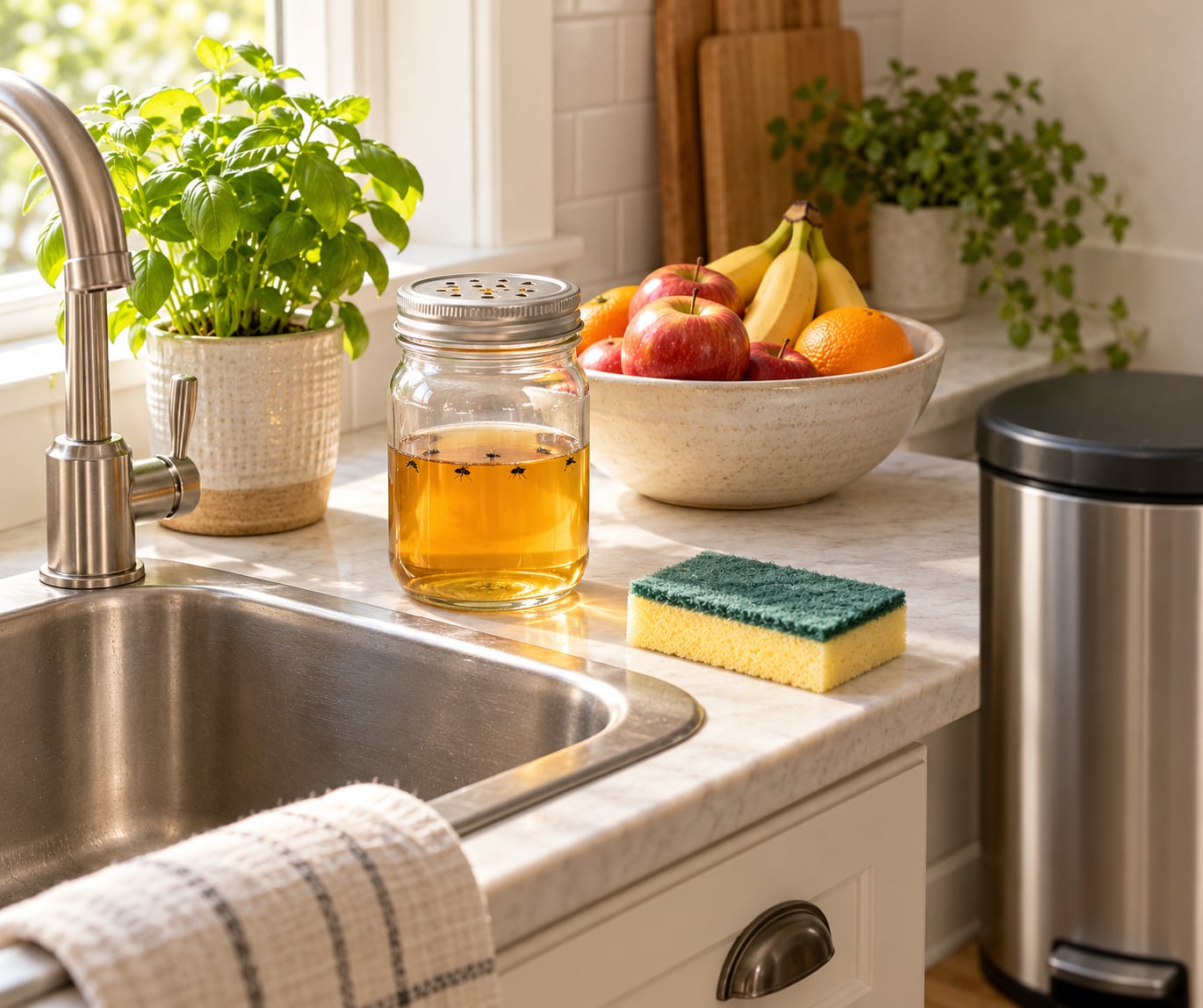
Fill the bottom of a small jar with a quarter cup of apple cider vinegar and two or three drops of liquid dish soap. The soap breaks the surface tension so the flies cannot sit on the liquid once they land. Punch five or six small holes in the lid with a nail and screw it on, or stretch plastic wrap over the mouth and poke holes in it.
That covered design outperforms the open bowl most people try. A bowl is easy to land on and easy to walk away from; a lid with holes forces flies to commit, and vinegar plus a fermenting fruit smell pulls them in.
Set two or three traps rather than one. Several home pest forums describe the single biggest improvement as moving from one trap to several, because the bait has to compete with the fruit bowl and more bait points win more flies.
Place traps near the problem area, not in the middle of the room, and replace the liquid every two or three days. When the jar looks murky and the trap stops collecting, dump it, rinse it, and refill. Paper strips inside a wide-mouth jar work too, and a wine bottle with an improvised funnel cap catches plenty during summer.
5. Check Less-Obvious Infestation Sources
If flies persist after a full kitchen clean, the breeding site is somewhere you have not opened yet. Walk the list.
- Damp produce drawers in the refrigerator, especially the bottom drawer where moisture collects.
- Recycling bins, where a rinse of juice and a banana peel can ferment for days.
- Mop heads left soaking and houseplant saucers holding standing water.
- Empty wine or juice bottles sitting by the sink with a sip left in them.
- Drains in the bathroom, laundry room, or basement, especially rarely used floor drains.
Fill a dry floor drain with water to see whether it holds. If it empties slowly and gurgles, that pipe has organic buildup and it needs the same treatment as the kitchen sink.
6. Prevent a New Infestation
Once the numbers drop, keep them low with a short weekly routine.
- Refrigerate stone fruit, bananas, and anything already softening.
- Keep the trash and compost lids down and take bins out on a schedule.
- Run the disposal with hot water after every use and flush the sink overflow.
- Wipe counters and refrigerator shelves once a week.
- Rinse empty bottles and jars before they reach the recycling bin.
- Keep one trap running in the kitchen during harvest season as a monitor, and empty it every few days.
Common Mistakes That Keep Fruit Flies Around
- Killing only what you can see. Sprays and swatters take out adults and leave the eggs untouched. Clean the source or the next wave arrives.
- Leaving produce out. One overripe banana on a counter can feed a generation. Refrigerate anything past its prime.
- Wiping instead of scrubbing. A damp wipe moves sugar around. Break the film with hot soapy water and a sponge.
- Using an open bowl trap. It rarely catches enough to matter. Add a lid with entry holes.
- Spraying near open food. Residue reaches produce and food surfaces. Work on counters with nothing uncovered nearby, and wash down afterward.
- Treating drains with bleach only. Use an enzyme drain cleaner that stays in contact with the buildup.
- Stopping after one day. Expect activity for roughly a week as eggs already laid finish hatching. Cleaning twice, a few days apart, beats one frantic pass.
Vacuuming deserves its own mention, and it is the tactic that comes up most often in home pest forums when people ask what worked tonight. Rest a vacuum hose near the fruit bowl or the compost bin with the suction running low, and the flies get pulled in as they hover. An electric fly swatter handles the stragglers on a wall.
Frequently Asked Questions
How long does it take to get rid of fruit flies?
Most kitchens improve noticeably within three to seven days once the food sources are gone. Traps usually start filling within 24 hours. Eggs laid before you cleaned can keep hatching for about a week, so a smaller wave of new adults is normal and does not mean the plan failed.
Where do fruit flies come from in the first place?
Usually from produce. Adults lay eggs on fermenting fruit and vegetables, and the larvae feed there for a few days before pupating. Fruit also arrives home already infested, since eggs survive packing and shipping. Drains, garbage disposals, and compost bins are the other common sources.
Do fruit flies come from drains?
They can, though the drain is rarely the whole story. The garbage disposal baffle and sink overflow hole hold wet organic film where larvae develop. Drain flies are different: they are larger, fuzzier, and hold their wings in a V shape. If that is what you are seeing, treat the pipe rather than the fruit.
Do fruit flies bite, and can they make me sick?
Fruit flies do not bite people or pets. They land on food and surfaces, so the concern is contamination rather than a sting. Stored food can pick up bacteria they carry from fermenting material, which is another reason to clean surfaces and keep produce covered.
Why is my fruit fly trap not catching anything?
An open bowl is the usual reason, since flies land and then walk away from the liquid. Use a lid with small entry holes and add a few drops of dish soap so they cannot sit on the surface. Poor bait is the other common reason: very ripe fruit or a splash of red wine vinegar pulls harder than plain vinegar.
When should I call a pest control professional?
Call one if the flies keep returning after two full weeks of cleaning and trapping, if they appear in large numbers with no accessible food source, or if you live in a multi-unit building where a shared drain or exterior garbage area may be feeding the problem. A pro can trace breeding sites you cannot reach.
Start with the food and the garbage disposal tonight, then set a covered vinegar trap beside the sink and a second one near the fruit bowl. Within a day the jars fill and the count around the fruit bowl drops. Give it the rest of the week for the eggs already laid to run their course, and keep the refrigerator habit afterwards so the next summer does not start the whole thing again.