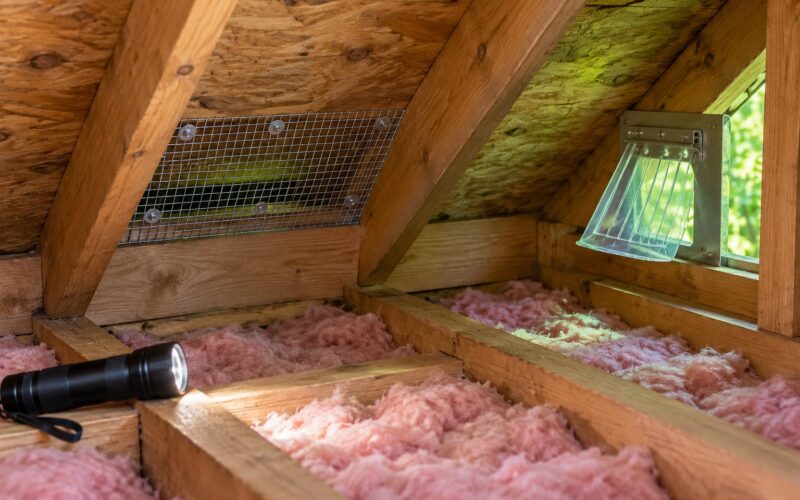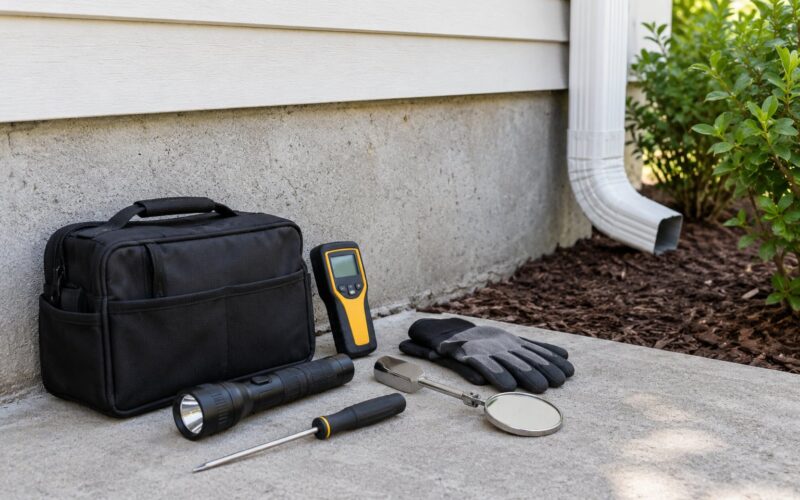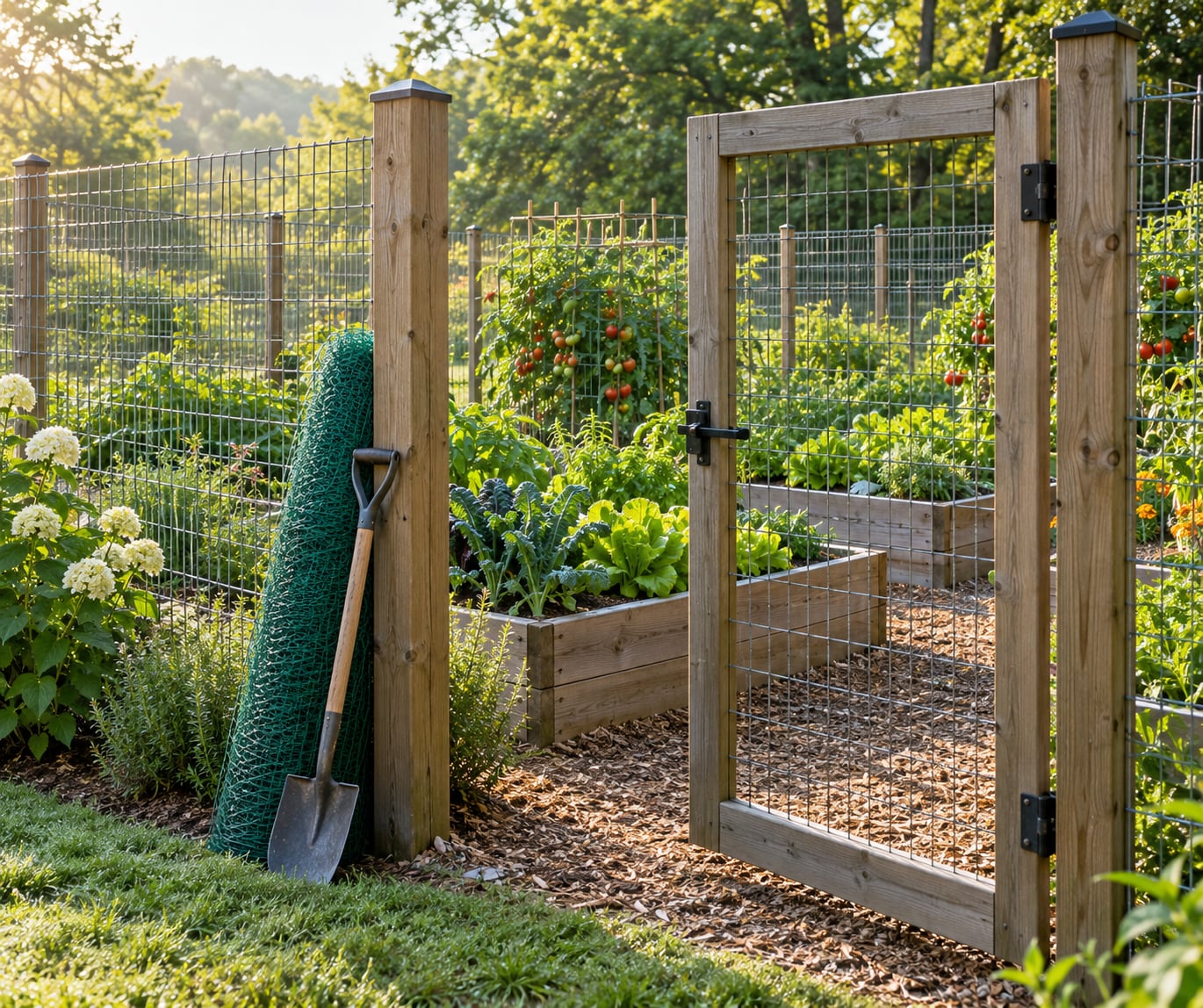
The only dependable way to keep deer out of a garden is to physically exclude them with one continuous barrier, then strip away the food and water that draw them close and add deterrents on top of that. A 7 to 8 foot fence around the beds, netting on individual crops, and a weekly cleanup routine will stop most of it in a single weekend. What takes longer is the part people skip: finding the gap that deer are actually using.
Deer are not trying to be clever. They follow the same routes at the same hours, they test the weakest point in a boundary, and they come back to whatever they ate last week. That predictable behavior is the reason this problem is solvable at all, and why the steps below are ordered the way they are.
I have watched enough gardeners throw money at spray bottles to say plainly: deterrents work best as the second layer, not the first. Exclusion does the heavy lifting. Everything else buys you time between repairs and covers the spots a fence cannot reach.
Table of Contents
- What You Need
- Step-by-Step: How to Keep Deer Out of a Garden
- Step 1: Confirm Where Deer Enter
- Step 2: Choose the Right Physical Barrier
- Step 3: Install Fencing Without Gaps
- Step 4: Protect Valuable Plants With Netting
- Step 5: Remove Attractants and Cover Feeding Sites
- Step 6: Add Motion-Activated or Scent Deterrents
- Step 7: Maintain a Consistent Deterrent Routine
- Common Mistakes
- Frequently Asked Questions
- How tall should a deer fence be?
- Will Irish Spring soap keep deer away?
- Do motion sprinklers work for deer?
- What is the best homemade deer repellent?
- Do wind chimes scare away deer?
- When should I start protecting my garden from deer?
- Conclusion
What You Need
What you buy depends on how much pressure you have and how big the area is. A 200 square foot vegetable plot inside a suburban yard is a different job than a 40 foot suburban perimeter around a cottage garden, so match the materials to the pressure rather than to a generic list.
- Welded wire or hardware cloth: the standard choice for a vegetable plot. 16 to 19 gauge woven or welded mesh holds up to antlers and stays taut. Woven wire stretches and sags less than chicken wire, which deer push through in a night.
- Polypropylene garden netting: nearly invisible over a bed or shrub row, light enough to move for weeding, and cheap to replace each spring. It is a cover, not a perimeter.
- Posts and fasteners: 6 foot steel garden stakes, 6 to 8 foot treated wood or metal posts, and staples, zip ties, or wire ties rated for the mesh weight.
- Netting fasteners: extra stakes, clips, or earth pins so edges can be re-secured after wind and rain. Netting fails at the corners, not in the middle.
- Tree guards and bud caps: rigid mesh cylinders around young trunks and ventilated caps over fruit tree buds, so antler rubbing does not strip bark.
- Motion-activated devices: a hose-end or impact sprinkler on a hose, or a battery unit that triggers water and sound when something crosses its zone.
- Scent deterrents: a registered, label-compliant repellent product. Read the label for crop safety and reapplication after rain.
- Basic yard tools: shovel for post holes, tamping bar, pliers, tape measure, a hose, and a wheelbarrow for displaced soil.
Before buying fence, check your local rules. Many municipalities, HOAs, or neighborhood agreements limit fence height, materials, or placement on a property line, and a 7 foot structure may need a variance or may simply be illegal on your street.
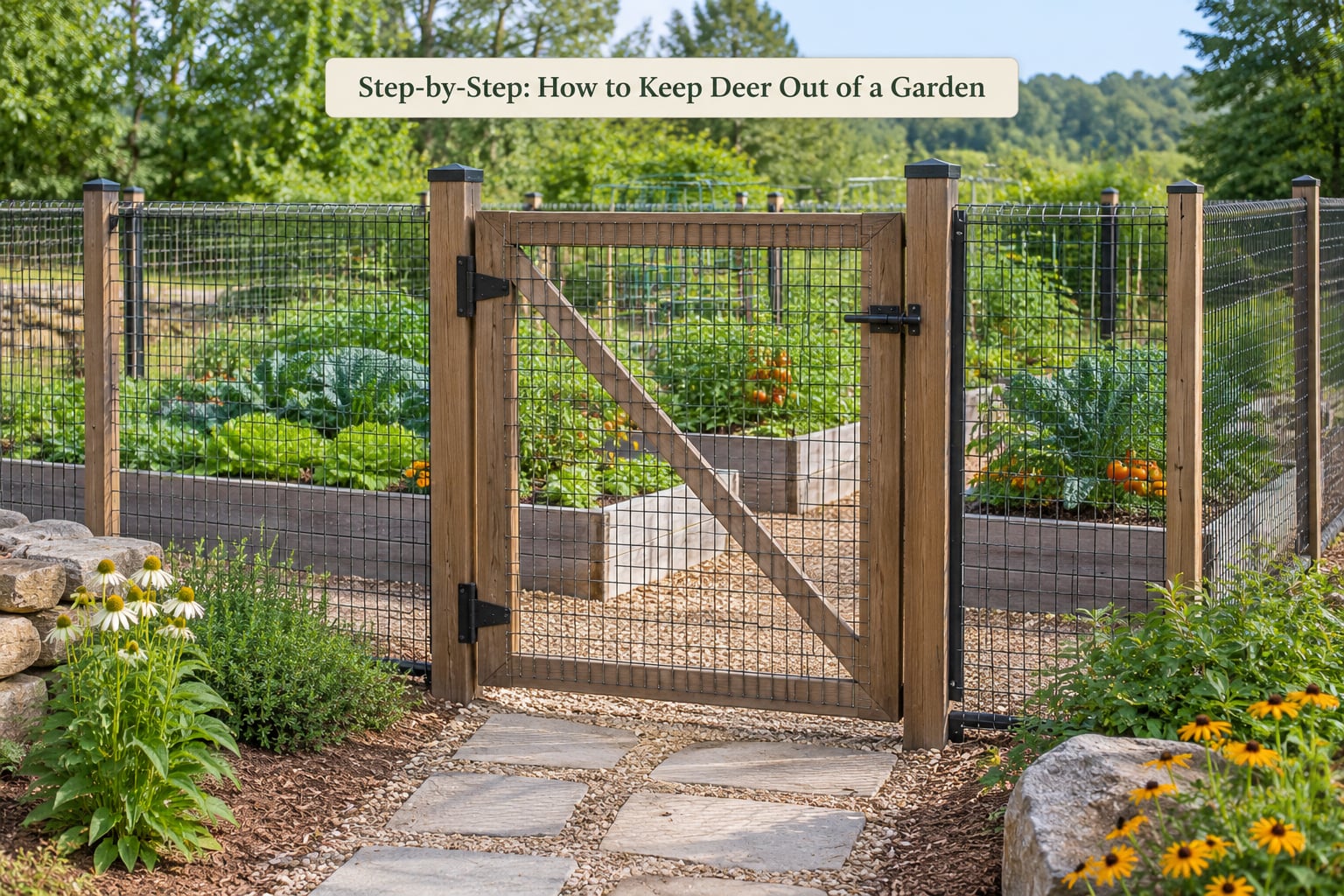
Step-by-Step: How to Keep Deer Out of a Garden
Step 1: Confirm Where Deer Enter
Walk the perimeter of the garden and the property line at dawn or dusk, when deer move and light is low enough to show tracks. Look for cloven hoof prints in soft soil, mud, or fresh rain, and note where they cross rather than where they end.
Damage tells you which deer are involved. Ragged stems and missing tops mean browsing. Smooth bark stripped from saplings in a vertical band, usually about chest height, means antler rubbing, which happens in the fall and is solved by guards rather than by scent.
Then check the obvious weak points: a gate that does not latch, a fence corner with a gap, a hedge or shrub row that forms a ramp over a low fence, and any place the fence sits more than a couple of inches off the ground. Deer also squeeze sideways through gaps far narrower than their bodies look from a distance. Fixing one gap is often the whole job.
Step 2: Choose the Right Physical Barrier
Height matters more than weight. Deer can jump roughly seven feet vertically in a standing start and considerably more when they run from a distance, so 7 to 8 feet is the practical minimum for a fence that will be relied on all year. Shorter barriers work only when something solid stops their momentum on the other side.
That is where the double fence trick earns its place. Two fences of 4 to 5 feet, set 3 to 5 feet apart, defeat deer more reliably than one 8 foot fence of the same total cost. Deer judge distance poorly at the moment they commit to a jump, so a confusing second wall often stops them mid-leap.
- Small plots and vegetable beds: 6 to 7 feet of welded wire on steel stakes, with a secure gate.
- Whole-property defense: 8 foot mesh on posts spaced 8 to 10 feet apart, with the bottom edge anchored.
- Shrub borders and individual plants: netting or mesh cages. This is the only realistic answer where fencing is restricted.
- Orchards, nurseries, and large acreage: high-tensile electric fencing on a portable or permanent line. A charged strand carries enough voltage to discourage contact without injuring an animal.
- Where height is restricted: invest in sealed mesh over the ground, netting on plants, and deterrents. Lower quality, lower expectation.
Step 3: Install Fencing Without Gaps
A fence is only as good as its least secure point. Set posts on the ground you will mow, leave the gate side clear, and mark the line before you start digging so the run comes out straight.
Set posts roughly 8 to 10 feet apart in the corners and at every change of direction, tamp them firm, and fasten the mesh along the top rail first so it hangs square. Work downward, tying or stapling at regular intervals, and keep the bottom edge within two inches of the soil.
Anchor that bottom edge. A straightener wire pinned at the base, or a run of extra staples over a wood batten, stops deer from shouldering under the mesh. Where the ground dips, follow the dip rather than cutting the mesh short, and leave a little slack so wind does not tear it off the posts.
Gates deserve more attention than the fence. Hang it so it self-closes, add a spring or gravity closer, use a latch that a deer cannot nose open, and sweep the ground under it so nothing invites a crawl. On the far side of the gate, run the mesh a short return or a drop panel, because a gate is exactly where deer test.
For electric fencing, follow the label on the energizer and follow the wiring instructions exactly. Set the wire low enough that a deer meets it at nose and chest height, keep vegetation off the line, and check the charge with a fence tester on a schedule. An electrified fence that is short on voltage feels like a fence post to an animal.
Step 4: Protect Valuable Plants With Netting
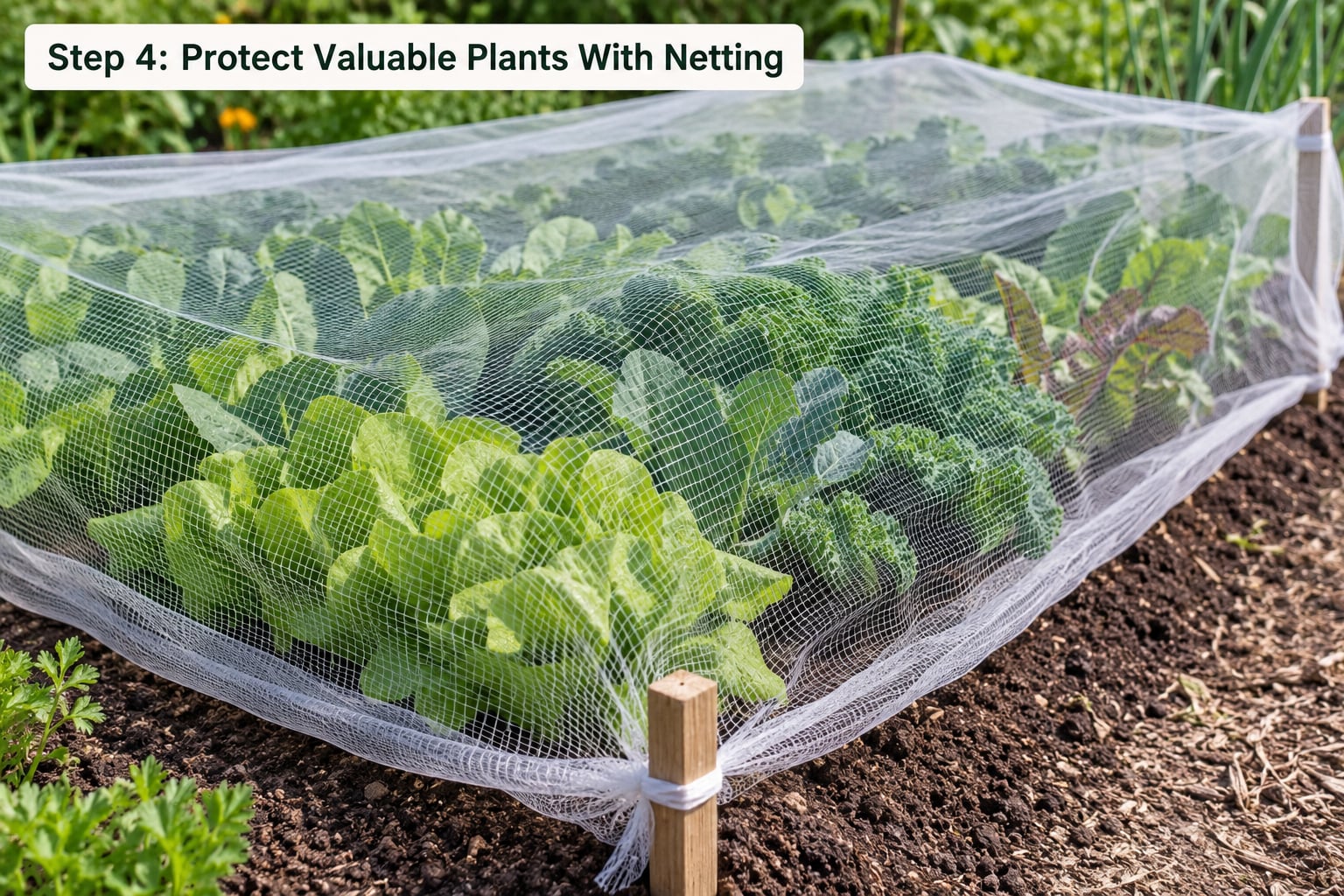
Netting is the workhorse for spots a fence cannot cover: a row of tulips by the front walk, a young peach tree, a bed of hostas in a shaded yard, or a shrub border on the property line.
Drape lightweight garden netting over the bed and pin it to the ground every few feet, leaving slack so the mesh does not press leaves flat. A hoop frame of wire or poly pipe over a bed lets you lift the net for weeding and harvesting without disturbing the edges.
For individual plants, put mesh cylinders or baskets over small shrubs and fruit trees, and anchor the bottom to the soil. Bud caps go on fruit tree buds in late winter, before swelling and before antlers come in, and they are removed as growth pushes through in spring.
Two cautions. Check netting every few days and open it by hand, because small birds, frogs, and mammals can get caught in loose or collapsed mesh. And take seasonal covers down as growth outgrows them, since a net pressing hard on a plant damages what you were trying to protect.
Step 5: Remove Attractants and Cover Feeding Sites
Deer follow food, and a surprising amount of what they eat comes from your yard rather than the woods. Fallen apples and pears, split tomatoes, spilled birdseed, an open compost pile, corn you use for wildlife feed, pet food left outside overnight, and even a bucket of rainwater that catches algae all raise the value of the whole property.
Rake and pick up weekly in season. Store fruit in lidded containers or a closed bin, keep the compost tumbler sealed and away from the beds, sweep seed spills under the feeder, and move pet bowls inside at night. If you deliberately feed deer, that food keeps them close, and everything else you install works harder because of it.
Clean up is also the cheapest deterrent there is. It costs nothing, it removes the reason deer are standing in your yard at all, and it works before any fence goes up. If you compost through municipal curbside collection, that is the simplest way to close the loop on food scraps. Check your local wildlife rules before you change anything about attractant management, especially where baiting is restricted.
Step 6: Add Motion-Activated or Scent Deterrents
Once plants are enclosed and attractants are gone, add deterrents to cover leftovers and open ground. Motion-activated sprinklers are the most reliable of these because the reaction is immediate, unexpected, and physical.
Place the sprinkler where it will hit a deer hard and spray it, not where it merely makes noise. Aim the stream across the approach path, keep the unit low enough that the sensor catches body heat, and walk past the zone yourself to confirm it fires. Where you can, run it on a timer so it goes off periodically on quiet days.
Expect habituation. Gardeners report that deer lose interest in a sprinkler within about a week, sometimes sooner, and the same goes for wind chimes, plastic predators, and any device that fires the same response from the same spot. Move it, change the timing, or pair it with a scent, and you get more out of the same hardware.
Scent deterrents fall into two groups. Area repellents, often built on putrescent egg solids or similar materials, create a smell boundary the deer reads as danger. Contact repellents, which rely on capsaicin or a bittering agent, do their work when the animal bites or rubs the treated plant.
Spray late in the day so foliage dries before evening, follow the label for edible crops, and expect to reapply every two to four weeks or after heavy rain. Use only registered products as labeled. Unlabeled mixtures and anything that sickens an animal create legal problems for you and a real animal welfare problem for the deer.
Step 7: Maintain a Consistent Deterrent Routine
The garden that stays intact is the one that gets checked. Set a weekly walk, the same day each week, and use it to look for five things: a lifted or cut fence section, a gate that no longer latches, netting with a new tear, fresh browse damage, and a deterrent that has stopped firing.
Rotate rather than repeat. Alternate the repellent brand or scent family, move motion devices to different points, and swap a sprinkler for a noisemaker for a week. Deer learn faster when the same thing happens every night, so variation is the cheapest performance upgrade available.
Respond to fresh damage immediately. A single bite or a new rub tells you where the weak spot is tonight, and fixing that spot before the second night stops a habit from forming. If you are seeing new trails each week, your barrier has a gap somewhere and more spray will not solve it.
Common Mistakes
Almost every failed deer fence comes down to the same short list of problems.
- A fence that is too short. A 4 foot fence looks finished and gets jumped. Raise it to 7 to 8 feet, or pair two low fences 3 to 5 feet apart.
- A gap under the gate. The weakest point on most properties. Add a self-closing hinge, a latch a deer cannot lift, and a drop panel or wire skirt beneath it.
- Netting pinned at the edges only. Corners and midspan lifts are where deer walk in. Add stakes every few feet and re-tension after each storm.
- Relying on scent alone. Spray is a supplement, not a perimeter. In areas with real pressure it fades within a couple of weeks and does nothing in hard rain.
- Forgetting the fruit. One dropped apple under the tree can undo a week of deterrents. Pick up or bury windfall fruit.
- Using unregistered products or unregistered devices. Follow the label, keep products away from children and pets, and check local rules on fencing height and noise devices.
- Failing to open netting. A collapsed net can trap birds or small mammals. Check every few days and free anything caught.
- Never moving the same device. Deer habituate to a sprinkler, a light, or a plastic predator left in one place. Reposition on a two to three week cycle.
Frequently Asked Questions
How tall should a deer fence be?
Seven to eight feet is the practical minimum for a fence you will rely on all year, because deer can jump about seven feet from a standing start and further when running. If height is restricted, two fences of 4 to 5 feet set 3 to 5 feet apart stop more deer than one low fence, since deer judge distance poorly as they commit to a jump. Whatever the height, anchor the bottom edge to within two inches of the soil.
Will Irish Spring soap keep deer away?
Results are genuinely mixed. The strong scent keeps some deer off treated plants for several days, but deer in areas with real browsing pressure often learn to eat the soap itself, especially in spring when almost nothing else is available. It also washes away in rain and has no residual effect on the soil. Gardeners who use it treat it as a free extra layer on top of fencing or netting, never as the main defense.
Do motion sprinklers work for deer?
They work well at first and then fade fast. The startle response is immediate and physical, which is why a sprinkler outperforms a wind chime or a plastic predator. Gardeners typically see deer ignore the same unit within about a week when it stays in one place with the same timing. Moving it, changing the spray pattern, and pairing it with a scent deterrent stretches the useful life of the device considerably.
What is the best homemade deer repellent?
An egg spray is the best known home recipe: mix roughly one part eggs with four parts water, about 20 percent egg to 80 percent water, and spray it on foliage in the afternoon. Break the chalaza, the stringy white knot inside each egg, and remove it, or the mixture will clog your sprayer. Apply again after rain, expect odor during use, and follow local rules before spraying anything near edible crops.
Do wind chimes scare away deer?
Only for a short while, if at all. Wind chimes rely on a sound deer can habituate to within days, and deer also judge noise by whether it came from something dangerous. They work best as a secondary noise layered with a sprinkler or scent deterrent, never as a standalone defense. Plastic predator figures and string lights behave the same way, losing effect after weeks or months in a fixed position.
When should I start protecting my garden from deer?
Install physical protection before the first flush of new growth, which for most of the US means late winter or very early spring, because that tender growth is what deer target first. Put up antler guards on young trees in late winter before the fall rubbing season, and cap fruit tree buds before they swell. Repellents and motion devices should be running before the first hard frost, and fall is the second busiest damage window, not the only one.
Conclusion
If you learn how to keep deer out of a garden in one order, this is the order that works: walk the perimeter and find the gap, pick up every piece of fallen fruit and close off compost and seed, install one continuous barrier of the right height with a latching gate and an anchored bottom edge, then add deterrents on top of that. The physical barrier does the protecting, the cleanup removes the reason deer showed up, and the deterrents cover the gaps you cannot fence.
Keep the weekly walk. Most deer problems that get expensive are the ones nobody checked for two weeks.