How to prevent termite damage comes down to three jobs that most homeowners can do themselves: control moisture, remove wood-to-soil contact, and keep a clear, dry perimeter around the structure. Most of the work is small and repetitive rather than expensive, and a full walkthrough takes an afternoon once you know where to look. Below is the process I walk homeowners through, plus the point where a licensed pest professional takes over.
Termites are the reason so many otherwise sound houses need major repairs. They work from the inside out, eating the wood behind paint and drywall long before anything looks wrong, and standard homeowners insurance treats their damage as preventable rather than a covered peril. That combination is why prevention matters more than reaction.
Table of Contents
- What You Need
- Step-by-Step: How to Prevent Termite Damage
- 1. Inspect the Home for Termite Signs
- 2. Reduce Moisture Around and Inside the Home
- 3. Keep Wood and Soil from Making Contact
- 4. Seal Gaps and Repair Damaged Building Materials
- 5. Maintain Vegetation and the Perimeter
- 6. Arrange Professional Inspections and Treatment
- Common Mistakes
- Spraying products without identifying the insect
- Ignoring moisture because the wood looks dry
- Filling galleries or knocking down mud tubes
- Sealing an active area and calling it fixed
- Assuming every pest control plan covers termites
- Stacking firewood against the house
- Relying on DIY products alone in a high-risk area
- Skipping the annual inspection
- Frequently Asked Questions
- How often should I inspect my home for termites?
- Can I prevent termites with DIY products?
- What do mud tubes mean on a house?
- Do termite treatments work year-round?
- How much moisture around a house attracts termites?
- When should I call a professional termite inspector?
- Start With the Foundation and the Drainage
What You Need

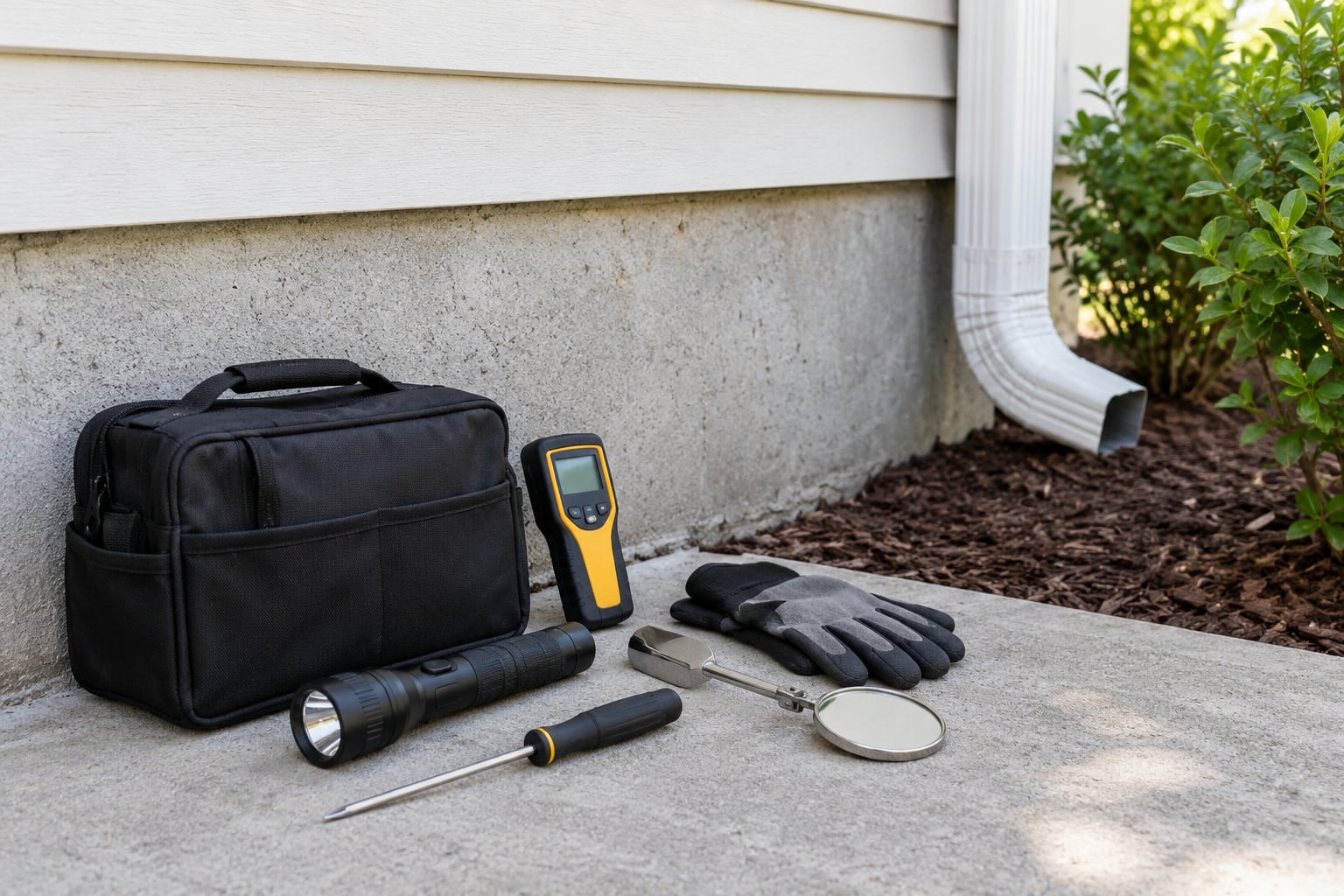
You do not need termite-specific equipment to do this well. A general hand tool kit covers almost everything, and the one purchase worth making is a pin moisture meter, which turns a guess about damp wood into a reading.
- Flashlight with a bright beam. Termites avoid light, so activity concentrates in shaded voids where your flashlight actually reaches.
- Pin moisture meter, or a straightedge and ruler as a cheap substitute. Wood above roughly 20 percent moisture content is a problem worth fixing.
- Screwdriver or small pry tool for probing soft wood and opening shallow inspection points.
- Folding ladder for baseboards, window headers and attic access.
- Protective gloves and a dust mask for crawl spaces, where you will meet fiberglass insulation, spider silk and old mouse droppings.
- Binoculars for checking roof edges and upper-story trim from the ground.
- Property records including any existing pest management contract, warranty, past treatment dates and known repairs.
- Contact details for a licensed termite professional, saved before you need them.
If your house has a crawl space, add a headlamp, knee pads and a respirator. Crawling on a dirt floor at 40 inches is not a beginner job.
Step-by-Step: How to Prevent Termite Damage
Work through these in order each year, in the spring and again after the rainy season. Steps one through five are homeowner work. Step six is where professionals earn their fee.
1. Inspect the Home for Termite Signs
Walk the interior first, then the exterior. Inside, run your hand along every baseboard, window sill, door frame and the trim around plumbing penetrations, and knock on wood that looks slightly darker or thinner than the rest of the wall.
Bubbling or peeling paint on a wall with no obvious damp source is a classic signal, because moisture from the colony wicks up into the finish. Wood that sounds hollow when tapped, doors that suddenly drag on the floor, or a shower wall that feels soft all point the same way.
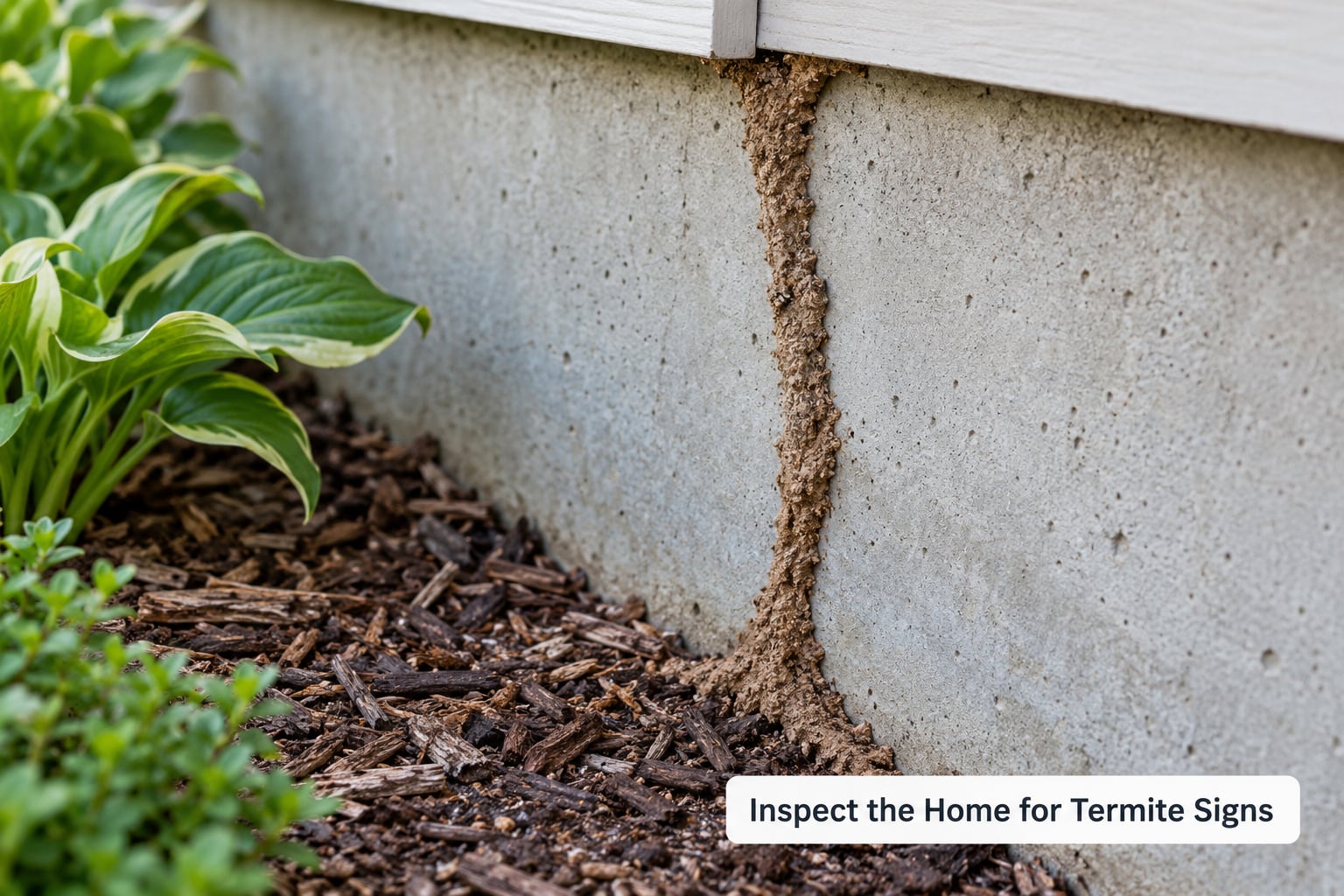
Outside, follow the foundation line and look for mud tubes, which are pencil-sized earthen runs bridging from soil to wood. Check around hose bibs, downspouts, deck posts and steps where the grade meets the wall.
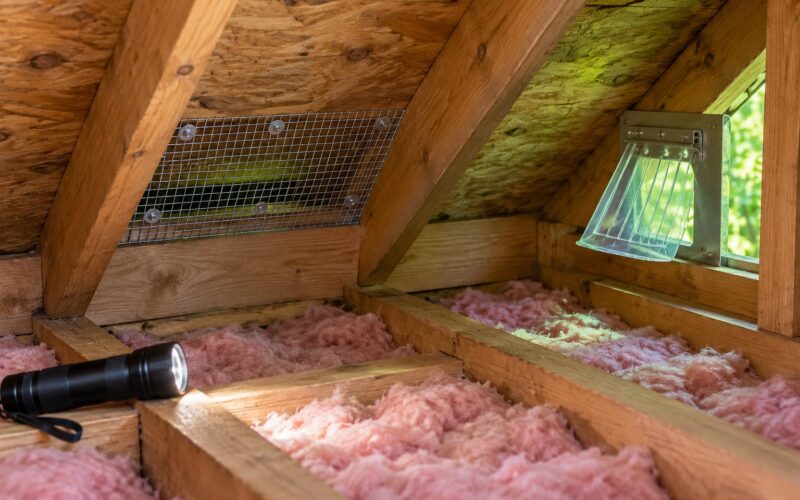
In the attic or garage, look for discarded wings, small piles of tan-brown shells, and frass that looks like coarse coffee grounds. Drywood termites show up here instead of at the foundation, and they need no soil contact at all.
Confirm the result by finding two or more signs in the same area rather than one. Mud tubes mean active travel; a single warped board might just be a seasonal expansion joint.
2. Reduce Moisture Around and Inside the Home
Termites need damp wood to survive, which makes moisture the lever with the most leverage in the whole process. Fixing drainage and leaks does more for prevention than any product you can buy.
- Clean gutters twice a year and extend downspouts so water lands six feet away from the foundation.
- Regrade bare soil that slopes toward the house for six feet out, or add a splash block at each downspout.
- Repair dripping hose bibs and any plumbing leak, including the slow toilet and the outdoor spigot you forgot existed.
- Add a dehumidifier or run exhaust fans in bathrooms, kitchens and laundry rooms after every shower or run.
- Check that laundry machines drain outdoors rather than into the crawl space.
- For crawl spaces, remove cardboard, debris and stored lumber, then let the space dry and check the moisture reading.
Persistent damp that returns after every rainfall usually points to a grading, drainage or foundation problem rather than a termite problem. Fixing that is structural work, and it is worth a licensed contractor.
3. Keep Wood and Soil from Making Contact
Wherever wood touches soil, you have built a highway. Break the contact and you cut off the colony’s easiest route in and out of the structure.
Common offenders are deck posts set directly in concrete, fence posts, porch columns, siding that extends to grade, and firewood stacked on the ground. The usual fix is a metal or PVC post shoe that holds wood above grade while keeping the post anchored.
Also trim or adjust exterior trim, siding and cladding so nothing extends more than a few inches below grade, and keep storage sheds, playsets and raised garden beds away from the house.
Leave anything load-bearing or foundation-related to a contractor. Shortening a structural post to fix a termite route is exactly the kind of shortcut that turns a small problem into a large one.
4. Seal Gaps and Repair Damaged Building Materials
Termites travel through openings far smaller than you would expect, including around plumbing and electrical lines, utility penetrations, deck ledger boards, expansion joints and the seam where siding meets trim.
Seal accessible gaps with a quality exterior sealant or polyurethane caulk, and fit metal or mesh guards over larger ventilation openings near the foundation while keeping weep holes clear.
When you replace wood, choose naturally resistant or pressure-treated material for anything that can contact soil. Heartwood cedar, redwood and cypress hold up better than softwood, and pressure-treated lumber handles ground contact but can still be vulnerable once the treatment cracks or the wood stays wet.
Know the difference between repair and treatment. Caulking a cosmetic crack does not treat a colony, and replacing eaten fascia will not slow an active infestation. Filling galleries or knocking down mud tubes without treating simply reroutes the colony and hides the evidence.
Deep structural damage, widespread activity in multiple rooms, or damage in load-bearing members belongs to a licensed professional. Tenting and fumigation are not homeowner jobs.
5. Maintain Vegetation and the Perimeter
Keep a clear zone around the house so you can see the foundation and so nothing bridges the soil to the structure.
Trim shrubs and tree limbs back from siding, keep leaves and debris out of gutters and away from the foundation wall, and pull mulch back to leave a few inches of exposed foundation. Mulch does not attract termites by itself, but a two-inch layer pressed against siding creates the cool, damp bridge they travel on.
Store firewood and lumber on a raised rack at least ten feet from the house, keep it off the ground and covered at the top, and remove dead tree stumps, fallen limbs and buried roots near the structure. If a tree must come down, take the stump with it.
None of this replaces treatment when termites are active. Maintenance keeps your inspections faster and your findings reliable.
6. Arrange Professional Inspections and Treatment
Call a licensed termite inspector when you see active signs, when you are buying or selling a home, when you have a history of nearby activity, or when your region has high subterranean pressure. The Southeast, Gulf Coast, southern California, Hawaii and parts of the Southwest carry the heaviest risk.
Ask what the inspection includes and whether a written report with photos comes with it. Find out who performs the work, whether the company is licensed in your state, and what the contract actually guarantees.
The word warranty covers two very different things. Treatment-only coverage means the company will return and re-treat if termites show up again. Damage coverage means the company pays to repair the damage, and that is the one worth paying for. A renewable contract is common, and the annual renewal usually runs a fraction of the initial treatment cost, so get both numbers in writing before signing.
Treatment choice follows the species and the extent of the problem. A liquid barrier treats the soil around the structure, a baiting system targets colonies through monitoring stations, and localized wood treatment handles limited drywood activity. Ask which approach your situation needs and why, and be cautious about anyone selling a single method before looking at the house.
Homeowners value companies that explain rather than just sell. If a technician cannot tell you what species he found, where the colony is, and what the contract covers, keep looking.
Common Mistakes
Most failed prevention attempts come from a handful of repeated mistakes. Each has a straightforward fix.
Spraying products without identifying the insect
Carpenter ants, powder post beetles and wood-boring beetles all damage wood, and each needs a different response. Over-the-counter sprays applied blind often chase a colony into the wall instead of eliminating it. Correct fix: open a damaged area and look at the insect, the frass and the galleries before you spend money.
Ignoring moisture because the wood looks dry
Hidden damp behind a wall or under a crawl space liner feeds a colony while the surface reads fine. Correct fix: use the moisture meter on concealed framing, and fix the water source rather than the symptom.
Filling galleries or knocking down mud tubes
This is the most damaging habit on the list. Mud tubes are the colony’s highway, and sealing or removing them without treatment makes the termites build a new route somewhere you will not see. Correct fix: leave the evidence intact until a professional has treated the area.
Sealing an active area and calling it fixed
Caulk stops travel along one path and does nothing to the colony feeding behind your walls. Correct fix: treat first, repair second, in that order.
Assuming every pest control plan covers termites
Many general pest contracts exclude termites entirely, and a few include inspection without treatment. Correct fix: read the exclusions and confirm termite-specific coverage in writing.
Stacking firewood against the house
A pile of seasoned logs leaning on siding provides a sheltered feeding source with a direct route to the wall. Correct fix: move it off the ground, cover the top and set it ten feet back.
Relying on DIY products alone in a high-risk area
Consumer sprays and soil treatments protect the surface, not the colony at the center of the structure. Correct fix: use DIY work for detection and prevention, and let a licensed company handle an active infestation.
Skipping the annual inspection
Damage accumulates quietly and annual detection cost is a fraction of repair cost. Correct fix: put the inspection on the calendar at the same time each year.
Frequently Asked Questions
How often should I inspect my home for termites?
Most homeowners should look once a year, ideally in spring after the rains, and add a second walk-through after storm season. Do a full interior and exterior check every time, then pay attention to any spot that changed since your last pass. Homes in high-risk regions, homes with wood siding or crawl spaces, and properties next to wooded land deserve closer attention and professional inspections more often.
Can I prevent termites with DIY products?
DIY products are useful for prevention and early detection. Over-the-counter soil treatments, sealants and moisture control handle a lot of the work on your own. They are not enough once termites are inside the structure, because the colony is usually hidden in soil or wood you cannot reach. That stage needs a licensed professional using a barrier, baiting system or targeted wood treatment.
What do mud tubes mean on a house?
Mud tubes are the earthen shelter tunnels subterranean termites build as they travel between soil and wood. Their presence means termites are actively moving through that area, usually feeding nearby. Broken tubes alone are not proof of a colony, since old tubes persist after a colony moves on, but fresh tubes with soft mud usually signal current activity. Leave them in place so an inspector can trace the route.
Do termite treatments work year-round?
Treatment can be performed in any season, but timing affects results. Spring and early summer are swarming seasons in many regions, and a technician can often spot activity then that is hidden in winter. Soil barriers usually need the ground to be workable and reasonably dry, so wet winter conditions can delay application. Cold weather can also slow bait consumption. Regional climate and the species involved matter more than the calendar date.
How much moisture around a house attracts termites?
Termites need consistently damp wood to survive, so persistent moisture is what turns a property into a target. A dripping hose bib, a downspout dumping water at the foundation or a crawl space reading above 20 percent moisture content is enough. Short-term puddles usually dry without harm, but recurring damp around the foundation, in wall cavities or under finished floors creates the steady supply a colony needs.
When should I call a professional termite inspector?
Call a licensed inspector when you find mud tubes, discarded wings, bubbling paint or wood that sounds hollow, and before any transaction involving the home. It is also worth calling if your region has heavy termite pressure, your previous company lapsed, or a neighboring property was treated and had the soil barrier renewed nearby. Ask for a written report with findings, photographs and a clear contract explanation before agreeing to treatment.
Start With the Foundation and the Drainage
Pick one afternoon this month and do two things: walk the full foundation line looking for mud tubes and soil contact, and check every downspout, hose bib and gutter for water going nowhere near where it should. Those two hours cover most of what makes prevention work, and they are the start of the annual routine.
Put the professional inspection on the calendar for the same week each year, and read your pest contract for the exclusions before you assume you are covered.