To learn how to keep squirrels out of the attic, you do one thing properly: shut off every route in and leave no route back out. Fit a one-way exclusion door on the main entry point, seal all other gaps with steel mesh, remove food and shelter attractants, then wait until the attic is confirmed empty before closing that final door for good.
Most homeowners can handle this over a weekend, though the exclusion phase takes a couple of weeks of patience on top of the work. The part people get wrong is sealing first and asking questions later, which usually ends with an adult squirrel chewing back through a fresh repair to reach its young.
This guide walks through the whole process in order, including how to check for babies and when to hand the job to a licensed wildlife control operator.
Table of Contents
- What You Need
- Step-by-Step: How to Keep Squirrels Out of the Attic for Good
- Inspect the attic and locate every entry point before you seal anything
- Install a one-way exclusion door at the main entry point
- Seal all other openings with the material that matches the surface
- Remove attractants and make the roofline less inviting
- Confirm the squirrels have left before you close the last hole
- Common mistakes and how to fix them
- Frequently Asked Questions
- How long should I leave a one-way squirrel door in place?
- Do one-way exclusion doors actually work?
- Can squirrels get into an attic through the vents?
- What should I not use to remove squirrels from my attic?
- When should I call a licensed wildlife control professional?
- Conclusion
What You Need
Gather everything before you go up. Half-finished exclusion jobs are common, and they leave the opening wider than it started.
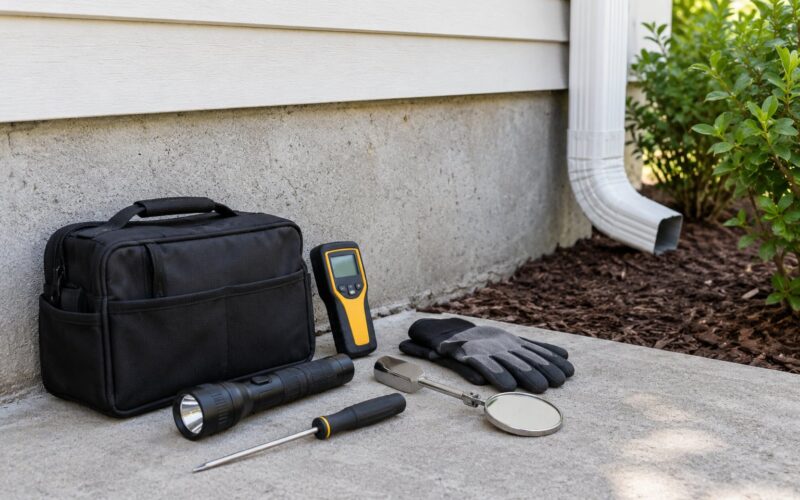
- A strong flashlight and spare batteries. Attics are unlit, and entry points hide in shadow along the eaves.
- Respirator and disposable gloves. Droppings, urine-soaked insulation and rodent-borne pathogens are a real exposure risk. A simple dust mask is not enough.
- Steel mesh or galvanized hardware cloth, 1/4 inch or finer. Squirrels chew through aluminum, plastic, screen and wood. Stainless steel or galvanized steel is what holds.
- Exterior-grade sealant, masonry sealant and roofing cement for gaps where mesh alone will not seat properly.
- Metal flashing, a hammer and roofing nails for damaged soffits, fascia and roof returns.
- Stainless steel staples or masonry fasteners to pin mesh flat against the opening.
- A one-way exclusion door sized to match the largest entry hole, plus a screwdriver or drill.
- Old towels or a drop cloth for insulation you will be stepping on or pushing aside.
For access, walk only on joists or on a laid plank across them. Never step between joists or on the bottom of a ceiling drywall grid. Wear a respirator, long sleeves and eye protection, go during daylight with another adult aware that you are up there, and keep your phone with you.
Step-by-Step: How to Keep Squirrels Out of the Attic for Good
Inspect the attic and locate every entry point before you seal anything
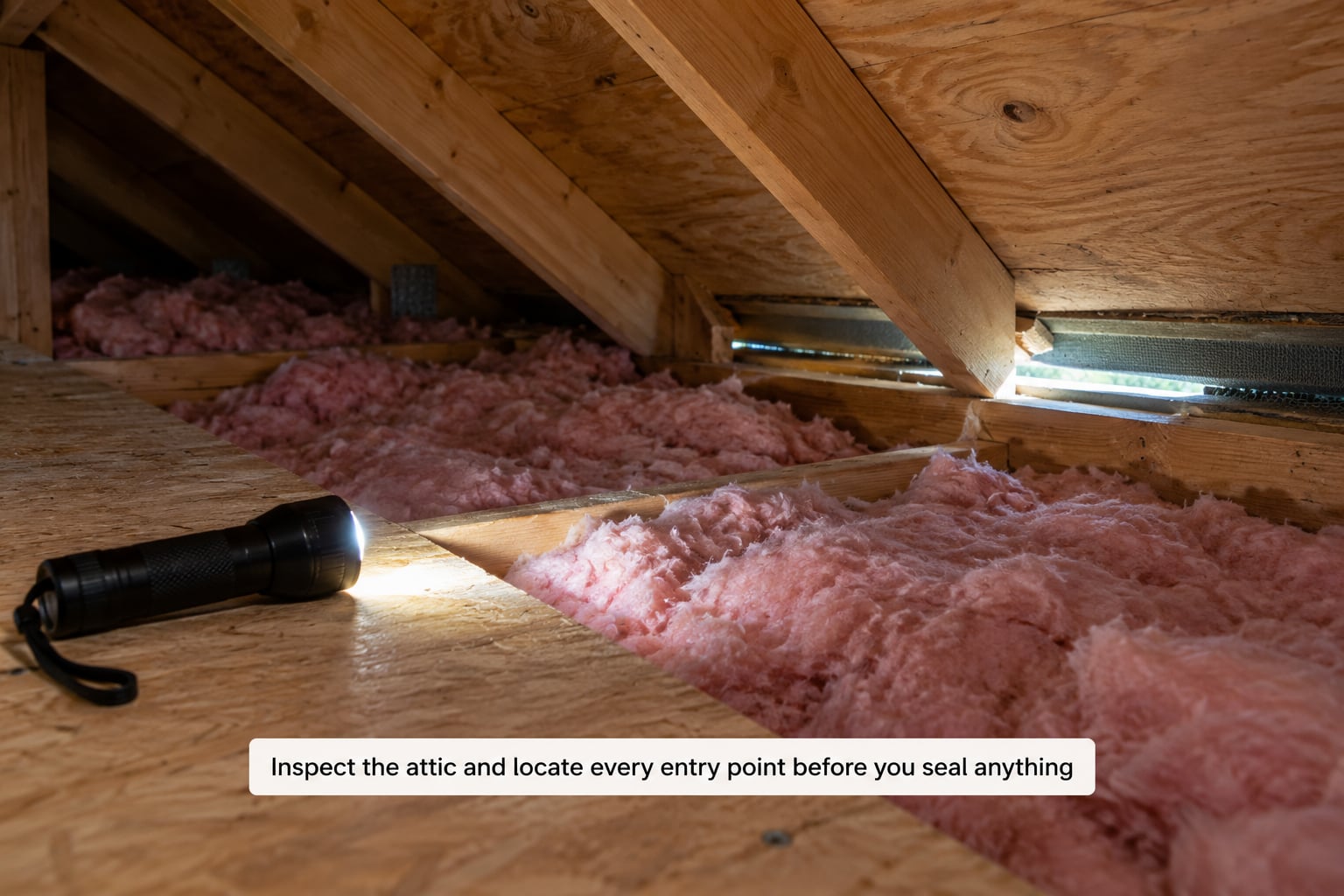
Look for evidence before you touch anything. From the attic floor, follow the eave line and the roof-to-wall junction with your light, and check the attic side of any gable or ridge vent covers for dark rub marks around the edges.
What you are hunting for:
- Gnaw marks on fascia boards, soffit edges and roof returns, often with orange staining nearby from repeated chewing.
- Rub marks where a squirrel’s belly drags across wood or shingle at a gap it squeezes through daily.
- Droppings and urine stains on insulation or ceiling drywall, plus a strong musky attic smell that shows up when you are outside in the rain.
- Nest material built against a warm surface, built from leaves, twigs and chewed insulation.
- Damaged roofing material where shingles have been pushed back or lifted.
- Unscreened gaps at vents, around chimneys, where plumbing or wiring penetrates, and along the ridge.
Then check the exterior from the ground with binoculars or from a stable ladder position. Squirrels typically use two holes, one to enter and one to leave so they have a predator escape route. Gray squirrels work a hole roughly the size of a quarter. Flying squirrels work much smaller, closer to a nickel, and nest in groups, so their attic tends to sound far busier at night. Gray squirrels are most active at dawn and dusk, flying squirrels after dark.
Mark every opening you find, including the small ones. Missing one nickel-sized hole is the single most common reason a finished exclusion fails in a month.
Install a one-way exclusion door at the main entry point
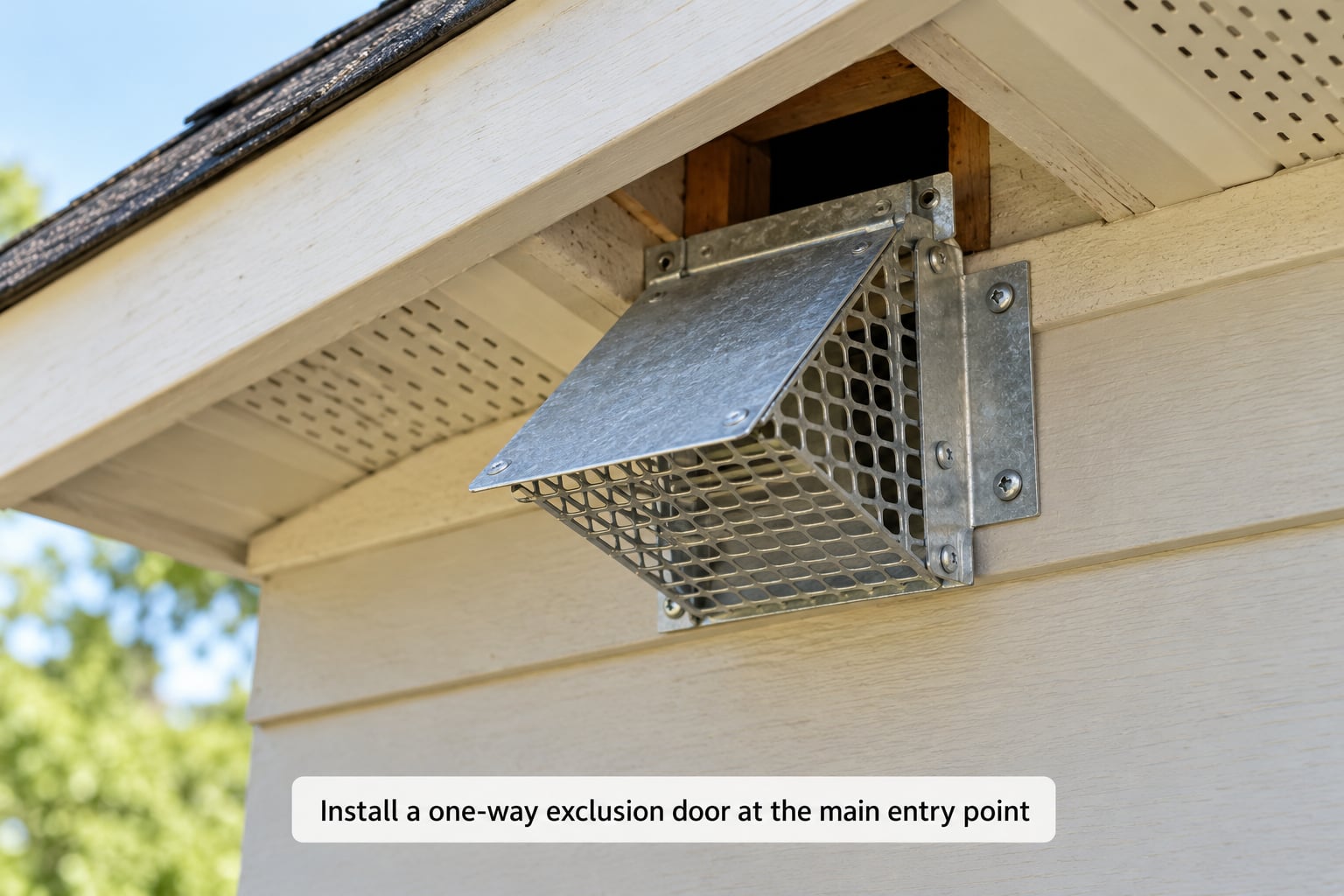
The one-way door is the heart of the job. It is a metal or rigid plastic flap hinged so a squirrel can push outward from inside but cannot push back in from outside. You attach it over the primary entry hole only after confirming no babies are present.
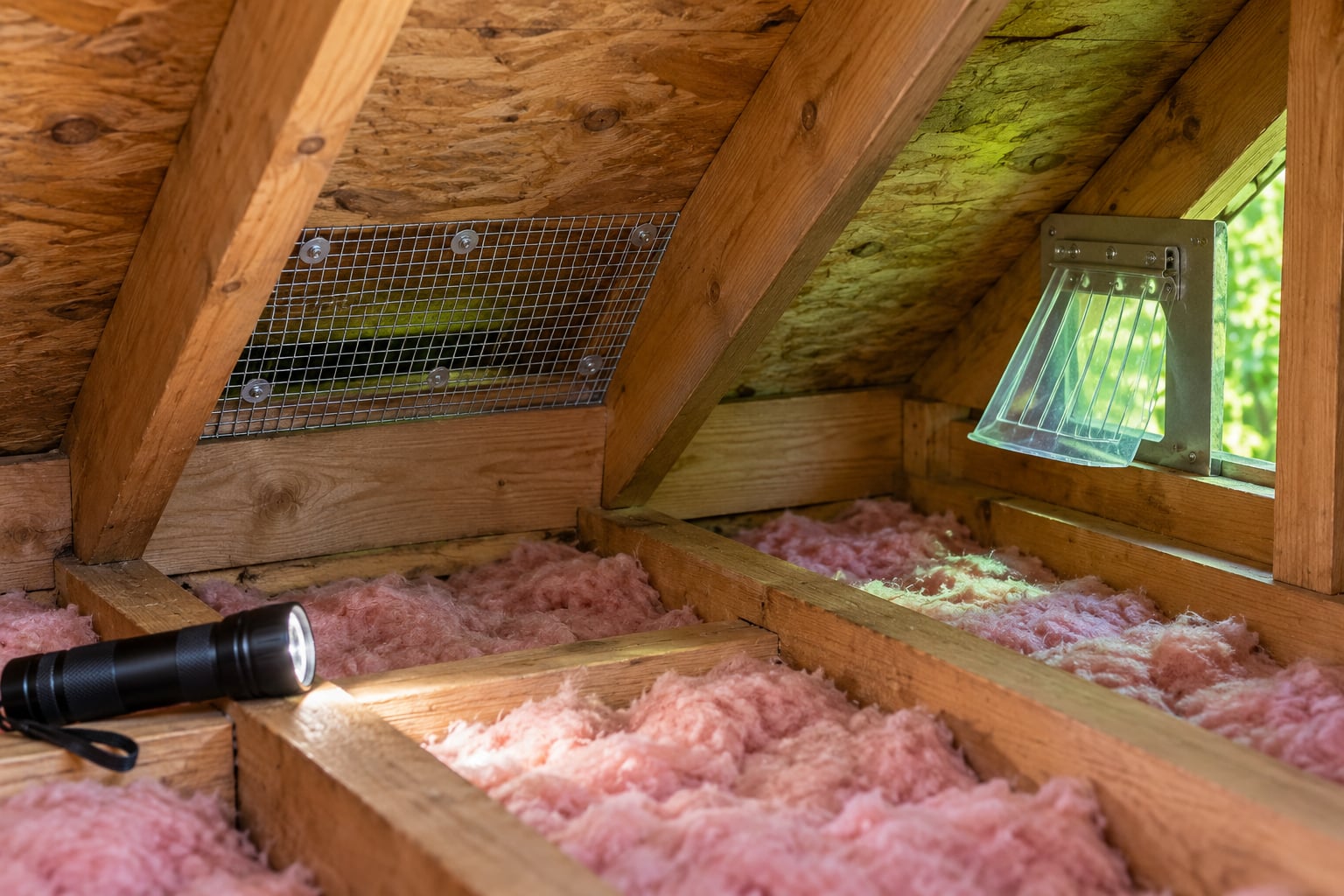
Size it so the opening clears the squirrel’s body comfortably. Mount it on the attic-facing side of the opening so a squirrel inside can find the light and push through, screw or staple the frame flat and seal its edges with sealant so the squirrel cannot feel daylight around the flap and retreat. Test it yourself before you climb down: push from the attic side and it should swing out freely, push from outside and it should not budge.
Check it again after a few days. Raccoons and larger rodents can shove a badly mounted door, and wind can rattle a loose frame loose enough to create a gap.
Seal all other openings with the material that matches the surface
Now close everything except the door you just installed. Match the repair to the surface so water still drains where it should, and never seal over a vent that needs to move air.
- Small gaps in wood or siding: 1/4 inch stainless steel or galvanized mesh, cut oversized, stapled flat with its edges biting into solid material.
- Soffit and fascia damage: replace the loose or gnawed board section with matching material, then cover the joint with metal flashing sealed with roofing cement.
- Roof returns and siding-to-roof joints: backer rod plus exterior sealant where the gap is under 1/4 inch, mesh and sealant where it is wider or irregular.
- Gable and ridge vents: a vent cover or guard that holds mesh flat against the entire opening, sized so the vent still breathes.
- Around chimneys and roof penetrations: mesh or metal flashing collar sealed with masonry sealant. Coat any lead flashing that squirrels have exposed rather than leaving bare metal.
Steel wool and caulk alone are temporary. They buy you a season at best on a route a squirrel uses daily, and hardware cloth with wide mesh is nearly as bad as nothing because a squirrel will enlarge it by chewing the edges.
Remove attractants and make the roofline less inviting
Sealing an opening while leaving the reason they came nearby in place is a delay, not a fix. Clear accessible food: fallen fruit, nuts, spilled birdseed, unsecured bird feeders, pet food left outside, garbage and compost. Bring feeders at least a few yards off the roof and add a baffle or dome that stops a squirrel from sitting on top.
Trim tree limbs that touch or reach the roof. A branch resting on the shingles is a highway straight to the eave line, and it defeats good exclusion work every autumn. You usually want branches pushed back roughly a few feet from the roofline so there is no leap-off point.
Do not use poison. It has no legal, humane or practical place in exclusion work, it does not get a squirrel out of your attic, and a poisoned animal moving through the space can create far worse problems. Mothballs, ammonia and noise devices are not exclusion either, though homeowners on wildlife forums report that vinegar and peppermint scents fade within a day and the squirrels come right back.
Confirm the squirrels have left before you close the last hole
Wait and watch rather than sealing on a guess. Listen from inside the house at dawn, dusk and after dark for a couple of weeks, and check the attic for fresh droppings, new nesting material or chew marks on the repair you just made. Silence and no new debris mean the space is clear.
When that holds up, remove the one-way door and seal the main entry hole permanently with the same mesh and sealant approach as every other opening. Keep monitoring for another month. Squirrels remember routes and will test a former entry, and an unopened hole does not stay unopened forever.
Common mistakes and how to fix them
Almost every failed job traces back to one of these.
- Sealing before checking for babies. A mother will chew back through mesh to reach her litter, and you will be doing the job twice. Look for a nest, listen for faint high-pitched squeaking, and open up insulation in a low-traffic corner before you seal.
- Trapping without sealing afterward. Removing one animal does nothing if the hole is still open, and a new squirrel moves in within days. Seal and exclude first, trap only as a backup for a stubborn adult.
- Using aluminum mesh, screen or plastic. None of it holds against a squirrel. Use galvanized or stainless steel mesh.
- Blocking ventilation. Sealing soffit, gable or ridge vents entirely traps moisture in the roof assembly and invites rot and mold. Cover the opening, do not close it.
- Fixing one hole and stopping. Two holes is typical, and a second route a few feet away defeats the whole project. Walk the entire eave line before you call it done.
- Relying on scent or noise instead of exclusion. Repellents fade in a day or two. Physical exclusion is the only thing that holds.
- Disturbing wiring or structure. Squirrels chew insulation off cables, and exposed cable is a fire hazard. Leave the wiring alone unless you are qualified to handle it, and never pull on romex or knock holes in the roof assembly to look around.
Two prevention habits are worth keeping afterwards. Re-check the roofline after every major storm, since wind lifts shingles and creates fresh gaps, and keep vegetation pulled back from the eaves.
Frequently Asked Questions
How long should I leave a one-way squirrel door in place?
Leave it in place for at least two weeks with no signs of activity, and through one full period of the animal’s active hours. That usually means checking at dawn and dusk for gray squirrels and after dark if you have flying squirrels. If you hear scratching, find fresh droppings or see new gnaw marks on the frame, the eviction is not finished.
Do one-way exclusion doors actually work?
They are the method most wildlife professionals recommend, and they work when they are mounted correctly. The door must be sized larger than the squirrel’s body, sealed around its frame so no daylight leaks around the edges, and tested from both sides so it swings outward only. If a squirrel cannot find the exit, it will chew back through adjacent material instead.
Can squirrels get into an attic through the vents?
Yes, especially through unscreened gable and soffit vents. Soffit vents sit directly under the eave line where squirrels already travel, and an uncovered gable vent high on the wall is a common second route. Cover them with vent guards that hold 1/4 inch stainless steel or galvanized mesh flat across the whole opening, keeping the vent free to move air.
What should I not use to remove squirrels from my attic?
Skip poison, which does not evict anything and can leave a dying animal inside the structure. Also avoid mothballs, ammonia-soaked rags, noise and ultrasonic devices, and vinegar or peppermint sprays, which homeowners on wildlife forums say fade within a day. Relocating squirrels is illegal or restricted in many states, so check your local rules before trapping and moving one.
When should I call a licensed wildlife control professional?
Call one if you find an adult squirrel still inside after a few weeks, if you find young that cannot leave on their own, if a squirrel seems injured or aggressive, or if the entry points sit on a steep roof or involve re-roofing or siding work. Professionals also handle the biohazard cleanup of contaminated insulation and can check wiring squirrels have chewed.
Conclusion
Start by confirming which opening the squirrels are using, then fit a one-way exclusion door on that route, seal every other gap with steel mesh and matching surface material, remove food and overhanging branches, and monitor until the attic stays quiet and clean for a couple of weeks. Only then close the last hole permanently.
Keep it humane and keep it safe: no babies, no poison, no exposed wiring, no unprotected edges. If squirrels are still inside after a few weeks, if you find a nest with young in it, or if an animal looks injured, call a licensed wildlife control operator rather than handling it yourself.