An oven not heating evenly usually comes down to one of eight things: a cracked heating element, blocked airflow, a pan or rack sitting in the wrong spot, or a temperature sensor telling the control board the wrong number. These are the oven not heating evenly causes homeowners run into most, and more than one of them is usually happening at the same time, which is why the symptom feels random from bake to bake.
The good news is that a real appliance fault is rarer than people think. Plenty of bakers who assumed their oven was broken turned out to be using a pan too large for the cavity or a rack position that starved one side of the oven of heat. This guide walks through all eight causes, then shows you a ten-minute diagnostic that tells you which one you have.
Table of Contents
- Oven Not Heating Evenly: Quick Diagnosis Guide
- One side of the food browns, the other stays pale
- The top browns before the bottom is set
- The whole oven feels cool, or it never reaches temperature
- The oven heats, but the numbers are off by 50 degrees or more
- There is an error code on the display
- It started right after a self-clean cycle
- What Does an Oven Not Heating Evenly Mean?
- 8 Common Oven Not Heating Evenly Causes
- 1. Failed Bake or Broil Heating Element
- 2. Worn-Out or Incorrectly Installed Heating Element
- 3. Blocked Air Vents or Poor Air Circulation
- 4. Uneven Cooking Racks or an Overloaded Oven
- 5. Incorrect Bake Temperature or Temperature Calibration
- 6. Door Seal Problems
- 7. Faulty Temperature Sensor or Control Board
- 8. Electrical, Gas, or Ventilation Problems
- How to Test an Oven for Even Heating Safely
- DIY Fixes You Can Try Before Calling a Technician
- Move the food, then re-test
- Clear every vent and remove foil
- Check the door seal with paper
- Clean the convection fan
- Clear self-clean residue
- Reset the oven
- Apply a calibration offset
- Work around the fault while you decide
- When You Should Stop Troubleshooting and Call a Professional
- You smell gas
- You see exposed wiring, scorch marks, or arcing
- An error code comes back after a reset
- There is a burning smell that persists after cleaning
- Readings stay inconsistent after the full diagnostic
- Frequently Asked Questions
- Why is my oven heating unevenly but still cooking food?
- Can I use an oven thermometer to check uneven heating?
- What is the most common cause of an oven heating unevenly?
- Does a dirty oven door seal cause uneven heating?
- Should I call a technician if my oven has an error code and heats unevenly?
- How do I know if the heating element needs to be replaced?
Oven Not Heating Evenly: Quick Diagnosis Guide
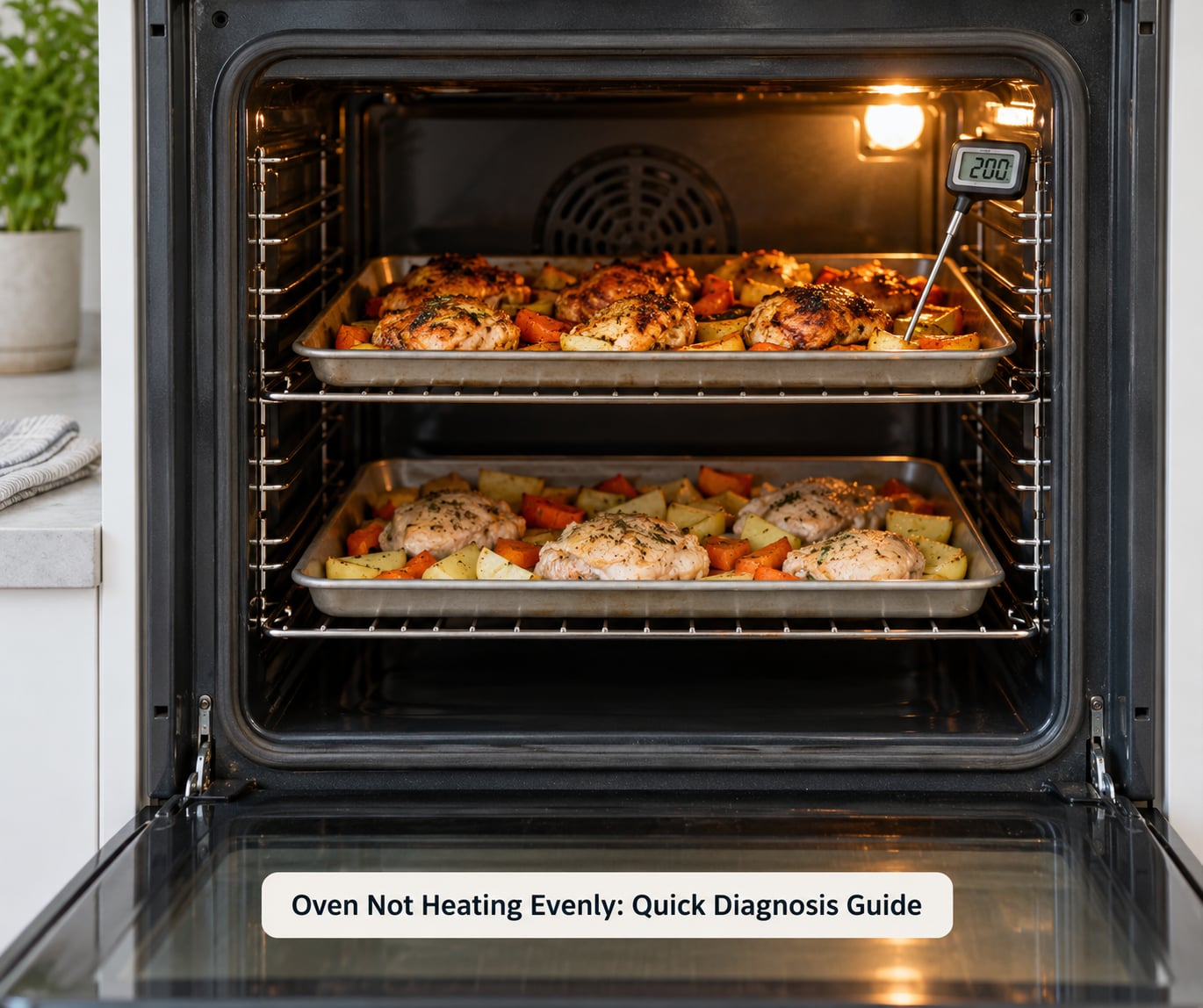
Start by naming the symptom, because the pattern points at the cause. Here is the short version.
One side of the food browns, the other stays pale
Look at airflow and pan size first, then the door seal. A pan that nearly touches the oven walls on one side blocks the air that would have circulated past it.
The top browns before the bottom is set
Two things drive this: a cooking vessel that is too shallow or too dark, and an oven running hotter than the number you set. Test the temperature with an oven thermometer before blaming the bake element.
The whole oven feels cool, or it never reaches temperature
That is not an uneven-heating fault. You are looking at a failed heating element, a gas igniter problem, or a breaker that has tripped.
The oven heats, but the numbers are off by 50 degrees or more
A consistent offset points to the temperature sensor or the calibration setting. An offset that changes every bake points to a sensor reading high one day and low the next.
There is an error code on the display
Stop guessing. Codes like F1 and F2 on GE ovens, or similar codes on Whirlpool and Frigidaire models, are the control board telling you a sensor circuit is open or shorted. Note the code and call for service.
It started right after a self-clean cycle
Self-clean residue is a real and frequently missed cause. Baked-on debris insulates part of the element and creates a false hot spot. Skip to the cleaning notes in the DIY section below.
What Does an Oven Not Heating Evenly Mean?
It means the cavity has hot zones and cold zones instead of one even temperature, so the food cooks at different rates on different sides. That is the whole meaning of the phrase, and every cause below is some variation on it.
There is a normal amount of variation in any oven, and it matters that you know where the line sits. Most manufacturers build in a tolerance of about 25 degrees Fahrenheit either side of the set temperature, and some allow up to 50 degrees at the door. Inside those limits you are seeing normal cycling, not a fault.
- Burnt on top, raw underneath — the oven is running hot, or your pan is too shallow for the heat. Homeowner check first, then calibration.
- Pale on one side, dark on the other — blocked airflow, a pan touching the wall, or an oven that is out of level. Homeowner fix.
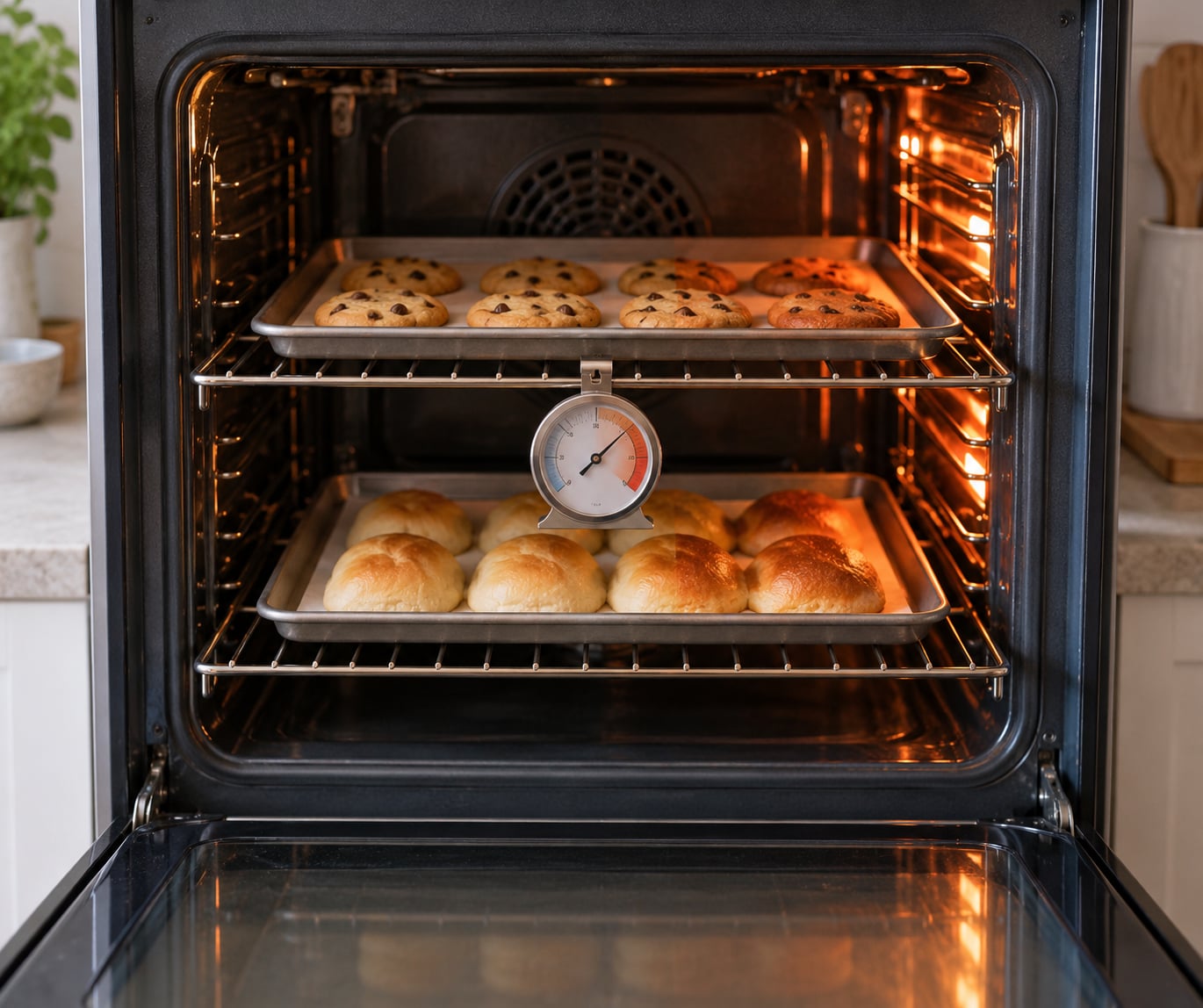
- Cookies spread unevenly in the tray — an oven sitting off centre, or a warped baking sheet. Homeowner fix.
- Everything bakes evenly but slowly — a temperature sensor reading low. Technician job.
- Everything bakes fast and scorches — a sensor reading high, or a failed heating element. Technician job.
- Burnt smell with no visible element damage — food debris on the element or the fan. Homeowner clean if it is safely reachable.
- Cold back corner only — the convection fan has stopped or is jammed with grease. Technician, though a deep clean sometimes solves it.
- Heating fine, then suddenly stops mid-bake — thermal fuse or terminal block. Technician only, and never bypass the fuse.
Before you take any of this apart, settle the question forum threads ask most: is this the oven, or is it the way you are using it? If the pan nearly fills the cavity, or you routinely bake with two full sheet trays and no air gap, you are creating uneven conditions no appliance can overcome.
A useful rule: if the same tray in the same rack position bakes perfectly every time, the oven is fine and the recipe or the pan is the variable. If the same tray bakes differently every time with no change on your end, the oven is the problem.
8 Common Oven Not Heating Evenly Causes
These eight cover the large majority of cases, and more than one can be present at the same time. That overlap is most common in older electric ovens that have never been serviced, and in ranges that get heavy daily use.
1. Failed Bake or Broil Heating Element
A failed element shows up as visible cracks, a broken coil, or a burnt mark on the oven floor where the element has sagged and touched the liner. If the coil is intact and glowing red, the element itself is working and you should look elsewhere.
Which element fails determines the symptom. The bake element sits at the bottom and its failure gives you an oven that never reaches temperature. The broil element sits at the top, and when it is the problem your food browns from above while the bottom stays pale.
Measuring resistance with a multimeter tells you whether the element is open, but replacing an element is a job for a technician in most cases because the leads connect to a terminal block behind a panel and the oven carries 240 volts.
2. Worn-Out or Incorrectly Installed Heating Element
An element does not always fail outright. As the sheath ages it can lose contact in spots, which creates a hot and cool pattern along its length rather than a dead oven. That is why one corner bakes faster than the rest.
Installation matters too. An element that has been moved, bent, or fitted onto a dirty spade connector conducts poorly and generates heat in the wrong place. If you or a previous owner pulled the oven forward to clean behind it, check that the element is seated flat and the connector is tight.
With the oven cold, look at the element sitting in its cradle. It should rest evenly without kinks. Visible warping or a dark scorch on the connector is enough evidence to have it replaced rather than repaired.
3. Blocked Air Vents or Poor Air Circulation
Airflow is the quiet reason behind a lot of uneven bakes. A fan-driven oven circulates air from a vent at the back or top, and anything that narrows that path creates dead zones along the walls where you cannot see them.
Foil lining the bottom, a sheet pan parked flat on the oven floor, a casserole dish touching a wall, or a stack of stored cookware in there when the oven is not in use all do the same thing. They turn a convection oven into a conventional one, and a conventional oven into an uneven one.
Pop a sheet of foil across the bottom to “catch drips” and you have also changed how radiant heat reaches the food from below. Manufacturers warn against it for this reason.
4. Uneven Cooking Racks or an Overloaded Oven
Rack position is the setting bakers are most likely to get wrong. The middle rack, or the centre of the two middle positions, gives the food the most even exposure to heat from above and below. Baking on the bottom rack with a tall pan puts the top of the food directly under the broil element, which is why it burns.
Overcrowding does the same thing in reverse. Two full sheet pans with a 1 inch gap is workable. Two pans wedged in with no gap at all has no room for heat to move, and you will get a top tray that dries out before the bottom tray finishes.
Large pans are part of the same problem. An 11 by 17 inch pan in a standard 30 inch cavity is a known source of one-side-hot complaints, because it covers the side vents and puts one edge close to the element.
Warped cookware deserves a mention too. A baking sheet that has been dropped or heated empty for years conducts heat unevenly on its own. That one pan will brown unevenly no matter what you do to the oven, and the fix is throwing it out.
5. Incorrect Bake Temperature or Temperature Calibration
Some ovens heat perfectly evenly and still cook wrong, because they are running 50 degrees hot or 50 degrees cool. That is a calibration problem, not a hardware fault, and it is the single most under-diagnosed cause in this whole list.
Most manufacturers let you apply a calibration offset through the control panel, usually somewhere between minus 30 and plus 30 degrees, and some allow a wider range. The manual for your model lists the menu path, and it varies by brand. Look for a setting named calibration, temperature offset, or oven temperature adjust.
Two details catch people. Calibration shifts the whole oven, so it fixes an offset but does nothing for a hot spot. And an oven that is 100 degrees or more away from the set number is not miscalibrated, it has a sensor fault.
6. Door Seal Problems
A torn, loose, or heat-hardened door gasket lets heat leak out of the cavity, and the oven then cycles harder and longer to compensate. You get slower recovery, more uneven browning near the opening, and a cavity that never holds the temperature the sensor expects.
The paper-slip test takes ten seconds. Close the door on a strip of plain paper and pull it. It should drag with noticeable resistance all the way around. If it slides out freely along one edge, that edge is your leak.
Also check that the door closes flush and latches. A door that does not seat evenly, or a sensing switch that is failing to confirm closure, will leave the oven in a preheat state that never completes properly.
7. Faulty Temperature Sensor or Control Board
The temperature sensor, usually a small probe or RTD mounted on the cavity wall, is what tells the control board when to stop heating. When it drifts or fails, the board runs long heating cycles against a number that is simply wrong, which shows up as scorched edges and underdone middles in the same bake.
An open or shorted sensor circuit throws a code instead. On GE ovens, F1 typically points to a runaway heating situation and F2 to an oven temperature issue, often a sensor that is open circuit. Whirlpool and Frigidaire models use their own schemes, so read the code list in your manual rather than assuming a GE code means the same thing on your range.
The control board itself is the last thing to suspect, not the first. It is also the most expensive part, so a technician should rule out the sensor, the wiring, and the terminal block before anyone quotes a board replacement.
8. Electrical, Gas, or Ventilation Problems
On an electric oven, look at the supply side. A loose or burnt terminal block connection causes arcing and can produce heat in an odd place, and a breaker that trips mid-bake stops the cycle before recovery. Damaged wiring insulation is a technician job with no exceptions.
On a gas oven, the causes are different. A weak igniter delays ignition, a clogged flame spreader with its ports partially blocked reduces the effective burner area, and a cracked burner tube leaks flame outside the intended path. Each of those shrinks or misplaces the heat source inside the cavity, and a fan-equipped gas range still depends on its rear convection fan moving air.
Ventilation matters more than people expect. A wall oven or microwave drawer with a blocked or missing vent path overheats, and some models deliberately hold back heat or cut cycles when airflow is restricted. That reads to a cook as the oven heating strangely.
Gas work, anything behind a panel carrying 240 volts, and any wiring repair belong to a licensed professional. That is not a hedge; it is where the line sits.
How to Test an Oven for Even Heating Safely
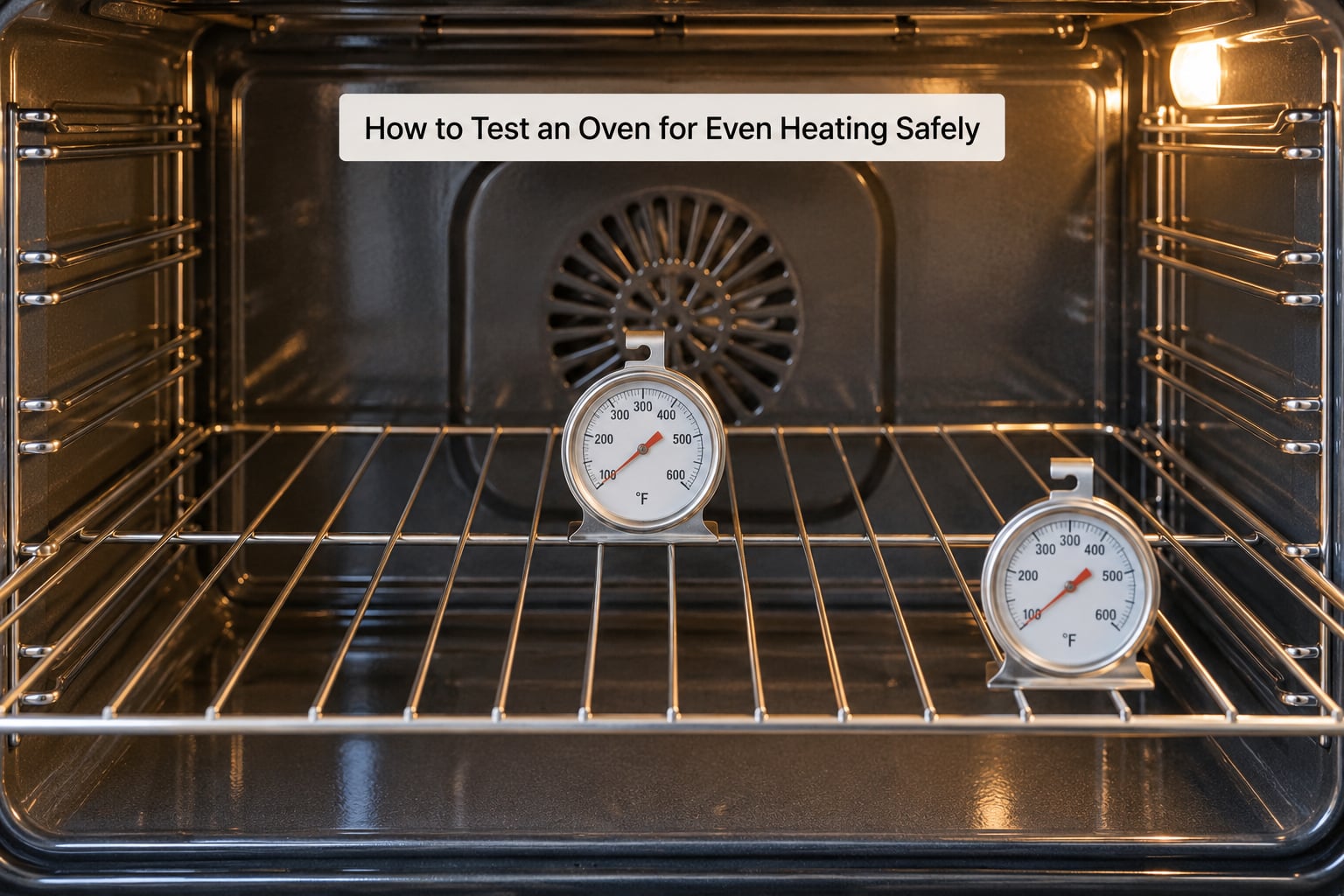
This test takes about 20 minutes and settles most arguments about whether your oven is actually faulty. Use a purpose-made oven thermometer, not a cooking thermometer, and set the oven to 350 degrees Fahrenheit with the racks in their normal positions.
First, put the oven thermometer on the centre rack in the middle of the cavity. Let the oven preheat for a full 15 minutes after it reaches temperature, which matters because most ovens are still stabilising when the preheat beep sounds. Read the thermometer and write the number down. Within about 25 degrees of your set temperature is normal.
Next, move the thermometer to the front of the same centre rack and repeat. The gap between the two readings is your temperature swing. Anything under about 25 to 30 degrees is a healthy oven. A spread above 50 degrees is a real uneven-heating fault worth chasing.
Then move to the back of the cavity, and to the left and right side walls, taking a reading at each spot. A back corner that reads dramatically lower than the rest points at a stopped convection fan. A consistent left-to-right difference points at a tilted oven or a side vent that is blocked.
Never do this test with the racks lined with aluminium foil or with a sheet pan shielding the element. You are measuring the oven, not a foil-lined version of it.
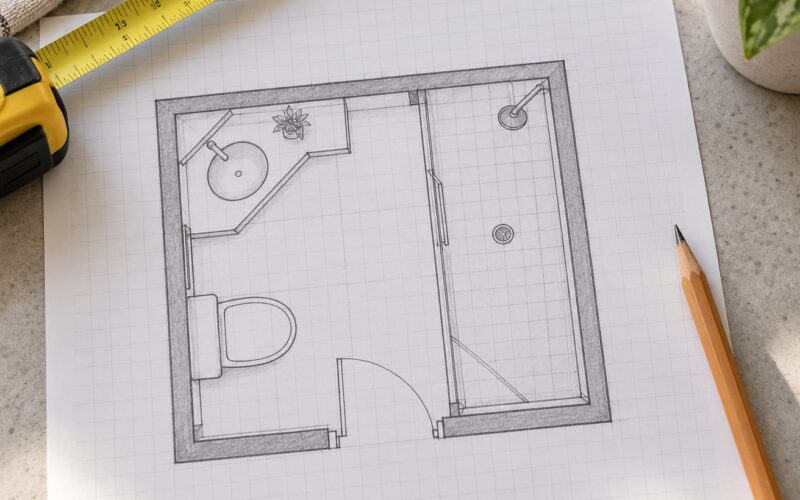
If you only own one thermometer, you can still get useful data by mapping the readings to a hand-drawn floor plan of your cavity, and comparing the same pan in the same spot bake after bake.
DIY Fixes You Can Try Before Calling a Technician
These are the checks that cost nothing and resolve a surprising share of complaints. Work through them in order and stop when the food bakes evenly.
Move the food, then re-test
Return to the centre rack, drop one pan at a time, and leave at least an inch of clearance on each side. If the problem was crowding, this alone fixes it.
Clear every vent and remove foil
Pull out stored pans, take the bottom foil off, and wipe the rear and top vents. Baked-on grease around a vent is enough to choke airflow noticeably.
Check the door seal with paper
Run the paper-slip test around all four edges. A gasket that drags loosely needs replacing, and replacement gaskets are a standard part rather than a special order.
Clean the convection fan
On many models the fan blade sits behind a removable back panel. If the fan turns by hand with resistance, or does not turn freely at all, grease and food debris are the likely cause. Technicians consistently rate a jam check as one of the fastest high-value checks on the whole list.
Clear self-clean residue
Run a full self-clean cycle on a cool oven, then wipe the cavity down with a damp cloth and a little mild detergent. Residue left behind after a cycle insulates part of the element and creates a false hot spot, and it is worth ruling out before anything gets replaced.
Reset the oven
Switch the breaker off for a full minute, then restore it. That clears a stuck control board latch and re-runs the temperature sensor check. It costs nothing and it fixes a surprising number of codes.
Apply a calibration offset
If the readings are even but consistently off, use the calibration setting in your manual to bring the number into line. Do this only after you have measured, never on a hunch.
Work around the fault while you decide
If you cook around a hot spot rather than fix it straight away, the routine experienced bakers converge on is the same one: bake on the middle rack, turn the tray halfway through, rotate sheet pans between racks, foil tent anything that browns fast, and drop the temperature by 25 degrees while adding time.
Splitting large batches into two smaller trays instead of one crowded one is the other half of the answer, and it costs you nothing but counter space.
When You Should Stop Troubleshooting and Call a Professional
There is a clear line here, and knowing it is what separates a good hour of fixing from a burned kitchen.
Call a licensed technician, and stop opening the oven, the moment any of these show up.
You smell gas
Do not use a switch, a phone, or a flame inside the kitchen. Shut off the gas supply at the valve if you can reach it safely, get everyone out, open a window, and call the gas utility or emergency services from outside the building.
You see exposed wiring, scorch marks, or arcing
Switch off the breaker and leave the panel alone. A terminal block with burnt conductors is a fire risk and not a homeowner repair.
An error code comes back after a reset
A code that survives a breaker reset means a sensor circuit, an element, or the control board has failed. Note the exact code, the model number, and what the oven was doing, because that is what the technician will ask for first.
There is a burning smell that persists after cleaning
Once you have wiped the element and cleared debris, any remaining hot-metal smell points to an element or wiring fault. Do not keep baking on it.
Readings stay inconsistent after the full diagnostic
If you have measured five positions and the spread is still wide, you have a hardware problem. Element replacement, sensor replacement, and gas burner work are all technician tasks, and so is any decision to replace the oven instead.
One judgment call is worth naming. If the oven is more than about fifteen years old and the quote comes back near the cost of a comparable new range, replacement is usually the better decision. Ask for the quote in writing and compare it against the replacement cost before you authorise anything.
Frequently Asked Questions
Why is my oven heating unevenly but still cooking food?
Because uneven heat changes browning and drying more than it changes raw doneness. A cake can brown on top and still be set in the middle. It still matters, because the top dries out before the base finishes setting, which is what collapses the middle of a cake and dries out cookies.
Can I use an oven thermometer to check uneven heating?
Yes, and it is the most trusted check in the DIY community. Place it on the centre rack, preheat to 350 degrees, wait a full 15 minutes past the preheat signal, then move it to the front, back, and both sides. A spread over 50 degrees between spots means a real fault, not normal cycling.
What is the most common cause of an oven heating unevenly?
Blocked airflow and the wrong rack position, by a wide margin. People expect a broken element, but crowding the cavity, lining the floor with foil, or baking on the bottom rack with a tall pan creates the same hot and cold zones that a failed part would.
Does a dirty oven door seal cause uneven heating?
It can. A torn or heat-hardened gasket leaks heat, so the oven runs longer and harder to recover, and the area nearest the opening bakes differently from the back. The paper-slip test takes seconds: the door should drag firmly on the paper all the way around.
Should I call a technician if my oven has an error code and heats unevenly?
Yes. An error code means a sensor circuit, element, or control board has failed rather than shifted, and a reset will not clear a real fault. Write down the code and your model number first. Do not open any panel behind the controls, because the oven carries 240 volts.
How do I know if the heating element needs to be replaced?
Look for a broken coil, a visible crack, or a burnt mark on the oven floor. If the element glows evenly red when the oven is on, it is working and the fault is elsewhere. Measuring resistance with a multimeter confirms it, but replacement itself involves a terminal block and should be left to a technician.
Start with the ten-minute diagnostic: centre rack, one pan, nothing stored in the oven, door seal checked, then a thermometer reading in the middle and at the front. Most people find their answer in the first three checks. If the readings are even and the food is still browning unevenly, the problem is the pan or the recipe, and that is good news.