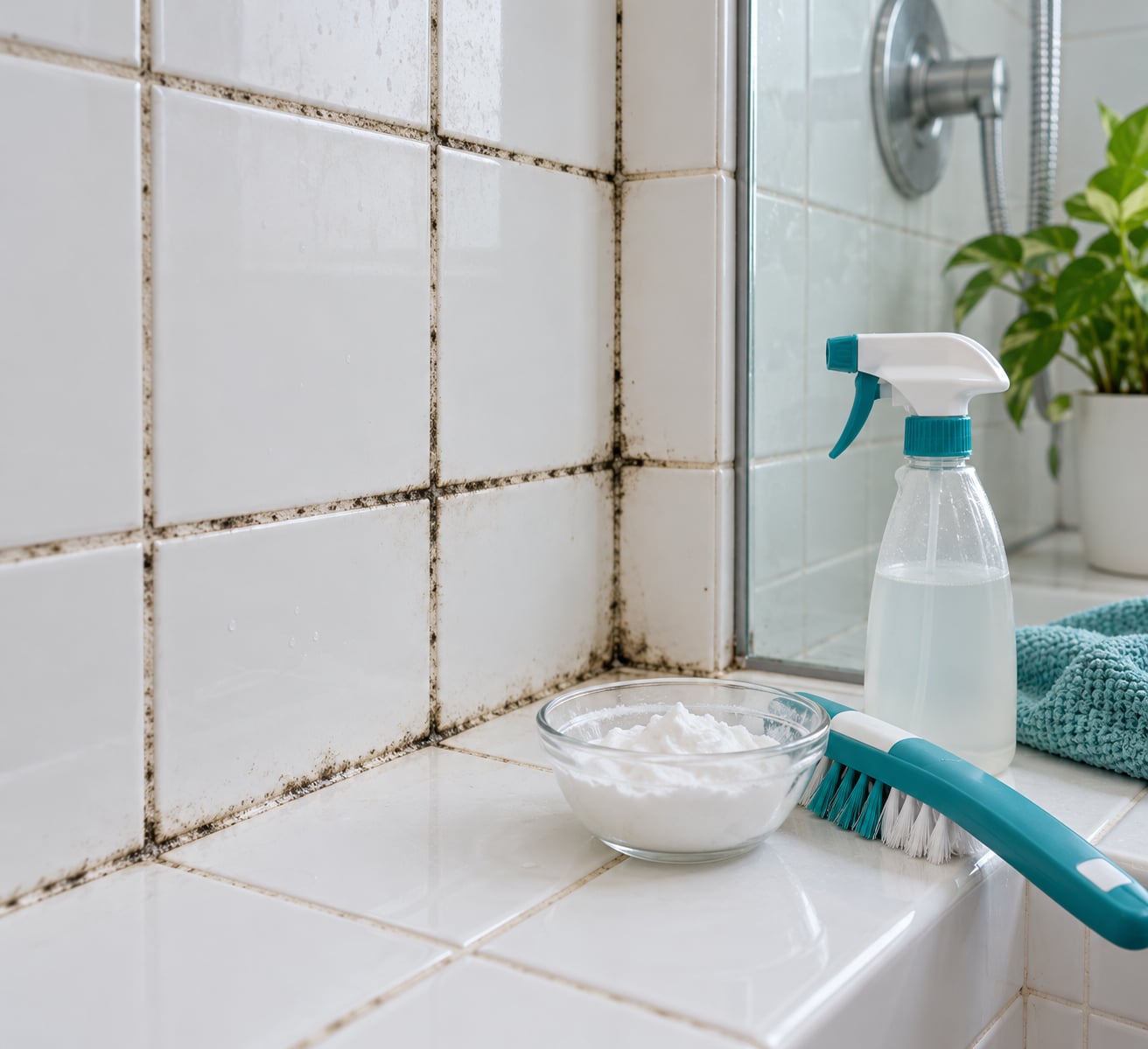
The fastest safe method is a paste of baking soda and hydrogen peroxide packed into the grout lines, covered with plastic wrap, left on for 30 to 60 minutes, then scrubbed with a stiff grout brush. Most shower grout mildew comes off in an afternoon with a mild cleaner and patience, and the whole job takes about an hour. No power tools, no harsh chemicals, no damaged grout.
I say that because I have watched people soak their shower in straight bleach for twenty minutes, then wonder why the grout looks worse. Grout is soft cement. It rewards steady, gentle work and punishes brute force.
Table of Contents
- What You Need
- Step-by-Step: How to Remove Mildew from Shower Grout
- Choose a Cleaner That Will Not Damage Grout
- Scrub the Grout Gently and Evenly
- Rinse, Dry, and Inspect the Grout
- Common Mistakes
- When Mildew Keeps Returning
- Frequently Asked Questions
- What is the safest way to remove mildew from shower grout?
- Can I use bleach to remove mildew from shower grout?
- Does baking soda really remove mildew from grout?
- How do I know if shower grout is moldy or just stained?
- Why does mildew keep coming back after cleaning the shower?
- When should I replace shower grout instead of cleaning it?
- Conclusion
What You Need
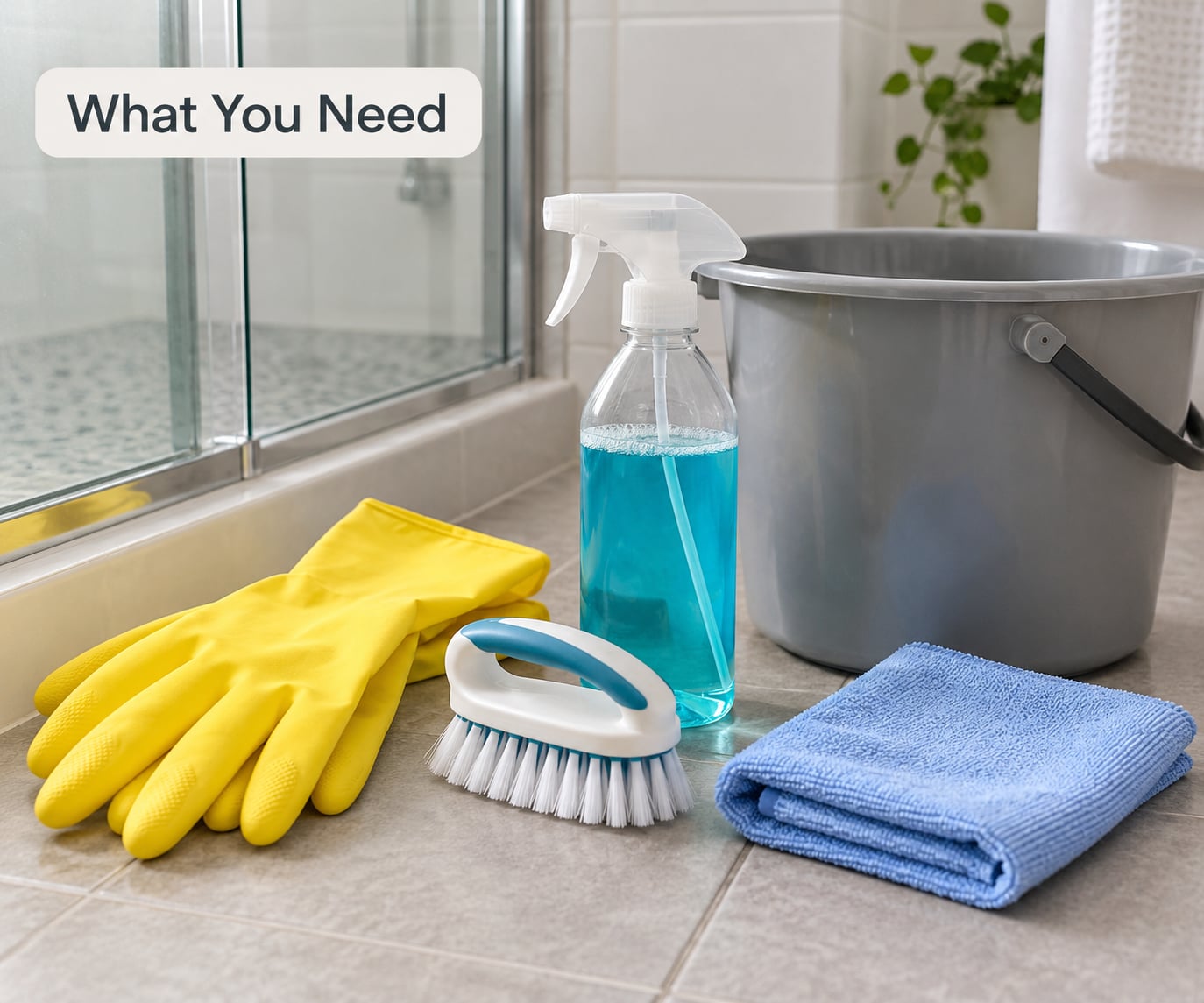
Gather everything before you start. A mid-job hunt for gloves in a wet shower is how people end up with bleach on bare hands.
- Nitrile gloves and safety goggles. Gloves protect your hands from standing cleaner. Goggles matter more than people think, because you will be leaning close to a wet floor.
- Ventilation. Open the bathroom door, run the exhaust fan, and if the shower is enclosed with a door, prop it open or run the fan through it.
- A stiff-bristled grout brush. This is the standard tool and it works. An old toothbrush is fine for narrow grout lines and around fixtures.
- A spray bottle or pump sprayer for mixing and applying your cleaner.
- A small bowl and a spoon for stirring up the baking soda paste.
- A bucket or the shower floor itself to catch rinse water.
- A microfiber cloth or squeegee for the final dry.
- Clear plastic wrap or cling film, optional but useful, for sealing the paste against the grout.
Leave the wire brush, the melamine sponge, and the all-purpose bathroom sprays in the cabinet for now. A wire brush will cut into soft cement grout, and melamine sponges are mildly abrasive enough to wear a groove in colored grout with repeated use.
Step-by-Step: How to Remove Mildew from Shower Grout
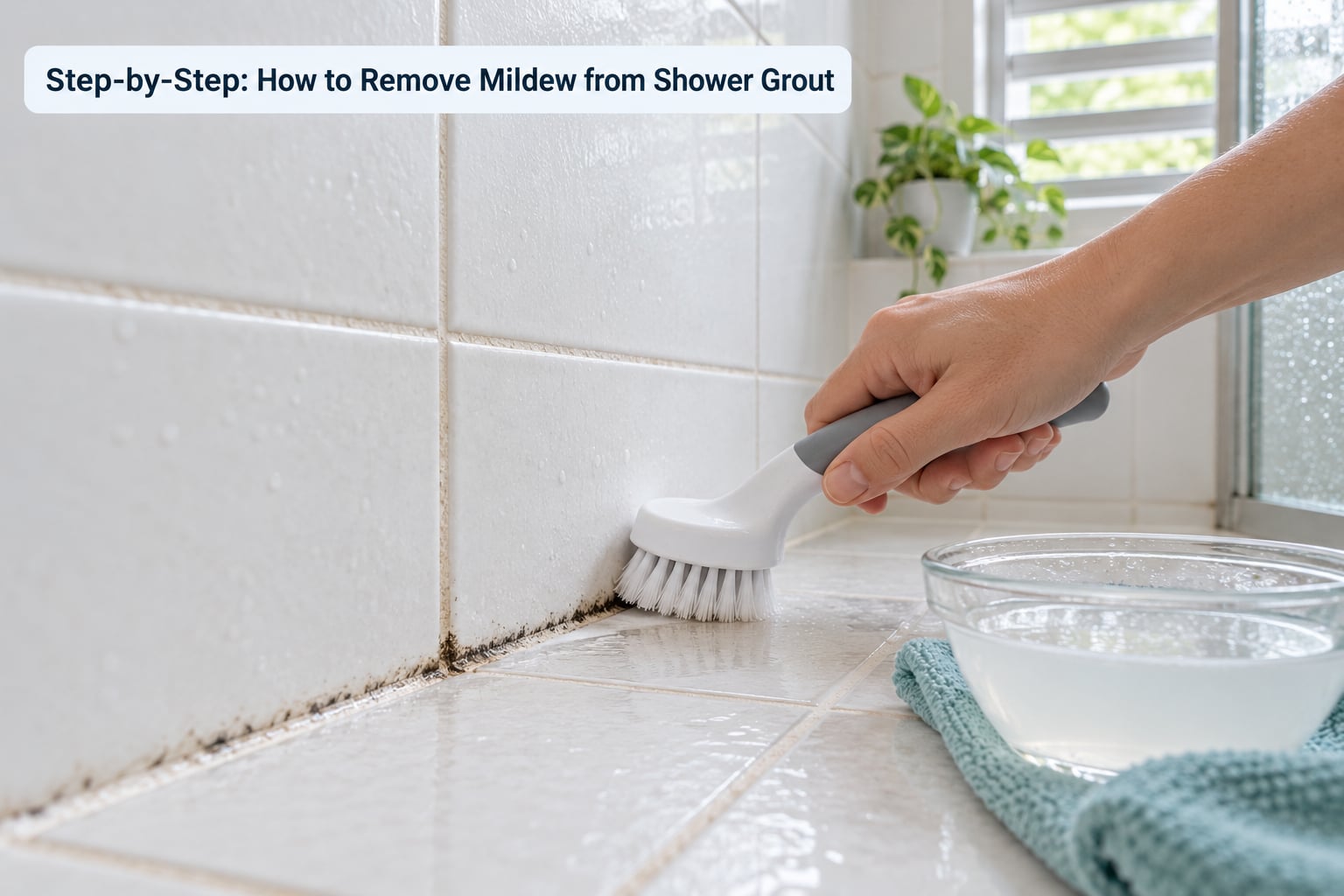
- Dry the shower and clear the soap scum. Wipe the grout with a damp sponge and a drop of dish soap first. Scum forms a film that mildew hides under, and the cleaner cannot reach through it.
- Mix your cleaner. For most showers, stir equal parts baking soda and 3 percent hydrogen peroxide into a thick paste. For a larger area, dilute one part white vinegar with one part warm water in a spray bottle.
- Apply it only to the grout lines. Pack the paste into the joints with the spoon, or spray the solution along the lines. Tile face does not need cleaner and bleach on porcelain can dull the glaze.
- Wait. Cover the paste with plastic wrap if you used one. Give it 30 to 60 minutes for the peroxide paste, or at least 10 minutes for the vinegar solution. Dwell time is the single reason most attempts fail.
- Scrub with a stiff grout brush. Short, firm strokes along the joint, not circular swirls across it. You want the bristles working inside the line, not levering at the edges.
- Rinse and dry completely. Sponge the cleaner away with clean water, wipe the tile dry, and run the fan. Any moisture you leave behind is an invitation back.
Choose a Cleaner That Will Not Damage Grout
Mild dish soap is a good pre-cleaner but it will not kill mildew on its own. For the kill step, a baking soda and hydrogen peroxide paste is the community favorite, and the r/CleaningTips thread on shower grout mold describes exactly this approach, spread thick over the grout lines, covered with plastic wrap, and left to sit.
Oxygen bleach, sold as OxiClean and similar powders, is the gentler middle ground. Mix it into a paste with warm water, let it sit for 10 to 15 minutes, and scrub. It is a good choice if the mildew is light surface growth, and cleaning forum readers recommend it often for white grout.
Diluted white vinegar works on mild mildew, roughly one part vinegar to one part warm water, with a 10 minute soak. Vinegar is an acid, so it is fine occasionally but repeated use slowly erodes cement grout and dulls a sealer.
Chlorine bleach is the strongest option and the harshest. A one to one dilution of water and bleach with a 10 to 15 minute soak handles stubborn growth on white grout, and it will lighten colored grout permanently. Never combine bleach with vinegar, ammonia, or any acid. The reaction releases chloramine gas, which irritates lungs and eyes fast. Pick one product and finish with it before opening anything else.
Grout type changes the answer. Cement-based grout is porous and drinks in whatever you use, so gentler and repeated beats stronger and long. Epoxy grout is non-porous and mildew sits on the surface, where a paste and a brush clear it quickly. Natural stone tile is a different story entirely, and acids will etch it, so check before using vinegar.
Scrub the Grout Gently and Evenly
Pressure should come from your wrist, not your shoulder. Work a two-foot section at a time so the paste stays wet while you work, and keep the brush inside the joint.
Stay off the surface once the dark color lifts and the paste starts turning grey. That grey is dead mildew coming out of the pores, and scrubbing past it is how you widen the joint. Rinse and dry a section, then move on.
Rinse, Dry, and Inspect the Grout
Sponge with plain warm water until the runoff runs clear, then dry the tile and the grout with a microfiber cloth. Wipe the shower walls down too, because a wet film up the tile will just drip back into the joints.
Check the result under bright light, ideally with the shower door open and daylight on it. Surface mildew goes from grey-black to a clean line that looks the same as the untouched grout beside it. A dull tan or pinkish shadow that survives is stain, not fungus, and no cleaner will take it out.
That stain sits in the pore, not on it. Grout that has held mildew for months is permanently discolored until you regrout it or color-seal it, and knowing that upfront saves a lot of wasted scrubbing.
Common Mistakes
Using bleach on grout of unknown color. Bleach lightens colored and gray grout for good. The correction is to start with a peroxide paste or oxygen bleach, and reserve chlorine bleach for white grout only.
Mixing cleaning products. Bleach with vinegar, bleach with ammonia, bleach with a vinegar-based bathroom spray. It happens because each bottle gets used and left in the shower, so the fix is to clear the shower of every other product before you start and never pour one into the other.
Scrubbing harder than the problem needs. A wire brush or a firm hand with a stiff brush gouges the joint, and the new groove collects water faster than the old one did. Use a stiff-bristled grout brush with steady short strokes, and remember the paste does most of the work.
Skipping dwell time. Spraying, scrubbing immediately, and rinsing is the most common failed attempt. The cleaner needs 10 minutes minimum, and 30 to 60 minutes for a peroxide paste. Set a timer, walk away, and let the chemistry do its share.
Cleaning right over the drain. Bleach and paste rinsed straight into a shower drain can irritate the plumbing and, in some municipal systems, lead people to wonder why their water smells odd the next day. Bucket the rinse water and empty it somewhere sensible, or at least run plenty of cold water after.
Skipping ventilation. Small enclosed bathrooms are the hardest case. Run the fan first, prop the door, and give it another 20 minutes after you finish. If bleach fumes bother you, use the peroxide paste and skip chlorine entirely.
Leaving it damp. A clean but wet shower is a mildew shower. Squeegee the walls, wipe the floor, and run the vent fan until the grout is dry to the touch.
When Mildew Keeps Returning
If it comes back within a few weeks, the cleaner is not the problem. Moisture is.
Run the vent fan for at least 20 minutes after every shower, not until you leave the room. A squeegee on the shower walls and door takes thirty seconds and removes the film that feeds the growth. After cleaning, let the shower dry completely before anyone uses it again.
Check the caulk bead where the tile meets the tub or the shower door drip line. Mildew usually starts there, and mildew growing inside a silicone bead cannot be scrubbed out of it. Cut the old bead out with a plastic caulk tool, clean the substrate underneath, and run a fresh mildew-resistant silicone or acrylic caulk in the gap.
Watch for signs that cleaning is pointless. Grout that crumbles when you run a finger across it, grout that is already loose, or a dark patch that spreads across the tile face instead of staying in the joints all point the same way. That is the point to regrout, or to have a qualified remodeler look at what is behind the tile. Growth on a ceiling, in a wall cavity, or in a large area of black mold with a musty smell is mold rather than mildew, and that is a job for a mold remediation professional rather than a brush and a paste.
Frequently Asked Questions
What is the safest way to remove mildew from shower grout?
A baking soda and hydrogen peroxide paste is the safest everyday method, because neither ingredient gives off fumes and neither bleaches colored grout. Mix them roughly equal, pack the paste into the joints, cover with plastic wrap, wait 30 to 60 minutes, then scrub with a stiff grout brush and rinse. Wear nitrile gloves and goggles, and run the exhaust fan while you work.
Can I use bleach to remove mildew from shower grout?
You can, on white cement grout only. Dilute one part chlorine bleach with one part water, apply it only to the grout lines, and let it sit no more than 10 to 15 minutes before rinsing thoroughly. Bleach permanently lightens colored or gray grout and can dull a sealer, and it must never be mixed with vinegar, ammonia, or any acidic cleaner, which releases toxic chloramine gas.
Does baking soda really remove mildew from grout?
Baking soda alone is a mild abrasive and a decent deodorizer, but it is the hydrogen peroxide doing the disinfecting. The pair works because the soda gives the mix enough body to stay on the grout while the peroxide oxidizes the mildew. Most people see visible improvement on the first pass and need a second pass a week later for the discoloration that remains.
How do I know if shower grout is moldy or just stained?
Mildew wipes off or lifts with the paste, and the grout underneath is noticeably lighter. Stain does not move. Wipe the dark patch with a bleach-dampened white cloth: if the cloth comes away dirty and the grout stays dark, the color is set into the pores of the cement rather than sitting on the surface. That kind of stain needs regrouting or color-seal, not more scrubbing.
Why does mildew keep coming back after cleaning the shower?
Almost always because the shower is still wet and the ventilation is not moving enough air. Run the exhaust fan for at least 20 minutes after every shower, squeegee the walls and door, and let the shower dry fully between uses. Also check the caulk at the shower door drip line and where tile meets the tub, since mildew growing inside a caulk bead returns no matter how well you scrub the grout.
When should I replace shower grout instead of cleaning it?
Replace it when the grout crumbles under a finger, is already loose, or when cleaning reveals a dull tan shadow that never lightens. That shadow means the discoloration is inside the porous cement, and no cleaner will reverse it. Regrout or color-seal at that point. If the dark growth has spread onto the tile face or into a wall cavity, call a qualified remodeler or mold remediation professional before you start cutting anything out.
Conclusion
Start by figuring out what your grout actually is, since that decides which cleaner is safe. Then work a mild paste into the lines, give it real dwell time, scrub gently with a stiff grout brush, rinse thoroughly, and dry the shower completely.
If it keeps coming back, stop cleaning harder and start looking at the moisture. A failed caulk bead, a weak vent fan, or crumbling grout will bring the mildew back every time until one of them gets fixed. That is a smaller job than you are expecting, and it is the one that actually ends this.