If you’re wondering why is water pooling next to my foundation, the short answer is that water is arriving faster than the ground can absorb or move it away. Usually the ground slopes toward the house, a downspout dumps at the base of the wall, or the soil around the foundation stays saturated. Fix the source of the water and most puddles disappear within a season. Updated for 2026.
A puddle at the base of a house looks minor until you notice it never quite dries out. In our experience the same handful of causes keep showing up, and most of them are visible from the yard if you know what to look at.
Table of Contents
- What Causes Water to Pool Next to a Foundation?
- How to Tell Where the Water Is Coming From
- Start by working out why is water pooling next to my foundation
- How to Fix Water Pooling Next to Your Foundation
- When Is Foundation Pooling an Emergency?
- How to Prevent Pooling After Rain or Snowmelt
- Frequently Asked Questions
- Is a small puddle next to the foundation normal?
- Does a sump pump fix surface water pooling?
- How far should downspouts discharge from the house?
- Is regrading around the foundation safe to do yourself?
- Will water sitting next to my foundation cause real damage?
- When should I call a plumber, drainage contractor, or structural engineer?
- What to Do First
What Causes Water to Pool Next to a Foundation?
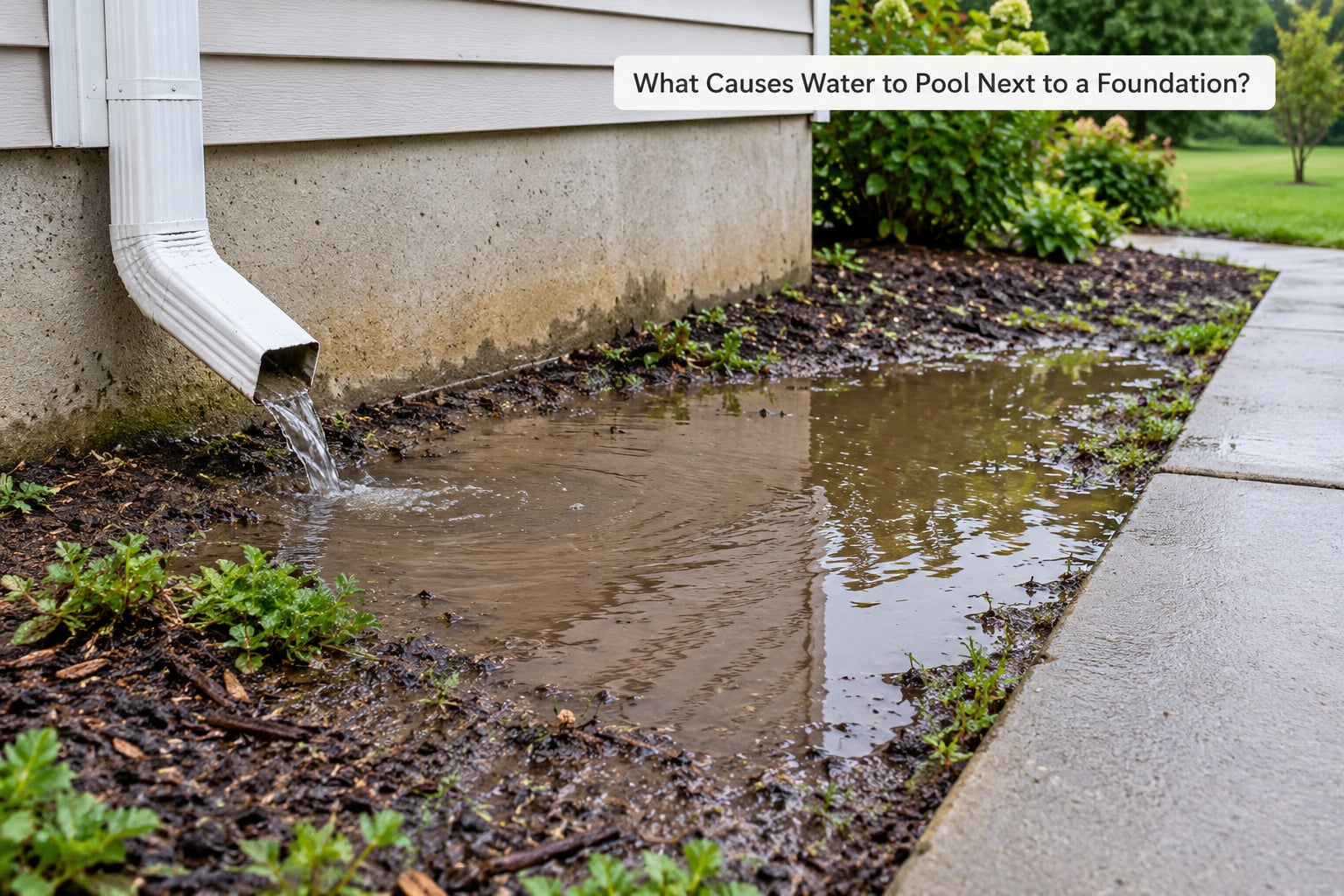
Water ends up at your foundation for one of a handful of reasons. Here they are in the order I check them, with the symptom that usually gives each one away.
- Negative grade (the ground slopes toward the house). The symptom is a puddle that hugs the wall on the uphill side of the yard, often right where the builder backfilled soil around the footing.
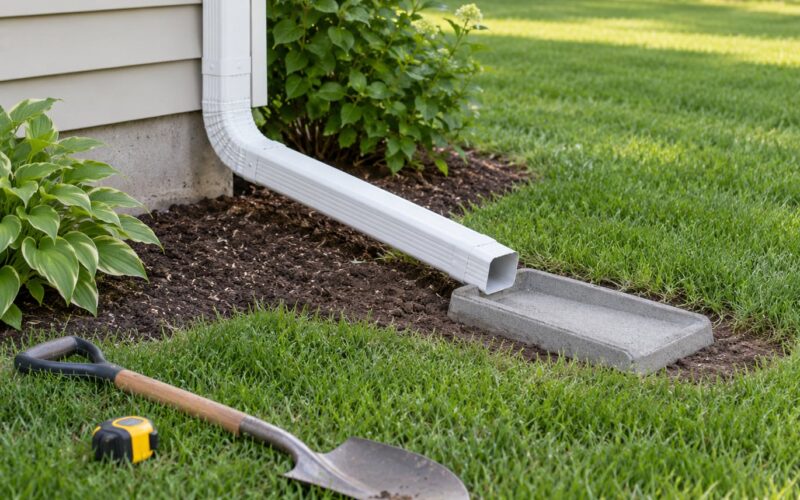
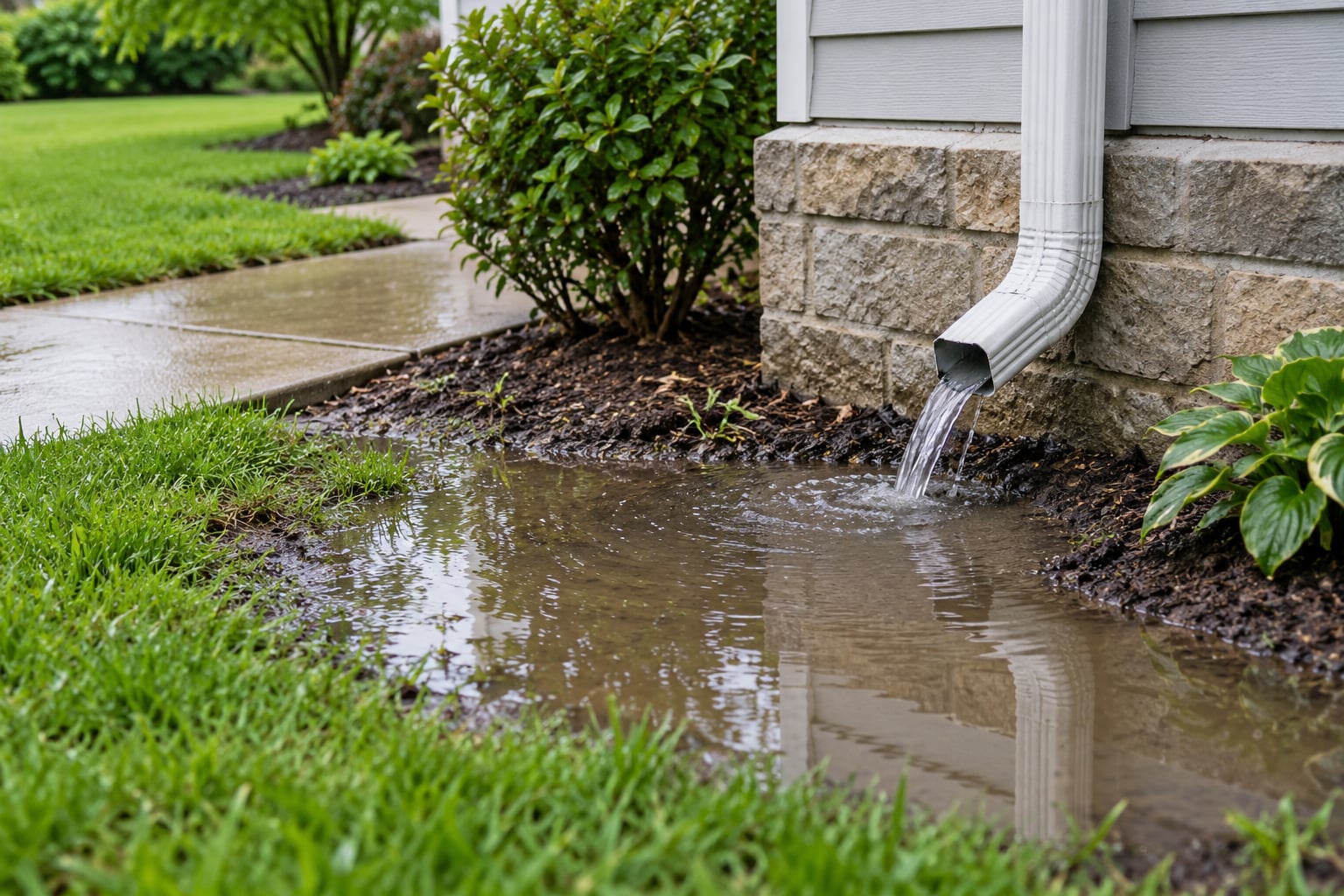
- Downspouts that discharge too close to the wall. Look for a splash stain or a wet strip of soil a few feet out. Ends at three or four feet from the house are extremely common in older homes.
- Clogged or undersized gutters. During a storm the water spills over the gutter lip instead of running to the downspout, so the whole roof’s worth of water lands along the eave line.
- A leaking downspout adapter or splash block. The pipe or adapter leaks around its top edge, so the puddle appears even on a dry day and the gutter looks perfectly clean.
- A low spot created by hardscape. A new paver patio, walkway, driveway, deck or retaining wall settles over time and becomes a shallow basin pressed against the foundation.
- Ground sloping the wrong way, including runoff from the neighbor. A driveway, street or uphill lot that drains your way sends water to your wall without you ever seeing it travel.
- Clay-heavy or compacted soil. The puddle is still there a day or two after a moderate rain. Homeowners in clay regions describe this pattern constantly.
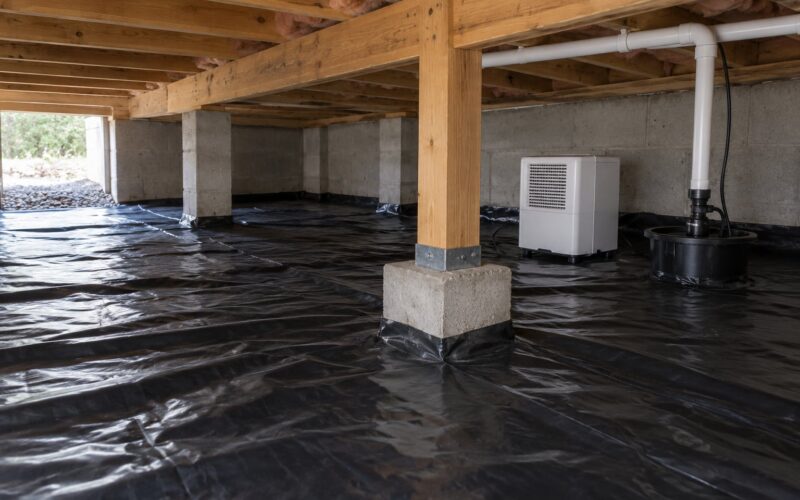
- Failed, absent or overwhelmed drainage. If a sump pump runs continuously during a storm instead of cycling a few times, the perimeter drain around the foundation is not keeping up.
- A high water table or groundwater. The water appears with no rain at all, or the basement floor shows damp patches and a musty smell even when the yard is dry.
Two different problems hide inside that list. Surface water comes from rain, roof runoff, and irrigation, and it drains away once you move it. Groundwater is water already in the soil, rising to meet the surface, and it does not drain away by moving a downspout.
How to Tell Where the Water Is Coming From
Start by working out why is water pooling next to my foundation
You can narrow this down in about fifteen minutes without digging anything up.
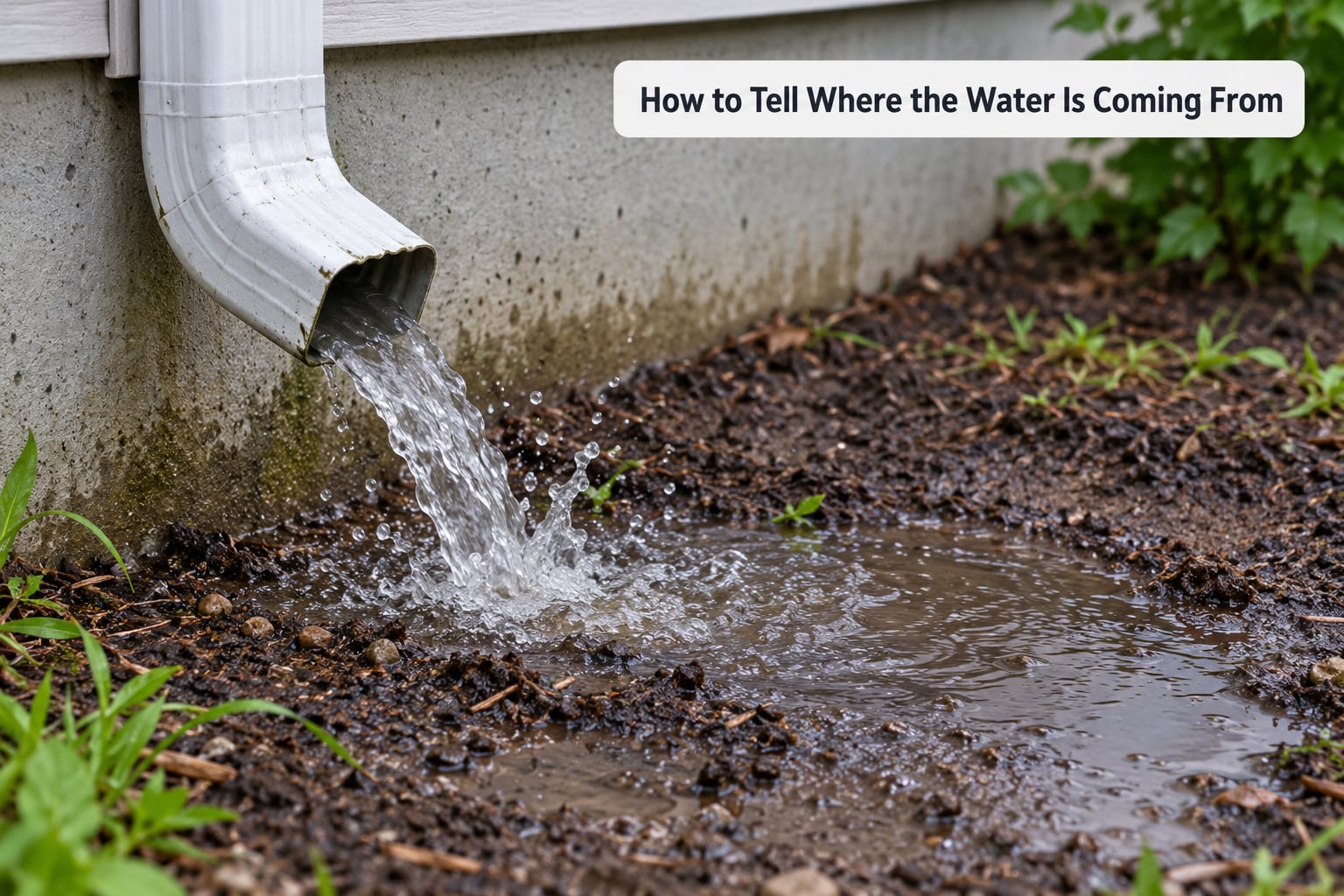
- Watch the next real rain. Stay outside and see where the water first shows up. A puddle that starts within minutes is almost always a downspout, a gutter overflow, or a leaking adapter.
- Walk each downspout to its discharge point. Note how far it is from the wall and whether it empties onto a slope that runs back toward the house.
- Check your grade with a level. Lay a 4-foot level on the soil along the wall, or hold a straightedge and a level on a small board. Repeat at several points around the house.
- Note where the puddle sits relative to hardscape. Pooling that hugs a patio edge or a driveway joint points at settlement, not at the foundation itself.
- Turn off irrigation and wait. If the puddle shrinks noticeably within a day, a sprinkler head is part of the problem and is the cheapest thing to fix.
Timing tells you what kind of water you have. Puddles that appear only during rain and drain within a few hours are surface runoff. Puddles that persist when nothing has fallen for a week point to groundwater or a saturated clay layer, and they will not be cured by regrading alone.
One warning about the hose test people often suggest. Running water at the wall to guess where it goes can raise the moisture level against the foundation and push water into existing cracks. If you want to test, keep it short and keep it well away from the wall, and skip it entirely if your basement has ever taken on water.
How to Fix Water Pooling Next to Your Foundation
Match the fix to the cause. Most yards need two changes at once, usually a slope correction plus moving the roof water farther out.
Two numbers decide most of this work. The ground should fall about six inches over the first ten feet away from the house, and a downspout should discharge six to ten feet from the foundation into a spot that drains away from it.
| What you’re seeing | What usually fixes it | Worth doing yourself? |
|---|---|---|
| Puddle hugging the wall, ground slopes in | Regrade the soil to a six-inch drop per ten feet | Often, if the area is small and no utilities are buried there |
| Splash stain a few feet from the wall | Extend or redirect the downspout to six to ten feet out | Yes |
| Water spilling over the gutter in a storm | Clean the gutters and correct the pitch | Yes |
| Puddle on a patio or walkway, dry on the lawn | Lift and relay the hardscape with a new slope away from the wall | Call a paver or concrete contractor |
| Puddle stays for days after moderate rain | French drain or a swale leading to a dry well or catch basin | Get a design first |
| Sump pump running all storm, water with no rain | Clear the existing drain tile, or add an interior perimeter drain | No |
Clear the gutters before anything else. It costs nothing but a ladder, and it rules out the most common cause. Watch the gutters during a rain rather than guessing, because a gutter that is technically clean can still be pitched toward the downspout opening and overflow under heavy flow.
Regrading sounds simple and mostly is, with two exceptions. Never work within the utility easement without locating your lines and any buried irrigation or electric, and never cut into the footing area or the backfill slope that holds the foundation in place. Multiple contributors in homeowner forums warn against digging a gravel trench as a shortcut, and they are right. A trench full of stone does nothing about a slope that points inward, and it can leave you with loose, settled soil exactly where you had solid ground before.
Where the water needs to go is the real design question. A French drain intercepts water along a line, a catch basin collects it at one low point, a swale carries it across the yard, and a dry well gives it somewhere to soak away. Where clay is heavy or the water table sits high, none of those work well, and the honest answer is that the water needs to be pumped or piped away rather than absorbed.
On the hardscape side, if the patio or walkway was installed recently and the pooling appeared afterward, take photos before anything is disturbed. Homeowners in this situation frequently end up negotiating with the contractor who did the work, and documentation is what settles it.
When runoff arrives from a neighbor’s property, you usually cannot regrade the shared line yourself. A dry catch basin or a low swale on your side, sometimes with a small amount of grading near your own wall, handles most of it. In some locations surface water flow across property is a legal matter, so check local rules before building anything on the boundary.
When Is Foundation Pooling an Emergency?
Standing water sitting against a foundation creates hydrostatic pressure, which pushes moisture through cracks, joints, and pipe penetrations. Some signs mean you can schedule work. A few mean you should stop and make a call this week.
- Water standing against the wall for more than 24 to 48 hours, or entering the basement.
- A new stair-step crack, or a horizontal crack that was not there last season.
- A foundation wall that curves inward, called bowing.
- Doors or windows that stick, and floors that feel uneven on the main level.
- A musty smell in the basement or crawl space, efflorescence on the wall, or a sump pump that never stops.
- Visible rot in the sill plate or floor joists you can see through a crawl space opening.
Any of these should be looked at by a qualified professional. A structural engineer handles cracks, bowing, and settlement. A drainage or waterproofing contractor handles runoff and groundwater. Persistent damp and musty odor in a basement or crawl space is worth a call to a mold remediation specialist, because the mold can keep growing after the surface water is gone.
Damage from pooling is cumulative rather than sudden, which is exactly why it gets deferred. Each wet season adds stress to a structure that is already carrying the weight of the soil around it.
How to Prevent Pooling After Rain or Snowmelt
Run this checklist after every heavy rain, and once more at the start of the wet season.
- Clear the gutters twice a year, more often if you have trees directly overhead.
- Confirm every downspout discharges six to ten feet from the wall and that the discharge point itself drains away.
- Walk the perimeter with a level and check that the soil still falls six inches per ten feet.
- Look for settled spots where patio pavers, walkway joints, or driveway edges sit lower than they used to.
- Keep plantings off the wall. Large trees and shrubs belong roughly 15 to 20 feet from the foundation so mature roots do not reach the footing.
- Aim every irrigation head away from the house, and confirm the system runs long enough to water deeply rather than to shed water sideways.
- Watch the sump pump during a storm. A few cycles is normal; continuous running means the perimeter drain needs attention.
- In freeze-thaw regions, clear snow and ice away from the wall so meltwater cannot sit against it and refreeze.
How much any of this matters depends on your soil, your lot’s slope, and how much rain your region gets. A flat lot in a heavy clay area needs a different answer than a downhill lot with sandy soil, so compare the fix against your site rather than against a neighbor’s yard.
Frequently Asked Questions
Is a small puddle next to the foundation normal?
A shallow puddle that appears during rain and dries within a few hours is common, especially on a flat lot. It becomes a problem when water lingers for a day or more, sits directly against the wall, or keeps returning even in moderate rain. Track how long it takes to dry, and fix the drainage before it turns into a seepage issue.
Does a sump pump fix surface water pooling?
No. A sump pump handles water that has already reached the basement or crawl space through drain tile. Surface pooling beside the wall has to be moved by grade, downspouts, a drain, or a swale first. A sump pump running constantly during a storm is a sign your perimeter drainage is overwhelmed, not that the pump is the solution.
How far should downspouts discharge from the house?
Six to ten feet from the foundation is the standard target, discharged into a location that drains away from the building rather than onto a neighboring slope. If ten feet is not enough because the yard falls toward the house, a catch basin or buried pipe leading to a dry well handles the extra distance. Check that the pipe is not buried shallow enough to freeze in winter.
Is regrading around the foundation safe to do yourself?
Shallow regrading in an open part of the yard is usually straightforward work, but call before you dig. Know where your utility lines and any buried irrigation run, and stay away from the backfill zone directly against the footing, which is what holds the soil in place. Anything deeper than a few inches, or close to the wall, is a job for a grading contractor.
Will water sitting next to my foundation cause real damage?
Yes, if it keeps happening. Standing water builds hydrostatic pressure against the wall and drives moisture through cracks, joints, and pipe penetrations. Persistent damp also saturates the sill plate and floor joists, and creates conditions that attract termites and wood-boring insects. Even without a leak inside, a soaked crawl space is worth fixing before the next wet season.
When should I call a plumber, drainage contractor, or structural engineer?
Call a plumber if you suspect an underground supply or drain line is leaking into the soil. Call a drainage or waterproofing contractor for persistent pooling, a French drain, or interior drain tile work. Call a structural engineer for stair-step cracks, bowing walls, sticking doors, or uneven floors. Getting the source identified first usually means hiring only one of them.
What to Do First
Move the water away from the wall today. Clean the gutters, extend or redirect any downspout discharging near the foundation, and aim your irrigation heads away from the house. Then watch the next real rain and note where the puddle forms and how long it takes to dry. Take photos while it is wet.
Do not dig next to the footing or pour a gravel trench over a slope that points inward. If pooling continues after those steps, or you see cracking, bowing, or a sump pump that never stops running, bring in a drainage contractor or a structural engineer and let them diagnose it before anyone starts digging.
Everything here comes back to the same first question: why is water pooling next to my foundation? Find the source, move the water away, then watch it through one wet season. If it comes back, you are no longer guessing, and the fix gets much cheaper.