Knowing how to clean a dishwasher filter takes about ten minutes once a month: pull the bottom rack out, twist the cylindrical screen a quarter-turn counter-clockwise, scrub the parts in warm soapy water with a soft brush, rinse, then reseat the flat mesh first and turn the cylinder clockwise until it locks.
That short routine keeps food particles out of the drain pump and stops debris from recirculating onto clean dishes. Your owner’s manual beats any guide when it comes to your specific model, so read the filter section before you pull anything loose.
Table of Contents
- What You Need
- Step-by-Step
- How to Clean a Dishwasher Filter: Find and Remove It
- Let the Debris Soak
- Remove the Food and Grease
- Clean Stubborn Buildup
- Rinse and Inspect the Filter
- Reinstall and Test the Dishwasher
- Common Mistakes
- How Often to Clean It
- When to Call a Technician
- Frequently Asked Questions
- Can I put a dishwasher filter in the dishwasher?
- Do dishwasher filters have to be replaced instead of cleaned?
- Why does my dishwasher smell bad even after I clean the filter?
- Can I use vinegar, bleach, or baking soda on the filter?
- What should I do if the filter will not come out?
- Conclusion
What You Need
Almost everything you need is already in your sink cabinet. Gather it first so you are not drying a greasy filter with a damp towel hunting for a brush.
- The owner’s manual for your brand and model number, or the manufacturer’s cleaning instructions online
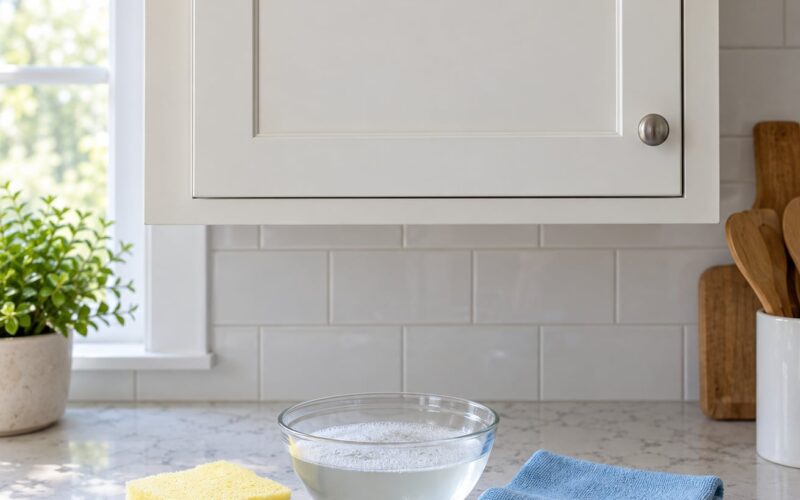
- Warm water and a few drops of mild dish soap
- A soft-bristled brush, an old toothbrush, or a small bottle brush that fits inside the cylinder
- A bowl, tray, or shallow sink to catch debris and dirty water
- Baking soda, citric acid, or a dishwasher-safe appliance cleaner for stubborn mineral or grease buildup
- A soft cloth or sponge, plus rubber gloves if the filter is greasy or has sharp edges
- Tweezers, handy for pulling sticky produce labels out of the spray arm holes
A flashlight helps too. Sump areas sit in shadow under the rack, and you cannot judge a clogged mesh hole you cannot see.
Step-by-Step
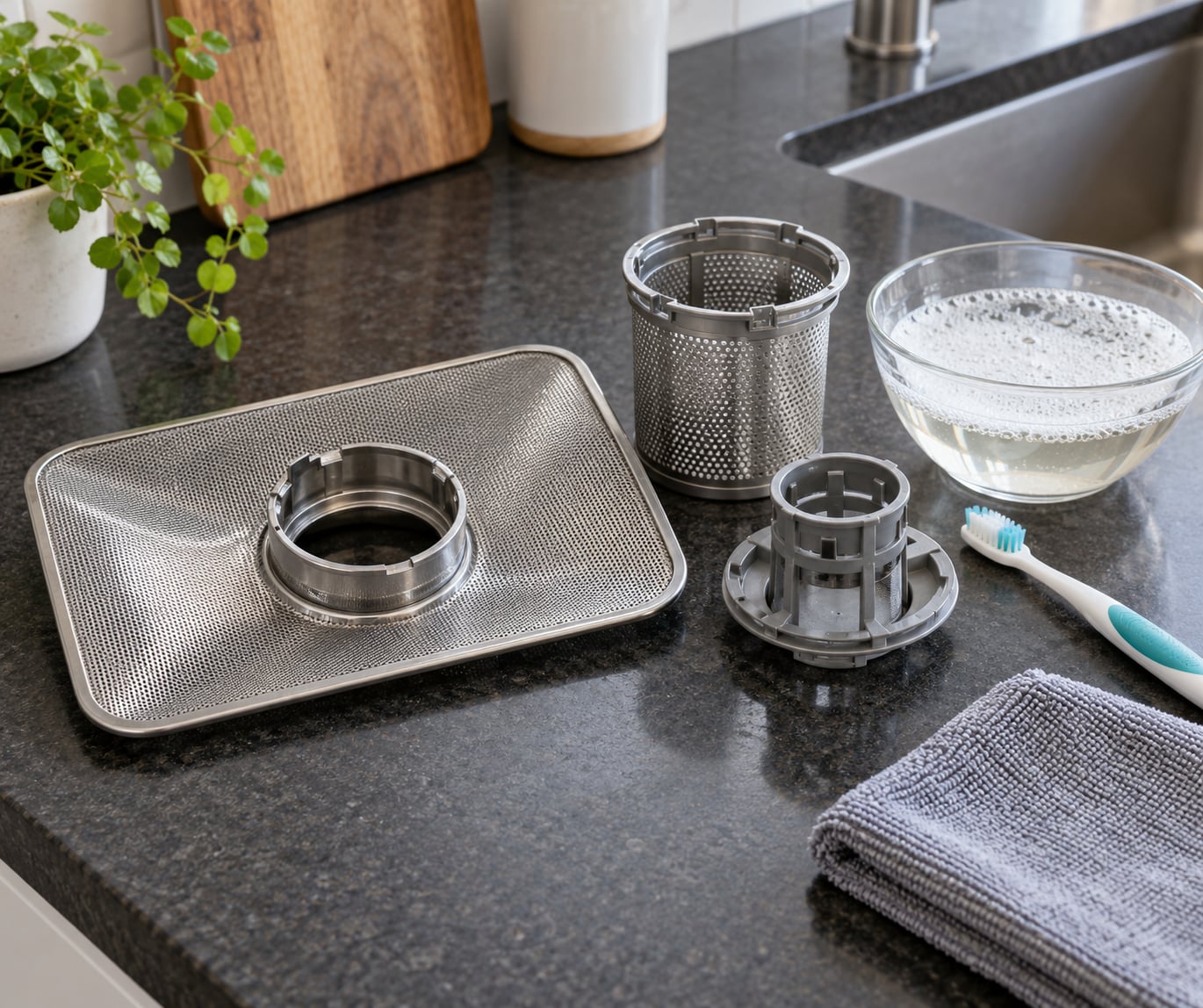
Most dishwashers use a two-part removable assembly: a flat coarse mesh filter and a cylindrical fine mesh filter that sits on top of it. These steps cover that design. Check the manual first, because some machines use a self-cleaning screen or a cartridge that releases differently.
How to Clean a Dishwasher Filter: Find and Remove It
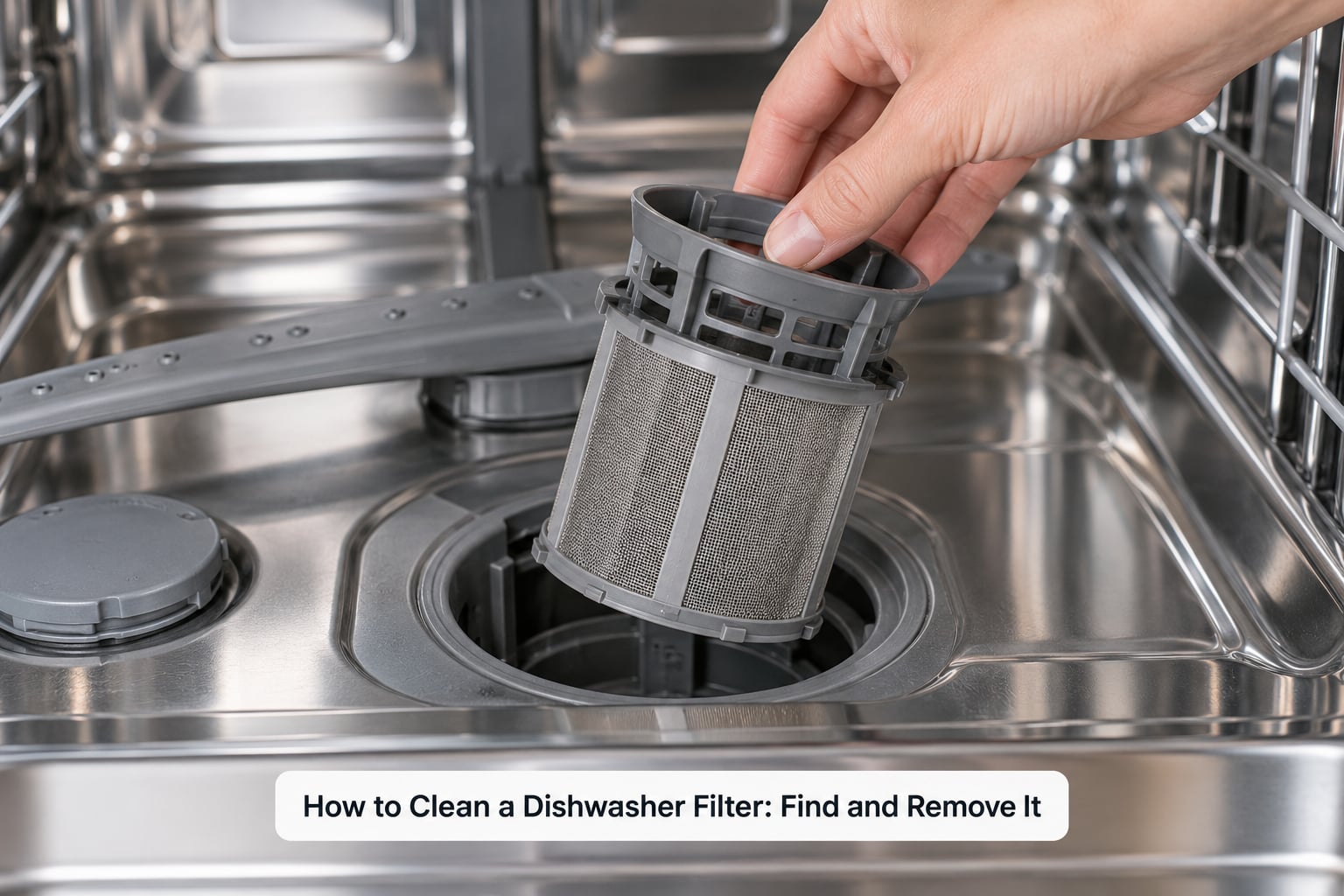
Cancel any running cycle, switch the dishwasher off, and if you are worried about power, unplug it or trip the breaker. Let the tub and the water inside it cool completely before you reach in.
Slide the lower dish rack toward you and out of the tub. The filter sits at the base of the wash tub, usually centered under the lower spray arm or slightly toward the back wall.
Turn the cylindrical filter counter-clockwise by a quarter turn or half turn, then lift it straight up. On some models it lifts out on its own, and on cartridge styles a plastic clip releases it. If nothing moves, stop and check the manual rather than forcing it.
Let the Debris Soak
Set the filter parts over a bowl or tray and pour over enough warm, soapy water to cover them. Ten minutes of soaking loosens the grease and food slurry that scrubbing alone never shifts.
Work over a bowl rather than the sink drain. Debris rinsed downstream can lodge in your household plumbing and create a second problem on top of the one you opened the dishwasher to fix.
Remove the Food and Grease
Scrub the mesh with a soft brush loaded with dish soap. Work from the center of the filter outward toward the rim so loosened pieces move toward the edge instead of disappearing into a hole.
The spray arm comes off with a simple twist or lift in most models. Set it aside and clear any holes that are blocked, since a clogged rotor hole starves the wash and leaves grit on everything above it. Sticky fruit produce labels are the usual culprit, and tweezers get them out.
Pull the flat coarse mesh filter forward and clean it separately. Wipe the sump area at the bottom of the tub with a cloth, because trapped food there keeps smelling even after the filter is spotless.
Clean Stubborn Buildup
For a filter that has gone a year or more without attention, soaking beats scrubbing. Choose one treatment and give it time rather than mixing several at once.
- Hot soapy water works for ordinary grease and food residue. It is the safest default for any plastic filter.
- Baking soda or citric acid in warm water is good for mineral scale and limescale, especially in hard-water areas.
- White vinegar dissolves light mineral film. Soak for 20 to 30 minutes and rinse well.
- One or two denture cleaning tablets in warm water break down hardened grease surprisingly well.
Skip bleach unless your manual permits it, and stay away from wire brushes, scouring pads, metal picks, boiling water, and harsh solvents. Those split plastic retaining tabs, melt seals, and strip the coating off fine mesh.
Rinse and Inspect the Filter
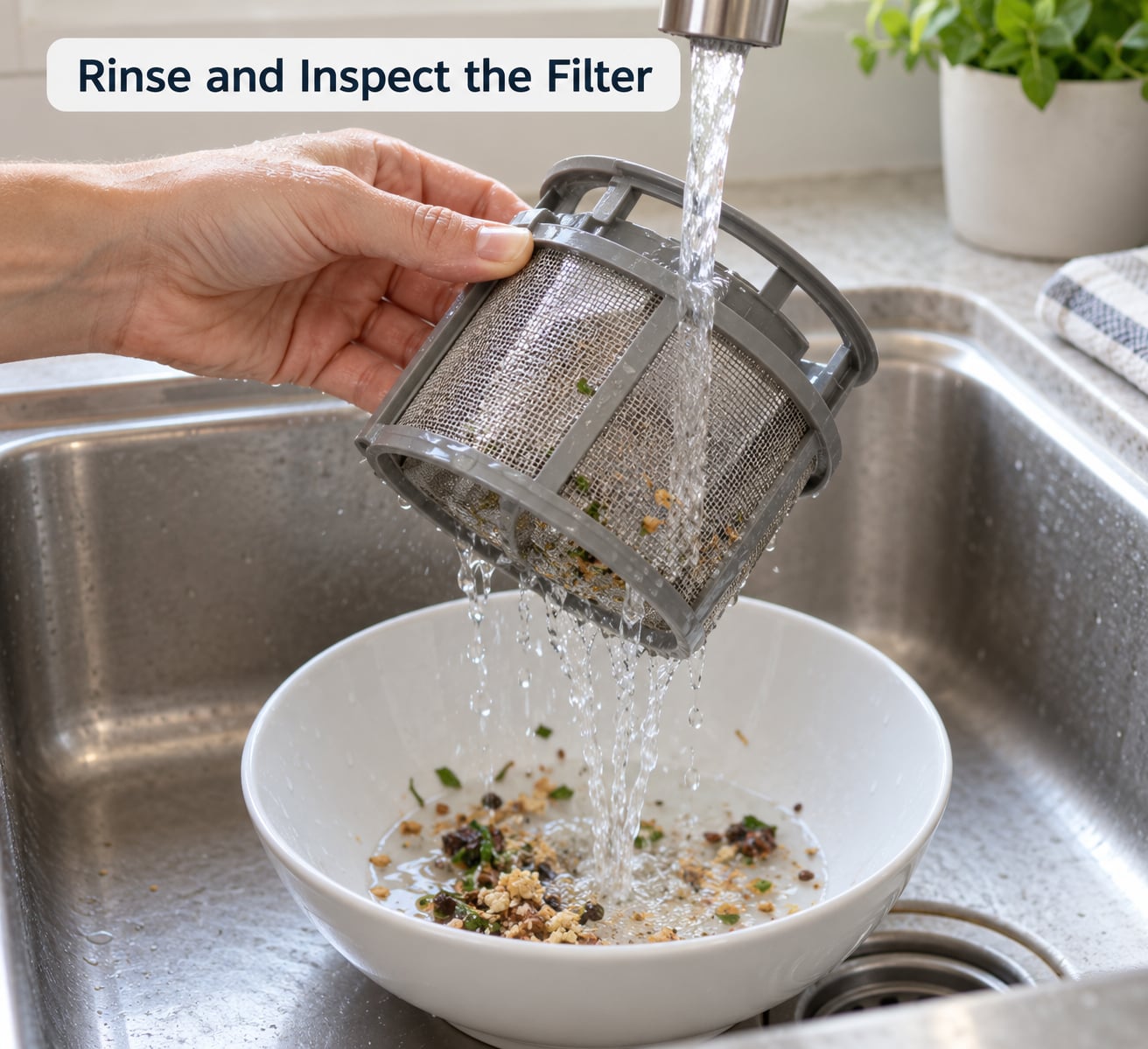
Rinse every removable part under warm running water until no soap, grease, or loose food particles remain. Hold the cylinder up to a light and look through the mesh to confirm the holes are open all the way around.
Check the rim, the seals, the plastic tabs, and the cartridge edges for cracks or splits. If you snapped a retaining tab or the mesh is torn, replacement assemblies are usually sold by model number and are far cheaper than a new pump downstream.
Wipe the parts dry. A filter that is properly seated has to sit flat and turn freely in its mount, so a wet or warped piece will not lock.
Reinstall and Test the Dishwasher
Slide the flat coarse mesh filter back into its track first, so it sits flat against the tub floor. Set the cylindrical filter on top and turn it clockwise until it locks.
Test the lock the way manufacturers describe: if the upper filter still turns clockwise when you try to spin it, it is not seated. Push it down gently as you turn. Then reattach the spray arm and slide the lower rack back in.
Run a short empty cycle on the hottest setting with detergent in the door. Watch for leaks under the tub, unusual grinding, and water that drains away rather than pooling at the bottom.
Common Mistakes
Running the dishwasher with no filter or with a loose one is the most common error, and it lets glass shards, bottle caps, and bone fragments reach the drain pump. Never start a cycle with the filter out.
Forcing a locked component to turn snaps plastic tabs and can crack the mount. If it will not budge, soak it longer and try again while warm rather than adding leverage with pliers.
Rinsing debris into the sink drain moves the problem rather than solving it. Always work over a bowl.
Ignoring the sump and spray arm holes leaves the machine dirty even with a perfect filter. The odor usually comes from trapped food in the sump or on the door seal, not from the filter itself.
Cutting yourself is easy on a neglected filter with sharp broken edges, so wear gloves if yours is gritty. And if the filter will not seat properly after cleaning, or the machine still will not drain, stop and call an appliance technician rather than continuing to take the machine apart.
How Often to Clean It
Check the filter monthly in a dishwasher you use regularly, and clean it any time you see residue, notice grit on dishes, or catch a musty smell. Heavy use, pet food, and grinding soil on produce all push the interval shorter.
The pattern below is a starting point. Match your row to your loading habit, then match the interval to how many loads you run in a week.
- Scrape and rinse dishes before loading: every 6 weeks at 1 to 2 loads a week, monthly at 3 to 5 loads, every 2 weeks at 6 or more loads.
- Scrape only, no rinse: monthly at 1 to 2 loads a week, every 2 weeks at 3 to 5 loads, weekly at 6 or more loads.
- Rinse as you fill the rack, no scrape: monthly at 1 to 2 loads a week, every 2 weeks at 3 to 5 loads, every 2 weeks at 6 or more loads.
- Load without scraping or rinsing: every 2 weeks at 1 to 2 loads a week, weekly at 3 to 5 loads, weekly at 6 or more loads.
Some machines use a self-cleaning mesh screen that is rinsed rather than scrubbed, and compact models may use a macerator that grinds debris with no filter to remove at all. If you see a grinding pump housing instead of a mesh cylinder, skip the filter routine and check your manual for cleaning that design.
When to Call a Technician
Filter cleaning solves most complaints. A technician is worth the visit when the problem keeps coming back after a proper clean.
- Water stays in the bottom of the tub after a cycle finishes
- A drain or heating error code reappears after the filter is clean and reseated
- Water leaks under the dishwasher during or after a cycle
- A grinding or whining noise starts during draining
- Debris reappears in the sump within days of a thorough cleaning
- Glassware stays cloudy or spotty even with fresh detergent and a clean filter, which often points to hard water and the softener setting
Debris that keeps coming back can mean a cracked sump or a failing pump impeller, and cloudy glass is a water hardness issue rather than a filter issue. Contact the manufacturer first for warranty coverage, then an appliance technician.
Frequently Asked Questions
Can I put a dishwasher filter in the dishwasher?
Yes, most people do it, and it works well on grease. Put the parts on the top rack or a utensil basket so nothing blocks a spray arm, add normal detergent, and run the hottest cycle you have. Skip it if your manual forbids it, and remember that dishwasher detergent residue left on fine mesh can need a second rinse by hand.
Do dishwasher filters have to be replaced instead of cleaned?
Cleaning is the normal answer. Filters are made to be washed repeatedly, and most manufacturers describe a monthly clean rather than a replacement schedule. Replace the assembly only if the mesh is torn, a plastic retaining tab snapped, or the rim is warped so the part will not lock. Look up the part by your model number.
Why does my dishwasher smell bad even after I clean the filter?
The filter is only one of several odor traps. Food often sits in the sump, inside the spray arm holes, and along the door seal gasket, where moisture keeps it damp. Clean those areas too, run an empty hot cycle with a cup of white vinegar in the top rack, and leave the door ajar between uses so the tub dries out.
Can I use vinegar, bleach, or baking soda on the filter?
Vinegar and baking soda are both safe for plastic filters and handle mineral film and light grease. Use them diluted in warm water, then rinse thoroughly. Bleach is riskier because it can degrade plastic and seals, so use it only if your manual allows it, and never combine bleach with vinegar or any other cleaner.
What should I do if the filter will not come out?
Soak it first. Warm soapy water for fifteen minutes dissolves the grease that has compacted around the mount, and the filter usually turns after that. If it is still stuck, add a little white vinegar to the soak and try again while the plastic is warm. If it still will not move, stop forcing it and call a technician.
Conclusion
Cleaning a dishwasher filter is quick once you know which part is which: turn the cylinder counter-clockwise, scrub both pieces in warm soapy water, rinse, then reinstall the flat mesh first and lock the cylinder clockwise. Start today by switching the machine off, pulling the lower rack, and checking your owner’s manual before you remove anything.