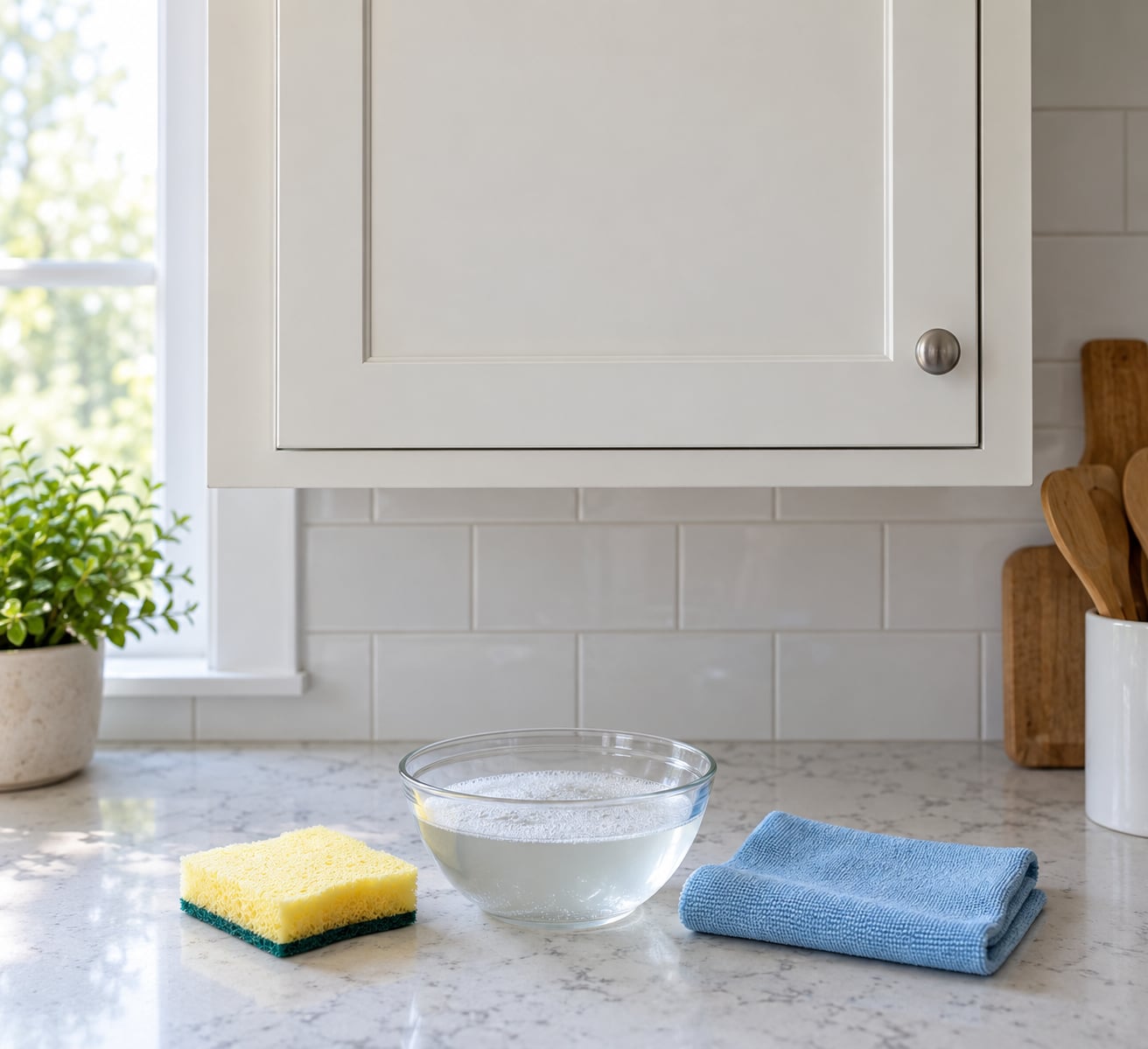
To remove grease from kitchen cabinets, mix a few drops of dish soap into a bowl of warm water, scrub the greasy face with a soft non-abrasive sponge, then wipe away the residue with a second clean damp cloth. On a full run of upper and lower doors, that is roughly ten minutes of scrubbing plus drying, and it costs almost nothing.
Most people overcomplicate this job. The reason cabinets still feel tacky afterward is rarely the wrong cleaner. It is stopping before every trace of soap and grease is off the surface, then assuming the cleaner did not work.
Not all the grease is splatter. Cooking fat heated hard enough breaks into droplets small enough to hang in the air, and the ordinary air currents that move warmth around a house carry that fine mist to whatever surface is closest to the range. Dust settles into the film, the film turns tacky, and more of it lands on top of that every night you cook. That is why the top edges of upper doors and the trim beside the range hood go cloudy before the doors themselves do.
Table of Contents
- What You Need
- Step-by-Step: How to Remove Grease from Kitchen Cabinets Without Damaging the Finish
- How to Test the Cabinet Finish First
- How to Loosen Grease from Kitchen Cabinets Without Scrubbing
- How to Scrub Stubborn Grease Without Damaging Cabinets
- How to Remove Cleaner and Restore the Cabinet Finish
- Common Mistakes
- Frequently Asked Questions
- What is the best way to remove grease from kitchen cabinets without damaging the finish?
- Can I use baking soda to remove grease from painted kitchen cabinets?
- How do I clean greasy kitchen cabinets made of wood?
- Will vinegar or bleach damage my kitchen cabinet doors?
- How do I get rid of sticky residue left after cleaning cabinet grease?
- How often should I clean grease from cabinets near the stove?
- How to Prevent Grease from Building Up Again
- Conclusion
What You Need
Everything for the main method is already in your kitchen. The only real decision is whether you need anything stronger than dish soap, and that depends on how much buildup you are facing.
- A bowl of warm water and dish soap, the workhorse mix for light and moderate film.
- A soft sponge or microfiber cloth. Never the scouring side of a sponge.
- A second clean cloth dampened with plain water, for the rinse pass.
- A soft-bristled brush or an old toothbrush for panel grooves, routed edges and around hardware.
- A drop cloth or old towel to catch drips and to set hardware on.
- Baking soda for a mild paste when soap alone stalls.
- Distilled white vinegar, optional, for a film that has gone hard and amber.
- A commercial kitchen degreaser, optional, for years-old hardened grease.
- Nitrile gloves, and a window cracked if you use anything alkaline or ammonia-based.
Wood cabinets get the gentlest options because moisture reaching seams and edges can cloud or swell the finish. Laminate is the most forgiving surface, since the printed layer is bonded plastic rather than a clear coat over wood. Painted cabinets sit in between, and matte paint shows scuffing sooner than satin.
Whatever you choose, test it first. Put a drop on the least visible corner of a door, leave it for the dwell time you plan to use, then check for dulling, color change or raised grain. If nothing changes, the cleaner is safe on that finish.
Step-by-Step: How to Remove Grease from Kitchen Cabinets Without Damaging the Finish
How to Test the Cabinet Finish First
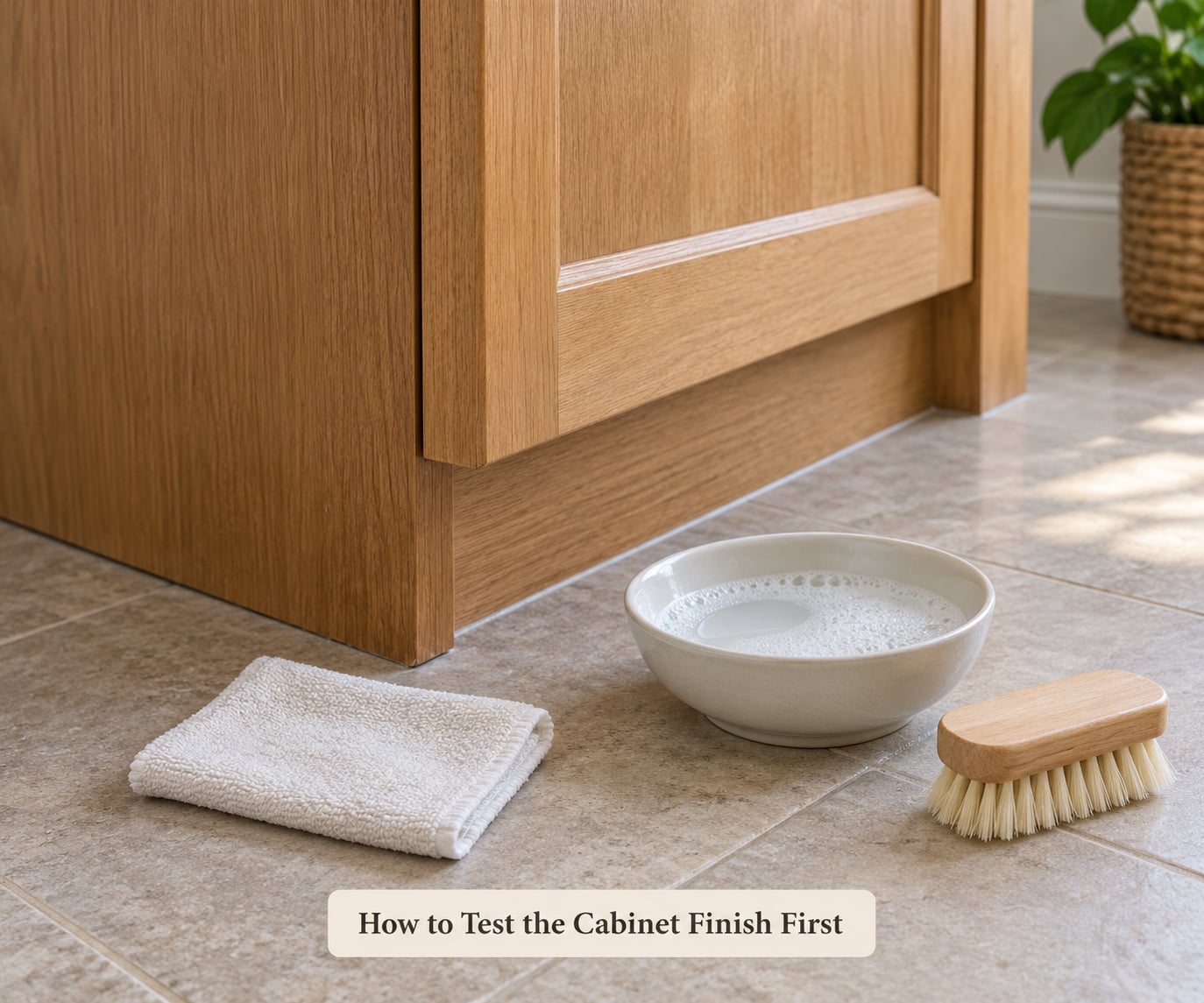
Look at the door in daylight rather than under kitchen lighting, which flatters everything. Painted cabinets show brush or spray texture and one perfectly even color, and the grain of the wood underneath is invisible. Bare or stained wood shows grain, and takes a drop of water into it immediately.
Laminate and thermofoil have no grain at all. They feel slightly warm and plastic to the touch, and the surface has a printed pattern with a thin clear film over it.
Check the least obvious spot you can find, usually the inside edge of a lower door where it meets the cabinet box, or the underside of a drawer front. Dab the cleaner, wait, wipe, and look at it in the same light you just used to judge it.
How to Loosen Grease from Kitchen Cabinets Without Scrubbing
Fill a bowl with water at roughly body temperature, about 100 to 110 degrees Fahrenheit, and add two or three drops of dish soap per cup. Stir until the water is still slightly slippery. Hotter water cuts grease faster, but it also raises the wood and strips the sheen off paint, so warm is the ceiling, not the target.
Dip your sponge, wring it until it stops dripping, and wipe the door starting at the outer edges and working toward the middle. Grease migrates inward as you go, and a clean center of a door stays clean while you work the frame last.
Work top to bottom on the whole bank of doors, and lay a towel beneath anything you are working on. Grease that runs down a door and pools in a seam is the single most common way people make a small job permanent. Let the soapy water sit for a minute on heavy areas before you scrub, because dwell time is doing most of the work.
How to Scrub Stubborn Grease Without Damaging Cabinets
Use the soft face of the sponge in small circles with light pressure. On wood, follow the grain rather than going across it, which lifts the grease instead of grinding it. The goal is not to scrub the door clean. It is to break the bond between the grease film and the finish, then let the soap carry it away.
For spots the sponge will not shift, mix two tablespoons of baking soda with one tablespoon of warm water into a thick paste. Dab it on with a fingertip rather than smearing it, let it sit five to ten minutes, and wipe with the soapy cloth. The paste is mildly abrasive and mildly alkaline, so it earns its keep on a sticky patch and stays off a whole door.
For hardened grease, the answer is a commercial kitchen degreaser such as Krud Kutter, ZEP Heavy-Duty Citrus Degreaser or Ecolab Heavy-Duty Citrus Degreaser. Spray it, leave it for one to three minutes so it can break the bond, and only then wipe. Skipping the dwell time is why people think these products do nothing. On sealed wood, Murphy’s Oil Soap diluted at roughly a quarter cup per gallon is the gentler alternative, since the oil conditions the surface as the soap emulsifies the grease. Stop and reassess the moment the finish looks dull or worn.
Hardware and shaker door grooves hold more grease than the flat faces do. An old toothbrush gets into the routed edges and around knobs where a cloth cannot reach.
How to Remove Cleaner and Restore the Cabinet Finish
Rinse matters more than the cleaning. Use a second cloth dampened with plain warm water, wiped until you see no soap film, then a third dry cloth to take the moisture off. People who complain about streaks are usually describing a leftover film that was never rinsed, not a bad cleaner.
Dry the doors immediately, working down, and pay attention to the top and bottom edges where water sits. On wood cabinets, trapped moisture along a seam can cloud the finish or raise the grain, and a damp cloth left sitting on a door does the same thing faster.
Once everything is dry, look at the doors at an angle. If you see a film, the finish has been attacked rather than cleaned, and it will need a refinishing product. On sealed wood, a conditioning oil restores the sheen after a first-time clean. On painted cabinets, the fix is touch-up paint, not more product. A satin paint touch-up matched to the original sheen will blend far better than any cleaner.
Common Mistakes
Never use bleach, ammonia on wood or painted cabinets, WD-40, Magic Eraser, oven cleaner, steel wool, or scouring pads on kitchen cabinet doors, and skip Dawn PowerWash on any finish. Each of these either strips the clear coat, leaves an oily film, or dulls the paint permanently.
Here is the correction for each one that comes up constantly:
- Hot water. Users insist on it and users wear gloves doing it. It mobilizes grease faster and it also raises the grain of wood and hazes a clear coat. Use water you can put your hand in comfortably.
- The scouring side of a sponge. It works, and it leaves a web of fine scratches that only shows once the room light hits it. Every honest report of “cleaned but looks worse” comes down to this.
- Bleach. It yellows, it is corrosive, and the rinse water carries it into seams. It solves nothing here that dish soap does not.
- Ammonia on wood. It is an aggressive alkali that will soften an old varnish or dull satin paint. If ammonia is the only thing left, dilute it heavily, open a window, keep it off the edges, and never mix it with bleach. The two together make chloramine gas, which is genuinely dangerous.
- WD-40. It is a lubricant and a solvent, not a degreaser. It liquefies the grease and then re-deposits an oily film that collects dust faster than the grease ever did.
- Magic Eraser. It is mild abrasive powder. On a matte painted door it will leave a shiny patch that never blends back in.
- Oven cleaner and Dawn PowerWash. Both are built to strip baked-on polymer from metal. In r/CleaningTips the warning about PowerWash is repeated more than any other, because it etches the clear coat off a cabinet in a single pass and no amount of re-wiping brings it back.
- Undiluted degreaser. Dwell time beats concentration every time. If the concentrate is sitting on the door, it is dissolving the finish along with the grease.
One more trap: a wet cloth resting on a door while you do something else. It works like a slow soak, and the finish underneath dulls and clouds long before you notice.
The habits that keep most of this from happening are simple, and they are the subject of the last section below.
Frequently Asked Questions
What is the best way to remove grease from kitchen cabinets without damaging the finish?
Warm water with a few drops of dish soap, a soft non-abrasive sponge, and a second clean damp cloth to remove the residue. The soap emulsifies the grease so it wipes away instead of spreading. Dry the doors immediately afterward, and test any stronger product on a hidden corner first.
Can I use baking soda to remove grease from painted kitchen cabinets?
Yes, as a paste rather than a powder, mixed roughly two tablespoons of baking soda to one tablespoon of warm water. Dab it on a sticky spot, leave it five to ten minutes, then wipe with your soapy cloth. Keep it off a whole door and off edges, since it is mildly abrasive and mildly alkaline. Rinse and dry right after.
How do I clean greasy kitchen cabinets made of wood?
Use the gentlest option that works and keep water off the edges. Dish soap and warm water handles most film on sealed wood. For stained or natural wood, Murphy’s Oil Soap at about a quarter cup per gallon of warm water loosens grease while conditioning the surface. Work with the grain, wring your cloth until it does not drip, and dry the doors at once.
Will vinegar or bleach damage my kitchen cabinet doors?
Vinegar will not strip a finish, but repeated use can dull a matte or satin surface, and it does less than the warm water carrying it. Bleach is the real problem. It yellows over time, it is corrosive, and rinsing it sends it into the seams and edges of the door. Use dish soap instead and skip bleach entirely.
How do I get rid of sticky residue left after cleaning cabinet grease?
That tackiness is usually undried soap film rather than grease. Wipe the door again with a clean cloth dampened with plain warm water, then follow with a dry cloth, and the film goes. If a sticky spot remains after a full rinse pass, it is baked-on grease, so use a baking soda paste or a diluted degreaser with a proper dwell time instead of scrubbing harder.
How often should I clean grease from cabinets near the stove?
Wipe splatters while they are still warm, weekly for anything within a foot or two of the range, and give the door faces a proper damp wipe once a month. If you use the range hood, run it during cooking and clean or replace the grease filter on the schedule in its manual, usually every month or two and more often if you fry often.
How to Prevent Grease from Building Up Again
The people who keep their cabinets clean are not cleaning harder. They are wiping early and often enough that the film never hardens.
- Wipe a splatter while it is still warm. Grease that is five minutes old wipes off with a damp cloth. Grease that is five years old needs a degreaser and a dwell time.
- Run the range hood before you start cooking, not after the smell fills the room. Then clean or swap its grease filter on the schedule in the manual, every month or two for most homes, sooner if you fry often.
- Use a splatter screen when there is oil in the pan. A screen stops the large droplets; nothing on the market stops the fine mist.
- Give the door faces a damp cloth with a drop of dish soap once a month, and pay attention to the top edges of the upper doors, the trim beside the hood, and the metal around handles.
- Line cabinet shelves with washable liners or shelf paper, and take stored dishes out and wash them on a schedule rather than letting them sit in a film.
- Keep the cabinet faces and the wall beside them dry. Standing moisture in a corner is what turns a surface dull, and it invites the film back faster than grease does.
If your cabinets came with the house and have not been deep-cleaned in fifteen years, expect some staining to remain after a good clean. Discoloration that has soaked into wood or yellowed paint into a white finish is permanent. Cleaning fixes the film; only refinishing fixes the color.
Conclusion
Start by identifying your cabinet finish and testing the gentlest effective cleaner on a hidden corner, then work up from warm soapy water to a baking soda paste or a diluted degreaser only if the first pass is not enough. Wipe with a clean damp cloth afterward, dry the doors immediately, and the job is done in about ten minutes per bank of cabinets.