If your toilet runs for 10 or 15 seconds, goes quiet, then starts again a few minutes later with nobody flushing, the cause is almost always one of three things: a leaking flapper, a float set too high, or debris in the fill valve. Learning how to fix a toilet that runs intermittently takes about an hour, and most of it is diagnosis rather than wrench work. You need an adjustable wrench, a couple of screwdrivers, a sponge and a towel, and for most repairs, one small rubber part.
The important detail is that a toilet which runs on and off behaves differently from one that runs continuously, and the pattern tells you which part to look at first. If the fill valve shuts off cleanly and the tank just sits there, something is leaking past the flapper. If the water keeps trickling into the overflow tube and down to the bowl, the float or the fill valve is the problem.
Table of Contents
- What You Need
- How to Fix a Toilet That Runs Intermittently Step by Step
- How to Fix a Toilet That Runs Intermittently: Check the Flapper
- Adjust or Replace the Fill Valve
- Inspect the Float and Overflow Tube
- Check the Flush Handle and Trip Lever
- Test the Repair and Confirm the Tank Is Sealed
- Common Mistakes
- When to Call a Plumber
- Frequently Asked Questions
- Why does my toilet run randomly when nobody is using it?
- Is an intermittently running toilet wasting a lot of water?
- Can I repair a running toilet without replacing the flapper?
- Should I repair the toilet or replace the whole toilet?
- How often should I check the flapper and fill valve for wear?
- Does a running toilet always mean the flapper is bad?
- Conclusion: Start With the Flapper
What You Need
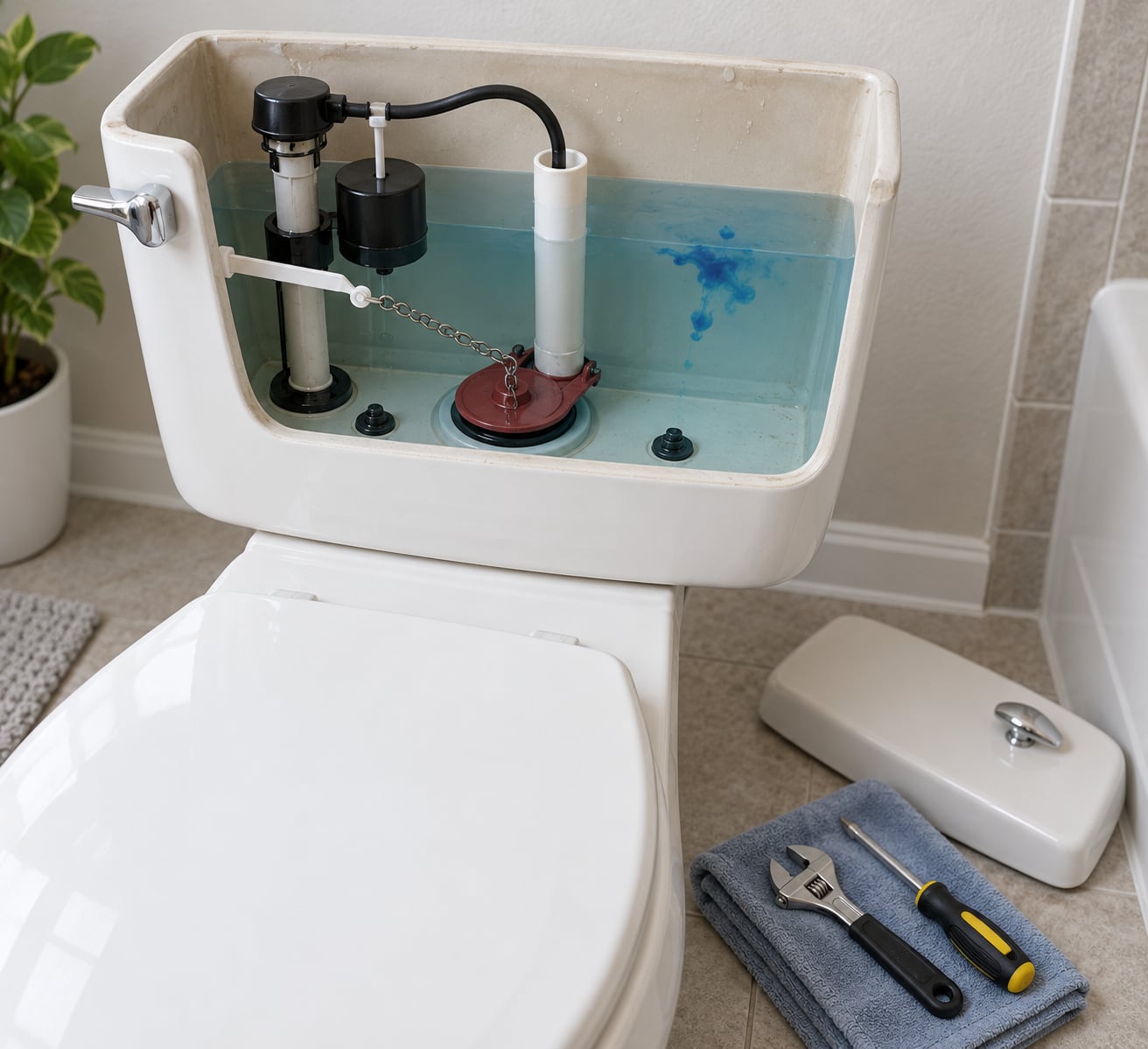
Start by figuring out which kind of toilet you have, because the parts differ. Lift the tank lid and look. A rubber flapper toilet has a hinged rubber flap on a flush valve at the center of the tank, with a chain running to the handle. A canister flush valve toilet has a cylindrical cartridge instead of a flapper. A button-flush toilet has a button on the top of the lid or deck and an actuator rod running down to the same valve. Write down the brand and model stamped on the tank or the flush valve before you go shopping, because the tank shape alone will not identify the part.
Tools and parts to have on hand:
- Adjustable wrench or channel-lock pliers
- Flathead and Phillips screwdrivers
- Old towel, sponge, and a shallow pan
- Food coloring for the leak test
- A replacement flapper or flush valve matching your brand and tank diameter
- White vinegar or a descaling pad for mineral crust
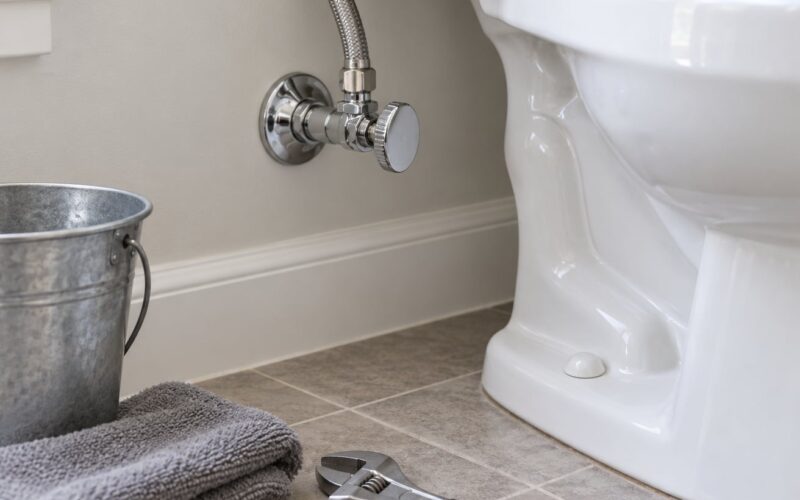
Before you touch anything, turn the shutoff valve behind the toilet clockwise until it stops, then flush once and sponge out the tank. A mug of water left in the bottom will keep sloshing around while you work. Keep the supply off until the test at the end, and put a towel down first. If the shutoff valve is stuck or the toilet keeps running with the supply off, skip ahead to the plumber section.
How to Fix a Toilet That Runs Intermittently Step by Step
Work through the causes in order of how common and how cheap they are. Do not start replacing parts. The dye test tells you where the water is actually going, and that saves you buying the wrong piece. Match what you hear and see to the likely cause:
- Runs 10 to 15 seconds every 5 to 10 minutes with no flush: the flapper or the flush valve seat is seeping. Look at the flapper rubber, the chain slack and the valve seat crust first.
- The refill runs normally, then starts again on its own: a slow leak past the flapper drops the level below the float trigger. Check the flapper seal and how the chain is aligned.
- A constant trickle into the bowl while the tank stays empty: the float is set too high and water is going down the overflow tube. Check the float adjustment screw or the float cup clip.
- Hissing with no tank refill and a falling water level: the fill valve is not closing fully. Check the fill valve cap for debris or the valve’s own flapper for wear.
- Runs for a few seconds then stops, repeating irregularly: a warped flapper, or a chain that is too tight or too slack. Check the shape of the flapper and the length of the chain.
- Still running with a brand new flapper: mineral crust on the valve seat, or high supply pressure. Check the valve seat, the fill valve and the incoming water pressure.
How to Fix a Toilet That Runs Intermittently: Check the Flapper
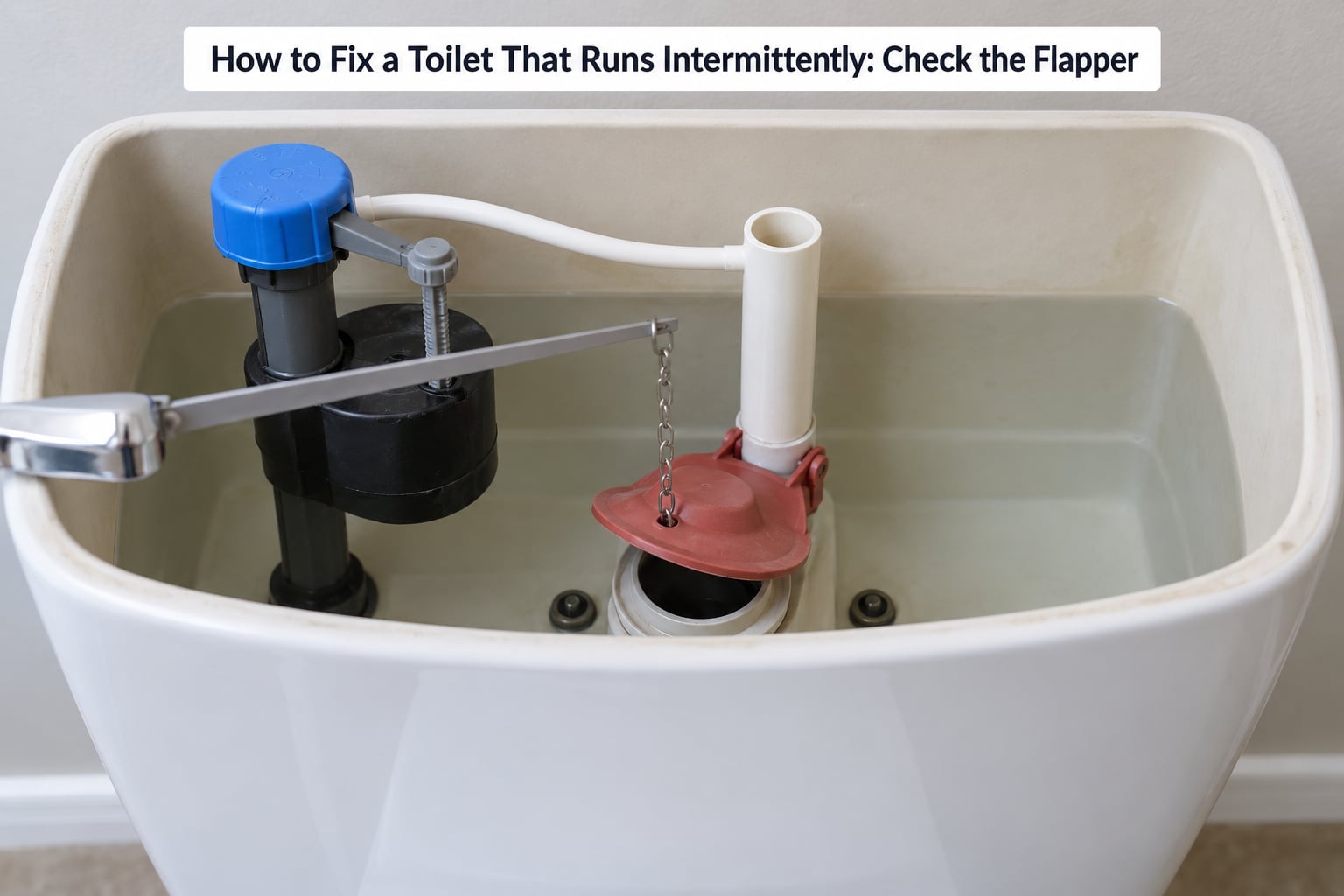
The flapper is the first thing to check because it causes more intermittent runs than anything else. Press the flapper down and let go. It should drop flat against the valve seat and stay there. If it rocks, hangs up on the overflow tube, or springs back, it is warped and will not seal no matter how much you clean it.
With the tank drained, pull the flapper straight up off the flush valve ears and lift the chain off the overflow tube lug. Check the rubber for cracks, hard edges, a milky white film or a flattened corner. Hold it up to the light. A good flapper looks matte black and flexible; a tired one looks grey, glossy and stiff.
Now check the two things that cost nothing to fix. The chain should have roughly half an inch of slack when the flapper is seated, so it does not hold the flapper off the seat. Too tight and the flapper cannot close fully. Too loose and the handle may not lift it high enough to flush. The flapper should also sit centered against the valve seat, not rubbing the side of the overflow tube, because that constant contact warps the rubber in a few months.
Look at the valve seat ring where the flapper lands. Hard water leaves a chalky white or gray crust there, and a flapper cannot seal over a raised crust. Scrub both the flapper and the seat with a stiff pad and white vinegar, rinse, and refit the flapper. Push it down so the chain hangs with a little play. If it still runs and the rubber looks tired, replace it with a chlorine-resistant flapper matched to your tank diameter and style. Two-bolt and three-bolt flush valves take different flapper bases, and forcing the wrong one onto the ears can crack the ears and turn a cheap fix into a new flush valve.
Adjust or Replace the Fill Valve
The fill valve is the tall column on one side of most tanks that shuts off when the water reaches the set level. The tell for a bad fill valve is a hissing sound with the flapper perfectly seated and the water level still dropping. In that case, water is escaping past the valve’s own internal flapper instead of going through the overflow tube.
To clean one, turn the tank supply on just enough to refill, then turn it off again. Unclip the fill valve from the overflow tube and lift the whole assembly out. Take the cap off the top and pour out whatever is sitting in it. Grit, sand and rust flakes collect in that cap and hold the valve flapper off its seat. Turn the valve upside down and flush it with a cup of water, then check the small flapper on the underside of the cap for a swollen or torn edge.
While the valve is out, look at the float mechanism it drives. If it is a cup float that rides on the overflow tube, there is usually a small clip or screw that sets the height. If it is a float arm with a ball on the end, bend the arm downward a quarter inch to lower the shutoff point. After refitting, the water should stop about one inch below the top of the overflow tube, and never above it.
Replace the fill valve rather than cleaning it when the cap is cracked, the stem is loose, or the valve keeps hissing after a proper flush-out. Match the new valve to the old one’s height, because an over-tall valve pushes the water line too high and an over-short one lets it run to the overflow. Follow the markings on the float body or the shims on the overflow tube rather than guessing.
Inspect the Float and Overflow Tube
A float set too high is the second most common cause and the one people misread. The overflow tube is the vertical pipe in the center of the tank, and its job is safety. If the water ever reaches the top of it, the excess drains into the bowl instead of onto the floor. So when a float is set too high, the water quietly goes down the overflow pipe, the float drops, the fill valve kicks on, and you get the same run-stop-run pattern as a leaking flapper. From inside the room, the two look identical.
Tell them apart by watching the tank. Turn the supply back on and let it fill. If the water rises past the top of the overflow tube and then you hear a steady hiss as it drains to the bowl, the float is too high. If the water stops well below the overflow and then falls a little on its own, a leak past the flapper is refilling it.
A cup float clips onto the overflow tube and slides up or down. A float arm pivots on the valve body and is bent to set the level. A ball float hangs on a bent arm and the water pushes it up. Whatever the style, make the adjustment in small turns, refill the tank, and check the line against the overflow tube each time. If the cup will not stay where you put it, the clip is stripped and the float or the valve body needs replacing.
Check the Flush Handle and Trip Lever
If the flapper and the water level check out, look at the handle. A loose handle, a rusted trip lever, or a chain hooked onto the wrong link of the trip lever can leave the flapper hanging half open after every flush, which produces a short run that stops on its own. Give the handle a firm push and watch the flapper lift all the way clear of the seat. If it barely moves, the trip lever is worn or the handle is not screwed in tightly enough.
On a button-flush toilet, lift the button and check the actuator rod instead. The rod should push the valve open fully and release completely so nothing drags the flapper. On a dual-flush tower, make sure the smaller half actually empties the tank and the larger half empties it completely, and that the button returns to its rest position. A button that sticks half-pressed will hold the valve open every time.
Also check where the chain attaches. On many tanks the chain should be clipped to the third link down from the handle, not the last link, so it has slack without dragging.
Test the Repair and Confirm the Tank Is Sealed
Put a few drops of food coloring in the tank and let it sit for ten minutes, then flush and watch the bowl for a minute. Blue or green water appearing in the bowl means water is leaking past the flapper or through the valve seat. Clear water in the bowl means the flapper seal is holding and your problem is upstream, in the float or the fill valve.
Flush the toilet three or four times in a row. On each cycle, the fill valve should shut off with an audible click and stay quiet. If the sound of running returns after a few minutes with no flush, the leak is still there. Listen overnight if you can, since an intermittent fault can take hours to show up.
Turn the supply back on slowly so you do not shock the fill valve, and let the tank fill to the set level. Then dry the floor under the tank and the tank-to-bowl joint with a towel. Wait an hour and touch it again. Any dampness there means the tank bolts or the gasket need work rather than a tank part, and that is a plumber job.
Common Mistakes
Overtightening the fill valve nut. Crank the supply nut down and you will crack the plastic threads on the valve shank. Tighten by hand until snug, then a quarter turn. Hand-tight plus a little is enough; the rubber washer does the sealing.
Setting the float too high. Following the old water stain line on the tank wall is a bad guide, because old mineral marks sit above the normal level. Aim for one inch below the overflow tube with the fill valve fully closed.
Forcing a mismatched flapper. If it does not slide onto the flush valve ears without pressure, it is the wrong base. A universal flapper usually works across brands, but the two-bolt and three-bolt styles still differ. Take the old flapper to the store, or bring the tank measurement.
Chaining or clamping the flapper shut permanently. People do this as a temporary measure and forget. It stops the leak and breaks every flush, and it can crack the chain hole in the flapper. Remove any wire, clamp or paper clip before you flush.
Dropping cleaning tablets in the tank. Chlorine and acidic tablets sit in the water and attack rubber and plastic parts from the inside. A flapper can stiffen and crack in a season, which turns a two-minute fix into a repeat visit. Use a rim hanger or flush the tablets in the bowl instead.
Over-tightening the tank bolts. The bolts that hold the tank to the bowl only need about half a turn past snug, in small increments, alternating sides. Too much and the tank or the bowl can crack, which is a much bigger job than the leak you started with.
When to Call a Plumber
Stop and call a licensed plumber if the tank or bowl has a visible crack, if there is standing water around the base of the toilet but the floor and the tank-to-bowl joint stay dry, if the supply line or the shutoff valve drips, or if water is running inside a wall or under a finished floor. A fill valve that will not shut off even with the tank drained also belongs to a pro, because the tank overflows the moment you walk away.
Repair-versus-replace is a fair question on an older unit. If the toilet is more than 20 years old, the fill valve is a one-piece unit that may not be a standard replacement part, or the tank and bowl are a matched set where parts get hard to find, replacing the whole toilet often costs less than two service visits. A modern WaterSense-labeled toilet uses about 1.28 gallons per flush compared with roughly 3.5 to 5 gallons for a typical older model, so the savings start immediately and continue on every flush.
One more thing worth checking if you have hard water. Recurring mineral buildup on the valve seat is the reason some flappers only last a few months, and no amount of part swapping fixes it permanently. A plumber can clear the seat properly or replace the flush valve while they are there.
Frequently Asked Questions
Why does my toilet run randomly when nobody is using it?
A small amount of water is escaping from the tank, which drops the level enough to trigger the fill valve again. Usually it is a leaking flapper, a chain that is too tight or too slack, or a float set high enough that water is spilling into the overflow tube. The dye test tells you which in about ten minutes.
Is an intermittently running toilet wasting a lot of water?
More than you would think. A leaking toilet can waste 200 gallons a day or more, which is over 73,000 gallons a year, and toilets are a significant share of indoor household water use. That shows up on the water bill even though the tank itself never looks full, because the loss happens in slow cycles.
Can I repair a running toilet without replacing the flapper?
Often, yes. About half the time the flapper is fine and the problem is the chain slack, the float height, or a chalky mineral crust on the valve seat. Scrub the seat and the flapper with vinegar, reclip the chain with about half an inch of play, and reset the float to one inch below the overflow tube before you buy anything.
Should I repair the toilet or replace the whole toilet?
Repair it if the tank, bowl and fill valve are under about 20 years old and parts still fit. Replace it if the unit is older, the fill valve is a non-standard one-piece design, or the tank or bowl is already cracked. A low gallon-per-flush model cuts water use on every single flush, so the savings add up fast.
How often should I check the flapper and fill valve for wear?
Give both a quick look every six months or so, and check the chain while you are up there. Rubber flappers on hard water can stiffen within a year. Listen to the tank overnight now and then, because an intermittent leak is far easier to catch by ear than by eye.
Does a running toilet always mean the flapper is bad?
No. A leaking flapper is the most common cause, but a float set too high, debris in the fill valve cap, a worn trip lever, or mineral buildup on the flush valve seat all produce the same on-and-off pattern. Watch where the water actually goes during the refill cycle and you can usually tell them apart without buying parts.
Conclusion: Start With the Flapper
Lift the lid, press the flapper, and look at the chain first. That single check resolves the majority of cases, and it costs nothing. If the flapper is sound and the run continues, work down the list to the float, the fill valve and the valve seat, testing the water line against the overflow tube after every change.
Then flush it several times and listen for a few minutes. Intermittent faults hide well, so give the repair a day or two of quiet before you call it done. If water keeps moving after that, or if you find dampness under the tank, stop and call a plumber. How to fix a toilet that runs intermittently is genuinely a beginner job, but only as long as the problem lives inside the tank.