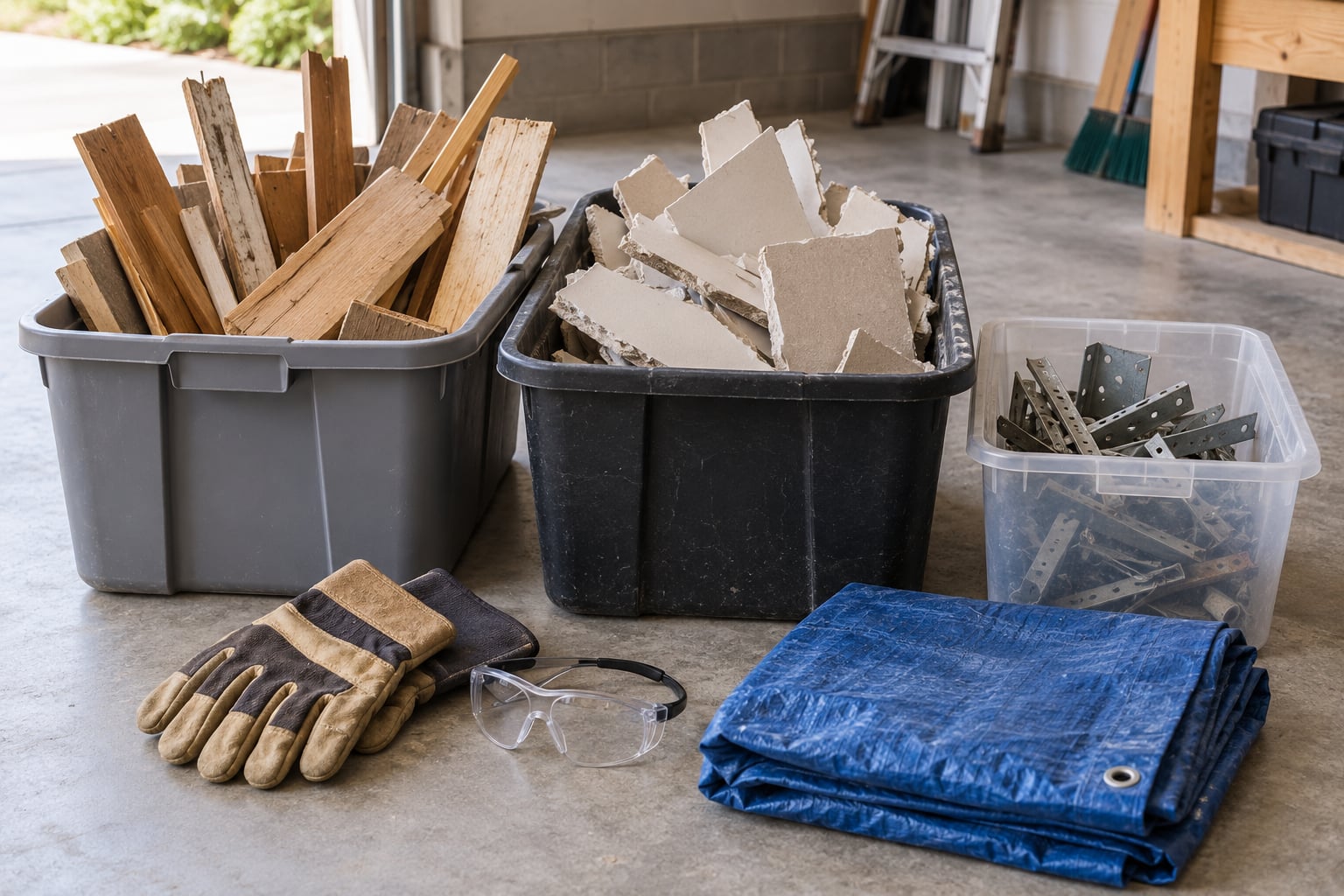
Construction debris cannot go out in your curbside trash or recycling cart in most US cities, so the real answer to how to dispose of construction debris is to route each material to a facility that accepts it. Sort first, confirm your local rules, then choose between self-hauling, a roll-off dumpster, a hauling crew, or a bulk waste bag.
A bathroom gut job might produce three yards of debris. A full kitchen demolition can hit ten. Either way, the material has to end up somewhere legal, and the wrong route is how people end up with a violation notice or a pile of rubble at the curb.
This guide covers the process end to end: what to gather, how to separate materials, who to call before you load, how to pick a disposal method, and how to haul the pile without damaging your truck or the roadway. Rules vary by city and county, and as of 2026 they are enforced a little more closely than they used to be.
Table of Contents
- What You Need Before You Sort Anything
- Step-by-Step: How to Dispose of Construction Debris
- 1. Identify and Separate the Debris
- 2. Check Local Rules and Hazardous Materials
- 3. Choose a Disposal Method
- 4. Load and Transport It Safely
- 5. Dispose of It and Keep the Receipt
- Common Mistakes That Cost Money or Trouble
- Frequently Asked Questions
- Can I put construction debris in my regular trash or recycling bin?
- What is the cheapest way to dispose of construction debris?
- How big a dumpster do I need for a renovation?
- What do I do with asbestos or lead paint found during demolition?
- What should I do with usable materials instead of throwing them away?
- Is hauling it away myself the same as hiring a crew?
- Conclusion
What You Need Before You Sort Anything
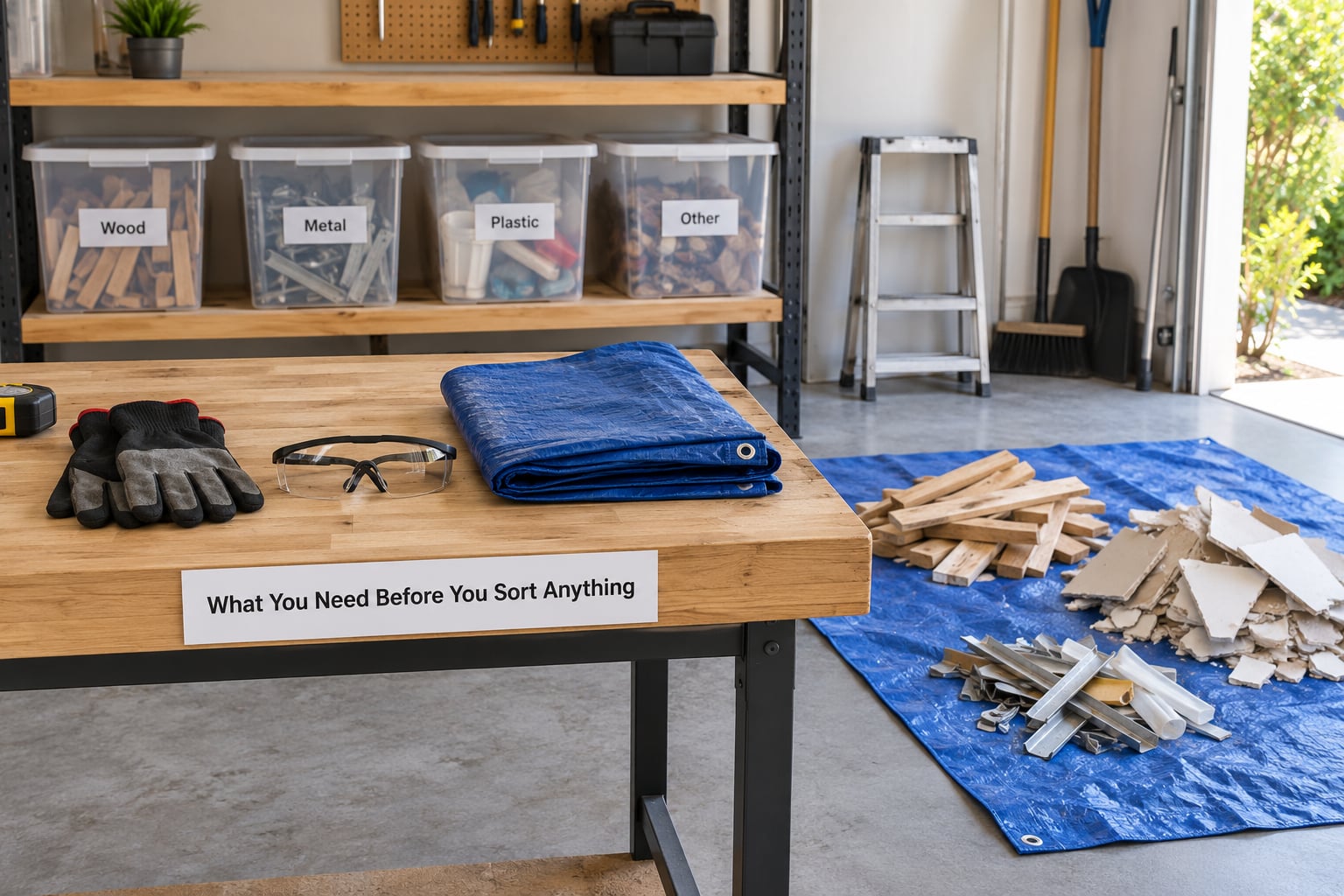
Gather your protective gear and containers before the first pile hits the floor. Most of the mess in a demo job is avoidable with about ten minutes of setup.
- Cut-resistant gloves and safety glasses. Demolition waste is full of staples, nails, and sheet-rock edges that do not announce themselves.
- A dust mask or respirator if you will be tearing out drywall or old flooring.
- Sturdy containers or pallets. Five-gallon buckets, a wheelbarrow, or a rented bin. Cardboard boxes collapse under plaster and tile.
- A heavy-duty tarp or plastic sheeting to cover the load in the bed of a pickup.
- A pickup, trailer, or rented truck with a payload rating you can actually check in the door jamb.
- Ratchet straps or tie-downs, plus a broom and shovel for the driveway afterwards.
- A phone. You are going to call your city or county public works department and at least one facility before you load anything.
One more thing to have ready: your project estimate. Knowing roughly how many cubic yards you are generating tells you which method you should price first, and it is the number every hauler will ask for anyway.
Step-by-Step: How to Dispose of Construction Debris
1. Identify and Separate the Debris
Sort the pile by material before anything else, because material type decides the destination, the weight, and often the price. Mixed loads get charged at the rate of whatever the hauler cannot recycle.
- Wood — lumber, trim, cabinets, pallets, and treated deck boards. Untreated wood usually recycles; treated or painted wood often does not.
- Drywall and plaster — keep separate from other material so gypsum can be recycled instead of landfilled.
- Metal — scrap framing, rebar, duct, and old appliances. This is the one category a scrap yard may pay you for.
- Concrete, brick, block, and asphalt — heavy. This is the material that produces the nasty surprises in dumpsters and trailers.
- Glass and fixtures — window glass, mirrors, toilets, sinks, vanities. Keep any reusable pieces out of the waste stream.
- Carpet, tile, and flooring — often accepted separately, sometimes with a per-pound charge.
- Insulation — fiberglass batts, loose fill, and foam. Foam is a special case handled by a specific recycler.
- Paint, solvents, and fuels — these are regulated, and they do not belong in a pile with lumber.
You will know this step is done when every pile in front of you is one material and nothing is stacked two categories deep. If you are unsure about a specific item, keep it aside rather than guessing.
2. Check Local Rules and Hazardous Materials
Call your city or county public works or sanitation department before loading. Ask three things: which materials they accept, what the load limits and fees are, and whether a permit is needed if you plan to place a container on the street.
Most households get the same answer from a quick call, and it is the call people skip. Curbside bulk pickup is designed for furniture, appliances, and mattress-sized items, not lumber, drywall, or rubble. Contractor-generated debris is almost always barred from residential carted collection outright. Assume nothing is allowed until the department tells you it is.
Handle regulated materials separately, and do not put them in a roll-off, a trailer, or your curbside bin. Asbestos, lead-based paint, mercury-containing fixtures, solvents, used paint, aerosol cans, treated wood, and contaminated soil need licensed or certified handling, and the EPA and state environmental agencies both set the rules. If you suspect asbestos or lead paint in a pre-1978 structure, stop the demo and get an assessment done before you touch it.
3. Choose a Disposal Method
Match the method to the size of the pile, the material, and how much labor you want to spend. There are five routes that cover almost everything a homeowner generates.
| Method | What it is | Best for |
|---|---|---|
| Self-haul | You load a pickup or trailer and drive it to a transfer station, C&D facility, or landfill | Two yards or less of light material, and short projects |
| Roll-off dumpster rental | A company drops a container, you fill it, they swap it out | Anything over a few yards, roofing, kitchens, whole rooms |
| Debris hauling crew | A crew loads and removes it for you, priced by volume | Piles too heavy or awkward for one person, tight schedules |
| Bulk waste bag | A heavy-duty bag or flexible container loaded by hand and picked up | Small remodels, a bathroom, a garage tear-down |
| Reuse and recycling | Scrap yards, salvage dealers, ReStore locations, and curbside or municipal drop-off | Anything metal, usable, or still sellable |
Two details decide more of these choices than people expect. First, most rental companies cap how much dirt, concrete, plaster, or roofing can go in a container, and surcharge the rest by weight, so a heavy-material project may be cheaper self-hauled. Second, hauling crews often refuse concrete, dirt, and plaster outright. Ask about restricted materials before you book, not after the truck arrives.
The reverse of a yard-for-yard comparison also happens: a roll-off has a minimum size, so a two-yard project can cost more than it should. Renting is priced per week at a flat rate, so a longer project is not much more expensive. If the pile is small but the work will take a month, that flat rate usually wins anyway.
4. Load and Transport It Safely
Contain the load before you move it. A tarp tied with ratchet straps keeps drywall dust, insulation, and paper off the road and out of other drivers’ windshields. Many municipalities treat material blowing out of a truck as littering.
Distribute the weight evenly and pack the heaviest material low and forward. An unbalanced load handles badly no matter how small the truck feels. Stay inside your vehicle’s payload rating, which is stamped on the driver’s door jamb, and remember that a full cubic yard of concrete weighs well over a ton. That is how a full pickup bed becomes a suspension problem in the first mile.
Keep sharp material down and covered, and never have anyone stand behind or beside a moving truck while you work. Use a ramp or boards rather than lifting heavy buckets by hand.
5. Dispose of It and Keep the Receipt
At the gate, confirm your materials are accepted before you tip. The attendant will weigh the load, charge by ton or by volume depending on the material, and hand you a scale ticket. Photograph it.
That ticket matters more than most people expect. It proves where the material went and how much it weighed, and landlords, general contractors, and demolition companies routinely ask a subcontractor for proof of disposal. If a portion was recycled, ask for a certificate of recycling or a diversion report, which is the document that supports a waste diversion rate claim on a bid or a project report.
You are finished when the pile is gone, the driveway is swept, the ticket is filed, and nothing regulated was mixed in.
Common Mistakes That Cost Money or Trouble
Putting debris in curbside trash or recycling. The fix: call public works first and get the rule confirmed in writing if you can. Repeated violations can bring a citation, and some jurisdictions add a cleanup charge to your utility bill or place a lien against the property.
Mixing everything into one load. Unsorted debris gets priced as mixed waste, which is the most expensive category at most facilities. The fix: spend an hour sorting before you load, and keep metal separate even if it is awkward.
Overloading a vehicle or container. Overage charges at the scale, plus the safety risk, plus damage to your own truck. The fix: check the payload rating, ask the hauler what the weight limit is, and make two trips instead of one.
Ignoring a material you are not sure about. Asbestos, lead paint, and solvents are the expensive mistakes, because they turn a simple disposal into a remediation job. The fix: stop, isolate the material, and get a certified assessment before any more demolition happens.
Skipping the pre-check call. This one wastes the most time. The fix: call the facility, confirm the material list, the hours, the scale fee, and the weight cap, then load. It is a five-minute call that saves a round trip.
One last reminder on the physical side. Nobody reading this needs a lecture, but the injuries that come with demo work are mostly hand and foot injuries, and they happen in the first ten minutes of work when people are moving fast.
Frequently Asked Questions
Can I put construction debris in my regular trash or recycling bin?
Usually not. Most municipalities bar lumber, drywall, plaster, brick, concrete, and roofing from curbside carted collection, and contractor-generated debris is excluded outright. Bulky-item curbside pickup is generally reserved for furniture, appliances, and mattresses. Put the material out anyway and you can get a violation notice, a leftover pile, or a cleanup charge on your utility bill. Call your city or county public works department and let them tell you what your specific address is allowed to do.
What is the cheapest way to dispose of construction debris?
For a small pile of light material, self-hauling to a transfer station or C and D recycling facility is cheapest once you count your time. For anything beyond a few yards, a single roll-off rented for the week often costs less than several truckloads, because each extra trip adds gate fees and hours of loading. Recycle metal separately, since a scrap buyer may pay you for it, and check your city for free municipal drop-off days before paying anyone.
How big a dumpster do I need for a renovation?
Match the container to the pile, not to the project name. Small containers suit a bathroom or a garage tear-down, mid-size ones suit a kitchen demolition, and the largest sizes suit a full gut renovation or a roof tear-off. Ask the rental company for a weight limit, because concrete, dirt, plaster, and shingles can hit a cap within hours and then get surcharged by weight. For a small pile, a bulk waste bag is usually a better fit than a container minimum.
What do I do with asbestos or lead paint found during demolition?
Stop work on that material and treat it as regulated waste. Asbestos and lead-based paint in pre-1978 buildings require assessment and often certified abatement before removal, and the debris has to go to a facility licensed for it. It cannot go in a roll-off, a trailer, a bulk bag, or your curbside bin. Solvents, fuels, used paint, aerosol cans, and fluorescent bulbs are handled the same way, and mercury-containing fixtures have their own rule.
What should I do with usable materials instead of throwing them away?
Pull out anything still usable before you load. Doors, cabinets, vanities, appliances, and hardware can go to Habitat for Humanity ReStore locations or a ReUse Center, and architectural salvage dealers buy older doors, trim, and fixtures. List surplus stock online and give it away rather than disposing of it. Donating eligible goods to a qualified charity can also support a tax deduction when you itemize, so keep the receipt.
Is hauling it away myself the same as hiring a crew?
No, and the difference is mostly labor. Hauling means you load, tarp, drive, wait in line, and unload at the scale, and construction material typically takes noticeably longer to load than household junk. Hiring a crew means paying for that time instead of spending it. For a mid-size renovation, homeowners regularly find one container for the week beats several truckloads once their own hours are counted.
Conclusion
Start by separating the pile, then call your local public works department and one facility to confirm the rules and the material list. From there, match the method to the volume: self-haul a small pile of light debris, rent a roll-off for anything larger or for a long project, and reuse or recycle anything metal, usable, or sellable before you pay anyone to haul it.
Sorting is the single biggest lever on the final cost, and a five-minute call before loading is the cheapest insurance against a wasted trip or a violation notice.