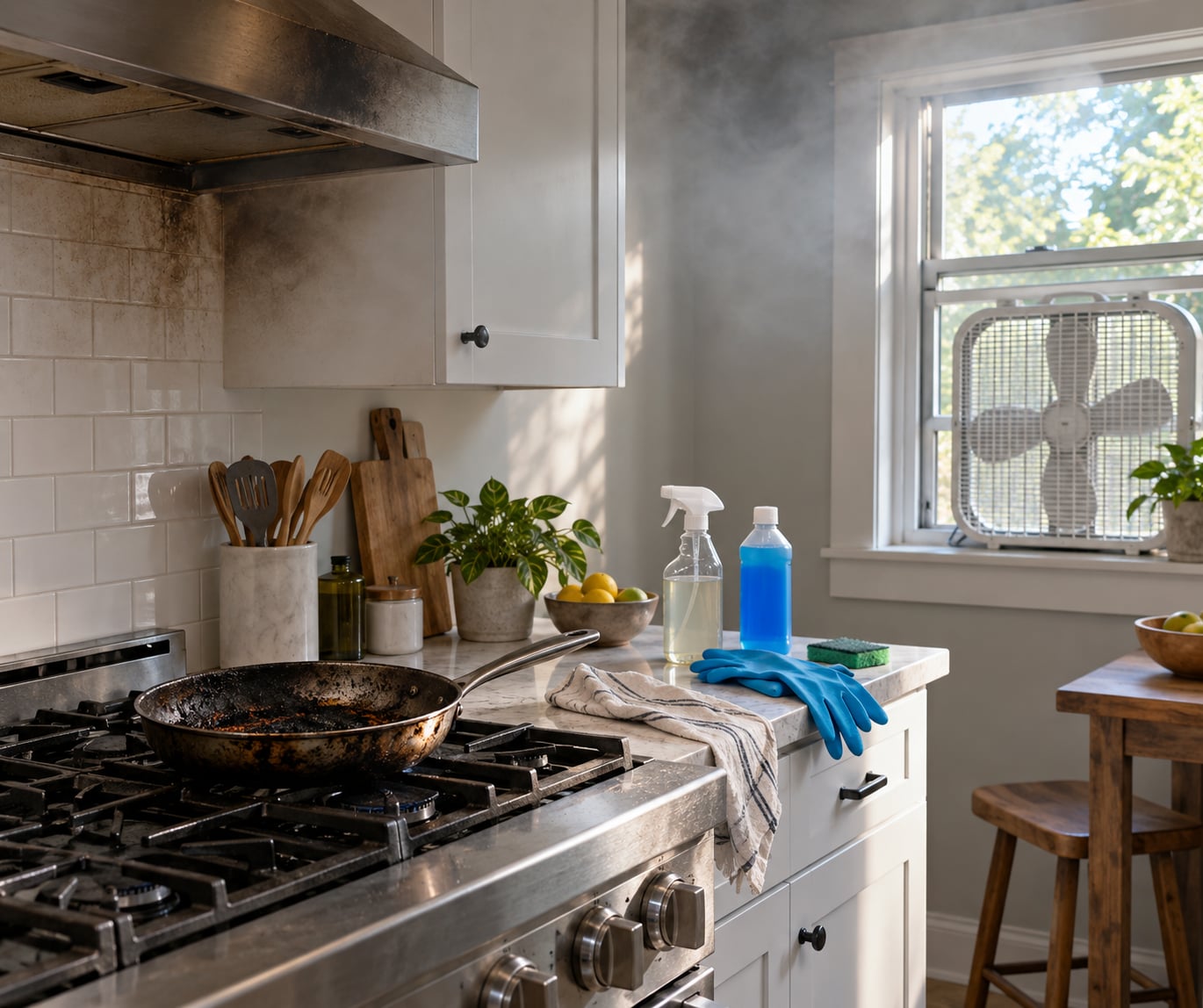
Smoke smell removal after a kitchen fire comes down to three things in order: fresh air, soot lifted off every surface, and a clean heating system. Confirm the home is safe, work from the ceiling down, and never wash anything before the loose soot is gone. Most odor left behind is soot you cannot see, sitting inside paint, drywall, cabinets and ductwork.
A small grease fire you knocked down with a lid is a weekend project. A fire that reached the cabinets, the walls or the vent hood is a restoration job with real health exposure, and the difference is worth knowing before you buy a single supply.
Smoke particles are small enough to walk through paint and settle into fabric fibers. That is why mopping the floor and spraying the air freshener in the kitchen is not a cleanup, it is redistribution.
Table of Contents
- What You Need
- Step-by-Step: How to Remove Smoke Smell After a Kitchen Fire
- 1. Confirm the home is safe to enter
- 2. Remove sources of smoke and soot
- 3. Ventilate the kitchen and nearby rooms
- 4. Clean walls, ceilings, cabinets, and hard surfaces
- 5. Clean the HVAC system and replace affected filters
- 6. Deodorize remaining rooms and porous materials
- 7. Check for hidden damage and lingering odor
- Common Mistakes
- Frequently Asked Questions
- How long does it take for smoke smell to go away after a kitchen fire?
- How do I get rid of smoke smell after burning something in the kitchen?
- Can I use vinegar and baking soda to remove smoke odor?
- Do I need to replace my furnace filter after a kitchen fire?
- Is it safe to sleep in a house after a small kitchen fire?
- When should I call a fire restoration company instead of cleaning it myself?
- Conclusion
What You Need
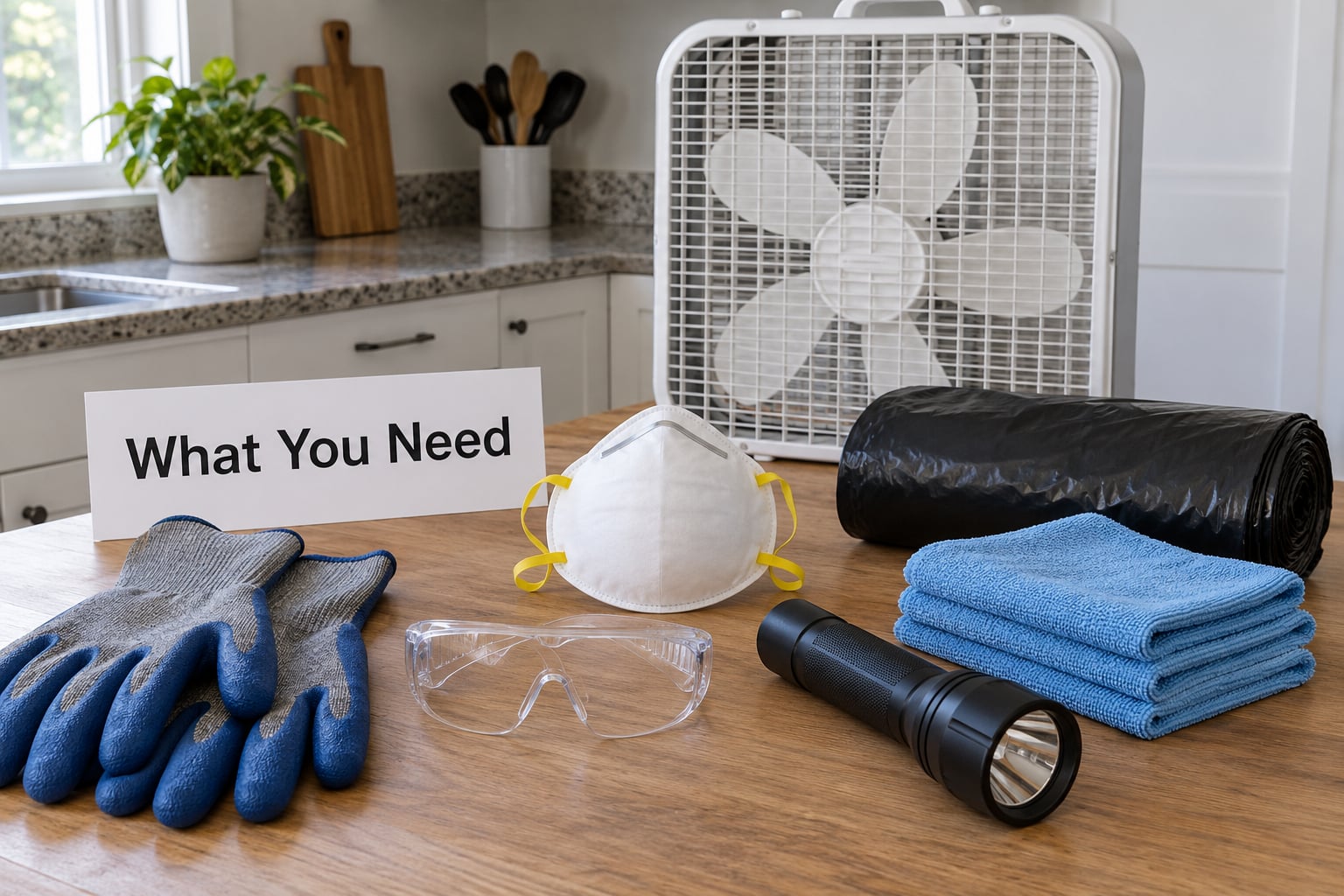
Gather everything before you start. A cleanup job interrupted halfway is how soot gets tracked from room to room.
- Respiratory and eye protection. An N95-style particulate respirator, safety goggles and nitrile gloves. A cloth mask catches nothing useful.
- A flashlight. You are checking ceilings, inside cabinets and behind appliances, where the light never reaches.
- A vacuum with a HEPA filter. A shop vacuum with a HEPA-rated filter works if that is all you have. Missing the filter sends fine soot back into the room.
- Soft brushes and a dry cleaning sponge. A paint-softening dry sponge lifts soot off flat paint without scrubbing it in.
- Microfiber cloths, a bucket and a mild degreaser. Kitchen surfaces carry grease and smoke together, and each one needs its own cleaner.
- Trisodium phosphate (TSP) for painted walls and cabinet exteriors, plus a separate all-purpose cleaner for counters and floors.
- White vinegar, baking soda and activated charcoal. These absorb residual odor once surfaces are clean. They do not replace cleaning.
- Laundry detergent and large trash bags. Both for the clothing and linens question, which usually decides whether odor comes back.
- A box fan and a rain cover for it. Useful for pushing air out of one opening while air comes in another.
Skip the fan until the fire department or an inspector has cleared the structure. A fan moves smoke through a house that has not been assessed yet.
Step-by-Step: How to Remove Smoke Smell After a Kitchen Fire
1. Confirm the home is safe to enter
Do not start cleanup until the fire department has released the property, or an inspector has signed off if the fire was contained and no department responded. Flame and smoke damage hides behind finished surfaces, and soot on a floor can be walked straight through drywall.
Walk the space slowly and look up before you look around. Check for soft or spongy ceiling drywall near the fire area, sagging or bubbled paint, scorched outlets, and any wall or ceiling that flexes when you press it. Smell for gas at the meter and at every appliance, and skip the cleanup entirely if you detect it.
Once the structure passes, dampen any loose ash and soot with water before you step on it. Dry ash tracks; wet ash stays put.
2. Remove sources of smoke and soot
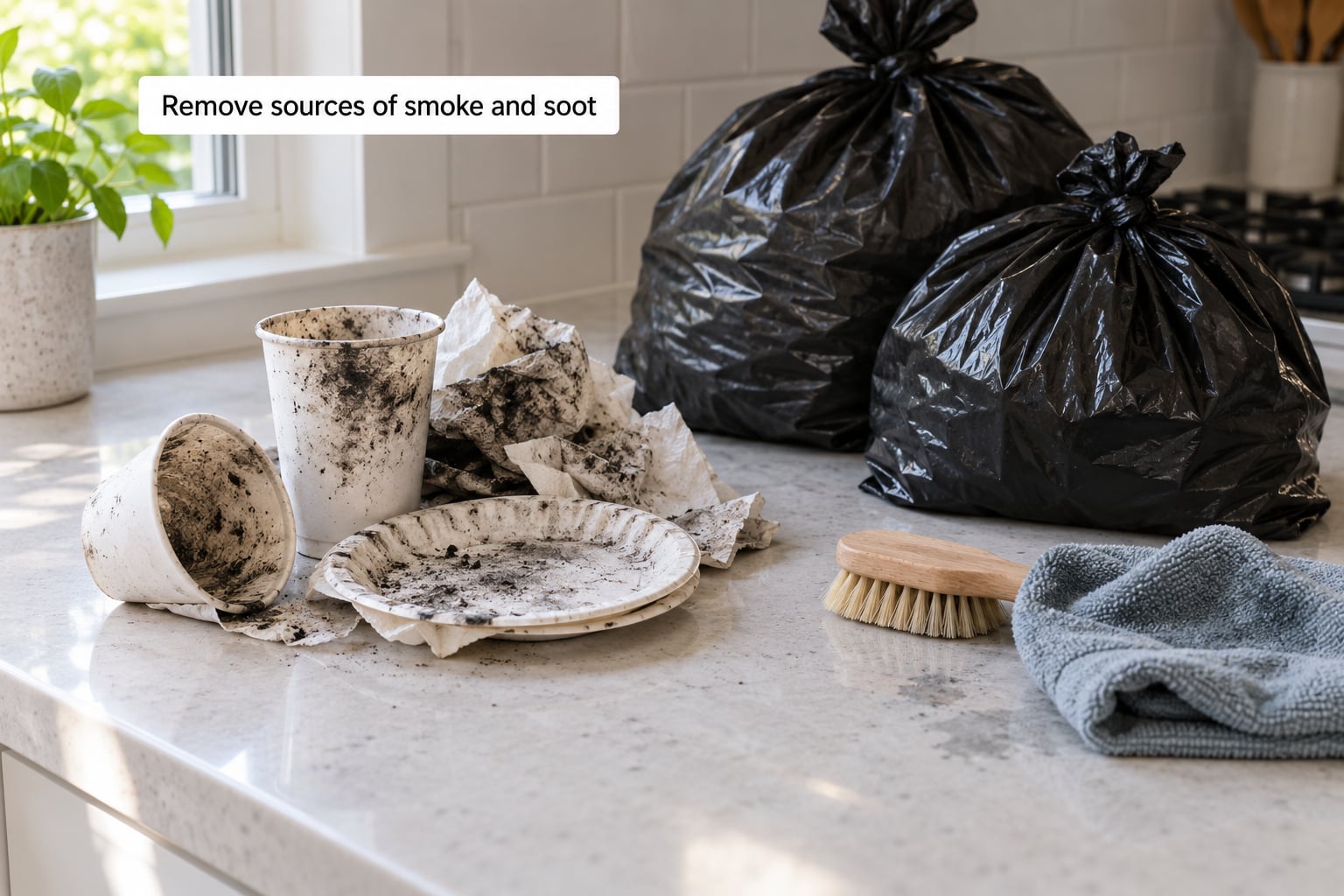
Clear the fire’s source first. Anything that burned in the pan, plastic containers near the heat, cabinet contents with soot on them, and food exposed to smoke all go into bags you can seal. Burned food often carries a taste that survives a wash, so discard it rather than testing it.
Sort what you pull out into three piles: trash, washable, and keep-but-treat. Then vacuum every surface with the HEPA filter running, starting at the ceiling, moving down walls, over blinds and window frames, across cabinet tops, and finishing on the floor. Work top to bottom, because soot falls.
For a light film, a dry sponge on a soft pad lifts it off paint without touching the finish. Check your work from an angle under good light. A wall that looks clean from below can still show a gray haze in daylight.
3. Ventilate the kitchen and nearby rooms
Open windows and doors on opposite sides of the house to create cross-ventilation, so air has somewhere to go instead of circulating through hallways. A box fan in a window blowing outward pulls stale smoke air through the space and speeds things up considerably. Keep it running day and night during cleanup.
There are two cases where you close the windows instead. If it is raining or the outdoor temperature is close to indoor temperature, incoming air adds little and cools the space. If outdoor air is itself smoky, ventilating pulls that smoke indoors and the problem grows.
Leave windows open for days after the visible haze clears. Odor that seems gone while the house is sealed and still whenever you open a door is usually trapped in a closet, cabinet or duct run, not in the main volume of air.
4. Clean walls, ceilings, cabinets, and hard surfaces
Now wash what you vacuumed. Mix about 4 to 6 tablespoons of TSP per gallon of hot water, wear gloves and goggles, and use it on painted walls, ceilings, cabinet exteriors and baseboards. Let it sit a few minutes, then rinse with a clean cloth. Never mix TSP with bleach or ammonia, and never mix any cleaner with bleach.
Kitchen surfaces need a different order. Degrease first, then treat smoke residue. Grease binds odor molecules and traps soot, so wiping a greasy cabinet with soapy water alone tends to spread a film rather than remove it.
Take the appliances apart as far as they come apart. Pull range hood filters and range grates and soak them in hot water with degreaser, then scrub. Inside an oven, run a heavy cycle at its highest heat with a bowl of water and a cup of white vinegar on the rack. For the refrigerator, discard anything that smells through the door seal, pull removable shelves, and wipe the interior surfaces with a baking soda solution.
Cabinet interiors often hold more odor than the fronts do, since heat drives smoke into them. Wipe them down, and for unfinished wood, seal it with a stain-blocking primer after the surface dries. If odor stays in drywall that has soot worked into the gypsum itself, sealing or replacing that drywall is the fix. Scrubbing harder will not reach it.
5. Clean the HVAC system and replace affected filters
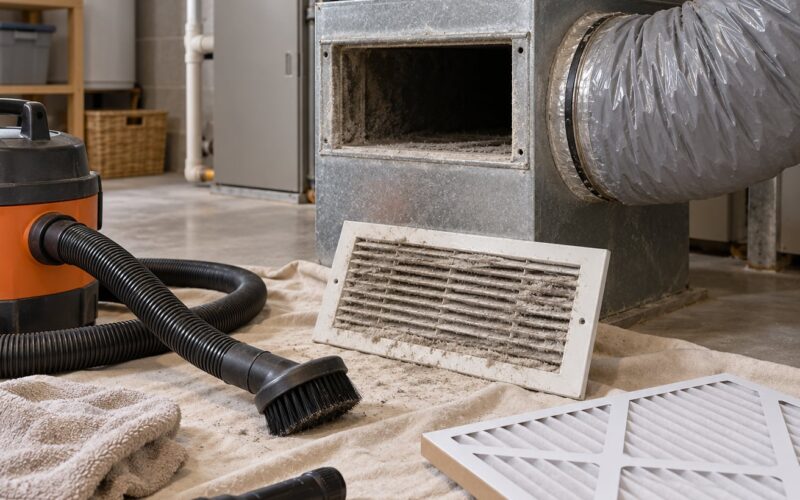
The heating and cooling system is the reason smoke smell seems to follow you from room to room. Ducts distribute air through the whole house, and a return grille in a smoky room pulls contaminated air into the plenum.
Replace the furnace filter right away, then replace it again a second time within a few weeks. A loaded filter chokes airflow and pulls more dust and soot onto surfaces. Run the system for several hours with windows open and the fan set to high so the new filter captures what is floating.
Inspect the visible ductwork and returns for soot or residue, especially in the first run after the kitchen. If smell comes back strongly whenever the blower runs, the ducts need professional cleaning and the coil may need servicing. That is a job for a technician, not a weekend.
6. Deodorize remaining rooms and porous materials
Sort porous belongings into washable and discard. Washable means machine washable fabric with no care label warning, upholstery with a fabric tag, and hard dishes and glasses. Air out anything you cannot wash, outdoors and away from the house, in direct sun for a full day.
Skip the clothes dryer for anything smoky. Heat sets an odor into a fiber permanently, and a single dryer cycle can ruin a load that would have come clean after three washes. Wash cold, add a cup of white vinegar to the rinse, and dry on a rack indoors.
For items you are keeping, spread baking soda or activated charcoal over carpets and rugs, leave them overnight, then vacuum. Activated charcoal works better than baking soda for continued absorption, so place bags near the source, not scattered thinly.
Discard items with heavy, greasy soot on them or with smell soaked deep into foam, carpet padding, insulation or unsealed wood. Seal porous building materials with an odor-blocking primer after cleaning. If odor returns the first time the heat comes on, the material was never sealed and the replacement decision is the cheaper one.
7. Check for hidden damage and lingering odor
Walk the house with the windows closed first, then open. Closets, cabinets above and below the kitchen, the attic hatch, the dryer lint trap and the return grilles are the usual hiding spots. Anything that smells noticeably stronger than the room around it is a hotspot worth treating directly.
Judge progress by how the odor behaves rather than by the calendar. Odor that weakens each day as you keep cleaning is on a normal track. Odor that stays exactly the same for a week despite wet cleaning usually means particles are still being released from a porous material or the duct system.
A mild soot event in one room often clears in one to three days of active ventilation. Smoke that reached the walls, ceiling or duct system commonly takes one to two weeks of work. Smoke that soaked into structural materials or multiple rooms is the point where cleaning stops being effective.
Common Mistakes
- Cleaning before you remove loose soot. Wiping a dry, sooty wall pushes particles into the paint and into the air. Vacuum or dry-sponge first, then wet clean. The fix is always top to bottom, never the reverse.
- Spraying air freshener to cover the odor. Fragrance adds volatile compounds to a room that already has ventilation problems and does nothing about particles. Use it, if at all, after the cleaning is finished.
- Running the dryer on smoky clothing. Heat locks odor into fibers permanently. Air dry anything that has been near smoke.
- Skipping the HVAC system. A dirty filter and coated ducts re-release smell every time the blower runs, and every wet cleaning you do gets undone within hours.
- Leaving windows open in bad outdoor air. On a smoky or hot day, you are bringing the problem in through the front door. Check the outdoor air before you open up.
- Refusing to discard porous items. Carpet padding, foam, insulation and unsealed wood hold odor for years. Most of them cannot be deodorized back to neutral, and trying costs time and money a replacement would not.
- Mixing cleaning products. TSP, bleach and ammonia in the same bucket produce toxic gas. Mix one product at a time, and rinse the bucket between jobs.
- Starting work before clearance. Cleaning a home nobody has assessed risks electrical exposure and damage that an insurance adjuster may not see.
Frequently Asked Questions
How long does it take for smoke smell to go away after a kitchen fire?
A contained fire with light soot usually clears in one to three days if you ventilate continuously and wet clean every surface. Smoke that reached walls, ceilings or ducts takes closer to one to two weeks. Odor soaked into structural materials, or smell that returns every time the furnace runs, means particles are still releasing and cleaning alone will not close the gap.
How do I get rid of smoke smell after burning something in the kitchen?
Remove the burned food and any nearby plastic, then vacuum soot from the ceiling, walls, cabinets and blinds with a HEPA filter. Open windows and doors on opposite sides for cross-ventilation, clean greasy surfaces with degreaser followed by TSP on painted surfaces, replace the furnace filter, and set out baking soda or activated charcoal. Keep ventilating for several days after the haze clears.
Can I use vinegar and baking soda to remove smoke odor?
They help, but only after cleaning. Vinegar is useful as a rinse and for washing dishes, glass and appliance interiors. Baking soda and activated charcoal absorb what is left floating in the air. Neither one lifts soot off a wall or pulls odor out of drywall, and applying them to a dirty surface just spreads the film. Clean first, absorb second.
Do I need to replace my furnace filter after a kitchen fire?
Replace it immediately, then again a few weeks later. Smoke travels through the return grille and into the duct system, and a loaded filter both captures soot and restricts airflow, which pulls more residue onto surfaces. If smell appears every time the blower runs, the ducts and coil need professional cleaning on top of the filter changes.
Is it safe to sleep in a house after a small kitchen fire?
Ask the fire department or an inspector first, every time. Even a small fire sends smoke into the duct system and behind wall surfaces where it can linger for weeks. A headache or cough indoors is a sign to step out, not a sign to open a window and lie down. If anyone has chest pain, breathing trouble or dizziness, get medical help right away.
When should I call a fire restoration company instead of cleaning it myself?
Call a professional when smoke touched multiple rooms, reached the walls or ceiling, coated the duct system, or soaked into carpet, insulation or unfinished wood. Those situations involve soot embedded in materials you cannot reach without replacing them, plus exposure to fine particles. A company certified through IICRC will also handle the documentation your insurance company will ask for.
Conclusion
Start by getting the home cleared, then remove the soot before you clean anything and keep air moving while you work. Follow with a degrease-then-wash pass on kitchen surfaces, a new furnace filter, and baking soda or activated charcoal in the rooms that still hold odor. Wash fabric without a dryer cycle and discard porous items with heavy greasy soot.
Stop cleaning and call a fire restoration company when smoke reached multiple rooms, coated the ductwork, or settled into drywall, carpet padding, insulation or unfinished wood. Those materials hold particles that no household cleaner reaches, and professional soot removal is far cheaper than living with the odor for years.