To create a home maintenance schedule, list every system in your house, sort the tasks by how often they need doing, then put each one on a calendar with a date, an owner, and a reminder. About two focused hours the first time, twenty minutes a month after that.
The reason to build one is that the expensive repairs almost never come from a broken part. They come from a clogged gutter that backed up into the basement, a water heater anode rod eaten through, or a lint-packed dryer vent. A schedule catches those early, when the fix is a fifteen-minute job.
Most people don’t fail at maintenance because they don’t care. They fail because nobody ever handed them a list. Fix that first, then the habits follow.
Table of Contents
- What You Need Before You Start
- How to Create a Home Maintenance Schedule Step by Step
- Step 1: Write down every system, not every task
- Step 2: Sort each task by urgency, not by convenience
- Step 3: Assign a frequency to every task
- Step 4: Put each task on a real date
- Step 5: Give every task an owner and a reminder
- Step 6: Close the record loop
- Step 7: Review the whole thing every quarter
- How to Create a Home Maintenance Schedule for Each Season
- Common Mistakes That Break a Home Maintenance Schedule
- Frequently Asked Questions
- How often should home maintenance be done?
- What is the 1% rule for home maintenance?
- What is the most overlooked home maintenance task?
- Do renters need a home maintenance schedule?
- Should I hire a professional or do maintenance myself?
- How do I remember infrequent tasks like annual or biennial jobs?
- Conclusion
What You Need Before You Start
You need five things, and four of them you probably already have somewhere in a drawer or on a phone.
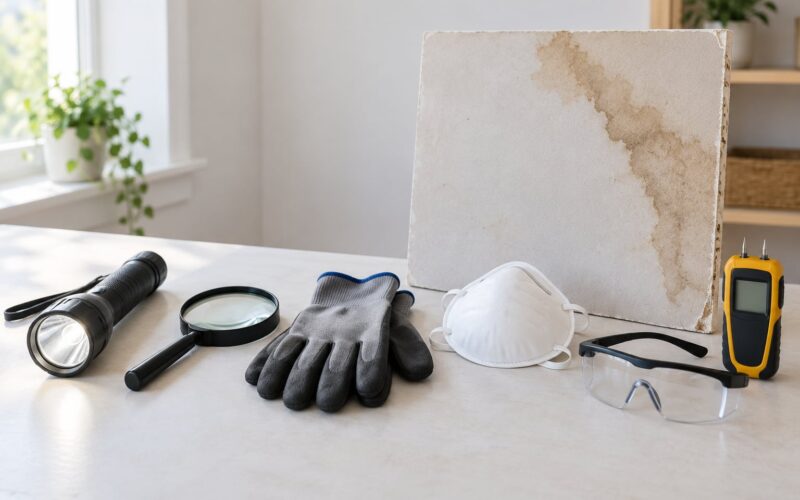
A home inventory is the first. Walk the property room by room and write down what you have: the furnace or heat pump and its age, the water heater make and tank size, the roof age if you know it, the appliance models, the HVAC filter sizes, the dryer vent route, the sump pump, the irrigation controller. Homeowner paperwork from the closing is the fastest source for all of it, and if the records are thin, the equipment itself usually has a label with a model and date.
Next, a maintenance history. Even a messy one helps. A shoebox of invoices, a note in your phone, whatever you already have. This tells you what was serviced when, which warranty windows are still open, and whether a problem has been showing up repeatedly.
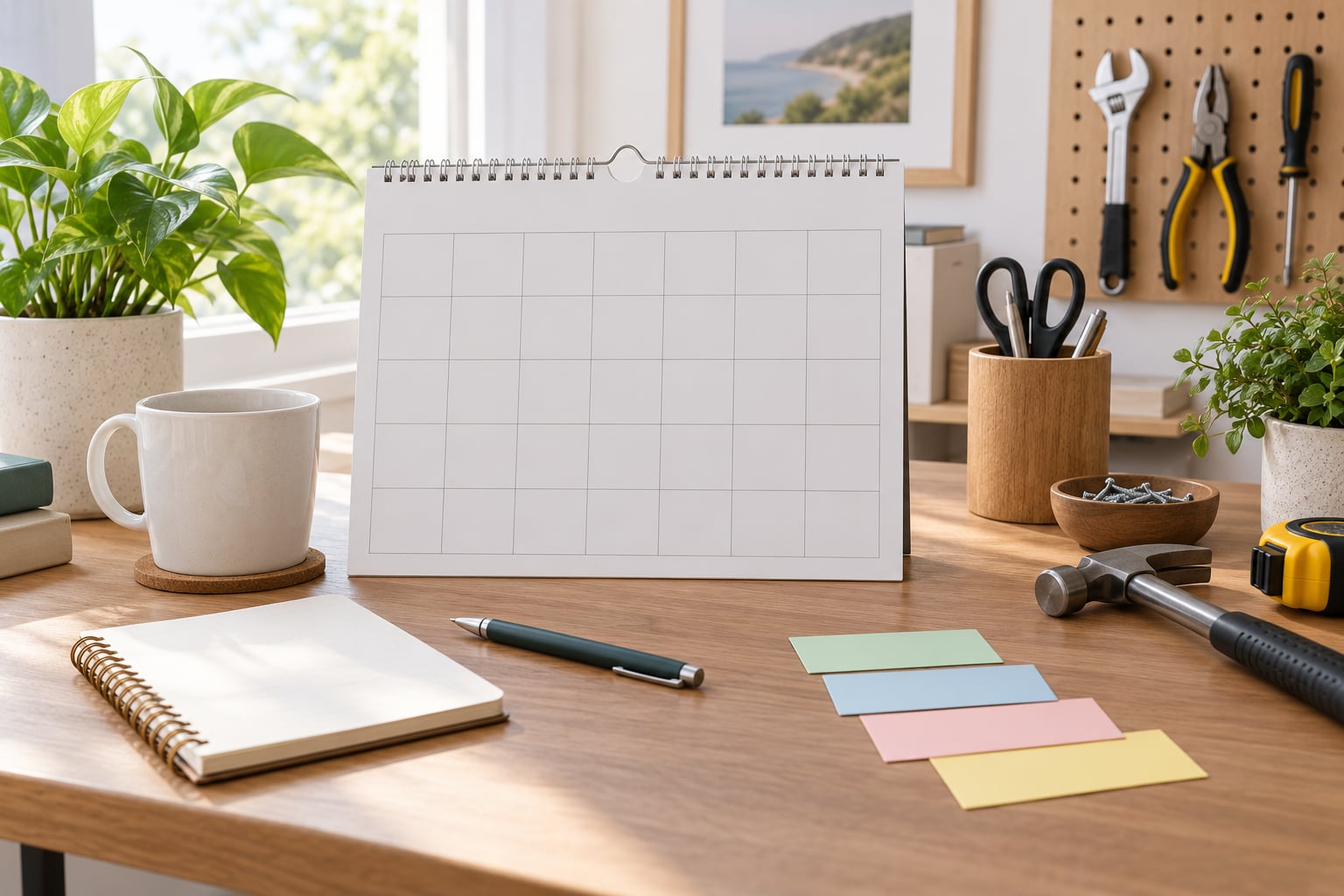
Then a calendar or task app. A paper wall calendar works well if you’ll actually look at it. A shared digital calendar works better when more than one person is involved. A dedicated household task app is worth it when the list runs past forty or fifty items.
A reminder system sits on top of whichever calendar you picked. The calendar holds the task; the reminder pulls you to it. The most common setup people land on is a recurring calendar event plus a phone alert a few days ahead.
Last, a contact list for qualified contractors: an HVAC technician, a plumber, an electrician, a roofer, and a general handyman, with the phone number, the last date they worked at your place, and what they did. Anyone doing work on gas, wiring, the panel, or the structure of the house should be licensed in your area. That part isn’t negotiable, no matter how small the job looks.
How to Create a Home Maintenance Schedule Step by Step
Step 1: Write down every system, not every task
Start with the systems, then attach tasks to each one. HVAC, plumbing, electrical, roofing and drainage, exterior envelope, appliances, and safety devices. Eight systems is a complete home. You will find roughly forty to sixty individual tasks once you go system by system.
How do you know you finished step one? Every room and every exterior surface should map to at least one system. If you find yourself unable to say what system something belongs to, that is a sign the system itself needs identifying first.
Step 2: Sort each task by urgency, not by convenience
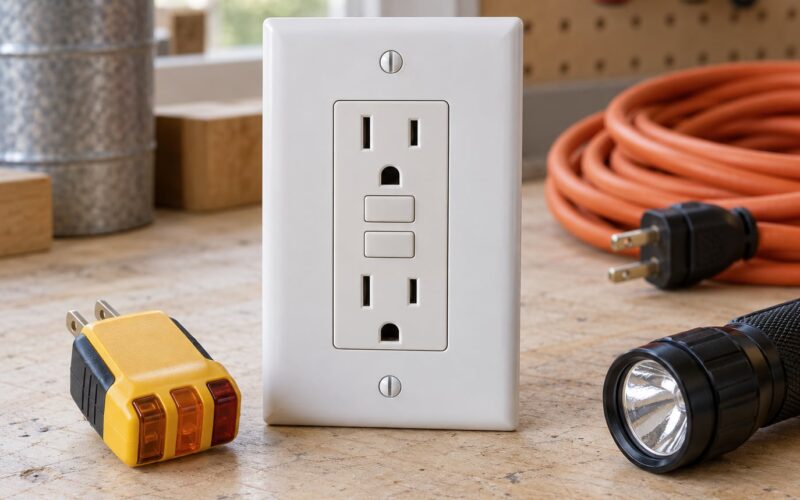
Put safety and water-related items at the top. Smoke and carbon monoxide detectors, the water heater and its pressure relief valve, the dryer vent, the sump pump, GFCI outlets, and anything gas-related are all in this group. Fire and flood cause the damage that is hardest to walk back from.
Then come comfort and habit items: filters, caulking, weatherstripping, cleaning, and paint touch-ups. Sorting this way means that when you only have time for three things on a busy Saturday, the three you pick are the three that protect the house.
Verification: read your list and check that no safety item sits below a cosmetic one. That ordering is the whole point of step two.
Step 3: Assign a frequency to every task
Use four buckets and stick to them. Monthly covers things like testing detectors, checking for leaks under sinks, running the sump pump, and running the garbage disposal. Quarterly covers filter changes, GFCI and outlet testing, exterior drain inspection, and washing the dryer vent screen. Semi-annual covers gutter cleaning, drain cleaning, caulk and weatherstripping inspection, and a water heater check. Annual covers the HVAC tune-up, the roof and chimney inspection, the dryer vent cleaning, the water heater flush, and the termite or pest check.
Add a fifth bucket for rare items: every two to five years, things like the water heater anode rod, the chimney cap, the garage door cables and springs, and the HVAC refrigerant lines. These are the tasks people skip forever because nothing ever prompts them.
Verification: every task has exactly one frequency, and no task is marked vague. If a line says as needed, it is not scheduled yet.
Step 4: Put each task on a real date
A schedule without dates is a list. Assign each task a specific month and, for anything quarterly or rarer, a specific week. This is how to create a home maintenance schedule that survives a busy month: the load spreads out instead of piling into one weekend you never get to.
Anchor seasonal work to the weather. Gutter cleaning before leaf fall and again after it. The furnace tune-up before the first cold snap, not in January. The AC service before the first hot week, not in July.
Verification: open the calendar and count the entries. A working schedule for a typical home lands somewhere between 40 and 60 entries a year.
Step 5: Give every task an owner and a reminder
One person owns each item. Shared responsibility without a named owner is how tasks vanish, so write the name next to the task, even if everyone shares the load. Then set the reminder a few days ahead of the date, because a reminder on the due date is a reminder you will scroll past.
Keep the effort honest too. A thirty-minute task and a half-day task should not sit in the same month. Move the big ones into their own slots.
Verification: every entry has both a name and an alert attached. Anything missing one of those is not really scheduled.
Step 6: Close the record loop
When you finish a task, log the date and what you did in a single running file. A note in the same app works, and a spreadsheet with columns for task, date, cost, and who did it works better if you ever need to hand the records to someone else.
This is what turns a checklist into a home maintenance tracker. When a warranty question comes up two years later, you have the service date. When the same pipe drips again, you know it was already an issue. Owners who keep these records pass them along at resale.
Verification: pick any completed task and confirm you can retrieve its date and outcome in under a minute.
Step 7: Review the whole thing every quarter
Once a quarter, sit down for twenty minutes and read the schedule with fresh eyes. Move anything that landed badly. Add tasks for anything new you bought or had repaired. Retire anything that no longer applies. This is also the moment to check that the contractor list is current.
If you are away for stretches of the year or own property you do not live in, the review matters more, not less. A local contact who can get in, plus a water-shutoff check before you leave, covers most of what goes wrong in an empty house.
Verification: the review date is itself on the calendar. An unreviewed schedule decays within a couple of years.
How to Create a Home Maintenance Schedule for Each Season
Seasons give you a rhythm for everything that does not fit a monthly slot.
Spring is exterior inspection time. Walk the roof line from the yard with binoculars, look for lifted shingles or bare patches, check the caulk around windows and the sill flashings, and run the outdoor spigots to confirm they still drain. Clean the gutters and downspouts, confirm they discharge away from the foundation, and service the AC before you need it.
Summer is cooling and drainage care. Clear debris from window well drains and the gutter downspouts that a spring storm loaded up, keep condenser fins clear of vegetation, and watch for pooling water or a leaning fence line after heavy rain. Inside, check washing machine hoses and supply valves while you are at it.
Autumn is heating and water preparation. Get the furnace or heat pump serviced before the season starts, replace the filter, set the thermostat to its heating setting and confirm the system fires, and check that every heating vent is open. Test smoke and carbon monoxide detectors on the same visit. This is also the season to flush the water heater and check the anode rod, before the first cold morning exposes weak water pressure.
Winter is weather-related inspection. Look for ice dam risk along eaves, check that the sump pump runs, walk the basement for musty smells or dampness, and clear snow from exhaust and dryer vents. If a cold snap is forecast, make sure every household member knows where the water shutoff is and who to call.
Common Mistakes That Break a Home Maintenance Schedule
Creating too many tasks in one sitting is the most common failure. Fifty vague entries get abandoned; twenty accurate ones survive. Cut anything you would not actually do.
Relying on memory is the second. Memory loses the dryer vent cleaning every year without fail. If a task is not written in a place you look regularly, it does not exist.
Burying safety work under seasonal chores is the third. Detectors, the pressure relief valve, the dryer vent, and the sump pump belong at the top of the list, not at the bottom of the autumn page.
Duplicating reminders is the fourth. When the calendar, the app, and a sticky note all fire for the same filter change, people mute all three. One system, one reminder, one owner.
Failing to update after a repair is the fifth. If a pro replaced the anode rod, the old entry should disappear immediately. Otherwise you pay twice for the same job, and your records stop telling the truth.
Setting the review in January and never moving it is the sixth. Fixed calendar reviews drift within a year. Put the review on the recurring schedule where it gets the same reminder as everything else.
Planning a 60-entry year and giving up in March is the seventh. Cut to the safety items plus the monthly handful, then add more once the habit holds. A home maintenance calendar you actually use beats a complete one you abandoned.
Frequently Asked Questions
How often should home maintenance be done?
Most work falls into four intervals: monthly items like detector tests and leak checks, quarterly items like filter changes and GFCI testing, semi-annual items like gutter and drain cleaning, and annual items like the HVAC tune-up, roof inspection, and dryer vent cleaning. Add a separate list for rare work every two to five years, such as an anode rod check or chimney cap inspection. Assign each task exactly one interval and write a specific date for it.
What is the 1% rule for home maintenance?
The 1% rule is a budgeting guideline, not a target you have to hit. Set aside roughly one percent of your home’s value each year for upkeep, and divide that into monthly amounts so the money is already there when something needs attention. Older homes deserve a higher percentage, since systems near the end of their service life cost more to maintain. Treat it as a starting point and adjust as you learn your home.
What is the most overlooked home maintenance task?
Dryer vent cleaning comes up more than anything else in homeowner discussions. Lint builds up behind the machine and inside the duct, and it is a leading cause of house fires. Running the dryer with a blocked or cracked duct also wastes energy and shortens the machine’s life. Clean the vent screen quarterly and the duct itself annually, and look for crushed or disconnected ductwork behind the dryer at the same time.
Do renters need a home maintenance schedule?
A full schedule is usually the landlord’s responsibility, but a short personal list still pays off. Keep track of the filter changes, the smoke and carbon monoxide detector tests, and the small fixes you have already had to make so you can raise them in writing. Tenants in older buildings benefit most from knowing the water shutoff location, the water heater make, and the last date the furnace was serviced.
Should I hire a professional or do maintenance myself?
Do it yourself for filter changes, gutter cleaning, caulking, weatherstripping, drain cleaning, and general inspections. Hire a licensed pro for anything involving gas, wiring, the breaker panel, the water heater internals, the roof, or structural work. That includes annual HVAC service on most systems. Follow the manufacturer’s maintenance instructions for whatever you own, since intervals and required steps vary by model.
How do I remember infrequent tasks like annual or biennial jobs?
Put them on the same calendar as everything else rather than in a separate list you will lose. Recurring yearly events are the easiest to forget, so convert them into a date you set once each year, or write them as a fixed annual reminder. Keep a running log of what was done and when, so a completed rare task never reappears a year later.
Conclusion
Building a home maintenance schedule takes one long afternoon and about eight decisions: inventory your systems, sort by urgency, assign a frequency, put a date on it, name an owner, attach a reminder, log the result, and review quarterly. That is the entire system.
Start today rather than waiting for a free weekend. Write down your eight systems, list the safety items at the top of the page, choose a calendar, and enter the next due date for each one. The schedule is finished when it exists, not when it is perfect.