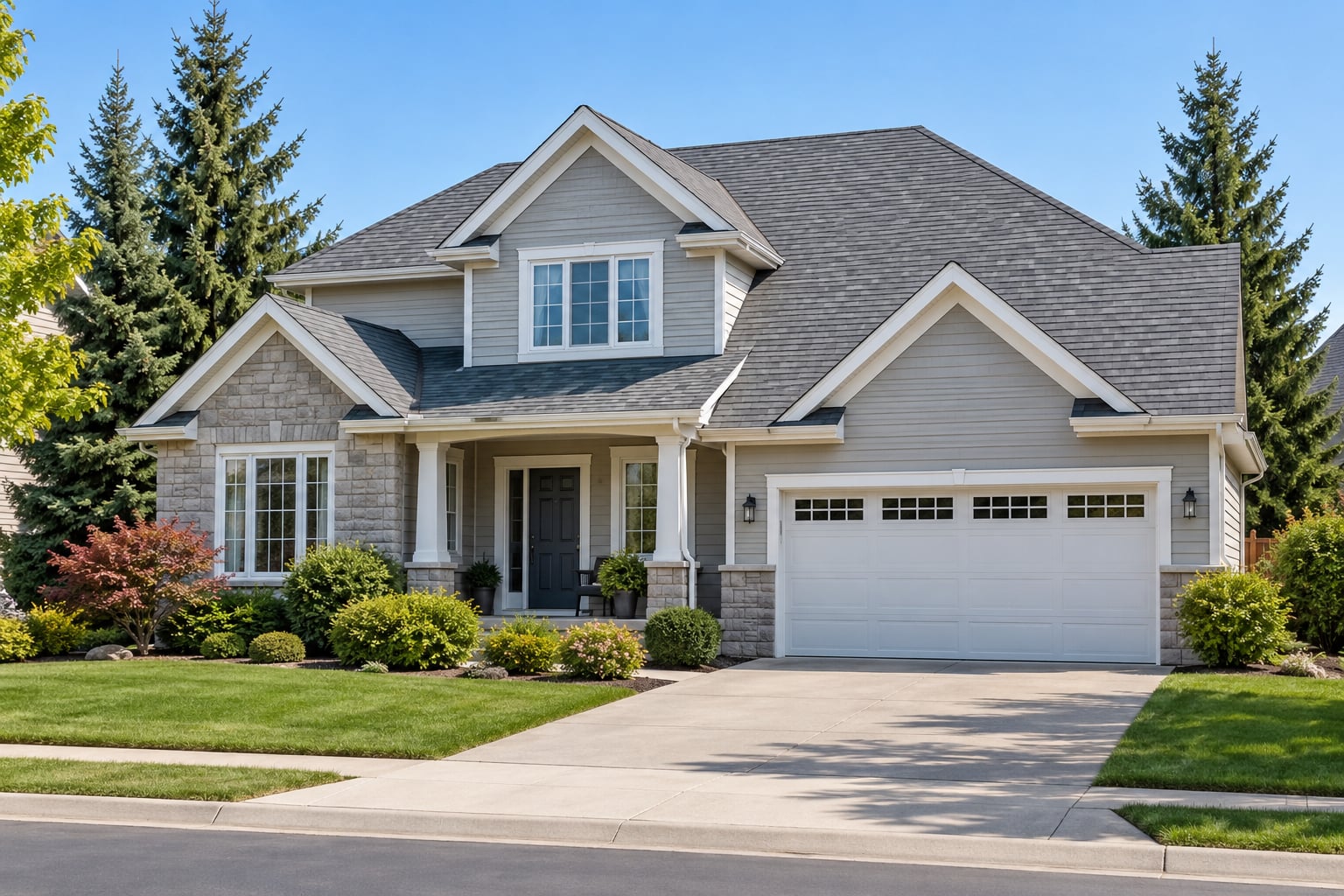
If you want the short version: how long does an asphalt shingle roof last? A well-installed asphalt shingle roof holds up for about 15 to 30 years, and where you land inside that range depends mostly on the shingle tier, the climate you live in, and how the roof was installed.
That number is the roof system’s number, not just the shingle’s. The felt underlayment, the flashing around chimneys and vents, and the sheathing underneath all age on their own schedule, and a roof fails because one of them gave out first.
Quick answer
- 3-tab shingles: roughly 15 to 20 years.
- Architectural (laminated) shingles: roughly 20 to 30 years.
- Luxury or last-ribbon shingles: roughly 30 to 50 years, though most stop performing well before that.
- Hot-humid South and Florida: often at the bottom of the range because UV and humidity attack the granules.
- Poor ventilation or a failed install: can cut several years off regardless of shingle brand.
Nobody can date your roof from the sidewalk. What follows is how the lifespan ranges break down, what moves a roof toward the short end or the long end of them, and how to work out how many years you personally have remaining.
Table of Contents
- How Long Does an Asphalt Shingle Roof Last?
- What the age of your shingles does not tell you
- Which Type of Asphalt Shingle Lasts Longest?
- Three-tab shingles: the short lifespan tier
- Architectural shingles: the default choice
- Luxury and last-ribbon shingles: heavy and expensive
- What a “30-year shingle” label actually means
- What Factors Determine How Long a Shingle Roof Lasts?
- Installation quality
- Local climate
- Roof pitch, size, and tree cover
- Attic ventilation
- Maintenance history and the deck underneath
- How Can You Tell When an Asphalt Shingle Roof Needs Replacing?
- Green streaks and moss: cosmetic or functional?
- How to estimate the life remaining on a roof you already own
- How Do You Extend the Life of an Asphalt Shingle Roof?
- Should You Repair or Replace Your Asphalt Shingle Roof?
- What Matters Most When Choosing a New Asphalt Shingle Roof?
- Contractor credentials and a written scope
- Underlayment and ventilation, specified by name
- Manufacturer warranty versus contractor warranty
- Permits, disposal, and the final walkthrough
- Frequently Asked Questions
- Can asphalt shingles last 30 years or more?
- Are architectural shingles worth the higher cost?
- Does roof moss mean the shingles need replacing?
- Should I replace an old roof before selling my house?
- Is it safe to clean an asphalt shingle roof yourself?
- Bottom Line
How Long Does an Asphalt Shingle Roof Last?
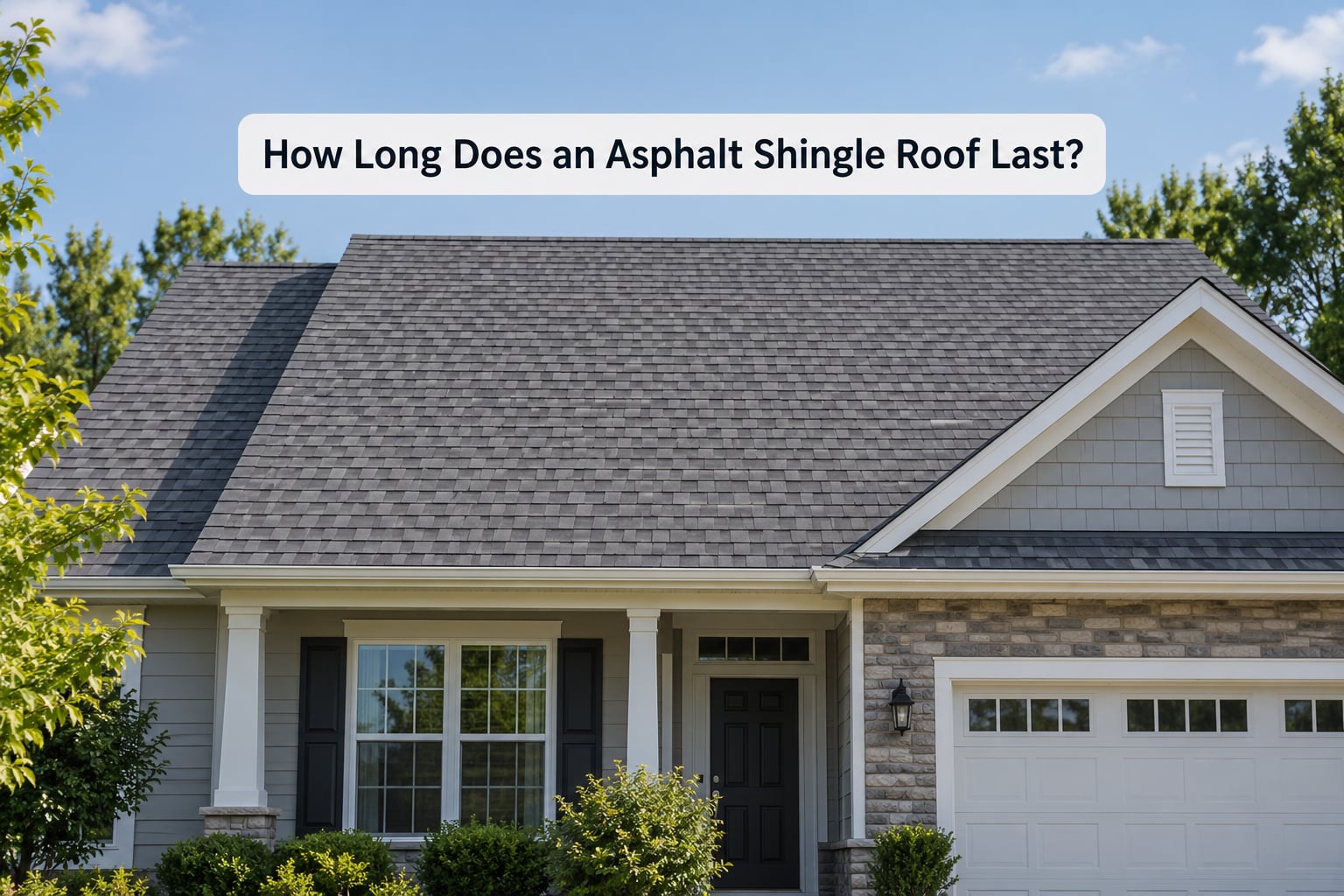
Most asphalt roofs deliver between 20 and 25 years of real service before the first serious repair, and somewhere in the late twenties to low thirties a full replacement usually makes more sense than patching.
Asphalt shingles are a fiberglass mat coated in asphalt and surfaced with crushed limestone granules. The granules exist to shield the asphalt from ultraviolet light, which is the main thing eating the material.
Sun cooks the asphalt, the granules loosen and wash into the gutters, and the exposed asphalt hardens and cracks. Once enough granules are gone, the shingle curls at the edges and the sealant strip underneath stops bonding.
That is the mechanical story of shingle failure, and it happens faster or slower based on how hard the roof works every day.
What the age of your shingles does not tell you
A roof can be twenty years old and still have fifteen good years on it, or it can be fourteen years old and be finished. Age is a weak predictor on its own.
The useful signal is condition: how much granule loss there is, whether tabs are lifting, whether flashing is still intact, and whether the sheathing underneath ever got wet.
The second thing age does not tell you is when to buy. Roofers and homeowners alike tend to wait for a leak, and a leak that starts in a valley or around a chimney often means months of interior damage before anyone sees it from inside.
Which Type of Asphalt Shingle Lasts Longest?
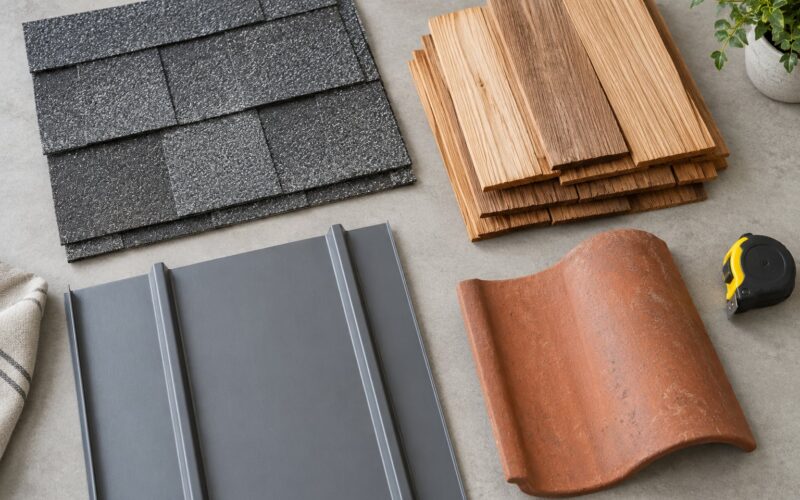
The answer to how long does an asphalt shingle roof last depends first on what is stapled to the deck. Three tiers cover almost every American home, and each one trades cost for thickness, weight, and service life.
| Shingle type | Typical lifespan | Look and weight | Cost tier | Best for |
|---|---|---|---|---|
| 3-tab (single layer) | 15 to 20 years | Flat, thin, lightest option; a uniform slab of color | Entry | Budget replacements, rentals, outbuildings |
| Architectural (laminated, two layer) | 20 to 30 years | Deeper shadow lines, roughly double the weight | Mid | Most owner-occupied homes, most climates |
| Luxury or last-ribbon | 30 to 50 years claimed | Heaviest, thickest, widest color range, slate and wood looks | Premium | Homes staying put, high-visibility streets |
Three-tab shingles: the short lifespan tier
Three-tab shingles are a single layer with a flat, slightly staggered profile. They were the standard for decades and remain common on houses built before the mid-1980s.
Their weakness is thickness. With only one layer to protect the fiberglass mat, thermal cycling and UV exposure reach the deck sooner, and 15 to 20 years is a realistic expectation even on a well-installed roof.
Architectural shingles: the default choice
Architectural shingles bond two fiberglass layers together, which doubles the weight and adds an extra barrier against heat and moisture. That extra layer is why they usually outlast three-tab by a solid decade.
They also hold their color better because the extra thickness keeps the asphalt from cooking, and the varied texture hides minor settling that would show on a flat three-tab field.
Luxury and last-ribbon shingles: heavy and expensive
Luxury shingles are the thickest option and often imitate slate or wood convincingly enough that they reset the neighborhood’s expectation for what a roof can look like.
The catch is weight. The heaviest luxury lines can add hundreds of pounds per square to the load, so an older home with a marginal roof structure may need extra framing work before they go on.
What a “30-year shingle” label actually means
The number on the shingle wrapper is a warranty term, not a life expectancy. A “30-year shingle” is covered against manufacturing defects for 30 years, and almost nothing else.
Warranties also carry conditions. Most require the shingle to be installed over a properly ventilated attic with a code-compliant underlayment, and many transfer only once or twice to a new owner.
Homeowners have told roofing forums that salespeople routinely quote the warranty number as if it were a promise. Plenty of 30-year-labeled roofs get replaced at 15 or 18 because the install did not qualify for the warranty in the first place.
What Factors Determine How Long a Shingle Roof Lasts?
Shingle quality sets the ceiling. Everything else decides where inside the range the roof lands, and most of these factors are outside your control once the roof is on.
Installation quality
Nail depth, nail placement, the number of fasteners in high-wind zones, and whether the starter row and valley were cut and laced correctly all show up as failures years later.
Fasteners driven too deep cut through the mat; fasteners driven too shallow let wind lift tabs. Underlayment laps that are too narrow let wind drive rain sideways under the shingles.
Local climate
The Northeast’s freeze-thaw cycles open the shingle body up repeatedly. The desert’s UV cooks granules off in a decade. The South’s heat plus humidity is a different attack again.
| Region and condition | What it does to the roof | Typical adjustment |
|---|---|---|
| Freeze-thaw Northeast | Repeated freezing expands trapped moisture and drives ice dams at eaves | Shave years off; keep the attic cold in winter |
| Hail-prone Plains and Midwest | Repeated impact knocks granules loose and bruises the mat | Check impact-resistance class and document hail damage |
| Hot-humid South and Florida | High UV erodes granules; algae and moss hold moisture against the roof | Expect the low end of the range and plan for insurance age limits |
| High-UV desert | Constant sun dries the sealant strip and bleaches color | Annual inspections; algae-resistant granules help little here |
Roof pitch, size, and tree cover
Steep, simple gable roofs shed water and dry out faster than low-slope roofs with valleys and complex dormers, where the underlayment carries more of the load for longer.
A large roof collects more debris and more standing snow, and any of them sit against the same limited number of maintenance hours.
Overhanging branches matter twice: they drop leaf litter that holds moisture, and they rub against shingles in wind, wearing the granules off one strip at a time.
Attic ventilation
This is the most underrated factor. A hot attic cooks the underside of the deck, and shingles cure and crack from below just as they do from above.
Code calls for balanced intake and exhaust vents with a clear path between them. A roof deck that is warm and damp in the attic also grows moss, which holds moisture against the shingles.
Maintenance history and the deck underneath
A roof that gets looked at annually and has its gutters kept clear outlasts an identical roof nobody checks, because small problems get fixed while they are still small.
The sheathing matters too. Plywood or OSB that dried out and warped after an early leak will push shingles out of plane, and repairs built over damp wood rarely hold.
How Can You Tell When an Asphalt Shingle Roof Needs Replacing?
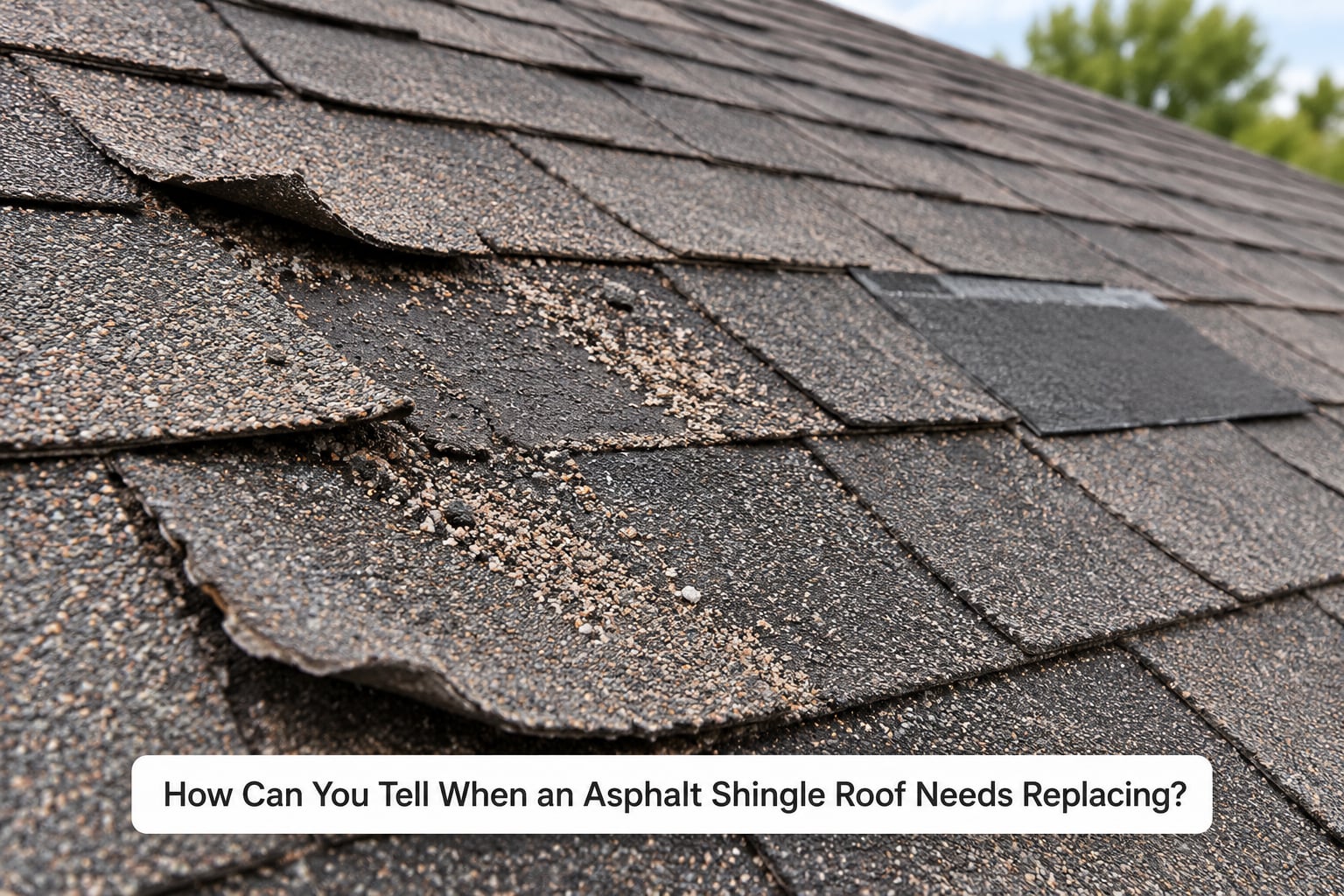
Most homeowners can read their own roof better than they think. The signs below run from cosmetic at the top of the list to structural at the bottom, and the order matters.
- Granules collecting in gutters or washing down the downspout: the protective layer is leaving the shingle, which is the first real warning.
- Widespread curling or cupping: tabs lifting at the edges across many slopes, not one wind-scattered strip.
- Brittleness and cracking: shingles that crumble or split when you look closely, especially in dry weather.
- Dark or washed-out patches: bare asphalt showing where granules are gone, often after rain makes the contrast obvious.
- Recurring leaks in the same spot: a single storm leak is repairable, four leaks in three winters is a roof problem.
- Sagging sheathing: visible dips between rafters, which is a structural conversation, not a roofing one.
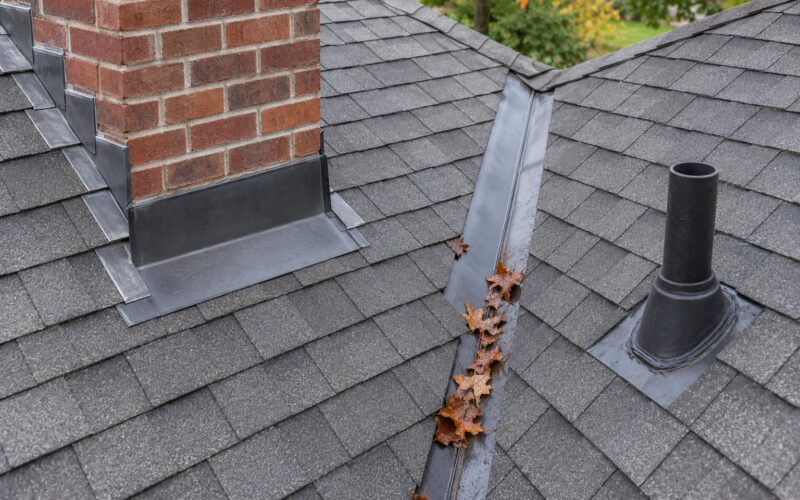
- Aged flashing: bent, rusted, or tar-patched metal around chimneys, vents, and skylights.
Green streaks and moss: cosmetic or functional?
Black streaking along valleys is usually algae growing on the limestone granules. It looks alarming and often does very little, because the granules underneath are still doing their job.
Moss is different in one respect: it holds water against the shingle surface, which keeps the asphalt damp and speeds decay.
Algae-resistant granules exist for exactly this reason in humid regions. They slow the staining without changing the roof’s service life.
How to estimate the life remaining on a roof you already own
Find the shingle manufacturer’s date code first. Most makers print a code on the bundle wrapper and stamp part of it into the shingle itself, and the second number is the year of manufacture.
Lift a small tab in an inconspicuous spot near a gutter or in the attic where light comes through. If it is brittle and breaks rather than bends, you are near the end.
Look for the original paperwork, the permit, or a photograph of the invoice. Homeowners in roofing forums describe how much harder remaining-life estimation gets when nothing was saved.
Check the ridge and hip caps separately, because they are the part that wears first. Cap shingles sit at the highest exposure on the roof and take the most direct weather.
One user on a roofing forum reported hip and ridge caps on their roof deteriorating around year 12 while the field shingles were still performing past year 25.
How Do You Extend the Life of an Asphalt Shingle Roof?
None of this is complicated. All of it is easy to skip for a decade, and the difference shows up in year 25 rather than year 5.
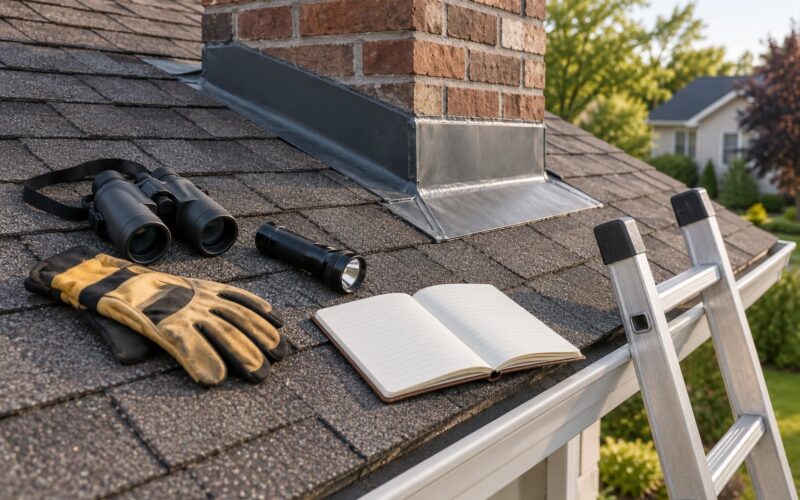
Look at it once a year from the ground. Binoculars or a zoom lens are safer and more informative than a ladder. Check for missing tabs, dark patches, and settled areas after every major storm.
Clear debris off the roof. Leaves in valleys hold moisture and block runoff, which is how water gets behind shingles in the first place. Do this from the ground with a roof rake or extension pole, never by climbing.
Keep gutters clear and downspouts directed away from the foundation. A backed-up gutter in a freeze-thaw climate is an ice dam waiting to form.
Trim branches back a couple of feet from the roof edge. This is the highest-return hour of maintenance work you will do all year.
Check penetrations and flashing. Pipe boots, vent collars, skylight edges, and chimney step flashing are where most leaks actually start. A dab of roofing sealant on a small gap is fine; a failed flashing job is not a sealant problem.
Verify attic ventilation every few years. Blocking a soffit vent with insulation is easy to do and quietly shortens the roof’s life.
Walking a roof to clear a gutter is how people end up in emergency rooms. If debris needs to be removed from the roof surface itself, that is a job for a contractor with proper fall protection.
Should You Repair or Replace Your Asphalt Shingle Roof?
Repair is the right answer when the roof is young, the damage is confined, and the deck underneath is sound. It stops being the right answer when repairs start recurring.
A useful rule of thumb that gets repeated in the trade is the 25% rule: when 25% or more of the roof needs repair, insurance adjusters and most contractors treat a full replacement as the better value, because labor to remobilize a crew on each patch adds up.
Replacement is the better answer when the roof is past the mid-point of its expected range, when damage spans multiple slopes rather than one valley or one wall, or when the same leak keeps coming back after repair.
Two situations force the question early. In Florida and other states that grade roofs by age, an insurer may decline coverage or raise premiums once a roof passes a threshold, so the deadline is set for you.
The second is a sale. Buyers discount a home with an old roof heavily, and a roof two years from replacement often costs more in negotiation than a new roof costs in the transaction.
One practical trap: if your shingle brand is discontinued, matching patches are impossible, and a small repair can commit you to a full tear-off later anyway.
For anything structural, sagging, or recurring, have a licensed roofing contractor inspect it before you decide. It is a few hundred dollars to know which side of the line you are on.
What Matters Most When Choosing a New Asphalt Shingle Roof?
The shingle brand matters less than the install. A premium shingle done badly still fails early, and the workmanship is what you are actually paying for.
Contractor credentials and a written scope
Ask for a license number you can verify, proof of insurance, and a written scope that names the shingle manufacturer and product line, the underlayment, the flashing work, the ventilation work, and the disposal.
A vague scope leaves the biggest decisions to whoever is standing on the roof that day.
Underlayment and ventilation, specified by name
Insist the scope names the underlayment product and the required overlap, and that the attic gets balanced intake and exhaust ventilation. Both are warranty prerequisites, not optional extras.
Manufacturer warranty versus contractor warranty
A 30-year manufacturer warranty protects you against a defect in the shingle. A contractor warranty protects you against a leak from the work, and it is only as good as the company’s balance sheet.
Roofing has a high turnover rate, and a contractor warranty that outlives the contractor is worthless. Ask how long the company has been in business and whether the warranty is backed by insurance.
Permits, disposal, and the final walkthrough
Confirm the permit is pulled, the old roof and old flashing are hauled away, magnet sweeps run for nails, and you get a walkthrough before the final payment clears.
Keep the permit, the shingle wrapper, and the warranty paperwork. Homeowners who cannot identify what is on their roof cannot use what is left of the warranty.
Frequently Asked Questions
Can asphalt shingles last 30 years or more?
Yes, if they are architectural or better, installed over a well-ventilated attic with proper underlayment, and kept up with basic maintenance. Three-tab shingles rarely reach 30. The 30-year figure on a shingle wrapper is a warranty term, not a service-life promise, so treat it as a ceiling rather than a plan. Roofing forums are full of homeowners whose 30-year-labeled roof gave out at 16 or 18.
Are architectural shingles worth the higher cost?
For most owner-occupied homes, yes. The extra layer of fiberglass roughly doubles the weight and adds a decade of expected life over three-tab shingles, and the varied shadow lines hide settling that a flat field shows. The premium is harder to justify on a rental, an outbuilding, or a home you expect to sell within a few years.
Does roof moss mean the shingles need replacing?
Not on its own. Dark algae streaking along valleys is mostly cosmetic, because the granules underneath are still doing their job. Moss is different because it holds water against the shingle, keeping the asphalt damp and slowing decay. If the roof is also losing granules and curling, the moss is a symptom of a roof that is already near the end.
Should I replace an old roof before selling my house?
Usually you do not have to, but you should price it in. Buyers discount hard for an old roof, and an imminent replacement often costs the seller more in negotiation than the roof costs to install. Walk the roof and the attic, fix any active leak, photograph everything, and disclose what you know. Buyers who understand the condition generally react better than buyers who feel blindsided.
Is it safe to clean an asphalt shingle roof yourself?
From the ground, yes. Using a ladder or a roof rake on an extension pole is a normal homeowner task. Climbing onto a shingle slope to clear debris or sweep granules is not, because shingles are slippery when wet and roofers rely on fall protection and training. If debris sits on the roof surface rather than in the gutters, hire a contractor.
Bottom Line
A well-installed asphalt shingle roof commonly lasts 20 to 30 years, with three-tab at the short end and architectural or better in the middle of the range.
The number that matters is not on the wrapper, though. Granule loss, widespread curling, and recurring leaks tell you far more than the shingle’s age does.
So take one careful look this year from the ground with binoculars, check the attic ventilation while you are at it, and if anything structural or recurring shows up, pay a licensed roofer to look before you plan the replacement.