Most US homeowners pay between $9,000 and $20,000 to replace a roof, with the average landing near $12,000 to $15,000 for a mid-size house. On a standard 2,000 sq ft home, that works out to roughly $450 to $750 per roofing square, where one roofing square equals 100 square feet of roof surface.
Those are typical US ranges as of 2026, not a quote. Labor rates, material choice, roof pitch and how much old roofing has to come off move the number a long way, sometimes by double.
Quick answer
- Typical range: $9,000 to $20,000 for a mid-size home
- National averages published for 2026: roughly $8,000 at the low end of commonly cited figures, up to $31,871 for a very large luxury-material job
- Cost per square foot: about $4.00 to $30.00 depending on material
- Cost per roofing square: multiply the square foot rate by 100
- Size rule of thumb: a 2,000 sq ft home needs roughly 20 to 22 roofing squares
Table of Contents
- How Much Does a Roof Replacement Cost by Size, Material, and Option
- How much does a roof replacement cost for a typical home?
- What Affects the Price
- Ways to Save on a Roof Replacement
- Get three written quotes on the same scope
- Compare line items, not totals
- Match the material to the building, not to the sales pitch
- Time the job when crews are less busy
- Check insurance and financing before you sign
- Know when a repair is the smarter call
- Frequently Asked Questions
- Is $30,000 too much for a roof?
- Does insurance pay for a full roof replacement?
- Can I replace a roof myself to save money?
- Do roofers have to tear off the old roof?
- What warranties come with a new roof?
- How do people pay for a $10,000 to $30,000 roof?
- Bottom Line: What to Do First
How Much Does a Roof Replacement Cost by Size, Material, and Option
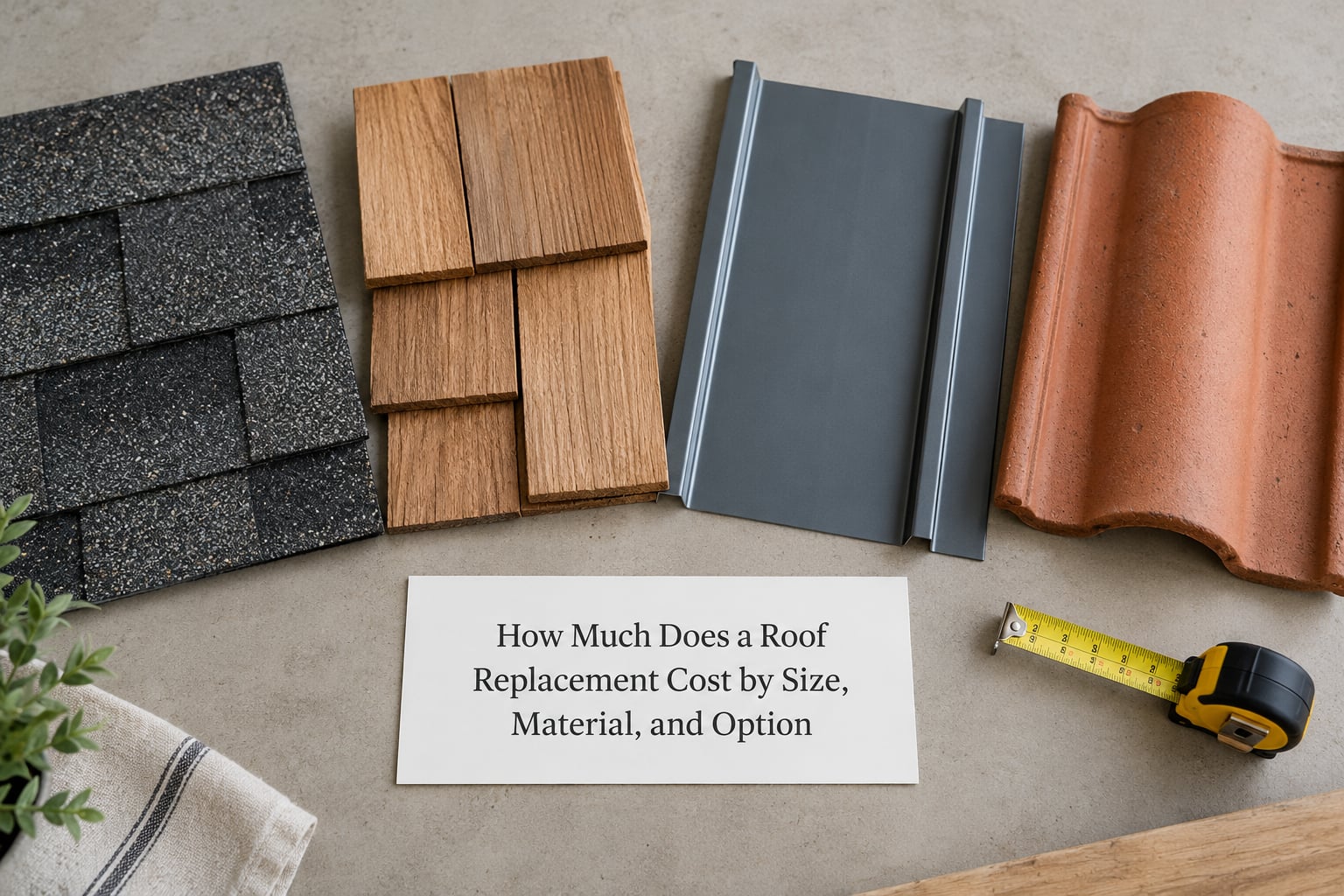
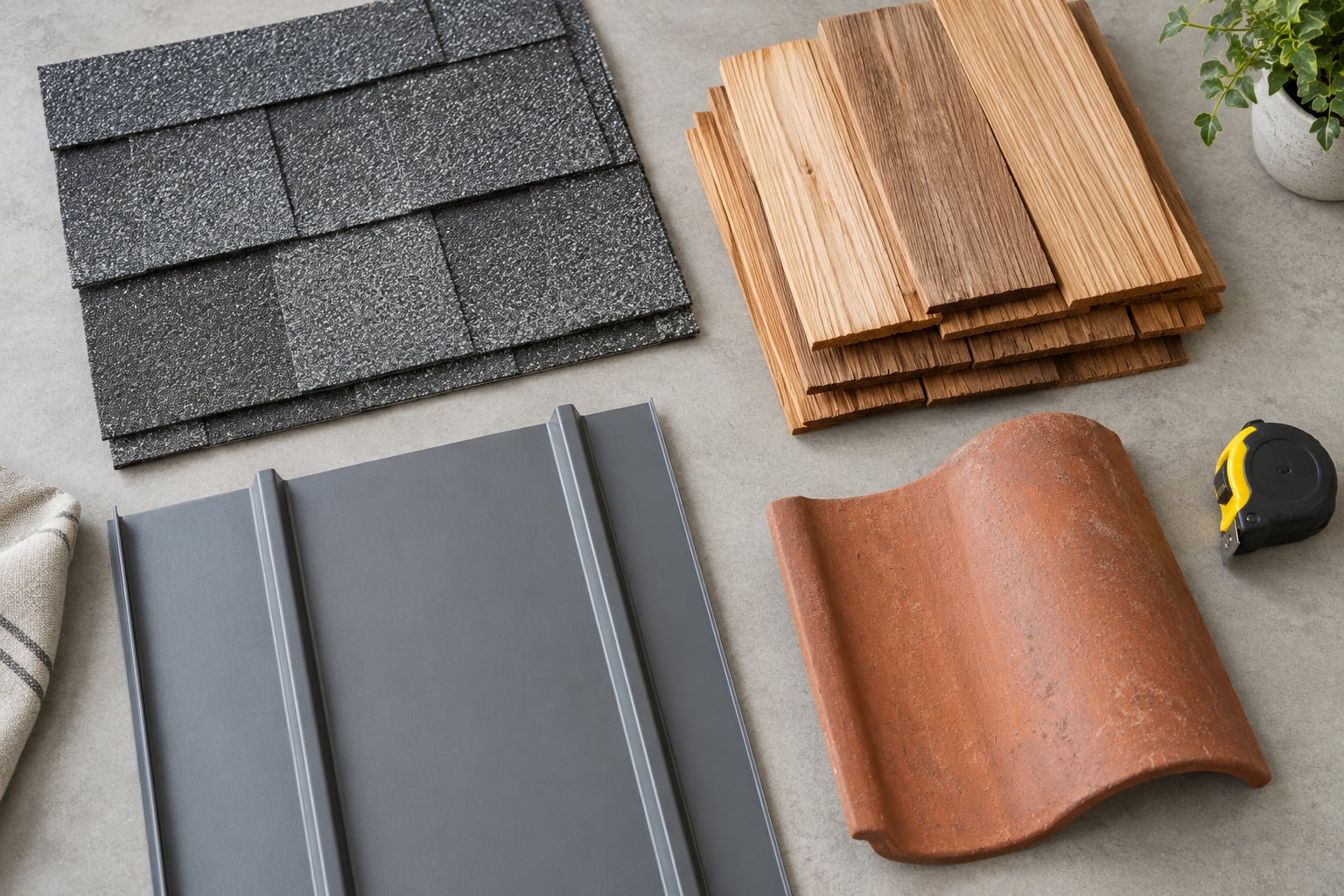
The single biggest fork in roof replacement cost is the material you pick. Asphalt shingles cover roughly nine in ten US homes and sit at the affordable end. Metal, slate and concrete tile run two to five times higher because the material costs more, it takes longer to install, and it is harder to find crews that work with it.
| Roofing material | Cost per sq ft | Typical total for a 2,000 sq ft home | Lifespan |
|---|---|---|---|
| 3-tab asphalt | $4.00-$5.00 | $9,000-$11,000 | 15-20 years |
| Architectural asphalt | $5.00-$7.00 | $11,000-$15,000 | 25-30 years |
| Luxury asphalt | $7.00-$11.00 | $15,000-$23,000 | 30-50 years |
| Synthetic shingles | $6.00-$9.00 | $13,000-$19,000 | 40-50 years |
| Cedar shake | $9.00-$14.00 | $19,000-$29,000 | 30-40 years |
| Standing seam metal | $12.00-$20.00 | $25,000-$42,000 | 40-60 years |
| Concrete or clay tile | $10.00-$18.00 | $22,000-$38,000 | 50-100 years |
| Slate | $18.00-$30.00 | $38,000-$62,000 | 75-150 years |
Those per square foot bands sit inside the $4.00 to $30.00 range Bill Ragan Roofing publishes for shingle work in 2026, and the totals assume a straightforward roof with average pitch and normal site access. A steep, complicated roof lands at the top of the band. A simple one lands at the bottom.
How much does a roof replacement cost for a typical home?
For the most common case, an owner-occupied single-story home of about 2,000 sq ft with architectural asphalt shingles and a normal tear-off, plan on $11,000 to $15,000 in 2026. That figure lines up with what contractors report in comparable markets: San Antonio asphalt replacements average $12,656, with collected bids running from $11,261 to $14,159 (thefatbook.com), and Houston replacements run $8,000 to $18,000 (silverridgeroofing.com).
Roof size does the arithmetic. Here is how the same material and crew translate across common home sizes.
| Home size | Roofing squares | Low | Average | High |
|---|---|---|---|---|
| 1,500 sq ft | 15-17 | $7,000 | $10,000 | $14,000 |
| 2,000 sq ft | 20-22 | $10,000 | $13,500 | $18,000 |
| 2,500 sq ft | 25-28 | $13,000 | $17,000 | $23,000 |
| 3,000 sq ft | 30-33 | $16,000 | $21,000 | $28,000 |
If you have seen a much higher or lower number quoted as “the average,” it is not necessarily wrong. Bill Ragan Roofing reports $31,871 as the 2026 average for a shingle roof, but that figure is for 30 squares of architectural asphalt, meaning a 3,000 sq ft roof. Rescue My Roof publishes an $8,000 replacement average, which reads more like a smaller or simpler job. Both numbers are describing different roofs.
Region shifts the same roof by tens of thousands. Eugene, Oregon replacements run $6,546 to $8,398 (homeyou.com). The Twin Cities run $9,000 to $22,000 (limitless-news.com). Chicagoland spans $9,800 to $49,600 across the whole size and material spectrum (constructionbyasi.com). In the Bay Area, architectural asphalt starts around $14,000 and premium metal runs past $60,000 (infinium.inc).
What Affects the Price
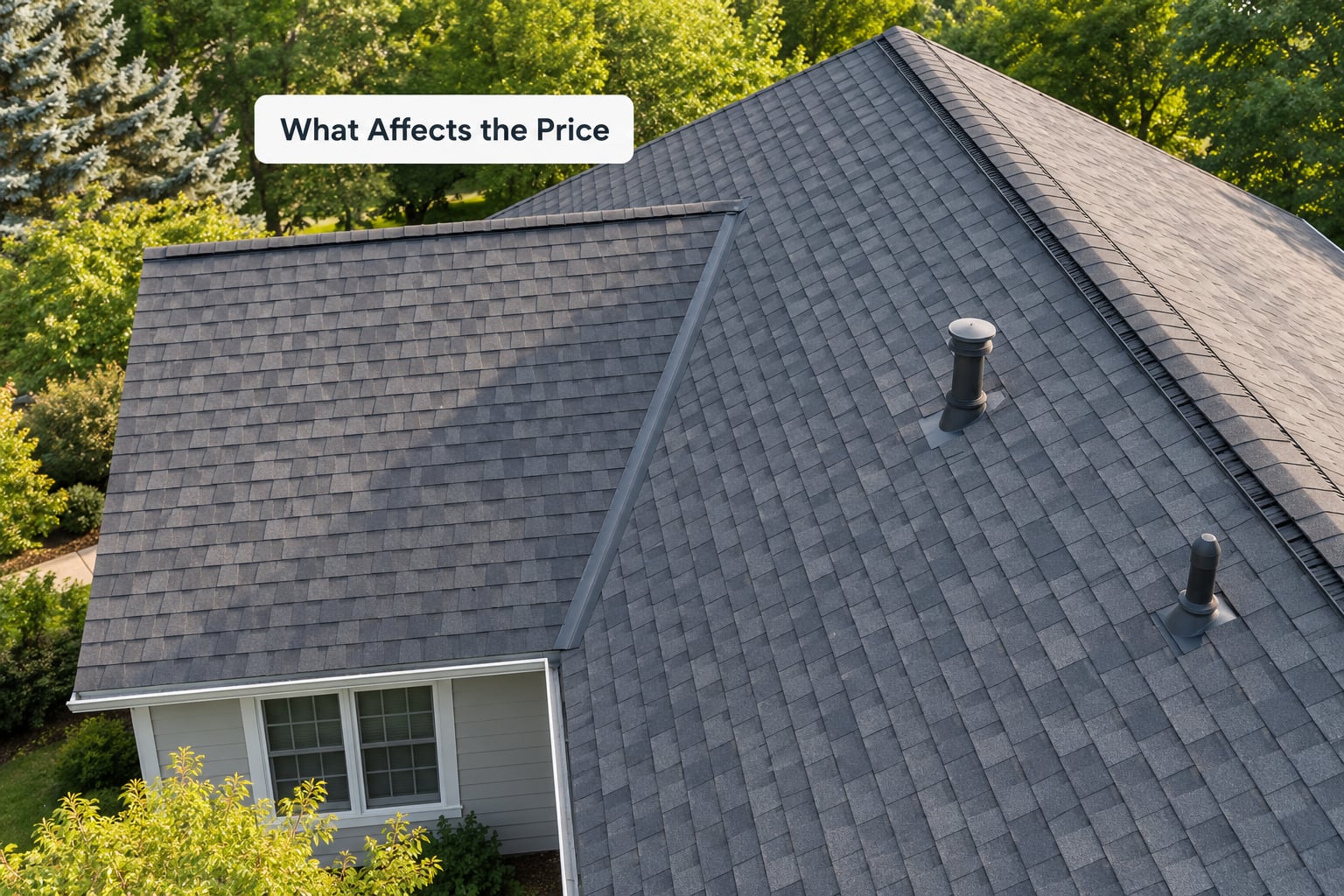
Nine things move a roof replacement quote more than anything else. If two estimates for the same house land far apart, the difference is almost always hiding in this list.
- Roof area. Every roofing square adds the same base cost, so a 3,000 sq ft roof carries roughly 50% more than a 2,000 sq ft roof of the same design.
- Material. Architectural asphalt is the reference point. Slate can run five times that rate per square foot, which is why the material table above moves so sharply between rows.
- Pitch. Steep roofs are slower and more dangerous to work on. Labor rates on a 10:12 pitch typically run above the same roof at 5:12.
- Complexity. Valleys, hips, dormers and multiple roof planes each add cutting and flashing work. A simple gable is the cheapest shape to roof; a cross-gabled house with dormers is not.
- Layers to tear off. One layer of existing shingles comes off fast. Two or more means more labor, more disposal and almost always new decking underneath. A quote that skips this line is the most common red flag in the industry.
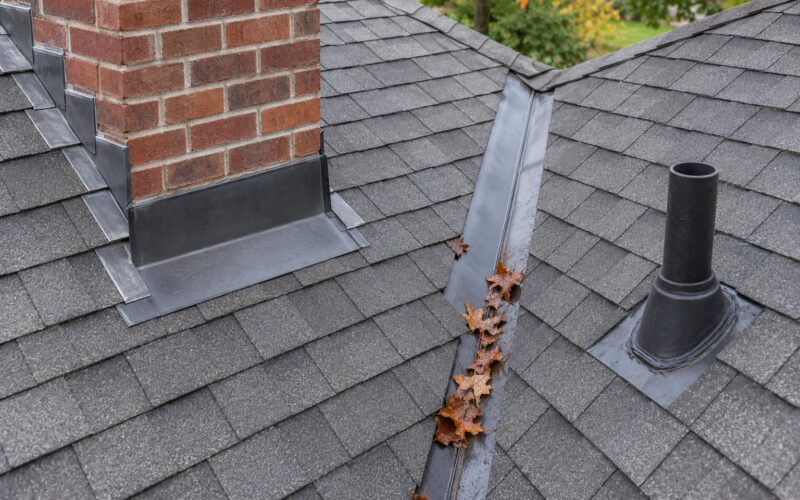
- Penetrations. Every chimney, skylight, bathroom vent and plumbing stack needs its own flashing work. A roof with four skylights costs more to re-roof than the same footprint without them.
- Decking condition. Soft or rotten sheathing has to be replaced, and contractors price that as a contingency. Homeowners report this is where estimates turn into change orders mid-job.
- Site access. Steep driveways, no driveway at all, dense landscaping or a house close to a neighbor all slow the crew and raise disposal costs.
- Regional labor. Two Tennessee cities illustrate the spread: Bill Ragan Roofing puts the Nashville average at $25,644 against $20,809 in Memphis, a difference of roughly 20% for the same work.
One clarification that confuses a lot of first-time buyers: a roofing square and a square foot are the same measurement. A roofing square is 100 square feet. When a roofer quotes $517 per square, that works out to $5.17 per square foot, which sits right in the architectural asphalt band. That exact figure was reported by a homeowner on the Bogleheads forum for a 20-square job using IKO Cambridge asphalt shingles at $15,500 total.
Ways to Save on a Roof Replacement
The savings that hold up are mostly about process, not shopping around for the cheapest crew. A rock-bottom bid usually means missing components, and a missing component becomes a leak.
Get three written quotes on the same scope
Ask each contractor to bid the identical specification: same shingle line, same underlayment, same ice and water shield coverage, same flashing scope. Quotes that differ only because each one priced a different job are useless for comparison. Homeowners who gather two bids landing within $1,000 of each other report feeling comfortable moving forward, and that closeness is the strongest signal most owners ever get.
Compare line items, not totals
A quote should name decking, underlayment or synthetic felt, drip edge, starter shingles, ridge capping, flashing, pipe boots, ice and water shield and roof vents. Any estimate missing several of those is cheaper because it does less. Matching the lists side by side shows you exactly where the price gap lives.
Match the material to the building, not to the sales pitch
Architectural asphalt at the low end of the band gives most homeowners 25 to 30 years. Upgrading to a heavier weight or a designer shingle adds thousands for a look you cannot see from the street. That upgrade makes sense on a house you plan to keep for decades, not on one you expect to sell within five years.
Time the job when crews are less busy
Roofing volume follows the weather and the insurance cycle. Scheduling outside the peak storm-response stretch usually means shorter queues and crews that are not rushing between hail calls. You trade a few weeks of scheduling for more attention to your specific job.
Check insurance and financing before you sign
If hail or a storm is involved, file the claim before contracting. Homeowners on r/homeowners report the worry that a contractor will inflate scope to match an insurance payout, so require line-item pricing and refuse scope you did not ask for. On the payment side, know your options before the crew needs a deposit: cash, a home equity loan or line of credit, a personal loan, contractor-provided financing, or insurance proceeds plus your deductible.
Know when a repair is the smarter call
Roof repair costs run $350 to $1,500 or more, with a national average near $949 (rescue-my-roof.com). Once repairs get close to $3,000, a full replacement is the better investment. The 25% rule is the standard version of the same thinking: if the repair estimate exceeds 25% of the cost to replace the entire roof, replace it.
Two warning signs to watch. The first is the storm chaser who shows up unannounced after a hail event with a contract and an offer to pay your deductible. The second is any quote you cannot reconcile to a per-square rate. Divide the total by the roofing squares and you should land inside the material band from the table above. If the math does not work, ask why before you sign anything.
Frequently Asked Questions
Is $30,000 too much for a roof?
It depends almost entirely on size and material. Thirty thousand is high for architectural asphalt on a mid-size home, but normal for a 3,000 sq ft roof with metal, slate or tile, or for a steep roof in a high-cost market. Divide the total by your roofing squares to check: roughly $400 to $700 per square is normal for architectural shingles, and much more for metal or slate.
Does insurance pay for a full roof replacement?
Only when the damage comes from a covered peril, most often hail, wind or a falling tree. Age-related wear is almost never covered. Insurers pay either replacement cost or actual cash value, and actual cash value deducts depreciation, meaning they pay only the current value of the old shingles. You file first, then contract, and you keep documentation of every inspection.
Can I replace a roof myself to save money?
Materials are cheap; labor and the risk are expensive. A tear-off and re-roof involves working at height, nailing to a deck you cannot see, and installing flashing correctly around every penetration. Most code requires a permit and, in many areas, licensed work. Mistakes show up as leaks months later, and insurers regularly deny claims on DIY or unlicensed roofing work.
Do roofers have to tear off the old roof?
A full tear-off is the standard on most jobs because it lets the crew inspect and repair decking and start on a clean, flat surface. An overlay saves money by nailing new shingles over the old, but roofing-industry opinion is that you save little more than a disposal fee, and the added weight can shorten the life of both layers. Some codes limit overlays.
What warranties come with a new roof?
Two kinds matter. The manufacturer warranty covers defects in the material itself, often 25 to 50 years for architectural shingles and longer for metal or tile. The workmanship warranty covers installation and typically runs 2 to 10 years. Read the workmanship term carefully, since it is the one that expires first and the one that protects you against a flashing mistake.
How do people pay for a $10,000 to $30,000 roof?
Most homeowners use cash from savings, a home equity loan or home equity line of credit, a personal loan, or financing offered by the contractor. Insurance proceeds cover part of the bill on a covered claim, with the homeowner paying the deductible and depreciation holdback. A question on r/FirstTimeHomeBuyer asked exactly this about a $10,000 job, and the honest answer is that the options all exist and the interest terms differ a lot.
Bottom Line: What to Do First
For a 2,000 sq ft home with architectural shingles, $11,000 to $15,000 is the number to budget in 2026, and $450 to $750 per roofing square is the benchmark to hold any quote against. Multiply that by your own square footage, then adjust for material, pitch and how many layers have to come off.
The first thing to do is measure your roof and know your roofing squares. Divide any quote by that number and compare it to the material band. Then get three written estimates on an identical scope, compare the line items rather than the totals, and walk away from anyone who will not show you what is included.
One last note on these figures: they are published US ranges as of 2026, drawn from contractor and market sources cited throughout. Local labor, material supply and your roof’s actual condition decide the final number, and only an inspection can do that. Treat this guide as budgeting help, not a quote.