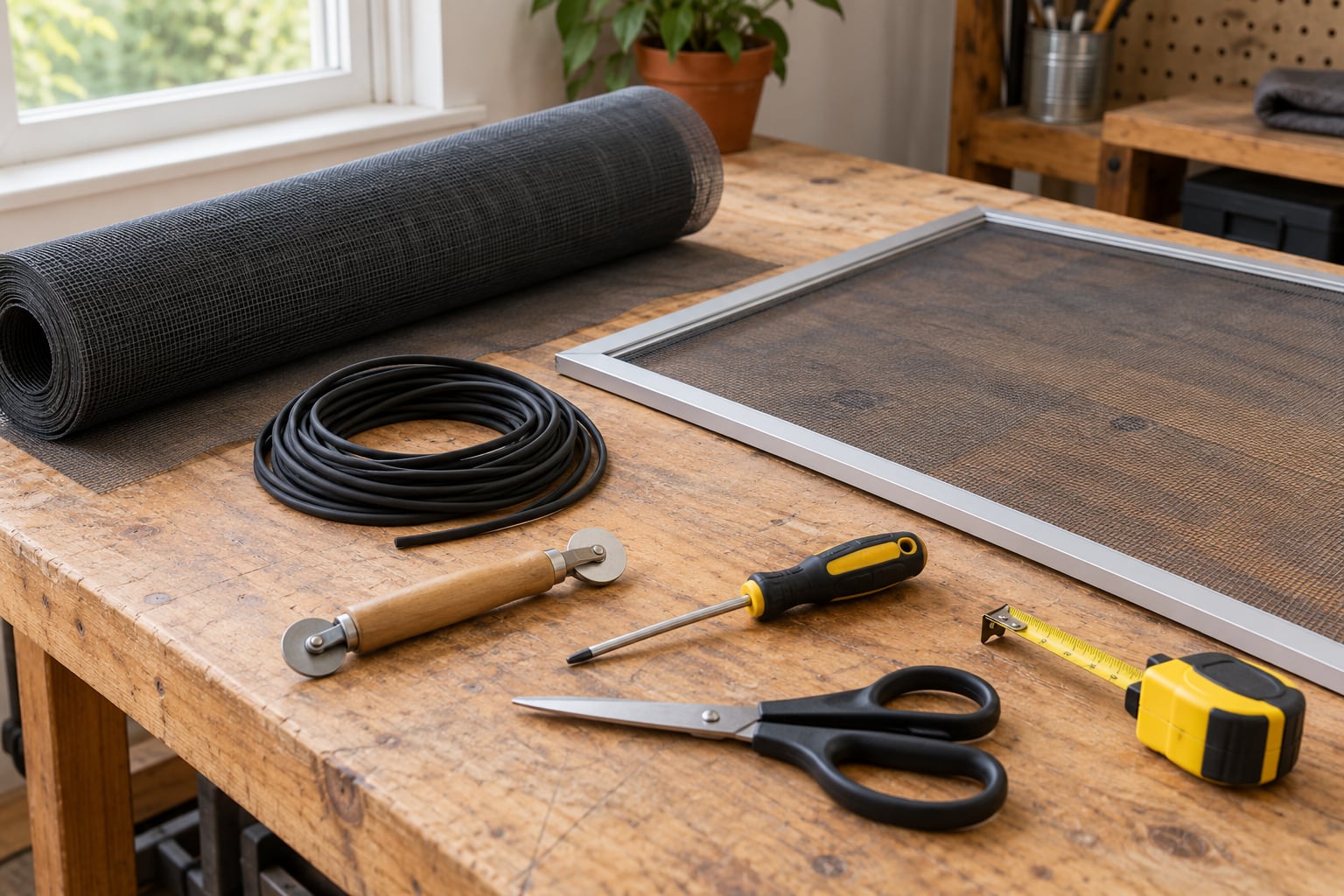
A torn screen is one of the easiest home repairs there is. To replace a broken window screen you pull the old mesh out of its groove, clean the channel, cut new screen to size, and press a rubber spline back into the frame to lock it. Most first-timers finish one window in 45 to 60 minutes, and every screen after that takes about 15 to 20. No special tools, just a screwdriver, a spline roller, and a tape measure.
The whole job hinges on one idea: the spline is what holds the mesh, and the spline groove is what holds the spline. Once you understand that little channel running around the inside of the frame, the rest is just measuring, cutting, and rolling. Most of the trouble people hit comes from cutting too tight or forcing the wrong size spline, both of which take about ten minutes to fix before you start and hours to fix afterward.
Below, I walk through the process for the standard exterior frame you’ll find on most single and double-hung windows, then cover what changes with aluminum mesh, custom screens, and the moments when a professional is the smarter call.
Table of Contents
- What You Need
- Which screen mesh should you buy?
- What size spline do you need?
- Step-by-Step: How to Replace a Broken Window Screen
- How to Replace a Broken Window Screen on a Standard Frame
- How to Install the New Screen and Spline
- How to Fix Common Screen Problems
- Common Mistakes
- Frequently Asked Questions
- Is it hard to replace a screen on a window?
- Can I reuse the old window screen spline?
- Should I replace the whole screen frame or just the mesh?
- Can I patch a small hole instead of replacing the screen?
- Which is better, fiberglass or aluminum screen mesh?
- When should I call a professional instead of doing it myself?
- Conclusion
What You Need
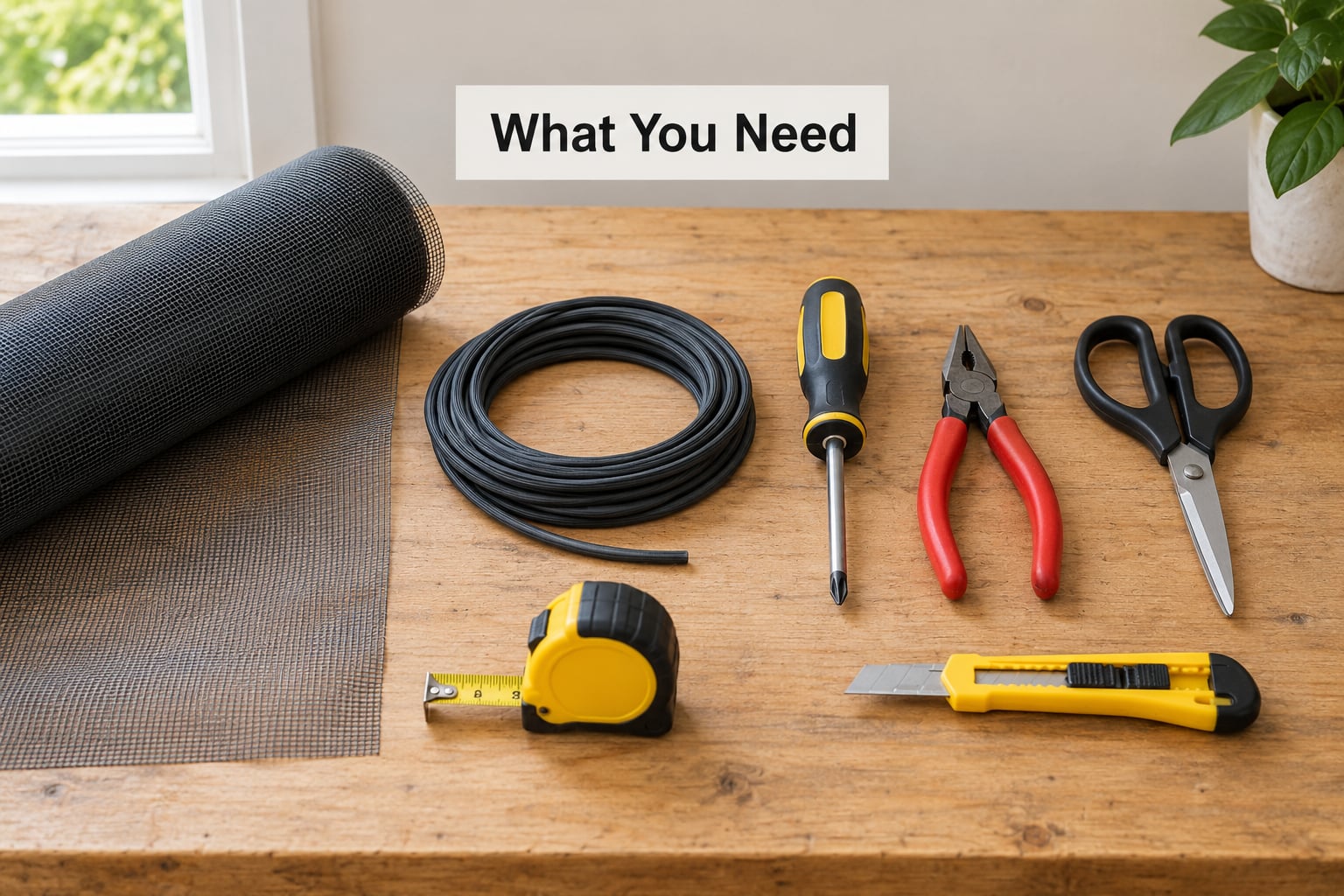
Gather everything before you pull the old screen out. Once the frame is bare and waiting, you do not want to be hunting through the garage for a tool.
- Replacement screen mesh, cut from a roll or a pre-cut panel sized to your frame
- Screen spline, the rubber cord that locks the mesh into the groove
- Spline roller tool, a small handheld wheel with a convex end and a grooved end
- Flathead screwdriver, for lifting out the old spline
- Measuring tape and a pencil
- Scissors or a utility knife for cutting mesh and trimming excess
- Stiff-bristle brush or small vacuum for cleaning the spline groove
- Masking tape to hold the frame steady if you work on a table
- Safety glasses when cutting mesh indoors or working above ground
Which screen mesh should you buy?
Fiberglass is the default for a reason. It flexes instead of creasing, cuts with scissors, and forgives beginner mistakes. Aluminum holds tension better and lasts longer, but it dents permanently when you fold a corner into it. Pet-resistant mesh is a thicker vinyl-coated screen built for claws. Solar screen blocks a large share of heat and glare while still letting light through.
| Mesh type | Durability | Ease of install | Best for |
|---|---|---|---|
| Fiberglass | Low to moderate, roughly 5 to 10 years | Easiest, cuts with scissors | Most bedrooms and interior rooms |
| Aluminum | High, 10 to 20 years | Harder, creases instead of stretching | Large front-facing windows and rentals |
| Pet-resistant | Very high, resists claw and tongue damage | Same as fiberglass, just heavier | Homes with dogs or cats at the window |
| Solar | High, UV stable | Same as fiberglass | West and south facing windows in hot months |
What size spline do you need?
Spline diameter has to match the width of your frame groove. Too thin and the screen will not hold tension, too thick and the spline will sit proud or refuse to seat at all. Bring a piece of your old spline to the hardware store if you are unsure.
| Frame groove width | Spline diameter | Common use |
|---|---|---|
| 5/16 inch | .150 | Small windows, many aluminum frames |
| 7/16 inch | .165 | Standard wood and vinyl frames |
| 1/2 inch | .175 | Heavy-duty and large-opening frames |
Step-by-Step: How to Replace a Broken Window Screen
The process breaks into three parts: getting the frame bare and measured, fitting and rolling the new screen, and correcting whatever looks off at the end. Set aside about an hour the first time.
How to Replace a Broken Window Screen on a Standard Frame
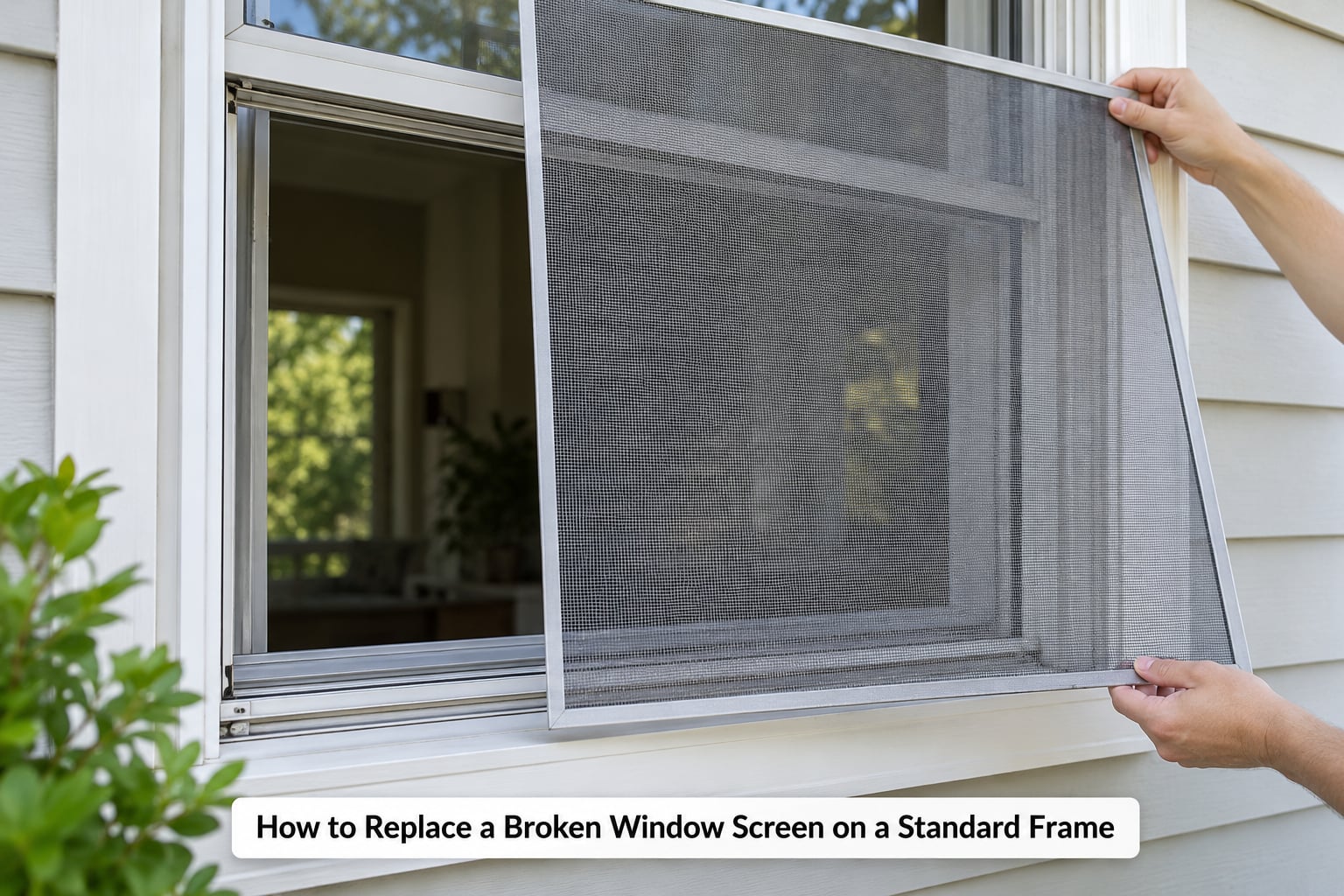
Start with the removal and the measuring. Get these two right and the rest is mostly rolling.
Step 1: Take the screen out of the frame. If the screen sits in a removable sash frame, lift or unscrew the whole frame from the window and lay it flat on a table. If the mesh is installed directly in the window sash, work with the sash open and supported. Pry up one corner of the spline with a flathead screwdriver, then pull the spline out of the channel one side at a time.
Step 2: Pull out the damaged mesh. As soon as the spline is free, the old screen lifts right out. If the mesh is still resisting, the spline is probably still caught in a corner, or it has hardened and swollen in the groove. Work it loose rather than yanking, because torn fiberglass strands are easy to miss with bare hands.
Step 3: Clean the groove. Vacuum the channel and brush out old adhesive, dust, and dried bits of mesh. This step gets skipped more than any other, and it is the reason a brand-new screen pops out six weeks later. Spline grips a clean, dry groove far better than one with a film of old glue in it.
Step 4: Measure the opening. Measure the channel from the inside edge to the inside edge at the top and bottom, then the left and right sides. Subtract a few millimeters, or about 1/8 inch, from each measurement. That small gap is your tolerance for the frame not being perfectly square.
Step 5: Cut the new mesh with room to spare. Now add about 1 inch of extra screen beyond each measured dimension. Standard advice is to cut the mesh two inches larger than the frame in both directions so you have a generous overlap all the way around. Fiberglass gets a diagonal snip at each corner so the excess folds into the corner without bunching.
Cutting tight is the single most common reason a screen ends up wrinkled. The extra half inch at each edge is what you grip while you stretch and roll, so it is not wasted material.
How to Install the New Screen and Spline
Fitting the mesh is the part of how to replace a broken window screen that looks trickier than it really is. Lay the mesh over the frame with the side you want facing outside, centered on top of the opening. Push a few inches of spline into the top channel to hold it in place, then work your way around.
Step 6: Roll the top edge. Set the roller at about a 10-degree upward angle so it pushes the mesh down and toward the frame as you roll. That downward angle is what stretches the screen rather than just pressing it flat. Move along the top edge in one direction without stopping.
Step 7: Work opposite sides sequentially. Do one side, then the matching side across from it, rather than finishing all four sides in a loop. Alternating pulls the tension evenly in both directions and keeps the mesh from drifting. Do the same thing on the last pair of sides. If you are working on a loose frame, run a strip of masking tape across the corners to stop it sliding around the table.
For aluminum mesh specifically, keep the screen flat and taut the whole time and never fold a corner under to save material. Aluminum takes a crease and holds it permanently. Fiberglass stretches instead, which is why it forgives a slightly misaligned cut.
Step 8: Trim the excess. Run a utility knife along the outside edge of the spline channel and cut the loose mesh away. Pull the cut strip off as you go so it does not tangle in the spline. Leave a thin fringe tucked under the spline rather than cutting flush, because that fringe is what keeps the screen from wicking in the breeze.
Now push on the center of the screen with your palm. A properly tensioned screen barely moves and feels firm. If it dimples easily, you have more tension to add by re-rolling with a steeper angle.
How to Fix Common Screen Problems
Almost every problem below has the same root cause: uneven tension. Work one fix at a time and re-check the whole screen each time.
Wrinkles and bubbles. Wrinkles mean the mesh was stretched in one direction more than the other, or it was cut too small. If it is still loose mesh, lift that edge’s spline and re-roll it at a steeper angle. If the mesh is genuinely undersized, no amount of rolling will fix it, and you should recut the panel with another inch of allowance.
The spline keeps popping out. Either the spline is too narrow for the groove or the groove still has old adhesive in it. Pull the spline, clean the channel properly, and try the next size up. If it will not seat at all, the diameter is too large.
Loose or sagging screen. Re-roll the loose edges with the roller angled harder toward the frame, working the corners inward to outward. Gravity sag in the middle of a large panel means the mesh was cut too large for the opening, and it needs recutting rather than more rolling.
Tears that appeared during installation. Cut the damaged section out in a straight line, then patch the opening with a screen repair kit or a square of mesh and a few staples on the back. Patching beats replacing only when the tear is small and the rest of the mesh is still tight.
Screen that flaps in the wind. Excess mesh along the bottom edge was not trimmed tightly enough. Re-seat that edge’s spline and cut closer to the channel so less fringe remains exposed.
Common Mistakes
Almost every failed screen repair traces back to one of five things. None of them are hard to avoid once you know they matter.
Cutting the mesh too tight. You need that extra inch of overlap on every side to grip and stretch the material. Cut to the exact measurement and you have nothing to hold onto, so the screen goes in loose and wrinkled. Fix it by recutting with more allowance.
Using the wrong spline diameter. A spline that is too small will not create tension and eventually falls out. One that is too large sits above the channel and looks loose even when it is fully seated. Match the spline to the groove width, and bring the old piece to the store as a reference.
Skipping the groove cleaning. Old adhesive and grit left in the channel reduce grip and hold the new screen off the frame. Ten minutes with a stiff brush fixes the problem you would otherwise fight all season.
Tensioning one side all the way around. Finishing side one before you start side two pulls the mesh diagonally and guarantees a wrinkle in the corner. Work opposing sides in sequence instead.
Rolling the roller flat. The roller needs an upward tilt so it pushes the mesh toward the frame. Held flat or tilted the wrong way, it presses the mesh into place without stretching it, and you end up rolling in every slack wrinkle by hand.
Reusing spline that has gone hard or brittle. Old spline that crumbles when you press it cannot grip the new mesh. Keep it only if it bends without cracking and still fits the groove comfortably.
Frequently Asked Questions
Is it hard to replace a screen on a window?
Not for most people. The process is lifting out the old spline, cleaning the groove, cutting new mesh with a bit of extra allowance, and rolling the spline back in. Allow 45 to 60 minutes for your first screen and about 15 to 20 minutes for each one after that. Fiberglass mesh is the most forgiving material for beginners.
Can I reuse the old window screen spline?
Sometimes. If the spline bends without cracking, is still round and firm, and fits the groove snugly, you can reuse it. Reuse fails when the spline has hardened, flattened, or crumbled, because it cannot grip the new mesh. When in doubt, a fresh roll of spline costs very little and removes the most common cause of a screen popping out weeks later.
Should I replace the whole screen frame or just the mesh?
Rescreen with the existing frame if the frame is square, the corners are still tight, and the spline groove is clean and undamaged. Replace the whole frame if the corners pull apart, the frame is warped or bowed, the groove is cracked or worn smooth, or the sash is rotted. Warped frames cannot hold tension, so new mesh on one will always sag.
Can I patch a small hole instead of replacing the screen?
Yes, when the hole is small and the mesh around it is still tight and undamaged. Trim the loose strands, cut a square of matching mesh a little larger than the tear, and staple or tape it to the back side. Patching a brittle, sagging screen just spreads the damage, so replace the mesh in that case.
Which is better, fiberglass or aluminum screen mesh?
Fiberglass is easier to cut, stretches rather than creasing, and suits beginners and interior windows. Aluminum holds tension better, resists weather, and lasts longer, but a folded corner leaves a permanent crease. Choose aluminum for large exposed windows or rentals and fiberglass everywhere else unless claws from a pet are the problem.
When should I call a professional instead of doing it myself?
Call someone when the frame is warped, cracked, or coming apart at the corners, when the window is above the second story and you would need a ladder, when the opening is an odd custom shape, or when the screen is a retractable or solar panel system with its own hardware. Those jobs need tools and access most homeowners do not have.
Two more questions come up constantly. Hardware stores sell the mesh, spline, and rollers, and their screen counters will cut a panel to your measurements if you bring the frame or exact dimensions. Professional rescreening runs far more than doing it yourself, so the cost gap only matters when the frame needs work beyond the mesh.
Conclusion
Start by measuring the channel in all four directions and checking that the frame is square with solid corners. Pick mesh that suits the window, match the spline diameter to the groove width, and vacuum the groove before anything else goes in.
Then cut with an inch of extra mesh on every side, roll the spline in with the roller tilted upward, and work opposite sides in sequence so the tension stays even. Trim the excess last, press the middle of the screen with your palm, and re-roll any edge that moves. That is the whole job of how to replace a broken window screen, and it is a job most people finish in an afternoon.