Fog that sits between the two panes of a double-pane window means the insulated glass unit has lost its seal, and no amount of scrubbing will clear it. Most fogged windows, though, are just surface condensation, and those clear up with airflow and better habits rather than new glass. This guide walks through how to fix foggy double pane windows in five methods, starting with the test that tells you which kind you have.
Budget an afternoon for diagnosis and the cheaper fixes. If it turns out the sealed unit has failed, the real repair is a glass swap that preserves your existing frame, and that part is worth handing to a glazier.
Table of Contents
- What You Need
- Step-by-Step: How to Fix Foggy Double Pane Windows
- How to Fix Foggy Double Pane Windows by Identifying the Source
- How to Fix Foggy Double Pane Windows with Simple Ventilation
- How to Fix Foggy Double Pane Windows with a Vacuum and Drying Method
- How to Fix Foggy Double Pane Windows with Cleaning and Seal Repairs
- When to Replace the Insulating-Glass Unit
- Common Mistakes
- Frequently Asked Questions
- Can foggy double pane windows be fixed without replacing them?
- Why is fog forming between the panes of my double-pane window?
- Can I separate the two panes and clean inside a double-pane window?
- Why does my double-pane window fog up on the outside?
- Does a home warranty cover a failed window seal?
- How much does it cost to replace a double-pane window?
- Conclusion
What You Need
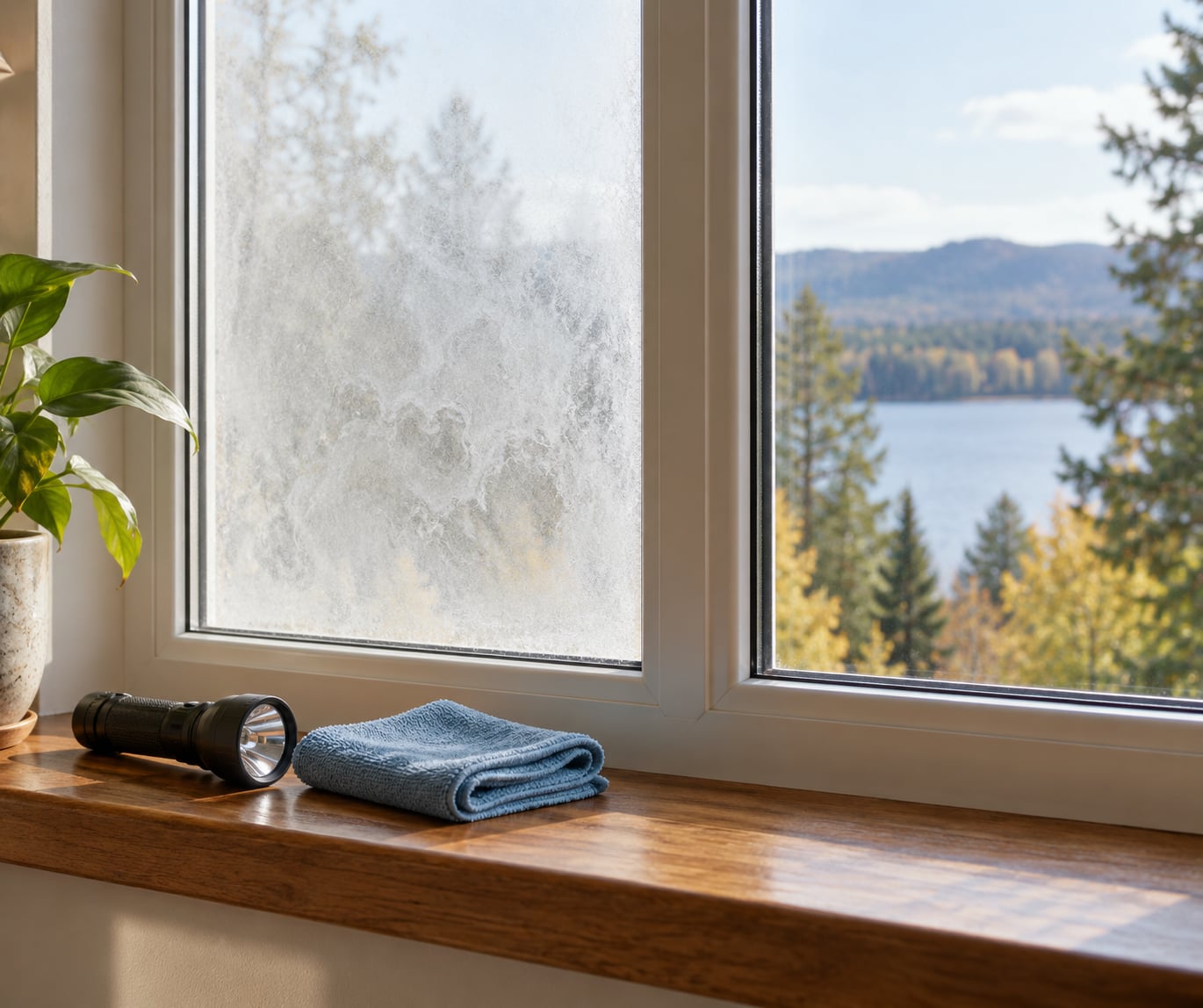
Start with diagnosis gear, because most jobs end before they start if you buy the wrong supplies. A flashlight tells you whether the moisture is trapped inside the glass sandwich or sitting on a surface you can reach.
- A flashlight to backlight the glass and reveal streaks, mineral deposits and the pattern of the fog.
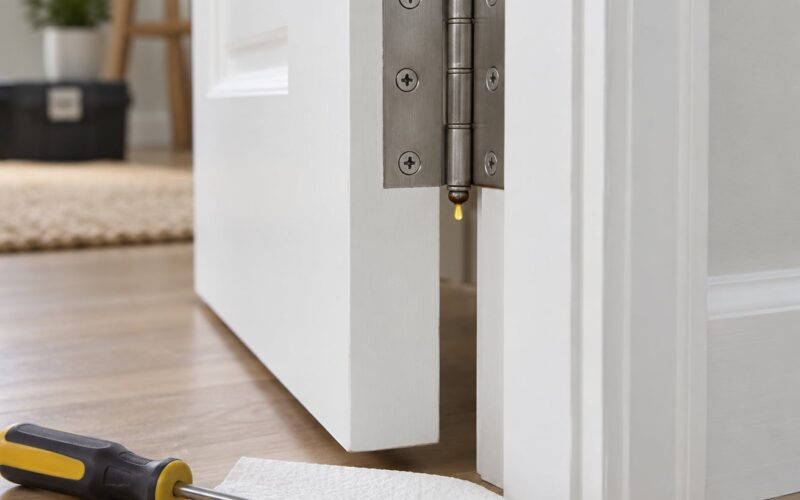
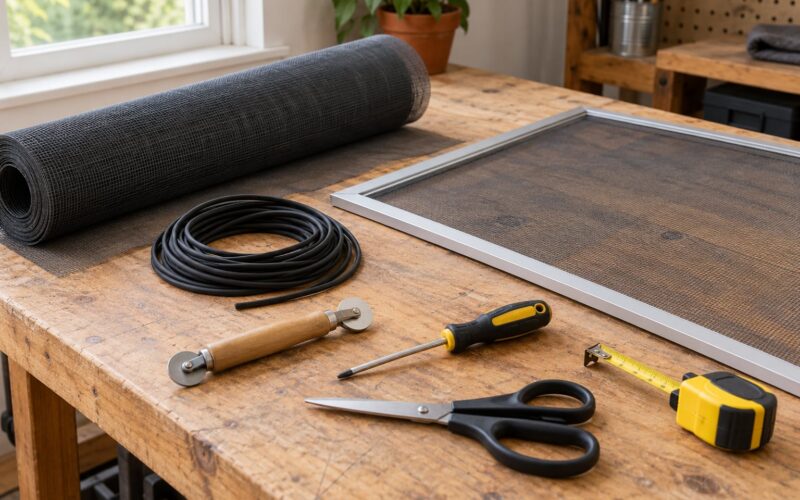
- A screwdriver and a putty knife for glazing beads, sash hardware and weatherstripping.
- A vacuum with a narrow attachment to draw air and moisture out of a small gap.
- Glass cleaner, a lint-free cloth and a soft brush for cleaning reachable glass and the glazing channel.
- Absorbent material such as silica packets or a dry sponge to soak up moisture you can reach.
- Replacement weatherstripping and an exterior or interior rated sealant, if the sash is losing its seal.
- Tape, a plastic sheet and a rubber gasket strip for building a temporary seal around a vacuum port.
- Replacement insulated glass unit parts, meaning the sealed glass unit itself, once your diagnosis points there.
Keep a phone camera handy too. Photos of the fog pattern on a cold morning and again after a sunny afternoon tell you more about what is happening than a single glance will.
Step-by-Step: How to Fix Foggy Double Pane Windows
Work through these five methods in order. Each one assumes the last failed to fix the problem, and the cost and difficulty climb as you go, so diagnosing properly saves you money.
How to Fix Foggy Double Pane Windows by Identifying the Source
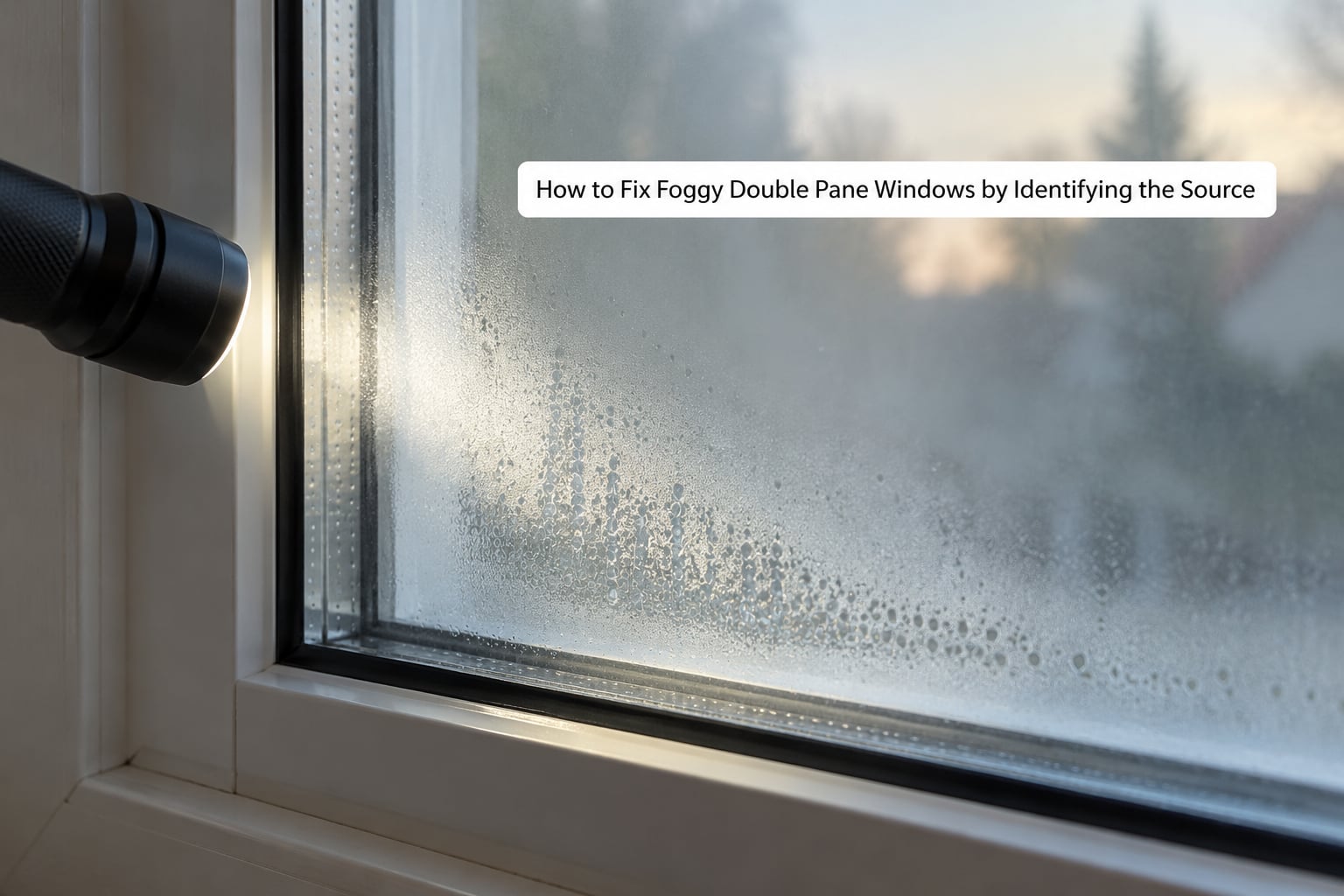
Finding the source of the moisture comes first, because the repair changes completely depending on where the water sits. Interior condensation beads on the inside surface and wipes away. Exterior condensation does the same on the outside face. Between-pane fog sits inside the sealed space and does not wipe away.
Run this test on a morning when the outside air is colder than your house:
- Touch the glass. Hold the flat of your hand on the fogged area. If the fog is on the inner surface, your hand leaves a clear streak behind it. Between-pane fog stays exactly as it was.
- Wipe and wait. Wipe the inner pane with a dry cloth. Surface moisture clears immediately and slowly returns in an hour or two. Fog between panes leaves no mark and returns the same way.
- Watch the edge. Look at the black spacer bar visible around the perimeter. A milky or chalky deposit there, or a haze that starts at the corners and spreads inward, points to a failed perimeter seal.
- Shine a flashlight through the glass. From a dark room, backlight the pane. Streaks and mineral deposits drifting inside the cavity confirm fog between the panes rather than on a surface.
Between-pane fog also has one behavior the others do not: it does not care about weather. It can appear on a dry, mild day and vanish on a cold, damp one, because the driver is the gas leak rather than indoor humidity. Surface condensation is the opposite. It shows up on humid mornings and disappears when the air dries out.
How to Fix Foggy Double Pane Windows with Simple Ventilation
Simple ventilation fixes fog that lives on a surface, and it costs nothing. This is the right method for bathroom, bedroom and kitchen windows where the room air is simply too damp for cold glass.
Start with the fans you already own. Run the bathroom exhaust fan during and for twenty minutes after a shower, and run the range hood vented outside when you cook. On a humid day, opening a window on the opposite side of the house gives the house somewhere to dump moisture instead of trapping it.
A dehumidifier handles the whole-house version of the problem. Set it to the bathroom or bedroom, run it through the damp season, and close doors and windows in that room so it pulls air from one place instead of the entire house.
Check the window hardware too. A sash that will not lock or will not close fully leaves a permanent air leak that brings humid room air straight to the coldest glass. A window that fogs only on the top floor during a cold rain is usually leaking warm moist air upward through a failed seal rather than sitting on a humidity problem.
If you notice more than one pane fogging at the same time, resist the urge to replace the whole house of windows. Test each one with the touch and wipe method first. Several separate failures usually mean one shared cause, such as a recurring seasonal humidity spike or a house-wide air leak around the openings.
How to Fix Foggy Double Pane Windows with a Vacuum and Drying Method
A vacuum method can dry out a lightly fogged cavity, and it works best on fog that is light and recent rather than milky with years of mineral deposit. Treat it as a low-cost attempt with modest expectations, not a permanent repair.
- Clean the accessible glass first. Wash both reachable panes and wipe the glazing channel dry, since dust and grit scratch glass when you work nearby.
- Find the least visible corner. Pick a corner of the glass inside the frame, ideally on the side nobody sees from the street.
- Cut a small port. Use a hand reamer or a small drill bit to make a hole roughly the size of a soda straw. Go through the gap edge where the glass meets the frame rather than into the center of the unit.
- Insert a hollow straw or a soft tube and run a rubber seal or gasketed tape around it so the gap is air-tight enough to pull a vacuum.
- Run the vacuum on the gap for several minutes while the glass is cold. Moving air draws moist air out of the cavity.
- Fill the cavity with dry air by leaving a dehumidifier or fan pointed at the port for a while, then seal the hole with an exterior rated sealant and tool it flat.
Homeowners on r/DIY and on window replacement forums report that a cotton swab or a pipe cleaner soaked in rubbing alcohol, pushed through the port, clears the haze from the inner surface of the glass. Many also report the improvement fading after roughly a year, and one person cracked a pane while drilling. Treat drilling as risk on tempered or wired glass, where a damaged edge cannot be repaired and the pane will need replacing. Never pour liquid into the cavity.
The desiccant beads inside the spacer bar are the one thing you cannot replace yourself. They absorb moisture and eventually saturate, which is the reason the fog persists. Once they are spent, drying the space buys you time and nothing more.
How to Fix Foggy Double Pane Windows with Cleaning and Seal Repairs
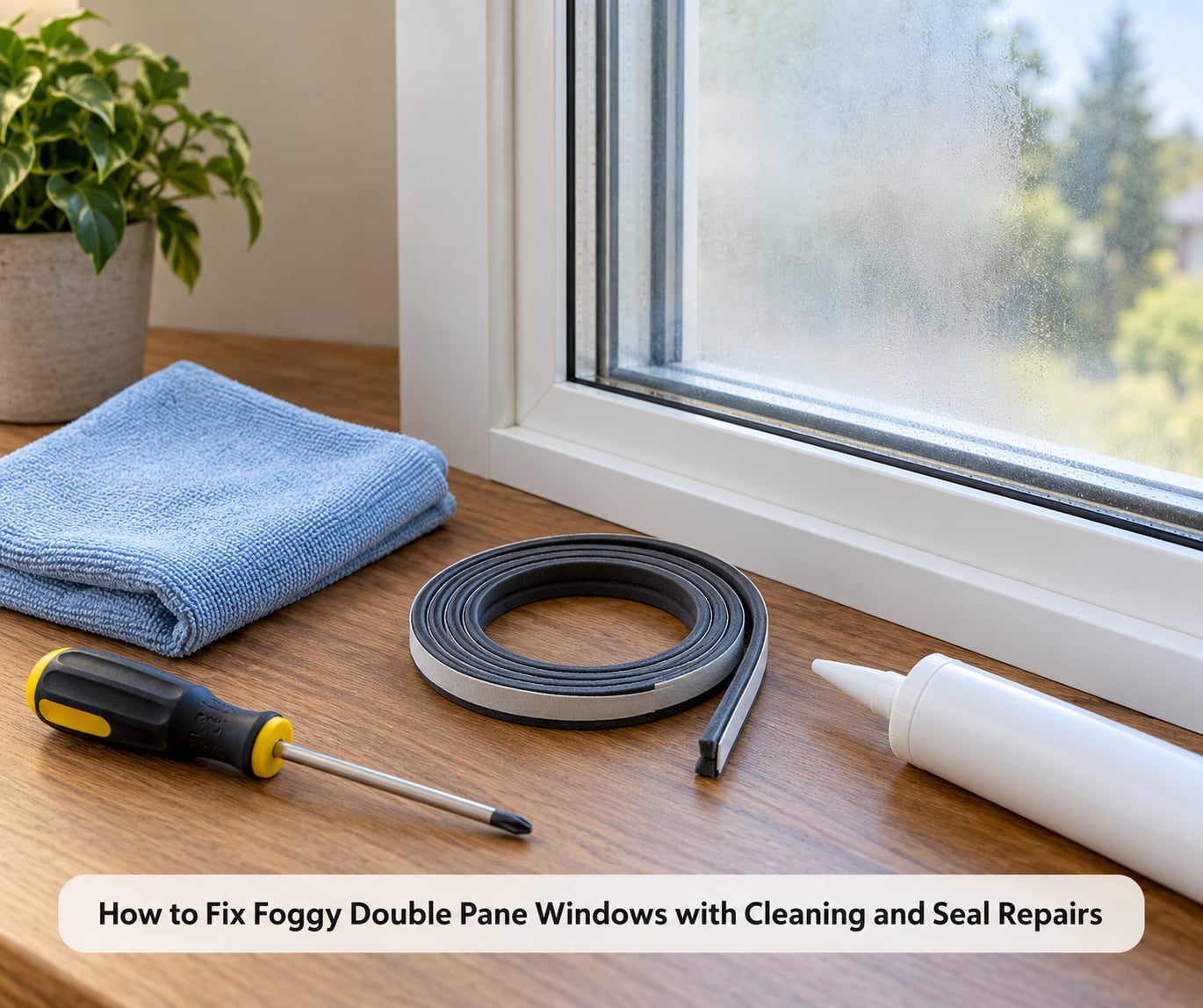
Cleaning and seal repairs fix fog when the frame or sash is the actual failure point. That is the good news case, because the glass itself is fine.
Clean what you can reach. Use a squeegee or soft cloth on the interior surface, and clean the sash channel where the glass sits so debris does not scratch the pane when it is handled. Remove any old caulk and dead sealant from the glazing channel before applying new material.
Replace weatherstripping along the sash and at the meeting rail. Bulging, torn or hardened strips create drafts that bring moist air to the glass all year. Pull the old strip out of its channel with a putty knife, clean the groove, and press or nail in the new piece. Cut miters at the corners so no gap is left open.
Seal only the frame, not the glass sandwich. A bead of an exterior or interior rated sealant along the sash-to-frame joint can close an air path that is feeding the problem. Anything that crosses the glass or the spacer bar traps the cavity permanently and will not restore the insulating gas.
Two details matter more than people expect. Keep weep holes in the frame clear so water drains out instead of sitting in the sill, and avoid pressure washing the sill, which forces water past the seal. If you notice a cold spot around the frame edge, or a draft that a rolled-up sheet of paper pushed into the sash gap reads clearly on a windy day, the frame is where your money should go.
When to Replace the Insulating-Glass Unit
Replace the insulated glass unit when the fog is between the panes, when deposits have turned the cavity chalky, and when wiping does nothing. In that situation the factory seal has failed, and the unit can no longer be resealed or refilled in the field.
Here is what actually goes wrong inside the unit. A sealed glass unit is two panes joined by a spacer bar filled with desiccant beads, with argon or krypton gas filling the cavity. A healthy unit loses a small percentage of its gas each year. Once the edge seal cracks, humid outdoor air enters, the desiccant saturates, and condensation forms on the inner faces where no one can wipe it.
That is why drilling, painting or caulking cannot fix it. Clearing a patch by drilling a hole gives the moisture a path out and lets you watch a change over the next months, but it does not put argon back, does not restore the insulating value, and leaves the glass exposed to the same leak. A working insulated glass unit is a factory-sealed sandwich, so only a new sealed unit truly restores performance.
A professional swap keeps your frame. The glazier measures the opening, removes the sash or lifts the glazing beads, cuts out the old unit, cleans the channel, sets the new unit on its setting blocks, applies the appropriate sealant and snaps the trim back. Ask for glass-only replacement and check that the quote lists the unit thickness, since 3/4 inch and 7/8 inch units do not fit the same glazing channel.
Choose a full window replacement instead when the frame itself has failed. Look for rot in a wood sill, warped vinyl that no longer closes against the frame, a cracked or corroded aluminum frame, or a sash that is already loose. In those cases new glass in an old frame just buys you time. If you own a condo or rental, check who is responsible for the window before paying for anything, since the glazing may fall to the association or the landlord.
Common Mistakes
Almost every damaging approach I see has a plausible-sounding reason behind it. Knowing which ones fail saves a pane and a weekend.
- Drilling holes to let the fog out. It can dry the cavity temporarily, but it does not restore the gas or the seal, and it risks cracking tempered or wired glass. The alternative is a proper glass-only replacement, done by a glazier.
- Pouring water, vinegar or solvents into the gap. Liquid enters a space that cannot be dried from inside, and it carries dirt onto the inner pane. The fix is to leave the cavity alone.
- Painting over condensation. Paint on a foggy surface traps moisture against the glass and hides the problem until the coating peels. Wipe the surface instead, and fix the airflow causing it.
- Running sealant inside the window space. Caulk across the spacer bar or glazing channel seals a cavity that needs to respond to temperature changes. Seal the sash-to-frame joint only.
- Assuming every fogged window can be caulked back to new. Once the desiccant is saturated, nothing restores performance short of a new unit. That is the honest limit of every DIY method in this article.
- Believing a hair dryer or heat gun solved it. Owners report the fog returning within weeks, and concentrated heat risks cracking the glass or warping the spacer. Use gentle airflow and a dehumidifier instead.
- Putting silica gel packets in the cavity. Multiple owners report no lasting change. The installed desiccant is what protects the unit, and it cannot be refreshed from outside.
Prevention is simpler than repair. Run exhaust fans, keep interior humidity near the 40 to 60 percent range, keep weep holes clear, avoid pressure washing the sill, and check the seal condition of windows when you notice other signs of age. Seal failure in double-pane windows typically shows up in the second decade of a unit’s life, so south-facing and west-facing panes with the most sun are worth watching first.
Frequently Asked Questions
Can foggy double pane windows be fixed without replacing them?
It depends where the moisture sits. Condensation on the inside or outside surface clears with ventilation, dehumidification and better habits, and that fixes it for good. Fog trapped between the panes means the factory seal failed, and that cavity cannot be resealed in the field. Vacuum and drying tricks buy months at most. The lasting repair is a replacement insulated glass unit fitted into your existing frame, which keeps the frame and most of the cost intact.
Why is fog forming between the panes of my double-pane window?
The perimeter seal around the spacer bar has failed, so humid outdoor air is entering the sealed cavity and saturating the desiccant beads inside. The escaping gas fill leaves the window less insulating, and the trapped moisture condenses on the inner glass faces where it cannot be wiped away. Seals commonly fail from thermal cycling, solar heating, water getting in through the sill, or defects from the original installation.
Can I separate the two panes and clean inside a double-pane window?
No, not on a sealed unit. The two panes are joined by a rigid spacer bar and a factory-applied seal, and taking them apart destroys both. Anything that separates the panes means the window needs a new insulated glass unit instead. The only interior surface work you can legitimately do is on the faces you can already reach from inside the room.
Why does my double-pane window fog up on the outside?
Condensation on the exterior face is normal, not a defect. In cold weather the outside pane is often colder than the indoor air beside it, so moisture in that air settles on the glass. It shows up on humid mornings and clears as the day warms. Sealing or painting the exterior glass does nothing and can trap moisture against the surface. Manage indoor humidity and let the exterior face clear on its own.
Does a home warranty cover a failed window seal?
A builder’s warranty sometimes covers a sealed unit that failed within its term, especially on new construction, and manufacturer warranties vary by brand and by material. Homeowner insurance generally does not pay for seal failure because it is treated as normal wear rather than sudden damage. Keep purchase records, photos and installation dates, and file with the manufacturer first. If a window came from a recent build, check both the builder and the manufacturer separately rather than assuming one covers the other.
How much does it cost to replace a double-pane window?
Costs vary widely by region, window size, glass type and how hard the frame is to work with, so quotes are the only reliable number. The order of the options is what matters: professional defogging is the cheapest and the least permanent, glass-only insulated glass unit replacement sits in the middle, and full window replacement costs the most. Get two or three quotes and ask each one whether glass-only replacement is an option before agreeing to anything larger.
Conclusion
Find out where the moisture is before spending anything. Run the touch and wipe test on a cold morning: if the fog wipes away, treat it with ventilation, exhaust fans, a dehumidifier and honest humidity habits, and repair the sash seals if air is leaking around the glass. If it does not wipe away, the factory seal has failed, and the only lasting fix is a replacement insulated glass unit installed in your existing frame. Get a glazier to assess it, ask for glass-only replacement, and check whether the frame itself is still sound.