Picking a privacy fence comes down to two things: how tall it needs to be to block the sightlines you actually have, and how solid it is between the boards. Get those two right and the material is a matter of taste, maintenance tolerance and what your local rules allow. Get them wrong and you will be looking at the wrong fence for the next fifteen years.
This guide walks through the decision in the order that saves money: name the problem, set the height, pick the screening level, then compare materials and check your rules before anything gets ordered. It takes an afternoon to read and a weekend of measuring.
Table of Contents
- What Is the Best Fence for Privacy?
- Full, Semi or Open: Name Your Screening Level
- How to Choose a Fence for Privacy Based on Your Needs
- Sightlines Are the Main Job
- Noise Reduction Is a Separate Problem From Sightlines
- Pet and Child Containment Changes the Design
- Short Runs Worth Spending On: Pools, Hot Tubs and AC Units
- How High Should a Privacy Fence Be?
- Is an 8-Foot Privacy Fence Too High?
- Make a Shorter Fence Feel Taller
- Which Fence Materials Provide the Best Privacy?
- Wood vs. Vinyl vs. Metal for a Privacy Fence
- Wood vs Vinyl: The Honest Comparison
- Metal for Privacy
- Climate Fit: Where Each Material Struggles
- Does a Privacy Fence Add Home Value?
- How to Plan Fence Placement for Maximum Privacy
- How to Account for Local Fence Rules and Property Lines
- Common Fencing Mistakes to Avoid
- What Affects the Cost of a Privacy Fence?
- Frequently Asked Questions
- What is the best height for a privacy fence?
- Is an 8-foot privacy fence too high?
- Is wood or vinyl better for a privacy fence?
- How much does a privacy fence cost per linear foot?
- Do I need a permit to build a privacy fence?
- Can you install a privacy fence on a slope?
- Conclusion
What Is the Best Fence for Privacy?
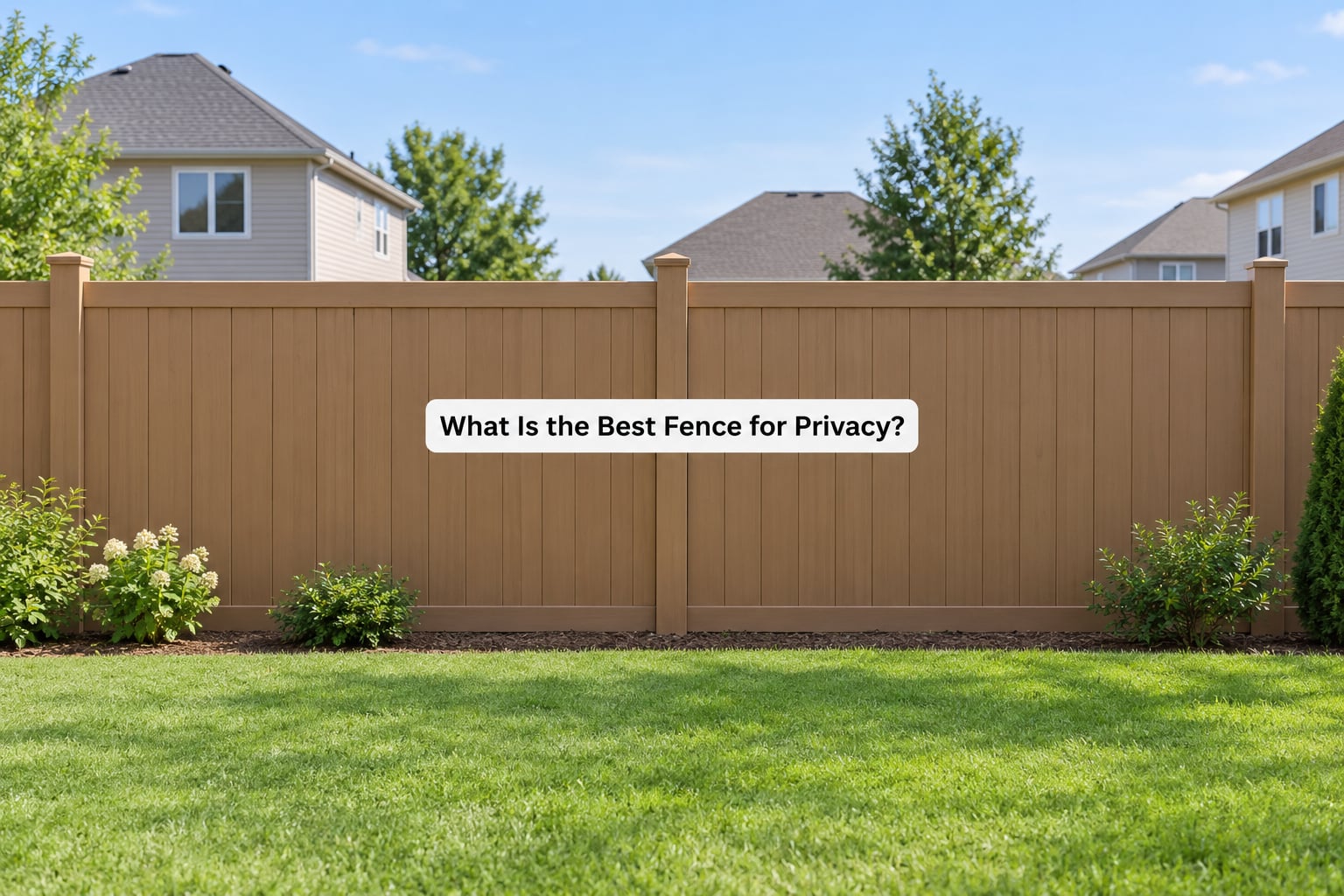
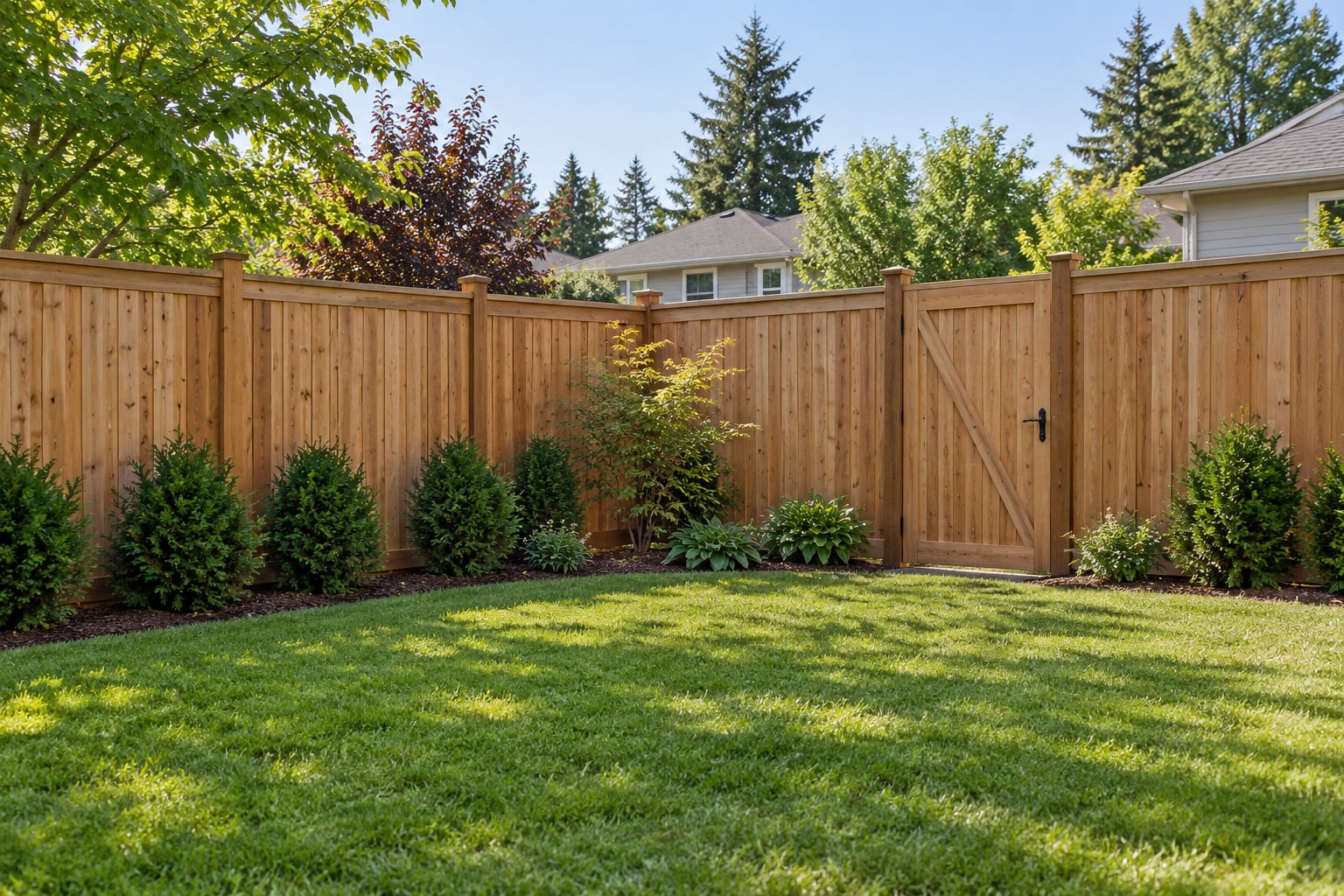
The best fence for privacy is a solid-panel fence at least 6 feet tall, built from cedar, pressure-treated wood, vinyl or composite. Height and board screening decide how private you get, not the material. Chain link, pickets and decorative metal give you a boundary line, not privacy.
Most homeowners settle on 6 feet of solid board with dog-ear pickets or full privacy panels. Six feet blocks seated and ground-level views from next door. It stops short of blocking a neighbour standing on a second-storey deck, and that is where 7 or 8 feet earns its place.
Full, Semi or Open: Name Your Screening Level
Contractors use loose words for this, so it helps to name your target before you shop.
- Full screening means no usable gap anywhere. Board-on-board construction, dog-ear pickets with overlapping seams, and solid privacy panels all qualify. This is what most people picture when they say privacy fence.
- Semi screening means the direct view is blocked but angled views and airflow get through. Shadowbox, horizontal slat with tight spacing, and lattice panels sit here.
- Open screening means you mark the boundary and let light and views move freely. Picket, chain link and wrought iron live here.
Test any sample before you buy it. Hold the panel at eye level in the spot you care about and look along it, not straight through it. Angled views are what give privacy fences away, because a fence that looks solid head-on often has gaps along the fence run where boards cup or where the ground falls away.
How to Choose a Fence for Privacy Based on Your Needs
The way to choose a fence for privacy starts with the specific view you want to lose, not with a material name. Walk your yard and identify each spot that bothers you: the neighbour’s deck, a street corner, a second-floor window, an AC condenser, a pool.
Then decide which of four jobs the fence is doing.
Sightlines Are the Main Job
This is the default. Stand on the highest ground you can reach on the other side, including a second-storey landing or the roof of a low outbuilding, and note how high above the ground you can see. That number is your target height, plus a foot of margin.
Noise Reduction Is a Separate Problem From Sightlines
A solid fence damps sound more than most people expect, but only a dense material does much. Wood, masonry and thick composite panels absorb; aluminium, chain link and thin vinyl panels ring and rattle in wind. If you sit next to a main road, weight and surface area matter more than height, so a 6 foot wood or masonry fence will beat a 7 foot aluminium one every time.
No fence silences traffic. What it does is cut the sharp, high-frequency edge, which usually reads as a quieter yard rather than a silent one.
Pet and Child Containment Changes the Design
Containment shifts the height floor upward. A determined dog clears about 5 feet, a 6 foot fence is the practical minimum, and anything over 6 feet needs a secure gate. Close the gap between the fence bottom and the ground with dog-proof mesh or a solid kick board, because a 4 inch gap at the base is a tunnel for small dogs.
Use self-closing hinges on any gate a child can reach, and lock hardware or an alarmed latch on the fence line itself. Where a neighbour shares the line with a child-heavy yard, check local rules before building above 6 feet.
Short Runs Worth Spending On: Pools, Hot Tubs and AC Units
A three-sided pool enclosure and a screened AC pad are small square footage but they carry code requirements of their own. Pool fencing usually needs a specific height, self-closing and self-latching gates, and no climbable horizontal rails within a set distance of the opening. Aluminum or powder-coated steel works well there because it resists corrosion near water.
An AC condenser is the opposite case: a short screen of slatted or lattice panels is enough, and airflow stays intact. Solid panel fencing around a condenser can trap exhaust heat back onto the unit and shorten its life.
How High Should a Privacy Fence Be?
For most residential yards, 6 feet is the standard privacy fence height because it blocks the eye level of a seated adult and anyone standing on the ground next door. Go to 7 feet when the neighbour has a raised deck, and think about 8 feet only when there is a genuine second-storey view.
| Height | What it blocks | Typical use | Things to know |
|---|---|---|---|
| 4 ft | Nothing above waist height | Front gardens, boundary marking | Often the local height limit with no permit |
| 5 ft | Seated adults, most seated views from a deck | Cheap screening, pet containment of small dogs | Still lets a standing neighbour see over |
| 6 ft | Seated and standing adults at ground level | The standard privacy fence height | Most codes allow this with no variance |
| 7 ft | Standing adults on a raised deck or patio | Blocks elevated next-door sightlines | Post depth, spacing and wind load start to matter |
| 8 ft | Most second-storey and balcony views | True seclusion, corner lots, unusual grade changes | Usually needs a permit and engineered wind bracing |
The sightline logic is simple physics. Average standing eye level sits around 5 feet 6 inches to 5 feet 10 inches, seated eye level around 3 feet 4 inches. A 6 foot fence on level ground clears both with margin. But ground drops away fast in some yards, and a fence that is 6 feet tall on the high side can read as a 4 foot fence from the low side. Measure the grade along the whole run before you commit to a height.
Is an 8-Foot Privacy Fence Too High?
An 8 foot fence is not too high for privacy. It is often too high for the rules and for the wind. Most municipalities cap residential fences at 6 feet for side and rear yards and require a permit and sometimes a variance above that. HOA covenants frequently cap lower still, and a corner lot may face separate limits from the street side.
Physically, a solid 8 foot panel behaves like a sail, and homeowners on r/DIY describe 6 foot sections that already act that way in a stiff breeze. Taller fences need deeper post holes, closer post spacing, a buried concrete footing below the frost line and a horizontal brace or kick board to stop the frame racking. Ask for that engineering in writing rather than assuming the installer knows.
Make a Shorter Fence Feel Taller
Where height is capped or the ground drops away, planting does the work instead. The highest-engagement threads on this question from small city and suburban yards all point the same way: narrow evergreen shrubs and dense hedges along the fence line make a fence read taller and fuller without asking anyone for a variance.
On the Houzz side of the argument, colour comes up constantly. Dark grey, dark brown, black and dark green recede and give foliage a neutral backdrop, while white and pale fences visually dominate and make a small yard feel tighter. A climbing vine on the neighbour-friendly side softens the surface, and low-voltage lighting along the base keeps the fence legible at night without adding height.
Which Fence Materials Provide the Best Privacy?
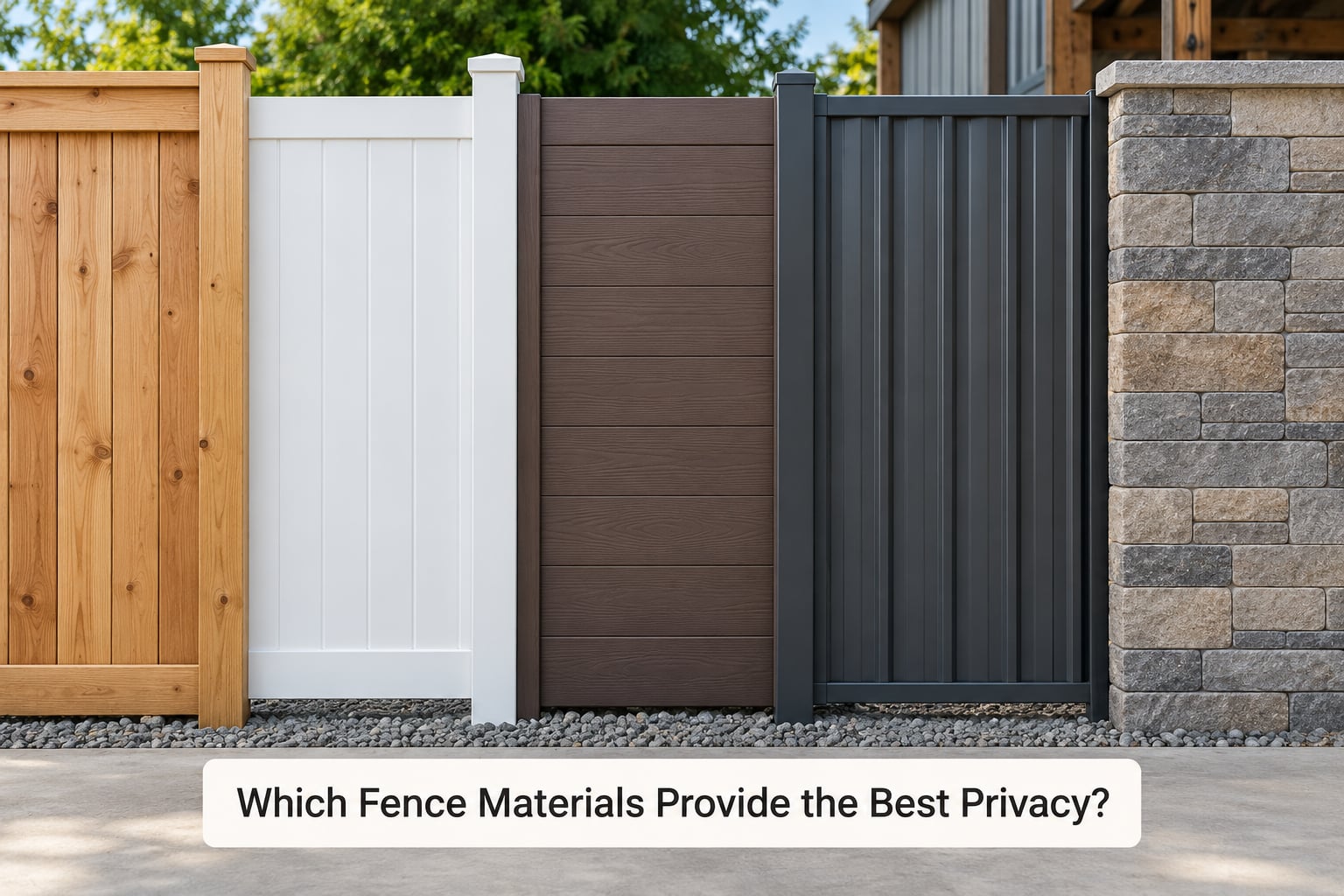
Cedar, pressure-treated pine and composite give the highest privacy because their boards are wide and their seams overlap. Vinyl gives equal full screening with almost no upkeep. Aluminum and steel give the most durability but only reach full privacy in the form of infill panels. Chain link gives you almost none, which is why it is a boundary marker and a dog run rather than a privacy fence.
| Material | Privacy rating | Typical lifespan | Maintenance | Relative cost per linear foot | Noise reduction | Best for |
|---|---|---|---|---|---|---|
| Cedar | Full | 15-25 years | Stain or seal every 2-3 years | Medium-high | Good | Natural look, willing maintenance |
| Pressure-treated pine | Full | 10-20 years | Stain or seal every 2-3 years | Low | Good | Most yards on a budget |
| Vinyl (PVC) | Full | 30+ years | Hose off occasionally | Medium | Moderate | Low maintenance |
| Composite (WPC) | Full | 25-30 years | Wash only | High | Good | Wood look without the upkeep |
| Aluminum | Semi to full with infill | 30+ years | Rinse, check hardware | Medium-high | Low to moderate | Coastal areas, pool surrounds |
| Steel | Semi to full with infill | 40+ years | Rust control, touch-ups | High | Moderate | Security, wide spans, harsh climates |
| Chain link | Open | 15-25 years | Tighten and replace fabric | Low | Low | Boundary marking, pet containment |
| Masonry | Full | 50+ years | Mortar repair | Highest | Excellent | Urban boundaries, noise and wind |
Two numbers are worth knowing before you shop. Boards and panels are often sold a little short of their labelled size, so the labelled height is not the finished height. And most material is priced by the linear foot while gates, corner assemblies and post caps are priced per piece, which is where the gap between a per-foot quote and a final invoice usually comes from.
Wood vs. Vinyl vs. Metal for a Privacy Fence
Wood wins on looks and upfront cost, vinyl wins on effort over a decade, and metal wins on strength and lifespan. For privacy specifically, wood and composite absorb sound best, vinyl matches them on screening and lasts longest with no work, and metal only wins on privacy when it carries solid infill panels rather than pickets.
Wood vs Vinyl: The Honest Comparison
Wood looks like a fence should look. It takes stain in any colour, a board can be replaced in an afternoon, and neighbours tend to read it as a higher-value choice. The catch is the maintenance cycle: a stain or sealer every 2 to 3 years, sooner on the sunny side, and boards that cup if they dry out on one face faster than the other.
That cupping complaint is the loudest one on r/DIY, where the practical advice is to hand-select every board and post, reject anything bent or already checked, and seal all faces rather than only the side that shows. Vinyl sidesteps all of it. It will not rot, warp or need a sealer, and good panels hold their colour for decades if they carry UV inhibitors. The two real drawbacks are brittleness in deep cold and the way thin, hollow-rail vinyl can look cheap from the street.
That second complaint comes up often enough to deserve a direct answer. What separates good vinyl from cheap-looking vinyl is panel thickness, the number of internal reinforcement rails, and whether the colour runs through the panel or only coats the surface. Buy samples and look at cut edges before ordering a long run.
Metal for Privacy
Aluminium and steel are the answer when you need the fence to stay straight over a long span, when corrosion is the deciding factor near the coast, or when the fence has to hold up in wind. On their own they screen very little. Add vertical or horizontal infill boards between the posts and you get a modern look with full privacy, at a material cost above wood.
Climate Fit: Where Each Material Struggles
Wood struggles with constant ground contact and wet climates, which is why a 2 inch gap above the soil line and a splash block matter. Vinyl struggles with repeated freeze-thaw cycles and with strong direct sun unless the panel carries UV inhibitors. Composite struggles with cost and, in older manufacturing, with posts that cup on the sun-facing side.
Aluminium handles salt air and heat well and never needs rust protection. Painted steel needs rust control in damp or coastal yards. Masonry shrugs off everything and costs the most.
Does a Privacy Fence Add Home Value?
A well-maintained fence that suits the architecture adds curb appeal, and a failing or mismatched one subtracts. Vinyl itself is closer to neutral than buyers assume: a clean fence in good repair is a positive, while thin panels and visible rail gaps are read as cheap. Wood, composite and masonry carry the more traditional premium.
How to Plan Fence Placement for Maximum Privacy
Where you put the fence matters as much as what you build. A fence set a foot inside your property line rather than on it buys margin for drainage and trim growth, and avoids a future rebuild when a survey turns up a discrepancy.
Map the sightlines before you measure anything. Stand at the places you want to be hidden and look out. Mark the spots that still see you. That map tells you which runs need full screening and which can get a cheaper open section, and that alone can trim the bill.
Work around slopes deliberately. On a gentle grade, racked panels follow the contour and look continuous. On a steeper grade, stepped panels create visible horizontal lines but seal the gaps under the fence, which matters more for pets and children than appearance does.
Leave access alone. Gates need a swing or slide path that does not hit a neighbour’s fence, a carport, or an air conditioner pad, and a wide enough approach for the equipment that delivers materials.
Before you order, run this short check: measure the run twice at both ends and the midpoint, mark the highest and lowest grade points, decide the gate count and width, walk the whole line and look along it from the outside, and confirm that no panel is planned where it would trap equipment exhaust. That last pass catches more problems than any other five minutes you will spend.
How to Account for Local Fence Rules and Property Lines
Check your rules before you design, not after. Call the local building or zoning department and ask three questions: what is the maximum height on side and rear yards, does height above that need a permit or variance, and what setback from the property line applies to a solid structure. Then read your HOA covenants, which are often stricter than the city.
Get a survey before you set posts. The cheapest way to avoid a neighbour dispute is knowing exactly where the line runs, and a professional survey is cheap against rebuilding a fence in the wrong place. Watch for utility and drainage easements on your deed, which can forbid any structure at all over a strip of ground.
If the fence sits on a shared line, talk to the neighbour before you build and agree on height, material, who pays and who maintains it. Many agreements are simply “both sides own and maintain”, and writing that down prevents an argument a decade from now. Where codes require it, a shared line usually means written consent from the neighbour.
Common Fencing Mistakes to Avoid
- Building on an assumed property line. Confirm with a survey first. This is the one mistake that can cost you a whole fence.
- Posts that are too shallow. A common rule of thumb puts post depth at roughly one third of fence height, with the footing below the local frost line.
- A tall solid fence with no wind engineering. At 7 and 8 feet, add closer post spacing and a horizontal brace or kick board.
- Skipping the permit. Height thresholds and proximity to a public road are the usual triggers.
- Boards installed with visible gaps. Even a narrow gap reads as a lit slot at certain angles of the sun.
- No plan for gates. Decide count, width and hardware early; gates and their hardware are priced separately and slow installation down.
- Leaving no ground clearance. Keeping boards a couple of inches above the soil helps the fence dry out and outlast rot.
What Affects the Cost of a Privacy Fence?
Fence pricing is a regional market and the numbers move, so treat any figure you find as a starting point to verify locally rather than a quote. What you can do is understand which parts of the job actually drive the total.
- Height. Taller means more material, deeper post holes, closer post spacing and often wind bracing. Height raises the multiplier faster than length does.
- Material. Wood sits at the low to middle end, vinyl and composite in the middle, aluminum and steel higher, masonry at the top.
- Linear footage. Most material is priced per linear foot, but gates, corner assemblies and post caps are priced per piece.
- Gates. Every gate adds hardware, labour and time. Wide double gates for vehicle access cost considerably more than a walk gate.
- Terrain. Slope, uneven ground and rock slow digging and raise labour. Rock in the soil can change the price on the day.
- Old fence removal. Tear-down and disposal are often quoted separately from installation.
- Permits and engineering. Above a certain height a plan review or a stamped drawing can be required.
- Finish. Staining, sealing or painting on wood is a recurring cost on a schedule, not a one-time fee.
Ask for an itemized quote that separates material, labour, gates, removal and permit fees. Homeowners on r/DIY build whole threads around exactly this breakdown because sellers rarely hand it over voluntarily, and comparing two itemized quotes is the fastest way to see where two offers actually differ.
Frequently Asked Questions
What is the best height for a privacy fence?
Six feet is the standard for most residential privacy fences. It blocks the eye level of seated adults and of neighbours standing on the ground next door, and most municipalities allow it without a permit. Go to 7 feet when a neighbour has a raised deck or patio, and to 8 feet only when there is a real second-storey view. Measure the grade along the run first, because a fence on a slope loses effective height.
Is an 8-foot privacy fence too high?
Not for privacy, but often too high for the rules and the wind. Many cities cap residential fences at 6 feet and require a permit or variance above that, and HOA covenants are usually stricter. Physically, a solid 8 foot panel acts like a sail and needs deeper post holes, closer post spacing, footings below the frost line and a horizontal brace to stop the frame racking.
Is wood or vinyl better for a privacy fence?
Wood suits people who want the natural look, can accept a stain or sealer every 2 to 3 years, and want cheap board replacement. Vinyl suits people who want 30-plus years with no sealing and no rot, though it can turn brittle in deep cold. For sound, dense wood and composite damp noise better than thin panels. Choose on maintenance tolerance and climate, not on privacy, since both screen fully.
How much does a privacy fence cost per linear foot?
Rates vary widely by region and change over time, so verify locally before you plan a budget. As a relative guide, pressure-treated wood sits at the low end, cedar higher, vinyl and composite in the middle, aluminum and steel above that, and masonry at the top. Installed cost includes more than the material price: gates, corner assemblies, old fence removal, slope and rock in the soil, permits and post caps can each move the total noticeably.
Do I need a permit to build a privacy fence?
Often yes, and many homeowners find out after building. Height is the usual trigger, since most cities allow 6 feet without a permit and require review above that, and a fence next to a public right-of-way often triggers extra requirements. HOA covenants can be stricter than city rules. Call your local building or zoning department first and ask about maximum height, setback and permit thresholds before you design anything.
Can you install a privacy fence on a slope?
Yes. On a gentle grade, racked panels follow the contour and look continuous while still sealing gaps at the base. On a steeper grade, stepped panels create visible horizontal lines but close off the space under the fence, which matters more for pets and small children than appearance does. Either way, expect extra labour, and set post depth from the lowest ground point so the footing still clears the frost line everywhere.
Conclusion
The order that works is simple: measure the sightlines, decide the screening level, set the height from the ground grade, then choose the material you can actually maintain. Check the local height limit and get a survey before you spend anything on materials, because those two steps can save you a full rebuild.
This week, walk the yard and mark every place you can be seen. That map is the only part of this decision you cannot buy your way out of, and everything after it follows from it.