Luxury vinyl plank vs laminate flooring comes down to where the water is. LVP is waterproof, softer and warmer underfoot, and takes heavy furniture without cracking. Laminate is harder, cheaper per square foot, and often more convincingly wood-like. The deciding variable is your rooms: wet or humid spaces push you toward LVP, dry living areas lean toward laminate. Last reviewed in 2026.
I have watched people fight this decision for months, buying samples they never carried into the actual room or ordering the wrong core for a basement that sweats. Both mistakes are avoidable. The comparison below covers what each material is made of, how each behaves around water, scratches, noise and heat, and what actually drives the installed cost, so the choice falls out of your rooms instead of a brand’s marketing.
Table of Contents
- Luxury Vinyl Plank vs Laminate Flooring at a Glance
- How Luxury Vinyl Plank vs Laminate Flooring Compares in Appearance
- Water Resistance and Moisture Safety
- Durability, Scratch Resistance, and Lifespan
- Comfort, Noise, and Underfloor Heating
- Installation and DIY Difficulty
- Maintenance, Cleaning, and Repairs
- Installation Cost and Value Over Time
- Which Should You Choose?
- Frequently Asked Questions
- Is luxury vinyl plank better than laminate for pets?
- What flooring certifications should homeowners look for?
- Can I install luxury vinyl plank or laminate over an uneven subfloor?
- Does laminate or luxury vinyl plank work better with underfloor heating?
- Can you replace one damaged plank without replacing the whole floor?
- What samples and measurements should I take before ordering flooring?
- The Bottom Line
Luxury Vinyl Plank vs Laminate Flooring at a Glance
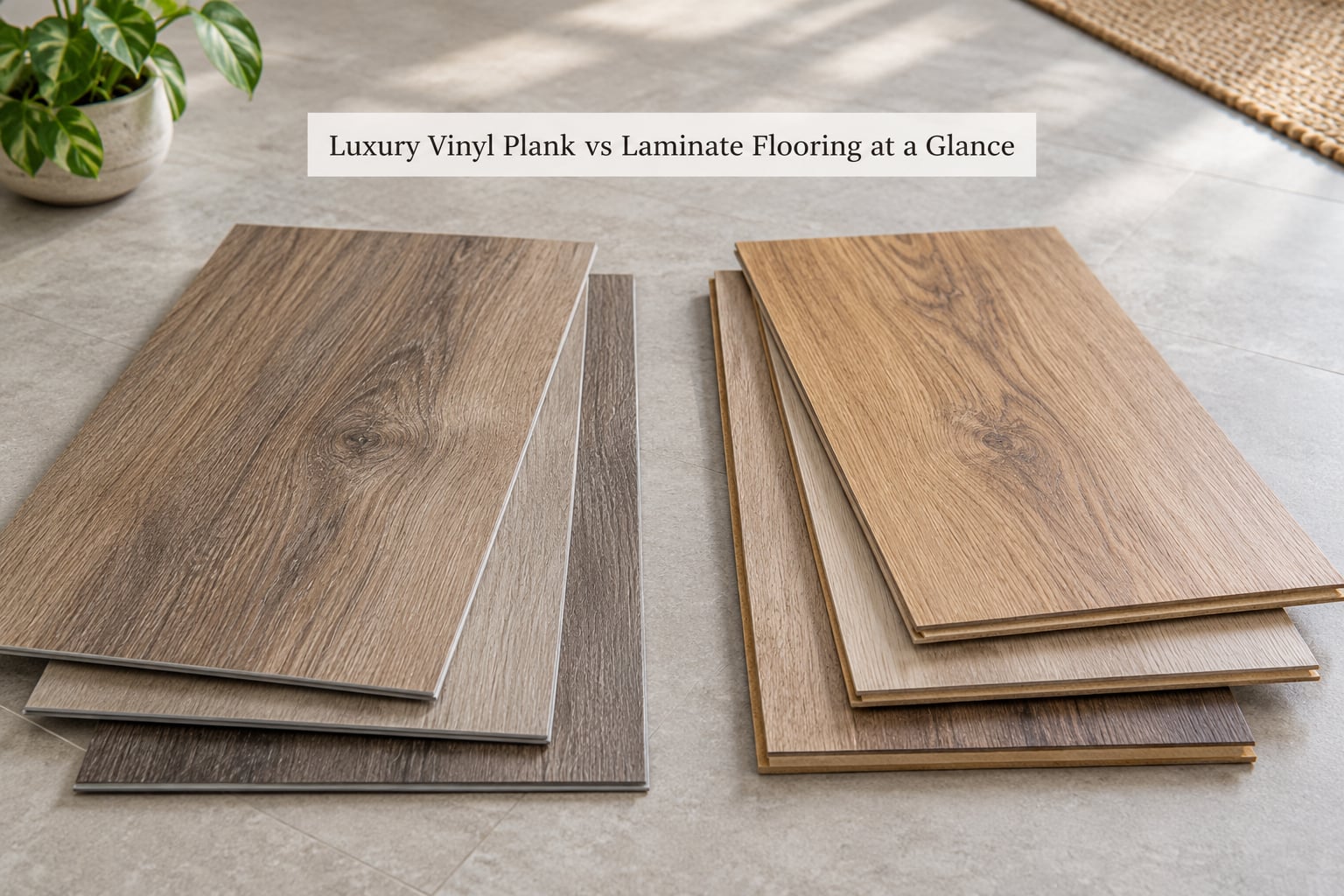
If you only remember one line from this guide: LVP wins where water lives, and laminate wins where you want a firm, wood-like floor at a lower material cost. Everything below is the detail behind that line.
| Attribute | Luxury Vinyl Plank | Laminate |
|---|---|---|
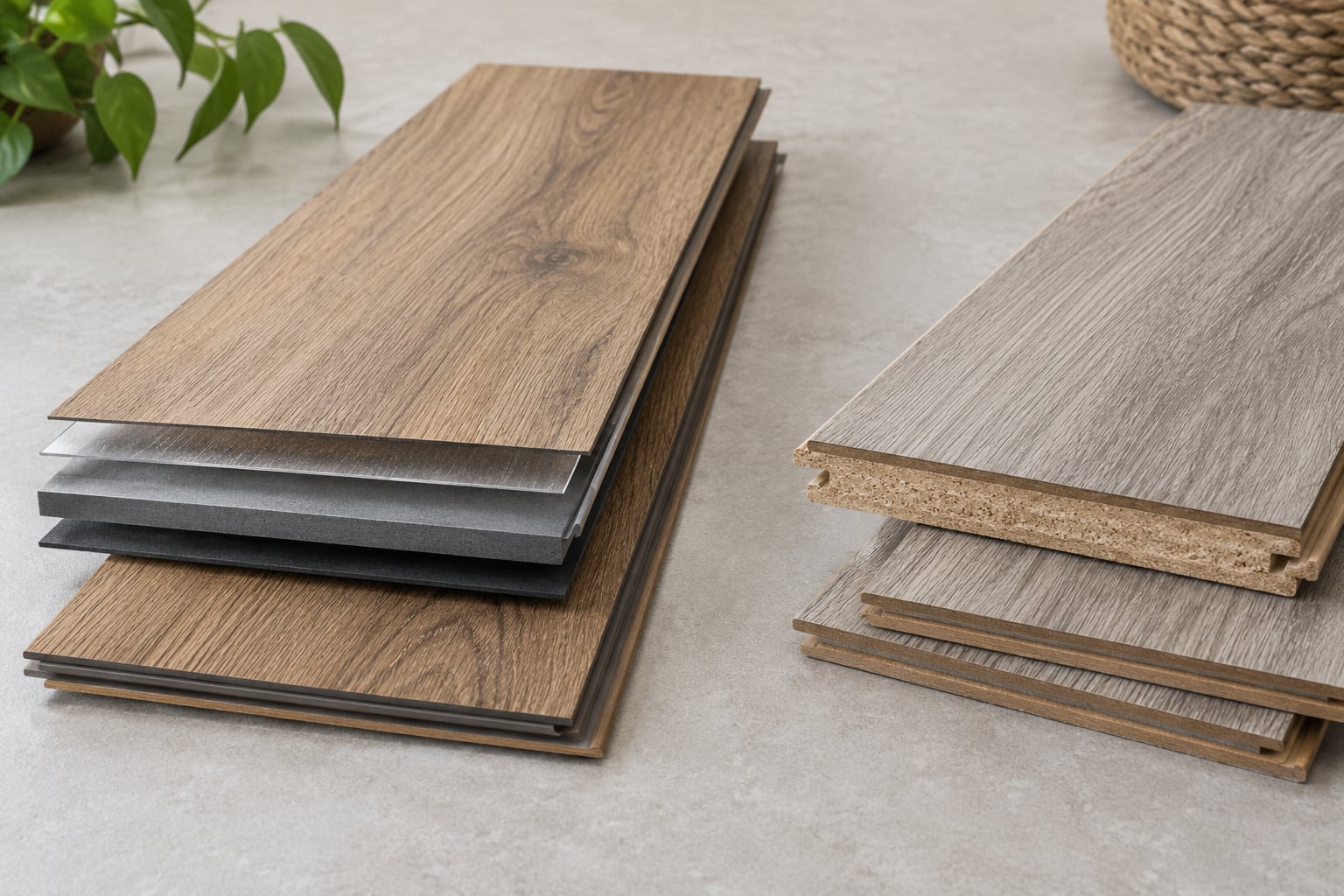
| Core material | PVC or a rigid composite such as SPC (stone plastic composite) or WPC | Compressed wood fiber, usually HDF high-density fiberboard |
| Water behaviour | Waterproof through the surface and the seams; standing water is survivable | Water-resistant only; water reaching the seams causes swelling and bubbling |
| Scratch resistance | Good, but thin or soft-wear-layer LVP shows marks under pet claws | Strong; a hard wear layer rated AC4 or AC5 resists claws well |
| Dent resistance | Soft core dents permanently under refrigerators and office chairs | Hard core resists indentation, though edges can chip |
| Comfort and warmth | Warmer, quieter, more forgiving underfoot | Firmer, cooler, more like solid wood to walk on |
| Wood-grain realism | Very convincing at mid and higher grades; softer sheen | Often the most realistic wood texture, especially matte finishes |
| Installation | Click-lock floating, usually with an attached pad | Click-lock floating over a required underlayment, or glue-down |
| Maintenance | Damp mop only; no steam, no standing water | Damp mop; keep seams dry and vacuum grit promptly |
| Repairability | Individual planks lift and swap cleanly | Planks swap too, but a swollen core may not drop back in |
| Typical cost position | Mid-range material cost, higher install line for wet-room prep | Lower material cost per square foot, similar install labour |
| Best rooms | Kitchens, bathrooms, basements, laundry, entryways, rentals | Living rooms, bedrooms, home offices, dry halls |
How Luxury Vinyl Plank vs Laminate Flooring Compares in Appearance
Laminate usually wins the realism contest, and it is worth admitting. Its decorative paper layer is a high-resolution print of a scanned wood surface, finished under a clear wear layer, so the grain sits inside the plank rather than on top of it. Matte and low-sheen laminate reads as real wood from across a room.
LVP prints its wood-grain image on top of a synthetic layer, which is why premium planks can look slightly flatter and more uniform than laminate. That sameness cuts both ways: consistent planks hide a single bad board, but they also reveal a repeating pattern faster.
Check pattern repeat before you commit. Six identical planks in a row is obvious in a sunlit living room, and narrow plank widths hide it better than wide ones. Look at the bevel detail too, since a clean micro-bevel reads as more expensive than a rough one.
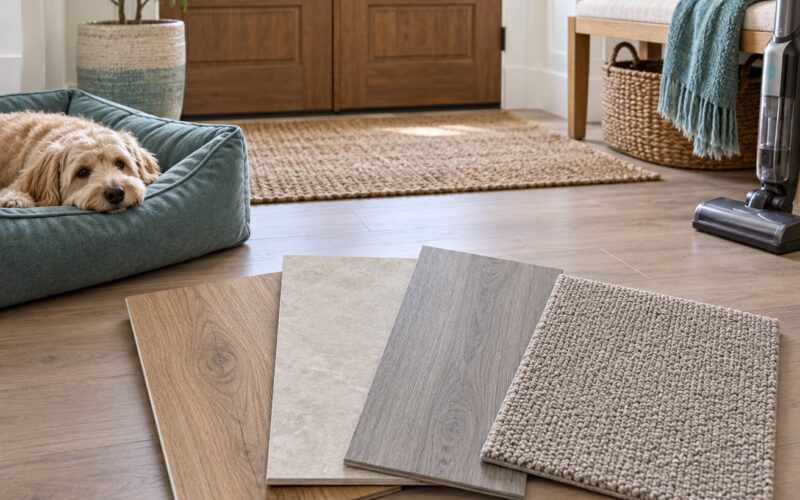
Judge samples in the room’s own light. Put the swatch on the floor overnight and check it in morning sun and again under a lamp in the evening, since most of the disappointment with wood-look floors happens because a sample was judged under showroom lighting.
Water Resistance and Moisture Safety
Water is the single biggest practical difference between these floors. LVP is waterproof in the way that matters to a homeowner: its synthetic core and its locking seams do not absorb moisture, so a spilled dishwasher, a wet dog or a flooded basement wash-and-dry scenario does not ruin the plank.
Laminate is water-resistant, not waterproof. Its wood-fiber core is compressed paper, and if that core takes on water the plank swells, then bubbles or delaminates, and that damage cannot be sanded out or filled. Once swelling starts, the plank often has to be removed.
That is why most manufacturers limit laminate warranties to specific exposure times, and why the warranty language matters more than the sales sheet. Read the fine print on standing water, wet rooms, and installation method before you buy.
On a basement slab, both materials need the same first step: test the concrete for moisture before anything goes down. Tape a plastic sheet to the floor, leave it 24 hours, then check for condensation. If you see moisture, deal with the slab before you choose a flooring material.
Waterproof laminate exists. It uses sealed edges and water-resistant cores that buy you time, but it still fails differently from LVP, usually at the seam first. In a full bathroom or a basement that floods, treat it as a second choice.
Durability, Scratch Resistance, and Lifespan
Laminate is the harder floor of the two, and it holds up better against claw scratches, grit and scuffs. That is a spec you can verify. Look for the wear layer thickness, expressed in mils (a mil is one thousandth of an inch), and the AC abrasion rating.
| Spec | What it means | Typical use |
|---|---|---|
| Wear layer in mils | The clear top layer that takes the abrasion; thicker is tougher | Under 12 mil is thin for a busy house; 20 mil and up is residential heavy duty |
| AC3 | Moderate abrasion grade | Bedrooms, guest rooms, low-traffic spaces |
| AC4 | Heavy residential grade | Kitchens, hallways, living rooms, pet households |
| AC5 | Commercial grade abrasion | Busy entryways, rentals, claw-heavy homes |
| Plank thickness | Overall rigidity; affects stability and dent response | 5 mm is entry, 6.5 mm and above is a more stable floor |
LVP’s advantage is not scratch resistance, it is impact and water tolerance. A dropped pan, a dragged appliance or a spilled cup is a non-event. Its weakness is indentation, because a softer core dents permanently under a refrigerator, a cabinet toe kick or a rolling office chair.
Users on reddit.com/r/Flooring report the honest version of both failure modes: budget LVP showing scratches after two years with a dog in the house, and laminate chipping at the plank edges rather than scratching flat. A chip along an edge is easier to live with than a scratch across the face.
For service life, expect quality LVP and mid-grade laminate to both sit in the 15 to 25 year range in normal residential use. Installation quality moves that number more than brand does, so read the installation warranty as carefully as the wear warranty.
Use furniture pads or coasters under every heavy leg, and lift rather than drag appliances. A lifted refrigerator leaves no mark; a dragged one can permanently indent vinyl.
Comfort, Noise, and Underfloor Heating
Comfort is where LVP quietly wins. It is warmer to the touch, more forgiving underfoot and noticeably quieter, because the vinyl core plus its attached pad absorbs impact that laminate passes straight through to the slab.
In a condo or a building with sound rules, that difference can matter more than appearance. Homeowners on reddit.com/r/HomeImprovement describe replacing glued-down engineered wood after noise complaints from a downstairs neighbour, and the softer synthetic floor is the usual answer.
Both materials are floating floors, so the IIC (impact insulation class) rating is a pad decision as much as a product decision. Ask for the floor-plus-underlayment combination rating rather than the bare plank rating, and check your building’s requirement before you order.
For underfloor heating, follow the manufacturer’s numbers on maximum surface temperature and heating system type. Warm water systems generally work well with both materials when those limits are respected; thick electric heating mats are the case to check carefully, since some vinyl cores and adhesives are not rated for them.
Laminate over hydronic heat has a long track record. LVP over heat runs warmer, which people like in a bathroom, but the printed layer can fade faster over a heat source, so pick a product with a stated UV and heat rating.
Installation and DIY Difficulty
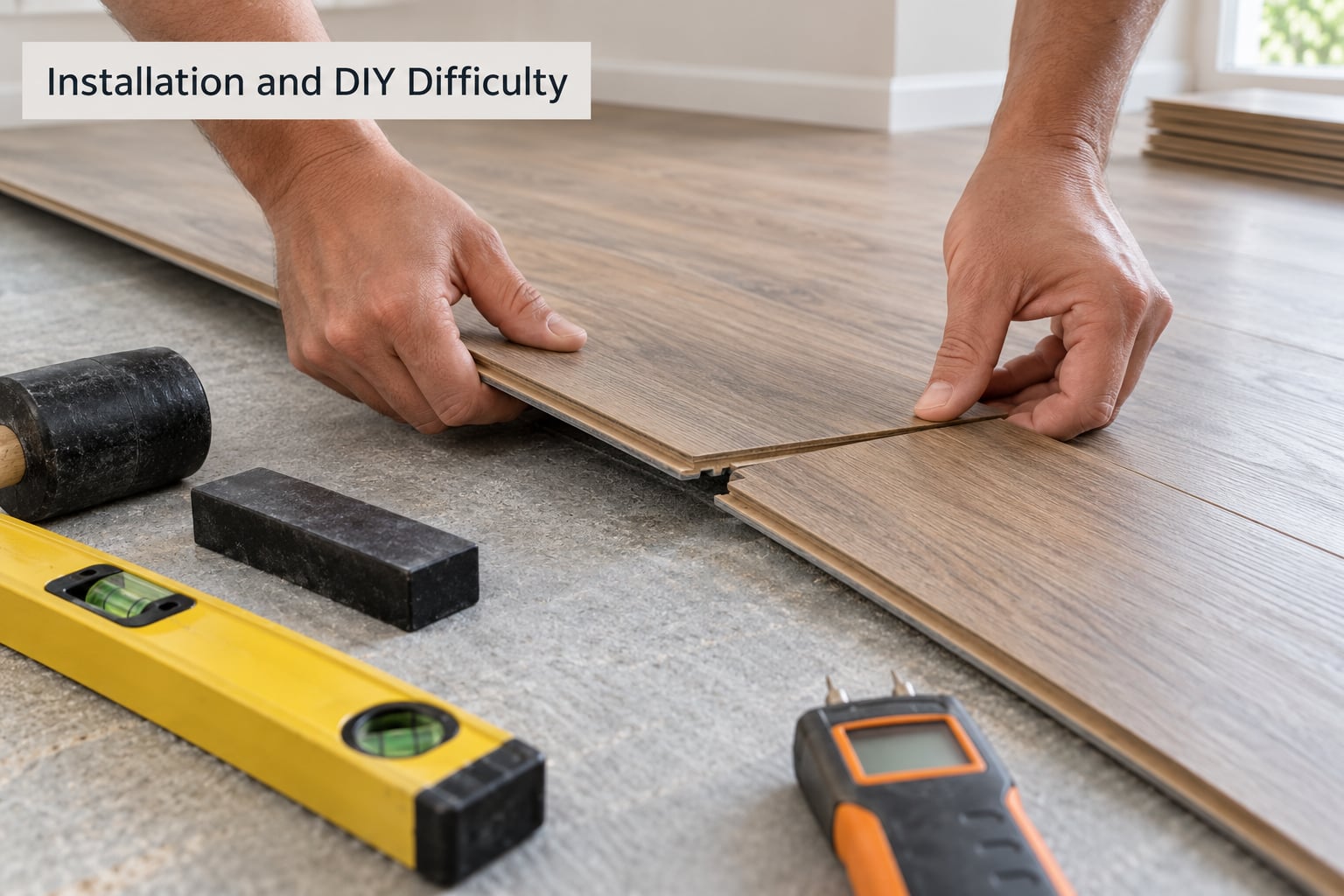
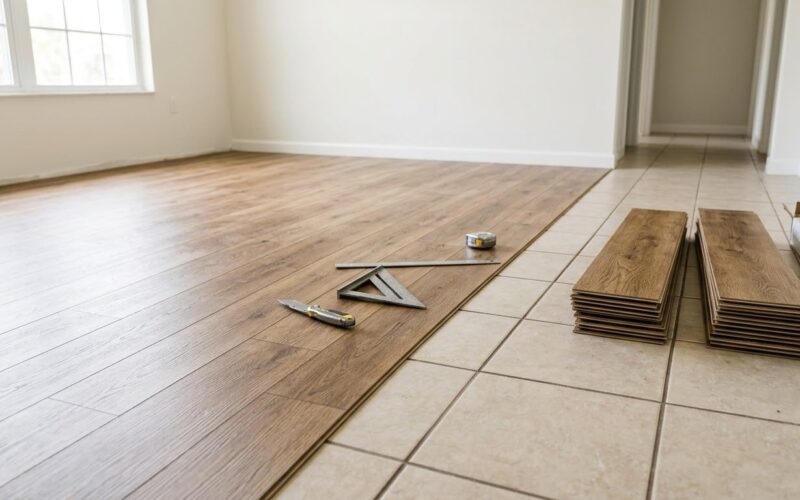
Both floors are click-lock floating systems, and both are genuinely within reach of a competent DIYer in a rectangular room. Plank size helps: longer and wider planks cover more area per row and go down faster, which is why LVP often feels the quicker job.
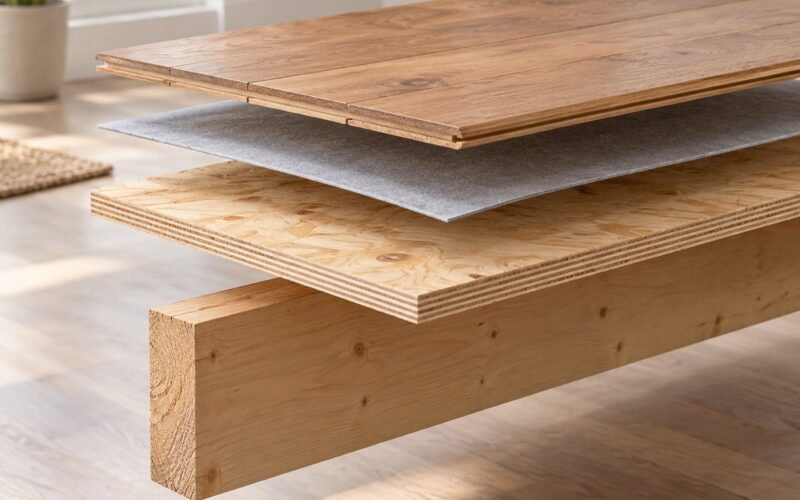
The differences are in the prep. LVP planks usually arrive with an attached pad, so the job is subflatness, a moisture check on concrete, and planning your expansion gaps. Laminate almost always needs a separate underlayment, which is an extra material line and an extra trip to the store.
Uneven subfloors defeat both materials. Neither will bridge a low spot, and a floating floor over a dip will rock and click. Check flatness with a straightedge, and repair or level before you open a box rather than after.
Wet rooms are where DIY judgement matters most. Bathrooms and basements often need a moisture-mitigation membrane or a vapor barrier beneath the floor, and several manufacturers void the warranty if that step is skipped or if the wrong installation method is used.
Hire a pro when the floor goes over an existing tile, when there are many transitions and cuts around cabinets, when the room is wet, or when the subfloor needs levelling. You will pay labour either way, and a bad prep is the expensive failure.
Maintenance, Cleaning, and Repairs
Neither floor needs wax or polish, and neither can be refinished. Sanding laminate destroys the wear layer, and you cannot sand a printed vinyl layer either, which is exactly why spare planks matter.
For routine cleaning, vacuum or sweep grit first, because grit underfoot is what scratches a surface. Then damp mop with a pH-neutral cleaner the manufacturer approves. Keep water off laminate seams, and skip the steam mop on both: it forces moisture into seams and can lift the locking edges.
Stain removal is easy on LVP, since most spills sit on the surface. On laminate, wipe promptly, because a stain that soaks into the decorative layer can be permanent.
Individual plank replacement works with both. Lift the surrounding planks, unclick the damaged one, drop in the new one. A warning sign of age is when replacement planks no longer match in tone, which is another argument for buying 5 to 10 percent extra material when you order.
Neither floor can be restored from deep damage. That ceiling is the reason many people with hard-wearing laminate in dry rooms still feel comfortable long after installing it.
Installation Cost and Value Over Time
Cost is where the comparison gets fuzzy, because the material price is only one line. The honest answer is that LVP usually sits at a mid-range material price, laminate usually sits below it, and the installed totals get closer than most buyers expect once preparation is counted.
What actually drives the total on either material:
- Quality grade — wear layer mils, core type and plank thickness. LVP at 20 mil with an SPC core costs more than entry LVP.
- Underlayment — laminate usually needs a separate roll, while LVP often carries a pad. Moisture membranes for wet rooms add to either total.
- Subfloor preparation — levelling, patching, or removing an old floor is often the biggest surprise line.
- Trim and transitions — reducers, T-moulds and stair nosing add up across a whole-home job.
- Removal and disposal — tearing up an existing floor is labour-heavy and is quoted separately by many crews.
- Waste factor — add 5 to 10 percent extra for cuts and for future matching replacement.
- Labour — similar per square foot for both, with wet rooms costing more on either material.
On value over a seven to ten year horizon, neither material wins on resale automatically. Both read as synthetic to an appraiser, and both look fine if they still look new at the time of sale. The floor that still looks unworn in year ten is the better investment, which usually means matching wear layer to traffic rather than buying the thinnest plank on sale.
One more cost consideration: if your floor gets wet, LVP survives the incident and the money you spent is intact. Laminate that swells has to be replaced, and the replacement is rarely covered by a warranty that excludes standing water.
Which Should You Choose?
Choose LVP if any of these are true about your home:
- Any room gets standing water, wet shoes, pet accidents or regular spills: kitchens, bathrooms, laundry rooms, mudrooms.
- You have a basement or slab with seasonal moisture and you want a floor that tolerates a leak.
- Warmth and quiet underfoot matter more than a crisp wood imitation, such as in a bedroom or a condo.
- You want a floor that installs fast, with fewer material lines to buy and less mess on the floor.
- You are renovating a rental and want a surface that wipes clean.
Choose laminate if any of these are true:
- Your rooms are dry: living rooms, bedrooms, home offices, upstairs halls.
- Wood-grain realism is your top priority, especially in matte and hand-scraped looks.
- Pet claws are the main wear concern and you want an AC4 or AC5 rated wear layer.
- You want to keep the lowest material cost per square foot on a large dry area.
- You are experienced with click-lock floating floors and want a stable, hard surface.
Where neither is the best fit: over radiant heat systems with limits the product does not meet, on a slab with unresolved moisture, in a room with heavy dragged furniture and no plan for pads, or anywhere you can install genuine engineered hardwood instead.
Frequently Asked Questions
Is luxury vinyl plank better than laminate for pets?
For spills, accidents and general mess, LVP is clearly better: it is waterproof and wipes clean. For claws, laminate with an AC4 or AC5 rated wear layer resists scratches better than most LVP, because vinyl is softer. Budget LVP with a thin wear layer will show scratches in a busy dog household. Match the wear layer to the animal, not the other way round.
What flooring certifications should homeowners look for?
Look for FloorScore certification for indoor air quality, and GREENGUARD or GREENGUARD Gold for low chemical emissions. On the durability side, ask for the wear layer thickness in mils and the AC abrasion rating, then confirm the installation method and water-exposure terms of the warranty. Certification without a readable warranty usually means the coverage is narrower than the marketing suggests.
Can I install luxury vinyl plank or laminate over an uneven subfloor?
Neither material bridges a dip or a hollow spot. Floating click-lock floors need a flat, firm subfloor within the manufacturer’s tolerance, checked with a straightedge across the room and along the diagonals. Repair high spots and low areas first, or level the floor. Many manufacturers void the warranty on an out-of-spec subfloor, which makes a levelling day cheaper than a re-install.
Does laminate or luxury vinyl plank work better with underfloor heating?
Both work over warm water radiant heat when you stay inside the manufacturer’s surface temperature limit. LVP feels warmer and is often preferred in a bathroom, though the printed layer can fade faster next to a heat source. Thick electric heating mats need careful checking, since some vinyl cores and adhesives are not rated for them. Always check the product’s stated limits.
Can you replace one damaged plank without replacing the whole floor?
Yes, with both materials, as long as the floor was installed floating and the damage is limited to one or two planks. Lift the surrounding planks, unclick the damaged board, and drop in a matching one. A swollen laminate core is the usual exception, because it will not drop back into the locking groove. Order 5 to 10 percent spare material at install time so the tone still matches.
What samples and measurements should I take before ordering flooring?
Measure the room length and width in at least two places, then add about 10 percent for cuts and future repair. Bring the floor sample into the room and check it in morning light, evening light and against your trim and cabinets. Note the plank width and pattern repeat, since a visible repeat is the most common post-install complaint.
The Bottom Line
Luxury vinyl plank vs laminate flooring comes down to the room, not the label. Water anywhere in the equation, plus comfort and quiet, points to LVP. Dry rooms, maximum wood realism and the lowest material cost point to laminate.
Before you order, do three things: measure the room and add your waste, judge the samples in the room’s own light, and read the warranty wording on water exposure and installation method. If you tell me the rooms, whether you have pets, and how much you can do yourself, I can narrow it to one material.