The best flooring for homes with pets is rigid-core luxury vinyl plank with a wear layer of 20 mil or thicker. It has a waterproof core that shrugs off urine and spills, a hard top layer that resists claws, and a matte or textured surface that keeps paws from sliding.
That combination is why it keeps coming up at the top of installer recommendations, and it is the material I would put down in most houses with dogs or cats. Porcelain tile is tougher still, and AC4 or AC5 waterproof laminate is a reasonable second choice when you want a wood look for less money.
Pet-friendly is not one property, though. It is three layers doing three jobs: a hard surface that takes a claw, a sealed core that stops liquid reaching the subfloor, and a finish with enough grip for an animal that lands at a run. A floor can score well on one and fail badly on the others, which is why comparing materials by a single “pet-proof” label wastes your time.
This guide compares the leading materials on exactly those layers, then walks through how to pick one room by room and how to keep it looking decent with a dog or cat in the house.
Table of Contents
- Best Flooring for Homes With Pets at a Glance
- What Makes Flooring Pet-Friendly?
- The wear layer is the claw barrier
- The core decides how accidents end
- The finish is the traction layer
- The things nobody measures still matter
- Which Flooring Is Most Scratch-Resistant?
- Vinyl: the answer depends entirely on mils
- Wood and bamboo: honest about the trade-off
- Carpet: the only material claws can actually catch
- Luxury Vinyl vs. Other Pet-Friendly Flooring
- Luxury vinyl vs. laminate
- Luxury vinyl vs. tile
- Luxury vinyl vs. carpet
- Luxury vinyl vs. hardwood
- Sheet vinyl, cork and sealed concrete
- How to Choose Flooring for Dogs, Cats and Busy Homes
- Cats deserve their own shortlist
- Senior and arthritic pets change the priority
- Puppies and housebreaking
- Match the material to the room
- Subfloor, install and the pet door
- How to Care for Flooring in a Pet Household
- Clean accidents the same day, with an enzyme product
- Keep water where it belongs
- Trim nails and use protection on the bad days
- Use the right mop, and the right sheen
- Frequently Asked Questions
- What is the best flooring for homes with dogs and cats?
- Is luxury vinyl flooring genuinely waterproof for pets?
- What flooring is best for preventing pet odors?
- Can I install pet-friendly flooring myself?
- What flooring is best for a room where pets have accidents?
- Final Flooring Recommendation
Best Flooring for Homes With Pets at a Glance
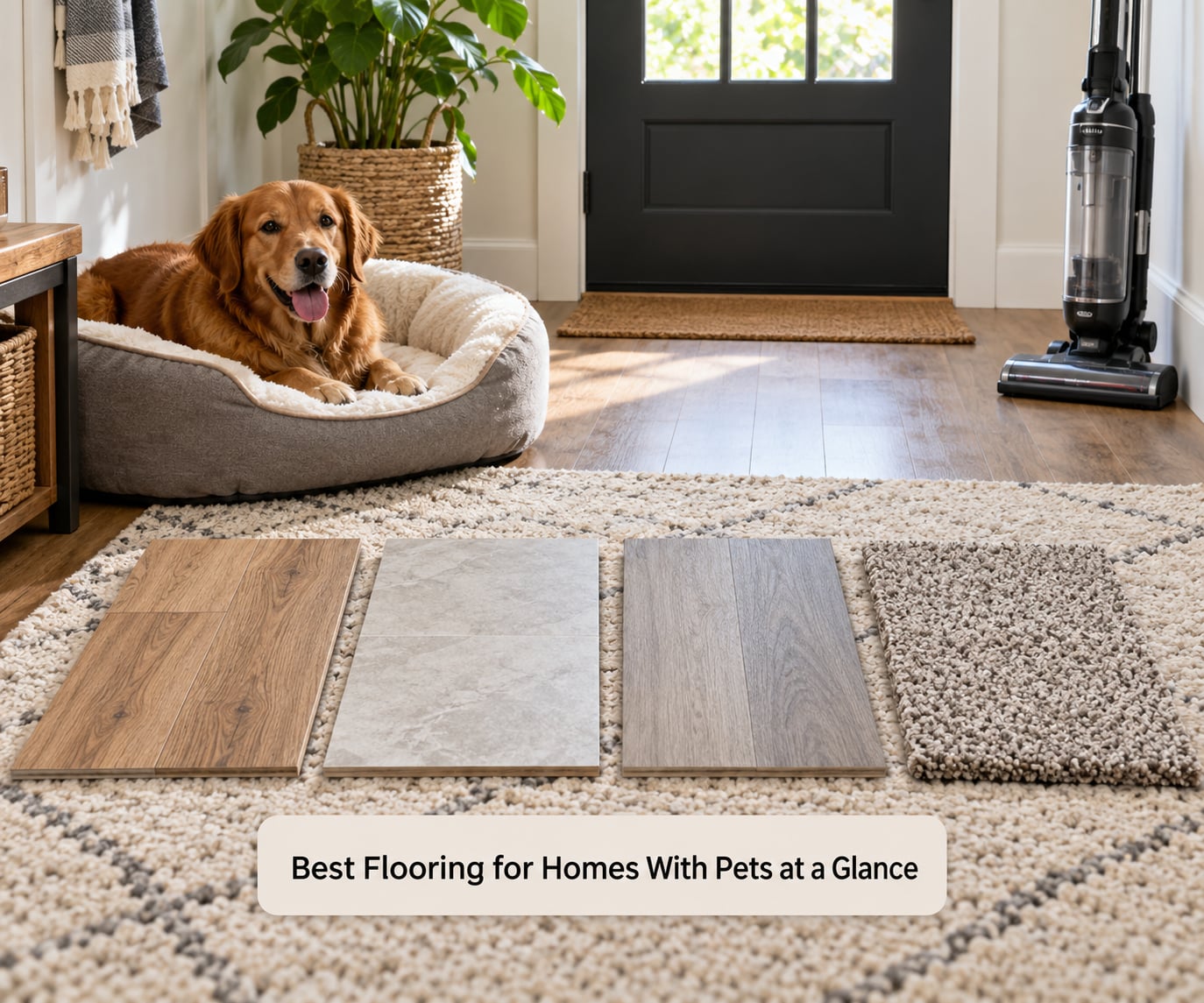
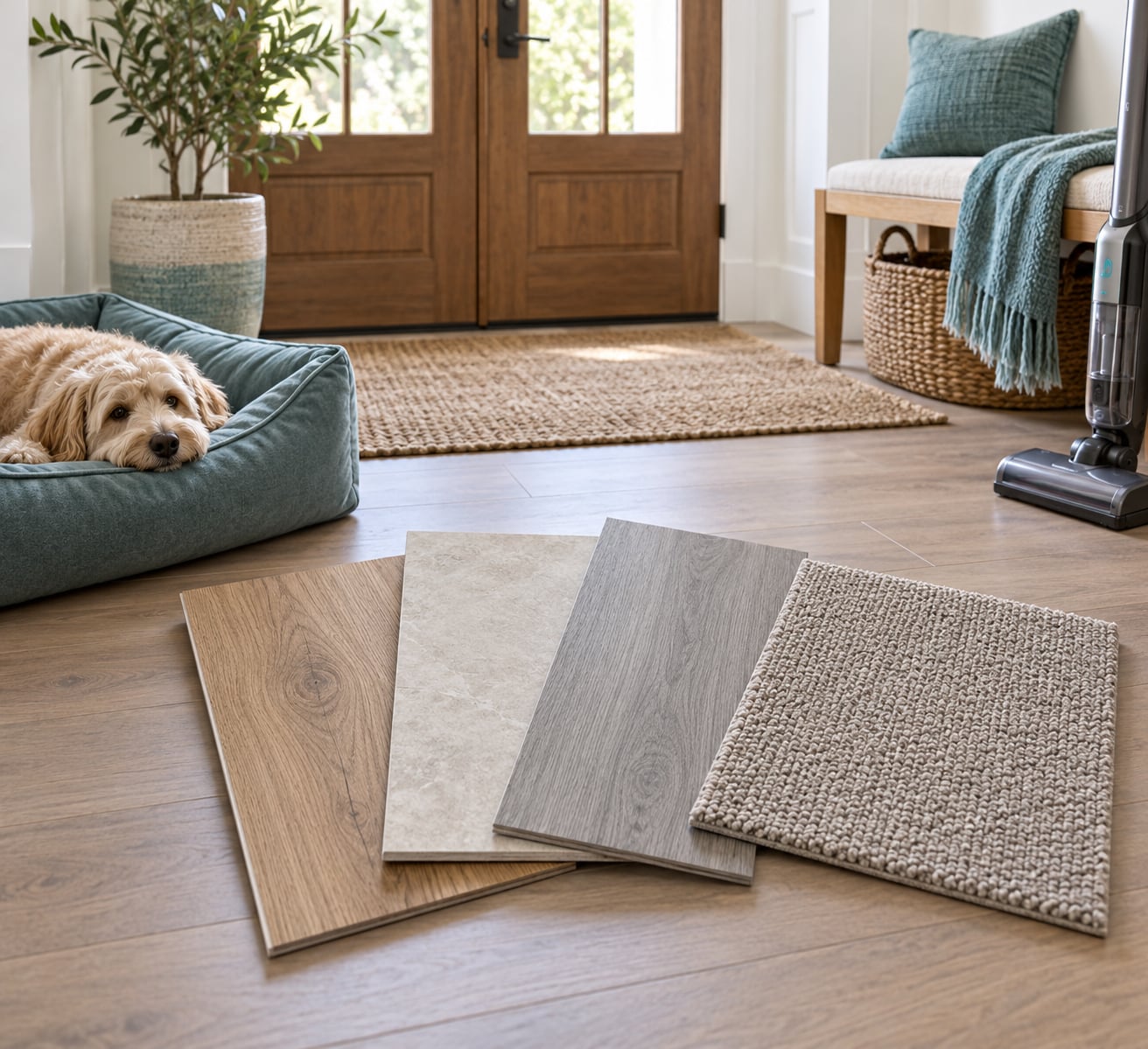
Rigid-core luxury vinyl plank leads on the combination of claw resistance, water resistance and traction. Porcelain tile is the hardest surface but the coldest and least forgiving to a slipping dog. Here is how the main options compare.
| Material | Claw resistance | Water and urine | Cleanability | Comfort underfoot | Noise | Maintenance |
|---|---|---|---|---|---|---|
| Rigid-core luxury vinyl plank (LVP) | Good with a 20 mil or thicker wear layer | Waterproof core | Excellent, damp mop and disinfect | Soft, cool, forgiving on joints | Quiet | Low |
| Porcelain or ceramic tile | Excellent | Excellent once grout is sealed | Excellent, but grout lines trap dirt | Hard and cold | Loud | Low |
| Waterproof laminate, AC4 or AC5 | Good | Water-resistant core, seams can swell | Good, damp mop only | Firm, moderate cushioning | Quiet | Low to medium |
| Engineered hardwood | Fair, shows nail marks fast | Poor, absorbs at the seams | Good with a dry or barely damp mop | Warm and comfortable | Quiet | Medium, may need refinishing |
| Sheet vinyl | Fair on cheap goods | Good, no seams to leak | Very good | Soft, thin underfoot | Quiet | Low, but it dents and tears |
| Low-pile carpet or carpet tile | Poor, claws snag and pull | Poor, odour sinks in | Fair, needs hot water extraction | Warmest option | Absorbs sound | High, vacuum often |
| Cork | Poor, dents and scuffs | Moderate, needs sealing | Good | Very cushioned | Quiet | Medium, reseal periodically |
| Sealed concrete | Excellent | Excellent | Very good | Hard, cold | Loud | Low, reseal every few years |
Read the table as a map rather than a verdict. A large, clumsy dog who runs at full speed across a hallway is a traction problem first and a scratch problem second, which pushes you toward textured vinyl over polished tile.
What Makes Flooring Pet-Friendly?
Pet-friendly flooring has three measurable parts, and you can check all three on a spec sheet or a product page before you ever visit a showroom.
The wear layer is the claw barrier
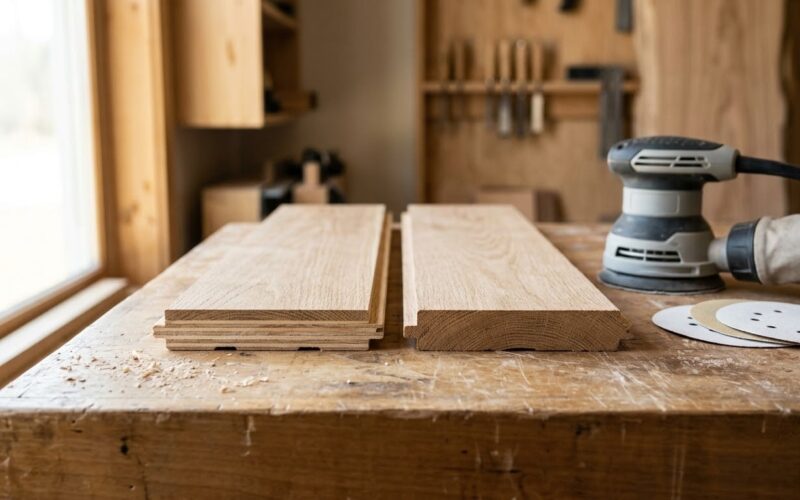
The wear layer is the clear protective top surface of vinyl and laminate, measured in mils, or thousandths of an inch. A 6 mil layer is thin enough to scratch through in a busy house with no effort. For homes with dogs, 20 mil or thicker is the practical floor, and higher is better if the budget stretches.
Laminate uses a different scale, the abrasion class rating from AC1 to AC6, which measures how much foot traffic the surface takes before it wears through. AC4 is the usual residential pick, and AC5 is the safe choice for large, active dogs.
The core decides how accidents end
Water resistance is a spectrum, not a yes or no. Rigid-core vinyl has a stone polymer composite core that is genuinely waterproof, which is why installers rank it first for housebreaking. Waterproof laminate resists spills but can swell permanently at the seams if standing liquid gets in. Hardwood, bamboo and cork absorb, stain and swell, and no amount of careful mopping changes that.
The finish is the traction layer
A glossy or polished surface is the most common mistake in pet households, because it looks clean and shows every scratch. Matte and textured surfaces hide minor marks and, more importantly, give a paw something to grip. Tile slip resistance is measured as the dynamic coefficient of friction, or DCOF, and you want a textured porcelain rather than a polished one.
Owners on r/Flooring and r/k9sports frequently describe older dogs slipping on smooth floors and blaming the dog for it. That is a floor specification, not a training issue.
The things nobody measures still matter
Noise, comfort underfoot and the cost of fixing a damaged section are just as real in daily life. Hard floors echo and transmit impact noise to neighbours, which matters in apartments. Rigid-core vinyl and cork are the quiet options. Area rugs fix warmth and comfort on tile, though you will need a rug that holds up to claws and can be cleaned.
Which Flooring Is Most Scratch-Resistant?
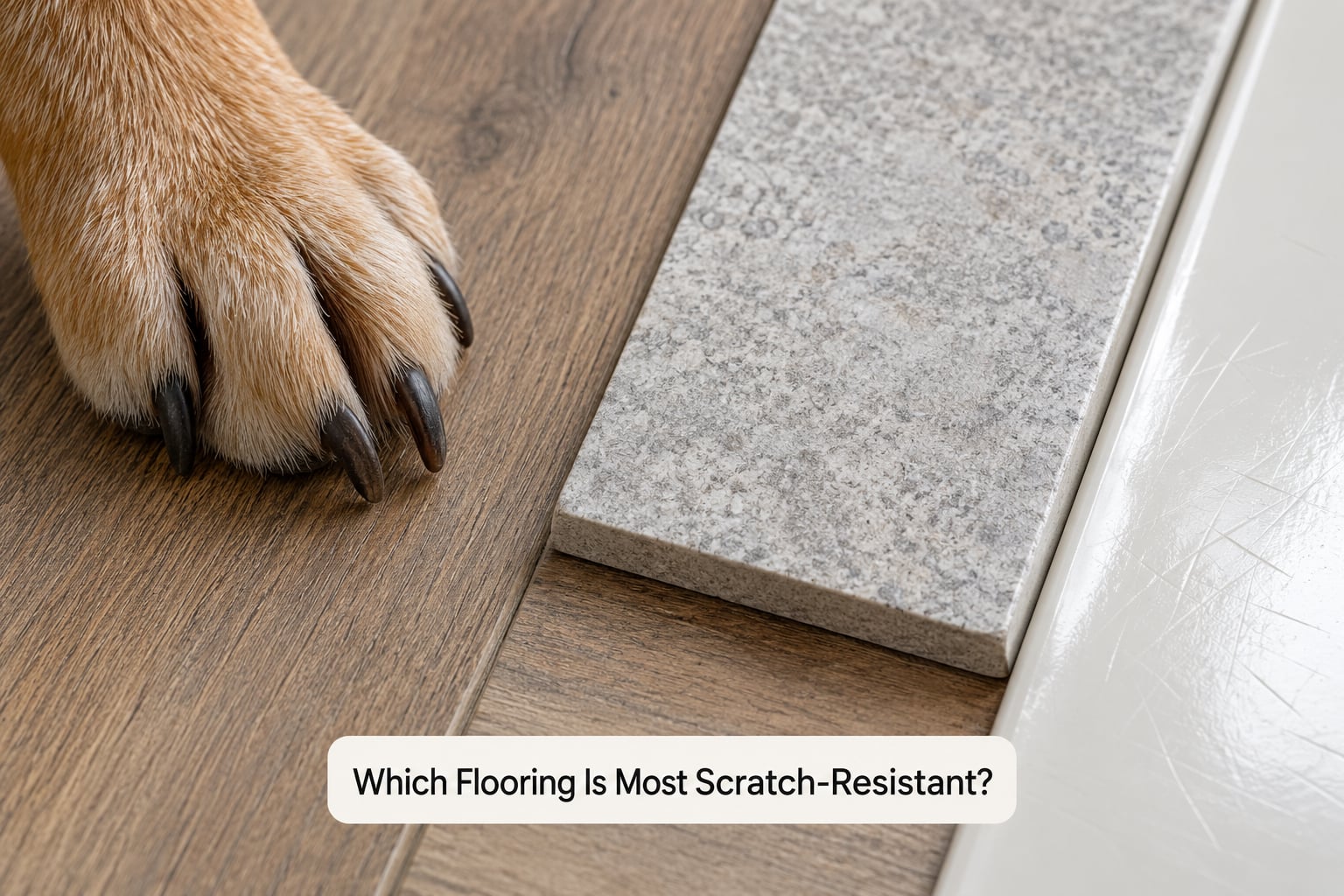
The most scratch-resistant flooring for dogs is porcelain or ceramic tile, followed by sealed concrete, then AC5 laminate and 20 mil luxury vinyl plank. Among natural materials, dense domestic hardwoods such as hickory and hard maple hold up best, and strand-woven bamboo rates around 5,000 on the Janka hardness scale, harder than maple.
Tile wins because nothing a dog does to a floor marks it. Two dogs on tile for five years looks like two dogs on tile for five years. The catch is everything around the tile: grout lines discolor, collect hair and hold odour, and a dropped kibble becomes a projectile on a hard surface.
Sealed concrete sits close behind for scratch resistance and loses nothing on water, but it is unforgiving on joints and needs resealing every few years to keep stains out.
Vinyl: the answer depends entirely on mils
Can dog’s nails scratch vinyl plank flooring? Yes, if the wear layer is thin. LVP with a 20 mil or thicker layer and a rigid core resists claws well, and the surface will dull rather than gouge. Cheap 6 mil sheet and plank vinyl is a different product entirely, and owners regularly discover that after installation rather than before.
Will dog claws scratch LVP flooring? Owners on r/DIY report waterproof laminate with a high AC rating holding up for seven years in homes with two large dogs. An r/FlooringShopOwners thread on homes with pets and kids landed on high-quality LVP as the top pick for scratch resistance, waterproofing and low maintenance, and an r/CALI_Floors thread reached the same conclusion for style variety.
The other forum consensus worth knowing: plenty of people insist LVP gets destroyed by pets, and that is usually a wear-layer story or a glossy-finish story rather than a material story. Matte rigid-core plank is a different product from a thin, shiny imitation of hardwood.
Wood and bamboo: honest about the trade-off
Engineered hardwood is warm, quiet and the only option that can be refinished, which matters if you plan to keep the floor fifteen years. It also shows nail marks within months, and a distressed finish hides minor claw marks better than a smooth one. A flooring-industry source recommends dense species such as hickory, hard maple and oak partly for that reason.
Solid hardwood fares no better with a digging dog. Bamboo is denser and harder, but it behaves like wood around water, so an accident left overnight is a swollen board.
Carpet: the only material claws can actually catch
Loop pile carpet gives a paw something to grip, which is why an r/k9sports discussion favours low-pile carpet tile over carpet with underlay for large and working dogs. Against that, claws snag loops and pull the pile, urine odour settles into the backing, and accidents are the hardest thing to fully remediate. Carpet tile is the compromise because a damaged piece lifts out and gets replaced.
Luxury Vinyl vs. Other Pet-Friendly Flooring
Rigid-core LVP beats the alternatives for most pet households, and the reason is a single word: waterproof. Here is how it holds up against the runners-up.
Luxury vinyl vs. laminate
Is LVP or laminate better with dogs? LVP, on water. Both handle claws well if you buy the right grade, but laminate’s core and its click-lock seams can take on standing water and stay swollen. LVP’s core will not. LVP also sits softer and quieter, and it tolerates a wet mop. Laminate wins on price and on a warmer, more convincing wood look.
Luxury vinyl vs. tile
Tile is harder, longer-lasting and completely indifferent to urine. Vinyl is warmer, quieter, softer on older joints, and it does not need a professional to install. The trade is durability for daily comfort. If you have a large, heavy, clumsy dog, tile’s slip resistance has to be verified carefully.
Luxury vinyl vs. carpet
There is no contest on accidents, digging dogs or odour. Carpet wins only on warmth, quiet and traction for an arthritic pet, and you can get most of that from a washable area rug over vinyl.
Luxury vinyl vs. hardwood
Vinyl wins on water, claws and cleaning. Hardwood wins on refinishing, resale and the way it looks in daylight. If your household is quiet, low on accidents and you plan to stay a long time, engineered hardwood is defensible. Otherwise the repairs you will make are cheaper on vinyl.
Sheet vinyl, cork and sealed concrete
Sheet vinyl has no seams for liquid to reach, which is its whole argument, but it dents under a dropped bowl and tears under a digging dog. Cork is the comfort king and a poor choice for claws or spills unless it is well sealed. Sealed concrete is a garage-floor material that works well in a finished basement or mudroom, and rarely elsewhere.
How to Choose Flooring for Dogs, Cats and Busy Homes
Start with the room where the damage concentrates, then the animal, then the money. Most wrong choices come from picking a floor for the whole house based on how the living room looks.
Cats deserve their own shortlist
No competitor guide covers this properly, but cats are half the problem. Retractable claws are the issue: they leave surface scratches that never gouge, and a clawed cat will find any seam or soft edge worth working at. A matte finish hides those marks far better than gloss. Position scratching posts away from walls and door frames so the cat is not rehearsing on your flooring, and put a washable mat in front of the litter box, which is where accidents actually start.
Cork and carpet are the two worst choices in a cat household with a scratching habit, and low-pile carpet tile is the least bad carpet answer because damaged sections lift out.
Senior and arthritic pets change the priority
Traction outranks scratch resistance when a dog is older. A textured or matte rigid-core plank, sealed concrete with a non-slip finish, or cork over hardwood will do more good than a harder surface. Avoid polished tile and any smooth high-gloss plank in the rooms a senior dog uses daily.
Puppies and housebreaking
A waterproof core is the whole game. Puppies are also harder on floors than adult dogs because of the slip-and-slide when they are excited, so texture matters as much here. Order a spare box of the exact lot for future plank replacement, since colour matching a later box is close to impossible.
Match the material to the room
- Mudroom and entryway: rigid-core LVP or sealed concrete. Wet, gritty, tracked-in traffic, no comfort requirement.
- Kitchen: rigid-core LVP, or sheet vinyl if the layout is simple. Water bowls and spills decide this one.
- Bathroom: porcelain tile with sealed grout, or LVT.
- Bedroom: AC4 or AC5 laminate, or engineered hardwood in a quiet house. Add a washable rug.
- Basement and playrooms: LVP, or cork if the room is finished and comfort matters. Watch the subfloor for moisture.
- Living room: the one room where looks are allowed to win. LVP or engineered hardwood, plus a rug.
Subfloor, install and the pet door
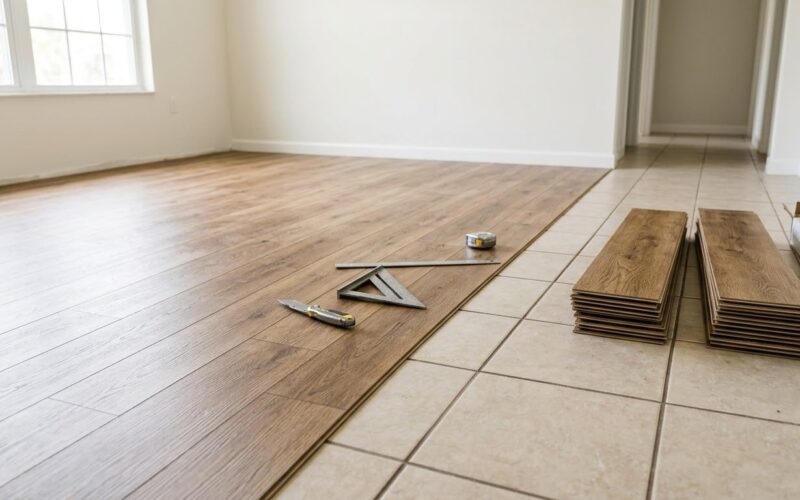
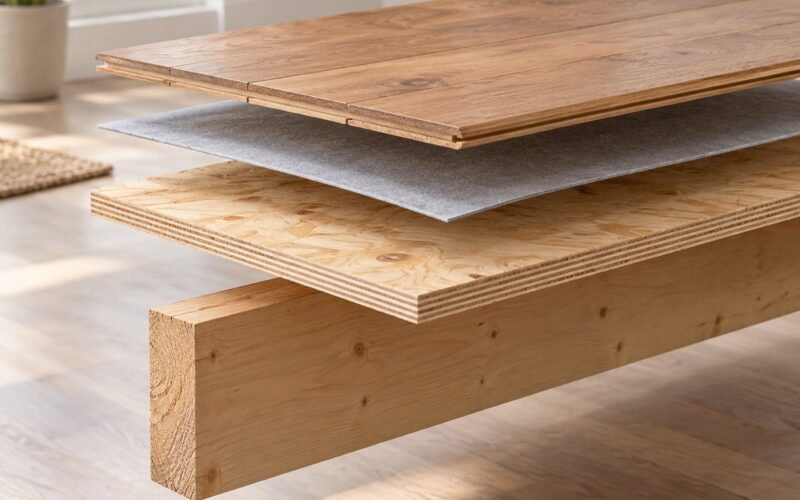
Waterproof flooring still fails if the subfloor is wet, and a basement slab needs a moisture test first. Click-lock plank goes down over most flat subfloors with the right underlayment, so a competent DIYer can handle a rectangular room, but tile and hardwood belong to professionals. Move the pets out for the install, seal every seam and cut a separate piece for the pet-door transition so the threshold does not sit in a puddle path.
How to Care for Flooring in a Pet Household
Even the best floor needs a routine, and the routine matters more than the material in most homes.
Clean accidents the same day, with an enzyme product
Urine odour that never quite leaves usually lives in the seams, under the baseboards and in the subfloor, not in the surface. Blot, then saturate with an enzyme cleaner made for pet urine, leave it for the label time, and dry it with a fan. Bleach and ammonia smell worse and do less. On carpet, saturate the whole backing rather than the patch, and keep a wet/dry extractor for the deep clean.
Keep water where it belongs
A rubber-backed mat under every water bowl catches most spills before they reach the floor. Non-backed mats slide and can be a trip hazard for a dog that is already unsteady. Wipe muddy paws at the door with a mat rated for wet traffic, since grit is what dulls a finish faster than claws are.
Trim nails and use protection on the bad days
Flooring does not fix behaviour, and a dog with long nails will mark a surface no matter how hard it is. Weekly trims, nail caps for one room during recovery periods, and a washable boot for slippery floors are cheap compared with a refinish. Rotating toys away from the floor and trimming nails before a new floor goes down covers most of the rest.
Use the right mop, and the right sheen
Vinyl and laminate take a damp mop and a diluted cleaner, never a soaking one. Hardwood and bamboo stay dry or barely damp, and never get a wet mop or a steam cleaner. Avoid oil soaps on anything you want to keep repairing later, since they leave a film that traps urine smell. Matte finishes need a matte cleaner, and a gloss-restoring product on a matte floor will make it shiny and more slippery in one step.
Frequently Asked Questions
What is the best flooring for homes with dogs and cats?
Rigid-core luxury vinyl plank with a wear layer of 20 mil or thicker is the best all-round choice. The waterproof core handles urine and spills, the thick wear layer resists claws, and a matte or textured finish gives paws traction. Porcelain tile is harder still, and AC4 or AC5 waterproof laminate is the budget-friendly alternative.
Is luxury vinyl flooring genuinely waterproof for pets?
The core is waterproof, which is different from stain resistant. Liquid sits on the surface or in the click-lock seams rather than soaking into the material, so urine wipes up instead of staining. Two caveats matter: cheap thin vinyl is not the same product, and odour still settles into seams, baseboards and the subfloor if you leave an accident sitting.
What flooring is best for preventing pet odors?
A non-absorbent surface with sealed seams, such as rigid-core luxury vinyl plank or porcelain tile with sealed grout, prevents the most odour. Then treat what gets into the edges: enzyme cleaner, same-day cleanup, and attention to baseboards and the subfloor. Carpet and sheet-backed carpet tile are the hardest materials to deodorise once urine has soaked in.
Can I install pet-friendly flooring myself?
Click-lock LVP and laminate are the realistic DIY jobs, especially in rectangular rooms, as long as the subfloor is flat and tested for moisture. Porcelain tile, sheet vinyl and engineered hardwood are professional work. Whatever you install, seal the seams carefully, order a spare box of the same lot, and keep the pets out of the room until the floor has cured and been vacuumed.
What flooring is best for a room where pets have accidents?
Waterproof rigid-core vinyl or porcelain tile, and the choice usually comes down to comfort. Vinyl is quieter, softer and warmer, so most households end up with it in bedrooms and playrooms. Tile is harder to stain and easier to hose down in a laundry or mudroom. Neither removes the need for same-day enzyme cleanup and attention to seams.
Final Flooring Recommendation
For most homes with pets, rigid-core luxury vinyl plank in a matte or textured finish, 20 mil or thicker, is the sensible default. It handles the three failures that actually happen, claws, accidents and slipping, without asking you to give up warmth or noise control.
Pick porcelain tile with sealed grout and a textured surface when durability matters more than comfort, or a basement, laundry or mudroom is the main space. Choose AC4 or AC5 waterproof laminate when the budget is the deciding factor and the household is quiet. Go engineered hardwood only if you are comfortable with nail marks and occasional refinishing, and skip carpet in any room with a digging dog or a litter box.
Before you shop, walk into the room your pet uses most and write down what actually happens there: muddy paws, a water bowl, a scratching post, a slipping corner. That list is the spec sheet, and it will tell you within a minute whether you need a wear layer, a waterproof core or a textured finish.