A lawn care schedule for the whole year is a month-by-month plan of what your lawn actually needs: mowing, watering, fertilizing, core aeration, overseeding, weed control and equipment care. Grass grows with the temperature, not the calendar, so the right window is set by soil temperature, frost dates and how much water the soil holds. This guide gives you the full annual rhythm for both cool-season and warm-season lawns, plus the timing triggers that tell you when to act.
Read it once, note your grass type and hardiness zone, then work down the table as the year unfolds. Most people only need an hour or two a week during peak season and a focused weekend in spring and fall.
Table of Contents
- Lawn Care Schedule for the Whole Year at a Glance
- How Climate and Grass Type Change Your Lawn Care Schedule
- Winter Lawn Care: Inspect, Repair and Plan
- Spring Lawn Care: Prepare, Feed and Repair
- Summer Lawn Care: Water Smart and Mow Wisely
- Fall Lawn Care: Overseed, Feed and Strengthen Roots
- How to Build Your Lawn Care Schedule for the Whole Year
- How to Shift the Calendar by Zone and Frost Date
- When to Hire a Lawn Care Professional
- Frequently Asked Questions
- How often should I mow my lawn during the year?
- What is the best lawn care schedule for the whole year?
- Should I fertilize my lawn in the fall?
- How do I know whether my lawn needs aeration or overseeding?
- Can I maintain a lawn in a hot or dry climate?
- Should I fertilize my lawn before or after aeration?
- Conclusion
Lawn Care Schedule for the Whole Year at a Glance
This is the yearly lawn care calendar in one view. Use it as a checklist and adjust each row for your zone and grass type using the triggers in the last column.
| Month | Cool-season lawns | Warm-season lawns | Timing trigger |
|---|---|---|---|
| January | Service the mower, sharpen blades, drain fuel | Same, plus check irrigation lines | Below 32F freezes most turf growth |
| February | Plan and order seed and fertilizer; soil test | Plan; check for winter damage | Days lengthening, soil still cold |
| March | Core aerate high-traffic areas as soil softens | Hardy Bermuda or rye overseed after final frost | Soil workable at 55F, not saturated |
| April | Pre-emergent herbicide, then begin mowing | Fertilize at green-up, start mowing | Green-up at 60-65F soil temp |
| May | Fertilize, reseed bare patches, mow weekly | Mow weekly, watch for brown patch | First flush of annual ryegrass seed heads |
| June | Mow 5-7 days; mow tall in heat | Mow 5-7 days at 2-3 inches | Night temperatures above 70F |
| July | Deep weekly water, expect dormancy in dry areas | Water deeply, mow at highest setting | Heat above 90F, growth slows |
| August | Aerate and overseed as temperatures ease | Watch chinch bugs and sod webworm | Dog days ease, nights cool to 60s |
| September | Main fertilizing window, heaviest seeding | Feed Bermuda and Zoysia, fill thin spots | 4-6 weeks before first frost |
| October | Last fertilizer, then mow and leave clippings | Overseed ryegrass for winter color | First fall rains, soil moist |
| November | Rake leaves, mow once more if growth continues | Rake, drain and blow out irrigation | Grass slowing below 50F |
| December | Leave the lawn alone; store equipment | Same; winterize irrigation lines | Dormant, or dormant by hardiness |
How Climate and Grass Type Change Your Lawn Care Schedule
Two facts decide almost every date on your calendar: what kind of grass you have, and how cold your winters get. Get those right and the rest follows.
Cool-season grasses include Kentucky bluegrass, tall fescue, perennial ryegrass and the fine fescues. They grow fastest in spring and fall, go dormant or semi-dormant in summer heat, and hold up better in winter. Warm-season grasses include Bermuda, Zoysia, St. Augustine, Bahiagrass, Buffalograss and Centipede. They thrive in summer heat, go dormant as nights cool below about 50F, and generally cannot survive a harsh northern winter. The transition zone runs across much of the mid-Atlantic, Ohio Valley and upper South, and homeowners there often juggle both calendars in one year.
| Grass type | Mow height | Peak feeding | Winter behavior |
|---|---|---|---|
| Bermudagrass | 2-3 inches | Late spring and midsummer | Dormant brown below 50F nights |
| Zoysiagrass | 2-3 inches | Late spring and summer | Dormant, rhizomes survive |
| St. Augustinegrass | 3-4 inches | Spring and early summer | Poor in northern winters; sod only |
| Tall fescue | 3-4 inches | Fall, light spring feeding | Green all winter at mild temperatures |
| Kentucky bluegrass | 2.5-3.5 inches | Fall, light late-spring feeding | Dormant in cold, recovers in spring |
| Perennial ryegrass | 2.5-3 inches | Fall | Winter-annual overseed for temporary color |
| Buffalograss | 2-4 inches, low water | Early summer only | Winter dormant, very cold hardy |
Hardiness zone matters mainly through your average last frost date in spring and first frost in fall. Gardeners in northern New England may not see sustained growth until late May, while a gardener in the Gulf Coast can overseed for winter color in early October. Use your local extension office frost-date table rather than a generic chart.
Several numeric triggers show up all year, and they matter more than any date:
- 50-55F soil temperature: turf is dormant or barely growing. Do not fertilize.
- 55F soil temperature: the window for pre-emergent herbicide on crabgrass and other annual weeds.
- 60-65F soil temperature: spring green-up. This is when feeding and mowing resume on cool-season lawns.
- 70-75F soil temperature: fastest germination for overseeded cool-season seed.
- 1 inch of water per week, delivered in as few sessions as possible.
Winter Lawn Care: Inspect, Repair and Plan
Winter is the one season where doing less is the correct answer. In cold regions the lawn is dormant and cannot be repaired; in mild regions it may still grow slowly and benefit from an occasional mow.
Decide whether to mow. Keep cutting only as long as grass is actively growing and the ground is firm. If you walk on the lawn and blades spring back, mowing is fine. If the soil is frozen or squishes with water, stay off it. In the transition zone and Deep South, one or two winter mows at 2.5-3 inches will tidy the lawn before spring.
Remove leaves as they fall. A heavy mat blocks light and traps moisture against the crown, which invites fungal disease and snow mold. Rake lightly on a dry day, or mow them finely so they break down. Shredded leaves do more good than most people expect, but only if they disappear within a few weeks.
Check drainage and fix bare spots. Winter is the right time to notice where water ponds after rain, since you cannot see it during a dry summer. Fill low spots with a soil amendment rather than more seed, because seed will not germinate in standing water. Repair eroded edges along driveways and fence lines while the ground is workable.
Service equipment now. Sharpen or replace mower blades, change the oil, replace the air filter, grease fittings, and drain old fuel or run the tank dry. A dull blade tears the grass and leaves a ragged, brown-tipped lawn that takes weeks to grow out of. This is the single most useful winter chore, because you will not want to do it in July.
Avoid traffic on frozen or waterlogged turf. Walking, driving the mower or parking on frozen grass breaks crowns, and repeated traffic on saturated soil compacts it into ruts that persist for seasons. Route holiday foot traffic onto a path or driveway.
Spring Lawn Care: Prepare, Feed and Repair
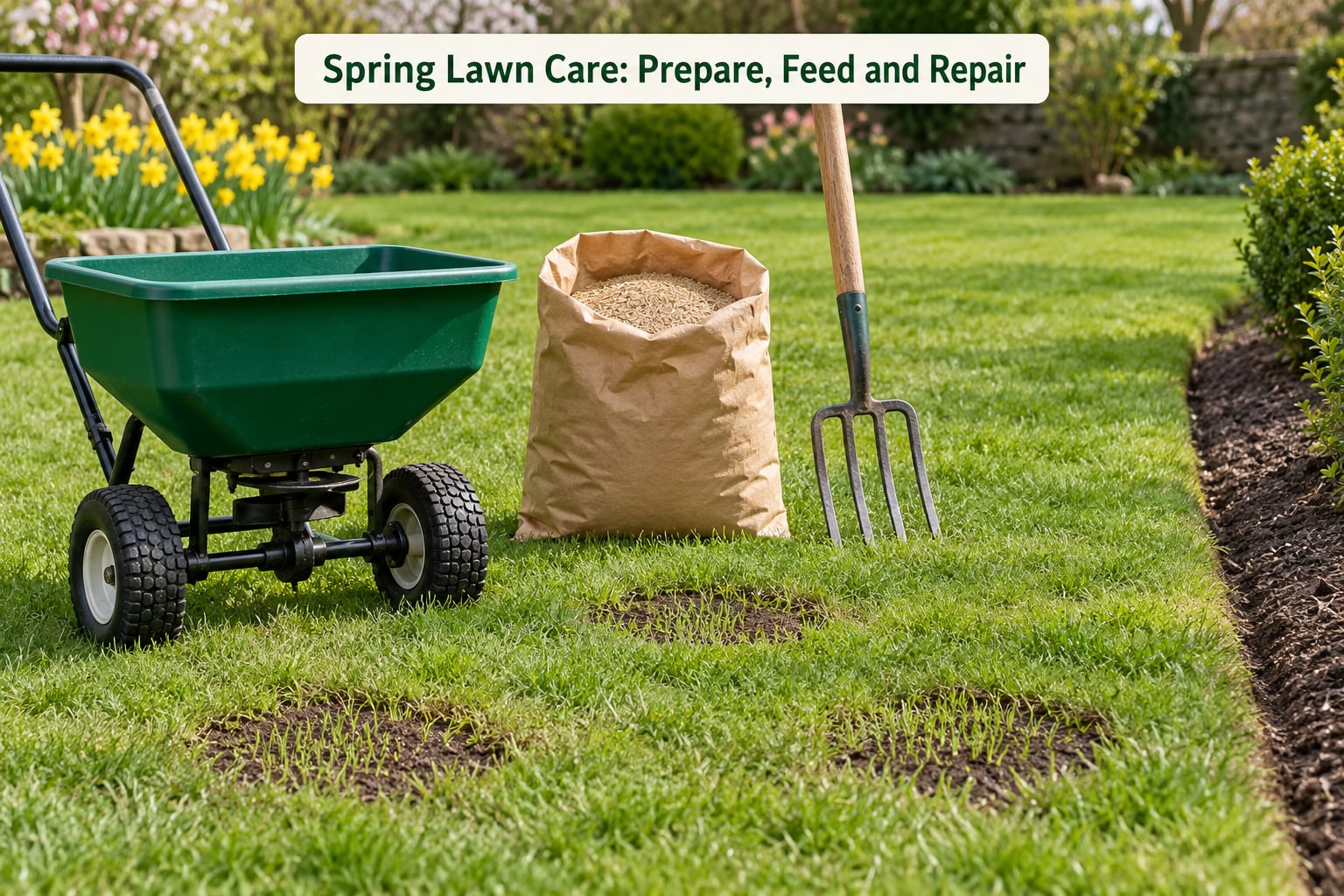
Spring is repair season. The goal is to fix what winter damaged, feed the grass while it grows hardest, and stop the weeds before they set seed. Order matters here, so work top to bottom.
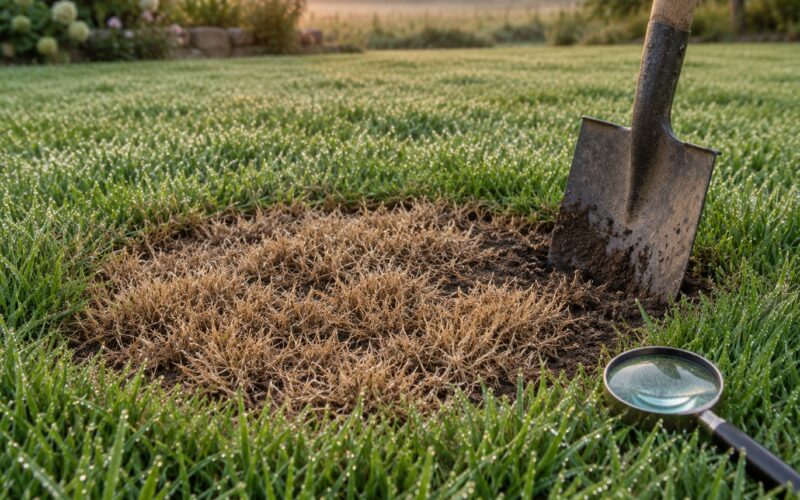
1. Rake and clean. Remove leftover leaves and debris so sunlight reaches the crown. Pull dead matted areas apart by hand or with a rake; anything that lifts in a sheet is matted, not just dirty.
2. Dethatch if thatch has built up. Check by cutting a small square and looking at the layer between green growth and soil. More than half an inch of spongy brown mat means dethatch. Do this before any herbicide so the product reaches the soil, and skip it entirely on a thin, healthy lawn, because dethatching tears healthy roots.
3. Apply pre-emergent herbicide. The window opens once soil hits about 55F and closes as soon as the lawn greens up. It works on seeds not yet germinated, which means it does nothing to weeds you can already see. Those need a post-emergent product applied to actively growing foliage.
4. Test the soil. A soil test through your state extension service measures pH, nitrogen, phosphorus and potassium so you do not guess. Most lawns want pH between 6.0 and 7.0. Lime raises pH and sulfur lowers it; both work slowly over months, so spring applications take effect next season.
5. Core aerate compacted areas. Hollow-tine aerators pull plugs of soil and leave the soil more porous than spike aerators, which just punch holes. Aerate high-traffic zones and bare patches while soil is moist enough to crumble but not so wet that it smears.
6. Reseed bare patches. Rake the bare area, loosen the top inch, spread seed, cover lightly with topsoil or compost, and keep it damp. Wait until the new grass reaches about 3 inches tall before mowing it.
7. Fertilize. Cool-season lawns get their lighter feeding at green-up, with the heavier feeding saved for fall. Warm-season lawns get their first feeding as they green up, once soil passes 65F. Avoid the all-purpose 10-10-10 garden fertilizer most people have in the shed: it is high in phosphorus, which grass rarely needs, and the fast-release nitrogen burns roots and invites lawn disease.
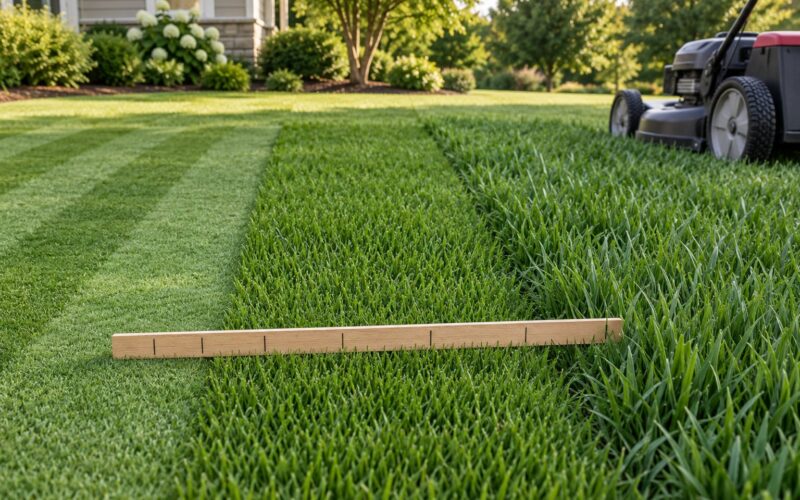
8. Resume mowing. Start at about half the height you will keep all season, and never remove more than one third of the blade at a time. Cutting too short forces the crown into the open, where it dries out and browns. This one habit separates a lawn that thins out every summer from one that does not.
Summer Lawn Care: Water Smart and Mow Wisely
Summer is maintenance, not renovation. The lawn is either in peak growth or shutting down, and your job is to reduce stress rather than add work.
Mow at the top of the range. Tall grass shades the soil, slows evaporation, and survives heat better. Keep blades sharp; a clean cut heals in a day, while a torn cut stays open for a week and invites disease. Mow early morning when the grass is damp and the air is cool, and never mow wet turf, which clumps clippings and clogs machines.
Water deeply and infrequently. Aim for 1 inch per week including rainfall, delivered in one or two sessions. Do the coffee-can test: set a straight-sided can in the lawn, run the sprinkler for 15 minutes, then measure the water in it. Multiply by four to get inches per hour, and that tells you exactly how long to run your system. Water before 10 a.m. so the canopy dries before nightfall. If your area restricts irrigation, water less often and deeper, and let the lawn slow down rather than pumping it full and brown.
Read drought stress correctly. The first sign is not brown grass but a lawn that resists springing back after you step on it. Next come dull, bluish-gray color and footprints that stay compressed. At that point water deeply once; repeated shallow watering trains shallow roots that fail faster next year. In hot, dry regions, letting a lawn go dormant brown for midsummer and watering it back in September is a legitimate choice, not a failure.
Grasscycle. Leave clippings on the lawn. They return nitrogen, shade the soil and cut what you haul away by a third or more. If the lawn is wet and clippings pile up, mow less ground per pass or collect them instead.
Treat pests and disease where they are, not across the lawn. Grubs, armyworms and chinch bugs arrive in patches, so dig at the edges of the damaged area and treat what you find rather than blanket-treating everything. Watch for brown patch in humid regions and dollar spot where mornings stay damp. Persistent fungal problems almost always trace back to mowing too low, watering at night, or over-fertilizing.
Fall Lawn Care: Overseed, Feed and Strengthen Roots
Fall is the most valuable season for cool-season lawns and the second most valuable for warm-season ones. The soil is warm, the rain is falling, and the grass grows roots rather than blades. Every task below aims at the same thing: a deeper root system before next summer.
Keep mowing. Do not stop early out of habit. Shorter days slow growth, so mow frequency drops to every 7 to 10 days, and take the grass down about an inch lower than your summer height for the last few cuts. Blade growth slows after the first frost; that is your real signal that mowing is done for the year.
Core aerate. Fall is the best window of the year because the plugs break down into the soil and the holes fill with air, water and seed. Moisture the night before helps. Is October too late to aerate? Only if the ground is frozen or the lawn is dormant from winter, and in those climates that is a job for March instead.
Overseed thin areas. Sow four to six weeks before your first frost, with soil at 70-75F for fast germination. Mow the existing grass short first, remove clippings, then rake seed into the soil and water it daily until it takes. Perennial ryegrass germinates fastest and holds color through winter; tall fescue blends well in shade; Kentucky bluegrass spreads by rhizome and fills in over a season or two. Avoid overseeding Centipede or Zoysia, which crowd out new seedlings, and remember that St. Augustine will not germinate from seed at all, only sod.
Fertilize. Apply the main feeding now, when soil is warm and roots are growing. Slow-release nitrogen feeds steadily and avoids the surge-then-crash pattern of cheap fast-release products. A four-application organic schedule, one in spring and one in late fall, is another pattern long-time owners follow. Finish with a winterizer weighted toward potassium in the last application, on lawns that stay semi-dormant through winter. Never feed after mid-December in the north; late nitrogen pushes tender growth into a freeze.
Remove leaves and stop mowing wet ground. Rake, mulch or mow leaves before they mat down, and keep traffic off waterlogged soil.
How to Build Your Lawn Care Schedule for the Whole Year
The calendar is the easy part. Turning it into a routine you actually keep takes three habits: set reminders, keep a short record, and know your task cadence.
Set reminders around conditions, not dates. Nine reminders a year is enough: soil test, pre-emergent, spring feeding, first mow, last mow, aeration, fall feeding, overseeding, winter equipment service. Attach the soil temperature or frost trigger to each one so a warm spring moves the date forward without you having to rethink it.
Keep a one-page record. Date, product and rate, weather, and how the lawn looked two weeks later. Two seasons of that and you will know which of your habits actually worked, and which ones cost you money for nothing.
Know the cadence. Mowing runs weekly at peak growth, every 10 to 14 days in the shoulder seasons, and stops when growth stops. Fertilizing runs 1 to 4 times a year depending on how much slow-release nitrogen each bag contains. Watering runs 1 to 2 times a week in heat, less in spring and fall, and not at all in winter. Overseeding and aeration happen once a year, soil testing every 2 to 3 years.
If you missed a season, recover instead of panic. Most lost ground is recoverable. Missed spring feeding is made up in the fall window. A missed pre-emergent is handled by pulling weeds by hand before they set seed, then spot-treating. A summer drought is repaired by overseeding in September, not by doubling fertilizer in July.
How to Shift the Calendar by Zone and Frost Date
Move every row in the table by comparing it to two numbers: your average last spring frost and your average first fall frost. Everything before the last frost is a preparation task, not a feeding task; everything within six weeks after it is a feeding task.
In the far north, shift the spring column four to six weeks later and compress the fall column into September and October. In the Deep South, shift everything earlier: greens up in March, overseed for winter color in late September, and treat winter as the dormant season. In arid regions, move watering and fertilization so growth stays concentrated in spring and fall, and plan for deliberate dormancy in the middle. In wet, humid regions, spread fall fertilizer into two lighter applications so heavy rain cannot wash it into low spots.
Check your zone and frost dates with the land-grant extension office in your state. They publish the local tables, and their turfgrass specialists are a better source than a national calendar written for somewhere else.
When to Hire a Lawn Care Professional
Some jobs are worth outsourcing, not because they are difficult but because they need equipment you would have to rent or buy for one afternoon.
Core aeration and overseeding. A walk-behind aerator handles a small lawn. Above roughly 5,000 square feet, a hollow-tine machine or a professional pass saves an afternoon and gives far more even coverage.
Drainage and grading. Ponding water kills grass, and no amount of fertilizer fixes a lawn sitting in a wet hole. Correcting grade means moving soil, and that is a job for someone with a plan and a machine.
Lawn renovation or transition-zone confusion. If your lawn alternates between fescue and Bermuda each year, it is not a schedule problem. Converting to one species, or accepting a two-species approach, is worth an assessment.
Recurring maintenance. If you cannot commit to mowing every 5 to 7 days through June and July, a weekly service is cheaper than reseeding a lawn that scalped itself.
During estimates, ask what product rate they apply per thousand square feet, whether they pull plugs or spike them, whether they do the pre-emergent timing, and whether the price includes the seed and fertilizer or only labor. A company that quotes by square foot with the products named usually beats one quoting a single figure.
Frequently Asked Questions
How often should I mow my lawn during the year?
Mow every 5 to 7 days during peak growth in late spring and summer, and every 10 to 14 days in the spring and fall shoulder seasons. Stop when the grass stops growing, usually after the first frost in cold regions and when nights fall below 50F in the south. Follow the one-third rule every time: never remove more than a third of the blade in a single cut.
What is the best lawn care schedule for the whole year?
Aerate and feed in spring as grass greens up, apply pre-emergent herbicide once soil reaches about 55F, mow at 3 to 4 inches through summer with 1 inch of water per week, then aerate, overseed and feed heavily in fall four to six weeks before frost. In winter, rake leaves, service equipment and avoid traffic on frozen or saturated turf.
Should I fertilize my lawn in the fall?
Yes, and for most cool-season lawns the fall feeding is the most important one of the year. Soil is warm, rain is reliable, and the grass builds roots instead of blades. Use slow-release nitrogen, and stop feeding in the north by mid-December. Warm-season lawns get a lighter fall feeding plus winter color where winters are mild.
How do I know whether my lawn needs aeration or overseeding?
Pull up a square of sod: if it resists and the soil is dense, hard and full of roots, the lawn needs core aeration. If grass comes up in thin pieces with bare soil underneath, it needs overseeding. Both problems often appear in the same high-traffic patches, so aerate and seed those areas together in early fall.
Can I maintain a lawn in a hot or dry climate?
Yes, with expectations adjusted. Mow at the tallest height your grass tolerates, water 1 inch per week in fewer and deeper cycles, and let the lawn slow down or go dormant in midsummer rather than watering it back to green. Buffalograss, Bermuda and Zoysia handle heat and drought far better than fescue or bluegrass.
Should I fertilize my lawn before or after aeration?
Fertilize after core aeration. The holes let granules and water reach the root zone instead of sitting on the soil surface, and the nutrients stay in the root zone longer. Mow the day before you aerate, leave the plugs on the lawn to break down, and water lightly afterward. Dethatching, by contrast, comes before pre-emergent herbicide.
Conclusion
Start by naming your grass and finding your zone and frost dates, because those two facts decide which version of this schedule applies to you. Then pick the one task that matters most in the current season and do it now rather than reading the rest for later.
That task is usually aerating and seeding in early fall, or fertilizing at spring green-up. Set the next reminder before you put the tools away, and the rest of the lawn care schedule for the whole year takes care of itself.