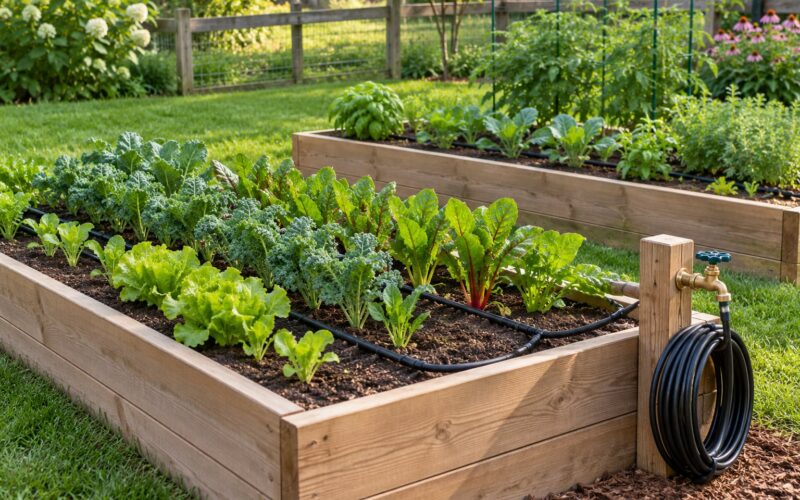
If you cut cool-season lawns like bluegrass and fescue at roughly 3 to 4 inches and warm-season lawns like Bermuda, Zoysia and St. Augustine at 1 to 3 inches, you will match the height your grass was built for. The number changes with the species, the variety, the season and how much stress the lawn is under.
Most lawns do not fail from mowing too often. They fail from mowing too short, which scalps the crown, shrinks the leaf area that feeds the roots and opens bare soil for weeds. Getting the height right solves a surprising share of lawn problems before you spend a dollar on anything else. This guide is updated for 2026 and works whether you push your own mower or hand the job to a crew.
Table of Contents
- How High to Mow Grass by Type: Quick Height Guide
- Which Mowing Height Does Your Grass Type Need?
- Cool-season grasses: 2.5 to 4 inches for most lawns
- Warm-season grasses: 1 to 3 inches, and variety matters enormously
- What if you are in the transition zone?
- Measure the height before you cut or after?
- How Do You Measure the Right Mowing Height?
- Should You Adjust Mowing Height for the Season?
- How Does Mowing Height Affect Lawn Health?
- Root depth and water use
- Weed pressure and bare soil
- Disease and crown protection
- Why uneven lawns happen
- How Often Should You Mow at the Recommended Height?
- What Mowing Mistakes Can Damage Grass?
- Frequently Asked Questions
- Is 4 inches too high to cut grass?
- What is the healthiest height to mow my lawn?
- Is 2 inches too low to cut grass?
- What is the 1/3 rule for mowing?
- Is it better to cut your grass short or leave it long?
- How often should you mow your lawn?
- How to Set Your Mowing Height for the Best Results
How High to Mow Grass by Type: Quick Height Guide
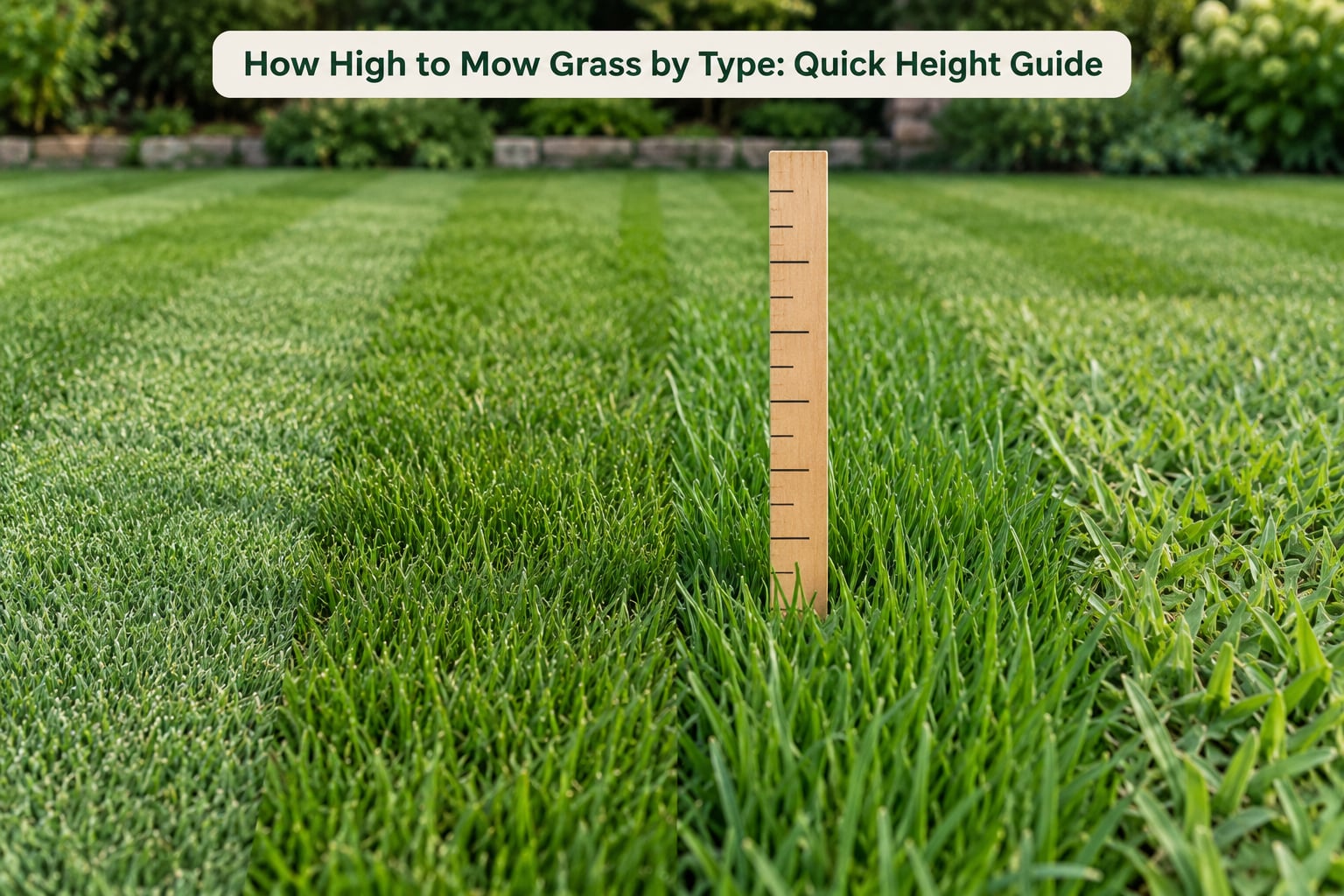
Cool-season grasses grow best between about 2 and 4 inches. Warm-season grasses generally perform best between about 1 and 3.75 inches, and most of them look their best on the shorter side of that range. Within each family, individual varieties want different numbers, which is why a Bermuda lawn and a Zoysia lawn next door to each other should not share a setting.
| Grass type | Recommended height | Mow when it reaches | In partial shade |
|---|---|---|---|
| Common Bermuda | 1 to 1.5 inch | 1.5 inch | 1.5 to 2 inches |
| Dwarf hybrid Bermuda | 0.5 to 1 inch | 1 inch | Rarely tolerates shade |
| Zoysia, coarse varieties | 1 to 2.5 inches | 2.5 inches | 1.5 to 2.5 inches |
| Zoysia, fine varieties | 0.25 to 1 inch | 1 inch | Not shade tolerant |
| St. Augustine | 2.5 to 4 inches | 4 inches | 2.5 to 4 inches |
| Centipede | 1 to 1.5 inches | 1.5 inches | 1.5 to 2 inches |
| Kentucky bluegrass | 2.5 to 3.5 inches | 3.5 to 4 inches | 3.5 to 4 inches |
| Tall fescue | 2.5 to 3.5 inches | 3.5 to 4 inches | 3.5 to 4 inches |
| Perennial ryegrass | 2.5 to 3.5 inches | 3.5 inches | 3 to 3.5 inches |
| Fine fescue | 3 to 3.5 inches | 3.5 inches | 3.5 inches |
| Buffalograss | 2 to 3 inches | 3 inches | 2.5 to 3 inches |
| Cool-season lawn mix | 3 to 3.5 inches | 3.5 to 4 inches | 3.5 to 4 inches |
The mow-when column is the one most guides leave out, and it is the more useful number. Height is what you leave behind; mow-when height is the point in the growth cycle where you should actually cut.
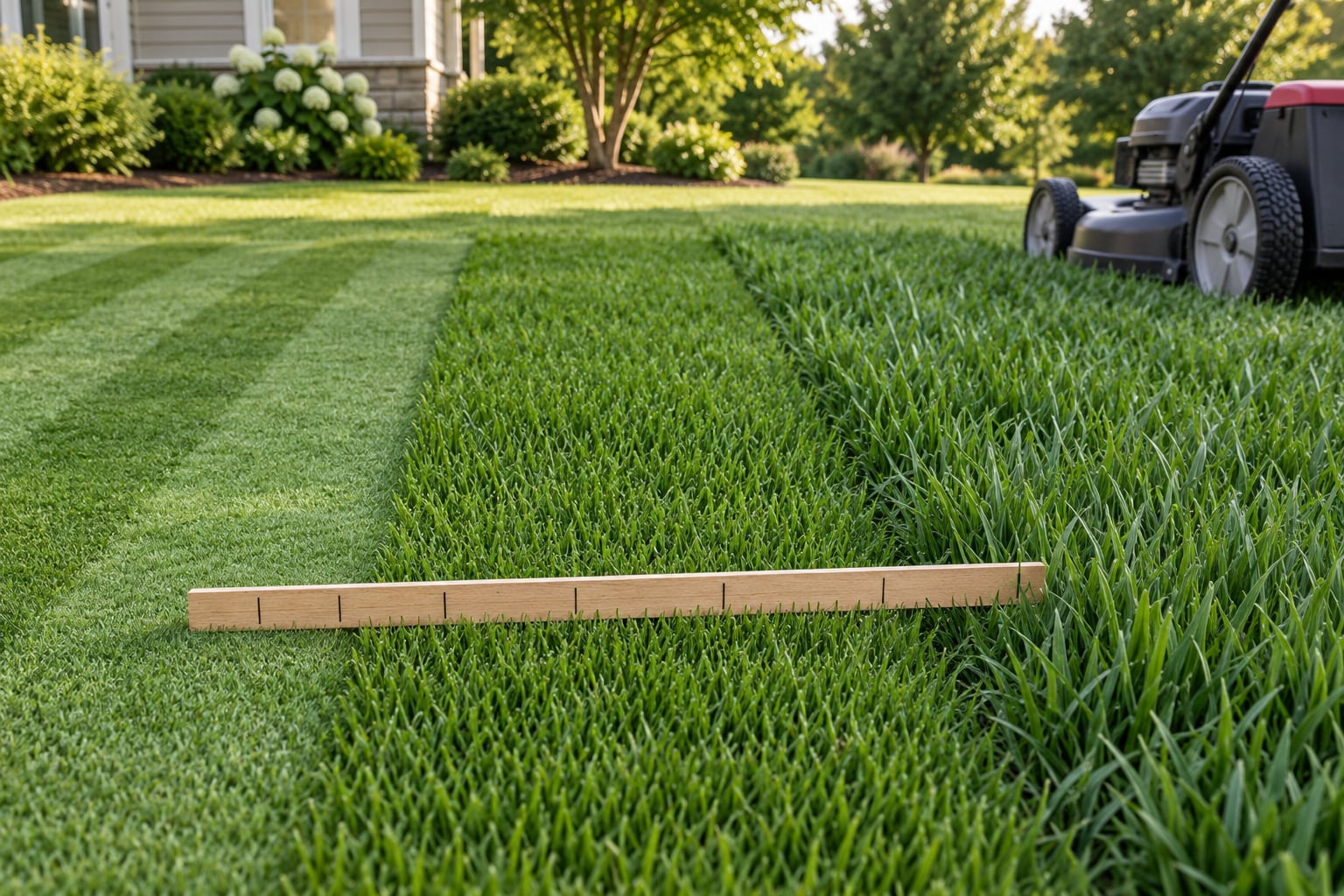
The one-third rule: never remove more than a third of the blade length in one pass. Grass at 3 inches gets cut when it reaches 4.5 inches. Grass at 1 inch gets cut at 1.5 inches. If the lawn is already well past that, shorten it over several passes instead of mowing it down in one go.
Which Mowing Height Does Your Grass Type Need?
Height ranges come from the species, and species come from climate. A quick way to sort your lawn: if it stays green through a mild winter and grows fastest in spring and fall, it is cool-season. If it goes tan and stops in cold weather and pushes hardest in summer, it is warm-season.
Cool-season grasses: 2.5 to 4 inches for most lawns
Cool-season grasses include Kentucky bluegrass, tall and fine fescues, perennial ryegrass and a lot of packaged seed blends. Their root systems are deeper and they tolerate cold, so they handle taller cuts better than warm-season grass does.
Kentucky bluegrass spreads by rhizomes and forms a dense sod, which means it shades the soil well at 3 inches or more. Tall fescue is the workhorse of the transition zone, and it is also the most forgiving of a taller cut. Cut it at 2 inches and you will often see crabgrass and clover move in within a season. Cut it at 3.5 to 4 inches and the same lawn looks noticeably thicker.
Perennial ryegrass germinates fast and dies out faster, which is why it shows up in mixes. It tolerates a range of heights but prefers 2.5 to 3.5 inches. Fine fescue is a shade and low-maintenance pick that wants to sit at the taller end of any range you give it.
Warm-season grasses: 1 to 3 inches, and variety matters enormously
Warm-season grasses include Bermuda, Zoysia, St. Augustine, centipede and buffalograss. They grow fast in heat, they go dormant in cold, and their recommended heights span nearly the whole scale. Homeowners on r/lawncare often post the same complaint: the lawn service cuts at 2 inches no matter what is growing, and the lawn browns out afterward.
Common Bermuda such as the variety used on sports fields wants 1 to 1.5 inches. Dwarf hybrids want less still, often 0.5 to 1 inch, and they punish anyone who cuts them at 2 inches. St. Augustine is the opposite instruction. It is a coarse, broad-bladed grass that wants 2.5 to 4 inches, and cutting it at 2 inches exposes the stems, which shows up as brown patches.
Zoysia varies more than any other lawn grass. Fine-textured selections are cut between a quarter inch and an inch, while coarser selections are happy from 1 to 2.5 inches. Centipede stays between 1 and 1.5 inches and dislikes rich, fast-release fertilizer. Buffalograss is a low-input grass that actually wants to be kept tall, around 2 to 3 inches.
What if you are in the transition zone?
The transition zone runs through the middle latitudes, from parts of the Northeast down into the Mid-Atlantic and across the upper South. Winters can be cold enough to hurt warm-season grass and summers dry enough to punish cool-season grass. Tall fescue handles both better than anything else, which is why most of the seed sold in that band is fescue or a fescue blend.
If your lawn is a mix and you cannot separate the species, mow at the taller number. A lawn cut at 3.5 inches stays green under stress whether the dominant grass is bluegrass or fescue. One-third of the lawn looking slightly loose is a smaller problem than a third of it going brown.
Measure the height before you cut or after?
Measure after. Mowing height is the distance between the soil surface and the tips of the blades once you have cut. Measuring before tells you how tall the grass was, which is useful for the one-third rule but is not the number your mower setting should match. Note it anyway, because the difference between the two is the amount you removed.
How Do You Measure the Right Mowing Height?
The lever on your mower says 3, but the deck may actually be cutting at 2.6. Worn linkages, tire pressure and uneven terrain all shift the real height, and this is the measurement problem almost every competitor page skips. Five steps will get you a real number.
- Park on a flat, level surface. A slope of a few degrees is enough to throw the reading off by more than a quarter inch on one side of the deck.
- Measure at the wheel or roller edge. That is the part of the deck that sets the cut height. On a push mower, measure from the ground up to the bottom of the wheel bracket at the front and rear.
- Measure on both sides. If the readings differ by more than an eighth of an inch, the deck is out of level. That uneven cut is what creates the striped and patchy look people try to fix with fertilizer.
- Set the lever to the middle of your grass range first. Then measure the real cut height and adjust from there rather than trusting the printed scale.
- Test on turf. Mow a short strip, measure the blades with a ruler pushed down to the soil, and average three spots. A simple pencil trick works in a pinch: lay a pencil on the grass and see how much of it sticks up above the pencil.
Worn decks and tires also raise the cut height over a season, so re-measure every few months. Inflate the tires to the pressure on the sidewall before you set the height, since a soft tire changes the reading.
Should You Adjust Mowing Height for the Season?
Yes. Even the same lawn wants a different height in June and in October, because heat, moisture and growth rate change what the grass can handle.
| Season | What to do | Typical adjustment |
|---|---|---|
| Spring green-up | Remove dead winter material, then settle into the range | Cut a half inch shorter on the first pass, then return to normal height |
| Summer heat and drought | Raise the deck to protect crowns and roots | Add half an inch, and a full inch for fescue and bluegrass |
| Fall | Hold the taller height to build root mass before winter | Stay at the top of the range |
| Winter | Keep growth low and crowns ventilated under snow | Cut to about 2 inches on cool-season lawns late in the season |
Heat and drought are the clearest signals. When a lawn browns in July, the blades are transpiring faster than the roots can replace the water. A taller canopy shades the soil, slows evaporation and keeps the root zone cooler, which is why homeowners who mow at 4 inches through a dry summer usually report far fewer watering trips.
Cold weather is the other signal, and it works in the opposite direction. Tall, wet grass under snow is a good home for snow mold, so the last mow of the season on a cool-season lawn is often shorter than the rest of the year. On warm-season lawns in the deep South, mow height barely changes because the grass barely grows in winter.
Patchy, thinning or recently overseeded areas get the same treatment: leave them longer. A stressed area needs every bit of leaf area it can keep, and it recovers faster at the taller setting than at the short one.
How Does Mowing Height Affect Lawn Health?
Grass blades work like solar panels. The more leaf area left above the soil, the more energy the plant makes, and the more of that energy goes into roots instead of just replacing what you cut off.
Root depth and water use
A lawn kept at 3.5 to 4 inches develops a deeper root system than the same lawn kept at 1.5 inches. Deeper roots reach further into the profile during a dry week, so the lawn bends without going brown. Shorter cuts mean a shallower, more fragile root mass that dries out sooner, and the watering bill usually shows it.
Weed pressure and bare soil
Crabgrass and clover need light to germinate at soil level. A 3.5-inch fescue canopy blocks most of that light, which is why taller mowing doubles as weed suppression. Cut the same lawn at 1.5 inches and you are inviting the annual weeds, then often reaching for a herbicide to fix a problem the mower created.
Disease and crown protection
Longer blades dry out slower after dew, and drier leaf tissue resists several fungal diseases. The crown, the growing point at the soil surface, also survives better under a taller canopy. Scalp the crown by mowing too low and you are not just removing leaf, you are removing the plant’s regrowth point.
Why uneven lawns happen
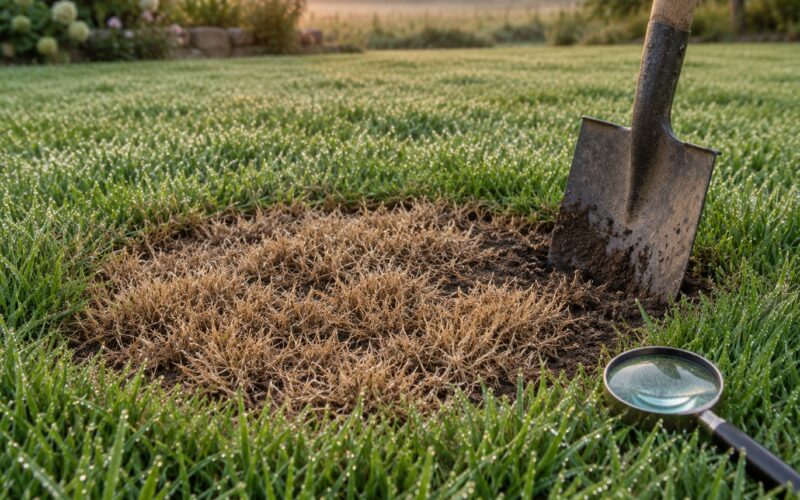
Brown patches after mowing usually mean the deck was set low enough to cut into stem tissue, and stems do not photosynthesize the way leaves do. Stripes, on the other hand, usually mean a level deck issue or mowing too fast. Thin, worn areas mean the lawn is being mowed too short for its root mass to hold on.
Short mowing does have a few genuine upsides: clippings decompose faster, you spend less time on the lawn, and you can stripe or create patterns more easily. That is the whole argument for it. For a lawn that has to survive summer, longer is the better trade.
How Often Should You Mow at the Recommended Height?
Follow the growth, not the calendar. A lawn that needs cutting every three days in May may not need it at all in December, and a lawn in the shade may go a week between passes. The trigger is simple: mow when the grass hits the mow-when height in the table above.
During fast growth, in peak spring or a warm-season lawn in early summer, plan on mowing two or three times a week. Cut often enough that you never take off more than a third. During slow growth, in winter dormancy or a drought-stalled lawn, drop to weekly or skip passes entirely. If the lawn is not growing, mowing adds stress without adding anything useful.
Two habits make this easier. Mowing when the grass is dry keeps clippings light and spreads them evenly. And overlapping each pass by a few inches on a fast growth period means you can drop to a lower deck height without shocking the lawn.
Above all, never mow a lawn that is wet. Wet grass clumps, cuts unevenly, rips the blade tips and can spread disease, and the clumped clippings smother the areas they land on.
What Mowing Mistakes Can Damage Grass?
Almost every brown, weedy or patchy lawn I get asked about traces back to one of these, and all of them are fixable.
- Cutting too short. Fix: raise the deck half an inch and hold it there for a month of mows before judging the result.
- Mowing wet grass. Fix: wait for the dew to lift, and mow mid-morning when blades are dry but the soil is not baked.
- Dull blades. Fix: sharpen twice a year, at the start of the season and again in late summer. A dull blade tears the tips and leaves a fuzzy, brown look that people blame on the mower height.
- Mowing at the wrong time of day. Fix: mid-morning is the best compromise between dry grass and moist soil.
- Ignoring clippings. Fix: let short clippings fall as mulch when the grass is dry and the lawn is not diseased. Bag only when the lawn is wet, when you just applied herbicide or fertilizer, or when clumps are heavy.
- Over-fertilizing a thin lawn. Fix: fix the height and watering first. Fertilizer on a scalped lawn feeds the weeds you were trying to shade out.
- Cutting into long grass all at once. Fix: drop half an inch per pass until you reach the target height, and remove the heavy clippings the first time through.
Mower type matters less than people think, but the pairing is useful. A reel mower cuts cleanly and handles the very short heights that dwarf Bermuda and fine Zoysia need. A rotary mower with a mulching blade covers everything from 1.5 to 4 inches, which is most home lawns. Cutting below about 1.5 inches with a rotary is where torn tips and scalping start showing.
Frequently Asked Questions
Is 4 inches too high to cut grass?
Four inches is not too high for cool-season lawns. Kentucky bluegrass, tall fescue and perennial ryegrass all handle 3.5 to 4 inches, and the extra shade and root depth usually improve the lawn. It is too high for common Bermuda and most other warm-season grasses, which should stay between 1 and 2.5 inches. If your lawn grows tall and floppy, mow slightly lower each pass until you settle near the right height.
What is the healthiest height to mow my lawn?
Most lawns are healthiest between 2.5 and 4 inches, and tall fescue or Kentucky bluegrass sits happily at the top of that band. The healthiest cut is also the one that removes no more than a third of the blade, using a sharp blade, on dry grass. Height and technique work together, so a lawn mowed short but often with a sharp blade still ends up thinner than one mowed at 3 inches with a dull one.
Is 2 inches too low to cut grass?
Two inches is too low for St. Augustine, tall fescue and Kentucky bluegrass, and it is a common mistake on Bermuda as well for common varieties that want 1 to 1.5 inches. Cutting that short exposes stem tissue, which browns and dries, and it opens the soil for weeds. Two inches is roughly right for coarse Zoysia and centipede, so the number on the mower lever is less important than the species underneath it.
What is the 1/3 rule for mowing?
The one-third rule says never remove more than a third of the grass blade height in a single mowing. Lawn at 3 inches, mow it when it reaches 4.5 inches. Lawn at 1 inch, mow at 1.5 inches. The rule exists because the blade feeds the roots, and removing more than a third at once forces the plant to draw on root reserves, which slows recovery and thins the turf.
Is it better to cut your grass short or leave it long?
For most home lawns, leave it longer. Cutting short means more mowing trips, more water use, weaker roots and a better chance of weeds. The exceptions are dwarf hybrid Bermuda, fine-textured Zoysia, putting greens and athletic fields, where a very short cut is the point. If you like the look of a tightly mown lawn, mow at 2.5 inches and never lower, and you will get most of the tidy appearance without the damage.
How often should you mow your lawn?
Mow based on growth rate, not the calendar. Check the grass a couple of times a week and cut when it reaches the mow-when height for its type, removing no more than a third each time. In peak spring or an early summer warm-season lawn, that often means two or three passes a week. In winter dormancy or during a drought stall, weekly may be enough or mowing can stop for a while.
How to Set Your Mowing Height for the Best Results
Start with identification, because everything else depends on it. If you are not sure what grass you have, take a handful of blades and a photo of the lawn to a local extension office, or look at the seed tag from the last time you seeded.
Then measure your deck at the wheel on level ground and set it in the middle of that grass type’s range rather than at the top. From there, work in a simple order: raise the deck half an inch when summer heat or drought arrives, drop it back for the last mow before winter on cool-season grass, and always leave a third of the blade standing.
Mow on dry grass, often enough to keep to that one-third rule, and re-measure every few months. That is the whole routine. Ask anyone mowing how high to mow grass by type, and most will tell you they guessed once and never checked again.