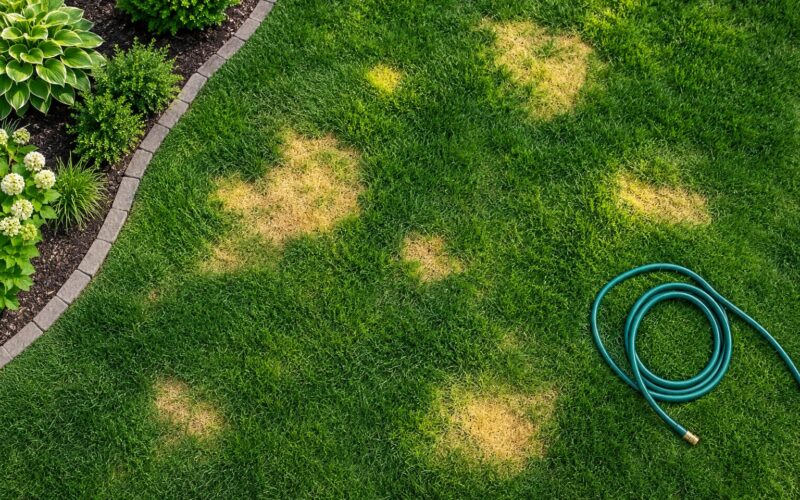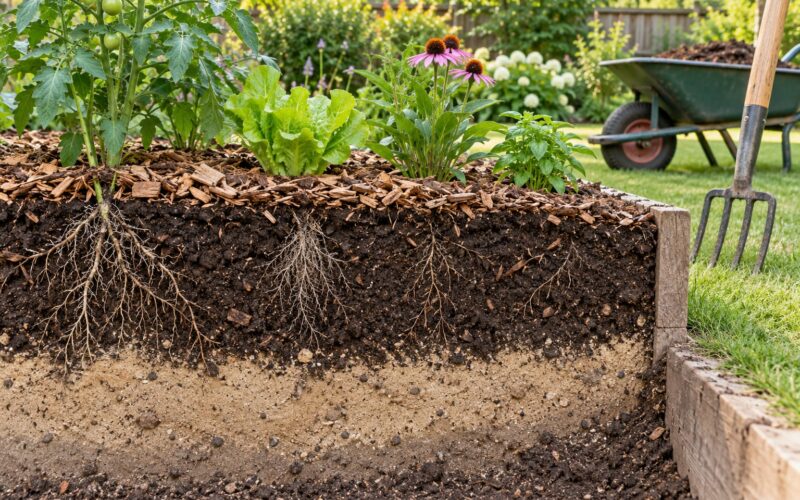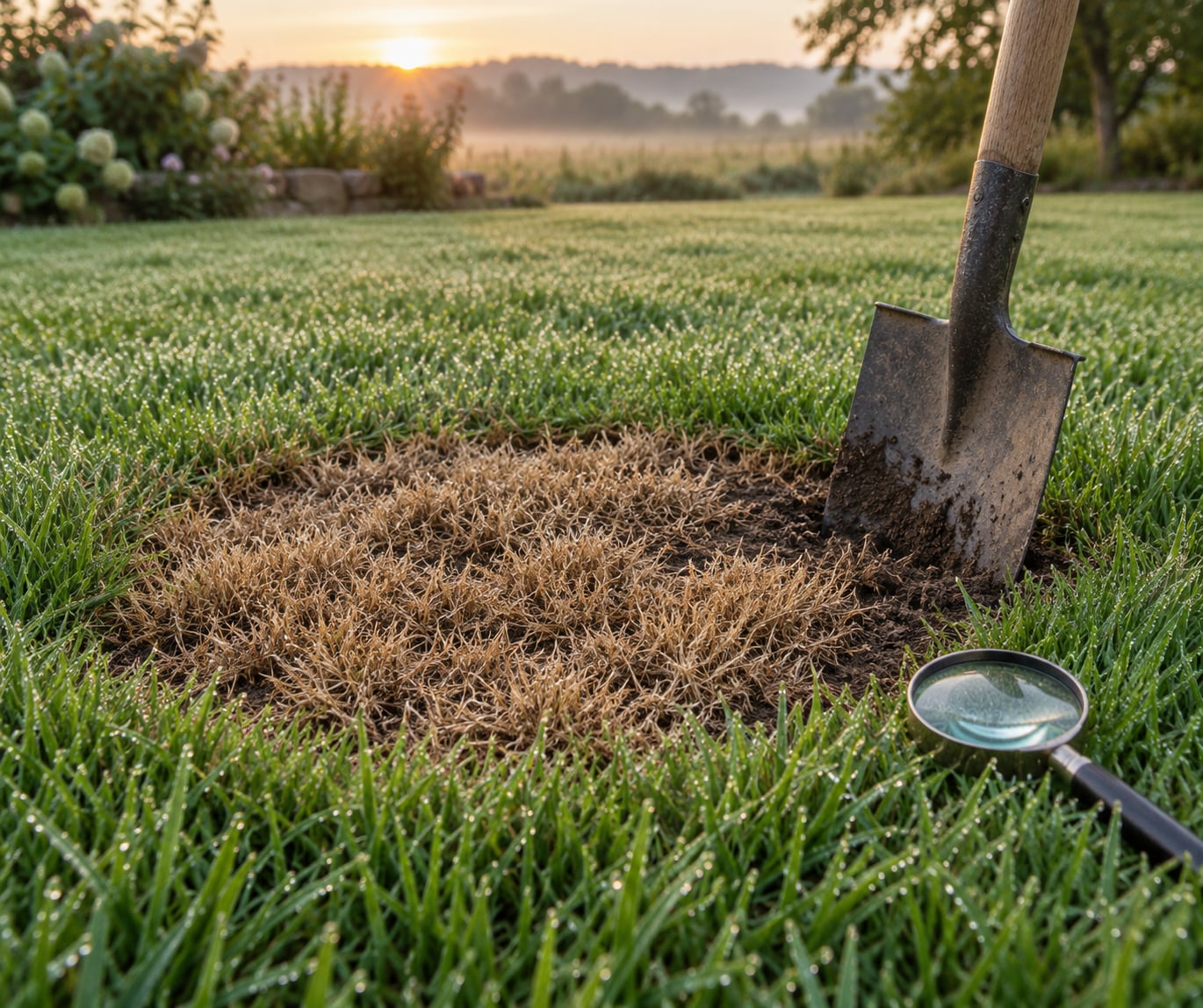
To identify lawn fungus, walk your lawn between 6:00 and 8:00 in the morning while dew still sits on the blades, then check whether the damage follows its own pattern and whether the roots still hold. What most people call fungus turns out to be grubs, dog urine, drought stress or a mower mishap, and misdiagnosis is the loudest complaint on lawn forums. Ten minutes of focused checking saves you from spraying the wrong thing all season.
Table of Contents
- What You Need Before You Try to Identify Lawn Fungus
- Step-by-Step Lawn Fungus Identification
- 1. Look for Rounded or Irregular Dead Patches
- 2. Check Whether the Grass Is Thinning or Dying
- 3. Inspect the Grass Color and Texture
- 4. Look for Webbing, Flaking, or Powdery Growth
- 5. Check the Pattern After Watering or Mowing
- 6. Examine the Soil, Roots, and Thatch — How to Identify Lawn Fungus From Root Damage
- 7. Confirm the Likely Cause Before Treating
- Common Lawn Fungus Identification Mistakes
- Frequently Asked Questions
- Are all brown patches in a lawn caused by fungus?
- Can lawn fungus spread to other parts of the yard?
- Will grass recover after a fungal disease is identified?
- Is white or gray growth on grass always fungus?
- Can I treat lawn fungus with a household product?
- When should I call a lawn professional instead of diagnosing it myself?
- Conclusion
What You Need Before You Try to Identify Lawn Fungus
Gather these before you walk out, because halfway through a check you will not want to go back inside for a tool.
- Gardle gloves. Spores, moisture and insects all move on your hands and shoes.
- A hand lens or magnifying glass, 10x or better. Most blade lesions are only a few millimeters long.
- A spade, garden trowel or sturdy screwdriver for lifting a plug of turf at the edge of the damaged area.
- A ruler and a coin. Patch size is how people describe the problem, and coin-sized spots mean something specific.
- Your phone, for one wide shot showing the whole pattern and one close-up of the blades.
- A few notes: what grass type you have, when the damage started, and the last two weeks of rain, irrigation and fertilizer.
That last item matters more than it looks. Disease pressure tracks weather closely, and people on TheLawnForum.com regularly solve a mystery by recalling that it started three days after a heavy irrigation cycle.
Step-by-Step Lawn Fungus Identification
Work through these in order and stop before you buy anything. The consensus on r/lawncare and r/LawnAnswers is blunt: positively identify the problem first, because a fungicide applied to the wrong cause wastes money and can make things worse. Nearly every fungal lawn disease needs excess moisture and a susceptible grass to develop, which is why the checks below start with pattern and end with soil.
Grass type gives you a head start too. Cool-season lawns (tall fescue, Kentucky bluegrass, perennial ryegrass) lean toward leaf spot, dollar spot, red thread and snow mold. Warm-season lawns (Bermuda, Zoysia, St. Augustine) lean toward brown patch, take-all root decline and southern rust. Disease pressure peaks in spring and fall in most of the country, when nights are warm and days are damp.
1. Look for Rounded or Irregular Dead Patches
Brown patch and dollar spot grow in circles, arcs and rings that widen a little each week. Larger holes often keep a ring of healthy green in the middle, which lawn people call a frog-eye pattern. A grayish-purple border around the active edge, sometimes called a smoke ring, shows up clearly when the morning dew is still on the grass.
Now compare that with damage that has a mechanical cause. Mower tracks and strip lines run straight. A dead corner usually means an irrigation head is blocked or aimed wrong. Dog urine spots stay in the same handful of places every time, usually along a path or a fence line. Fungal patches have soft, wandering edges; equipment damage has edges you could draw with a ruler.
2. Check Whether the Grass Is Thinning or Dying
Fungal damage usually starts as thinning. Individual blades brown off at the tips while the rest of the clump still looks pale and weak, and the patch gets wider over two or three weeks rather than overnight.
That gradual route matters. Grubs, drought and compacted soil can also thin turf, but they tend to produce a hard-edged look or a sudden collapse after a hot week. Tug-test a dying blade: if it snaps off at the crown and the base is brown and soft, you are looking at root or crown damage rather than a leaf disease.
3. Inspect the Grass Color and Texture
Color tells you where to look but never confirms anything on its own. Lesions with tan centers and reddish-brown or yellow borders point to leaf spot. Pale, dusty, bleached blades that curl and shrivel suggest dollar spot or a root problem. Rust shows up as orange-brown pustules that come off on your fingers and the soles of your shoes.
White or bleached Bermuda is worth its own note. Grass that turns pale silver-white rather than brown usually points at the root and crown rather than the leaf, and take-all root decline is one known cause. Pull a plug and look at the roots before you start treating the foliage.
4. Look for Webbing, Flaking, or Powdery Growth
This is the sign that settles most arguments. Fine white or gray cottony growth stretched over the blades, most visible between 6:00 and 8:00 AM under heavy dew, is fungal mycelium. It collapses or smears when you touch it, which is what distinguishes it from everything else.
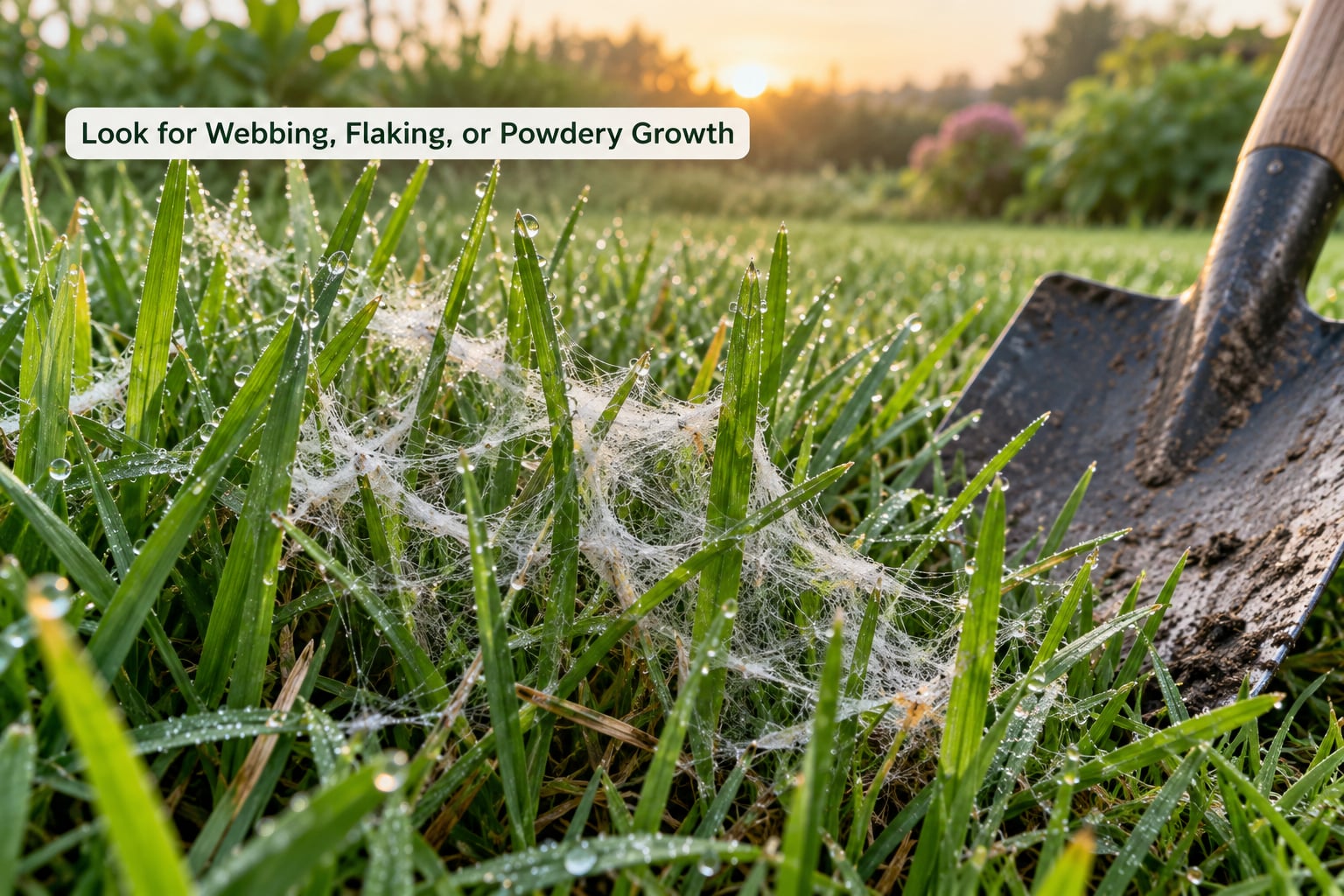
Other visible growths cause a lot of false alarms. Powdery mildew leaves a white dust-like coating on the surface of the leaf with the blades underneath looking blotchy and distorted. Red thread produces pink or reddish thread-like strands extending from the blade tips over tan patches. Slime mold is the harmless one: a foamy gray or black crust that sits on top of the lawn, breaks apart in rain and does not damage the grass.
Check where the growth is attached. Mycelium comes up off the blades, powder sticks to the leaf surface, and insect webbing stretches between blades and feels sticky.
5. Check the Pattern After Watering or Mowing
Give the problem a week or two of observation, because fungus moves and most other causes do not. Mark the edges of the patch with a few flags or sticks and see whether it has grown past them. A patch that widens a few more inches each week is behaving like an infectious disease.
Watering and mowing habits explain a lot. Damage that lines up with one irrigation zone usually means that zone stays wet, and excess moisture is the ingredient almost every fungal lawn disease needs. Long dew periods come from watering at night, when the blades stay wet for hours. Mowing wet lawns carries spores on the deck and shoes, which is why people on lawn forums ask constantly whether mowing spreads fungus. It can, and the same wet clippings can carry it into an unaffected area.
6. Examine the Soil, Roots, and Thatch — How to Identify Lawn Fungus From Root Damage
Cut a shovel-width square about 6 inches deep at the leading edge, where dead turf meets healthy turf. That is the method longtime users on TheLawnForum.com and lawnsite.com describe, and it separates most causes in one look.
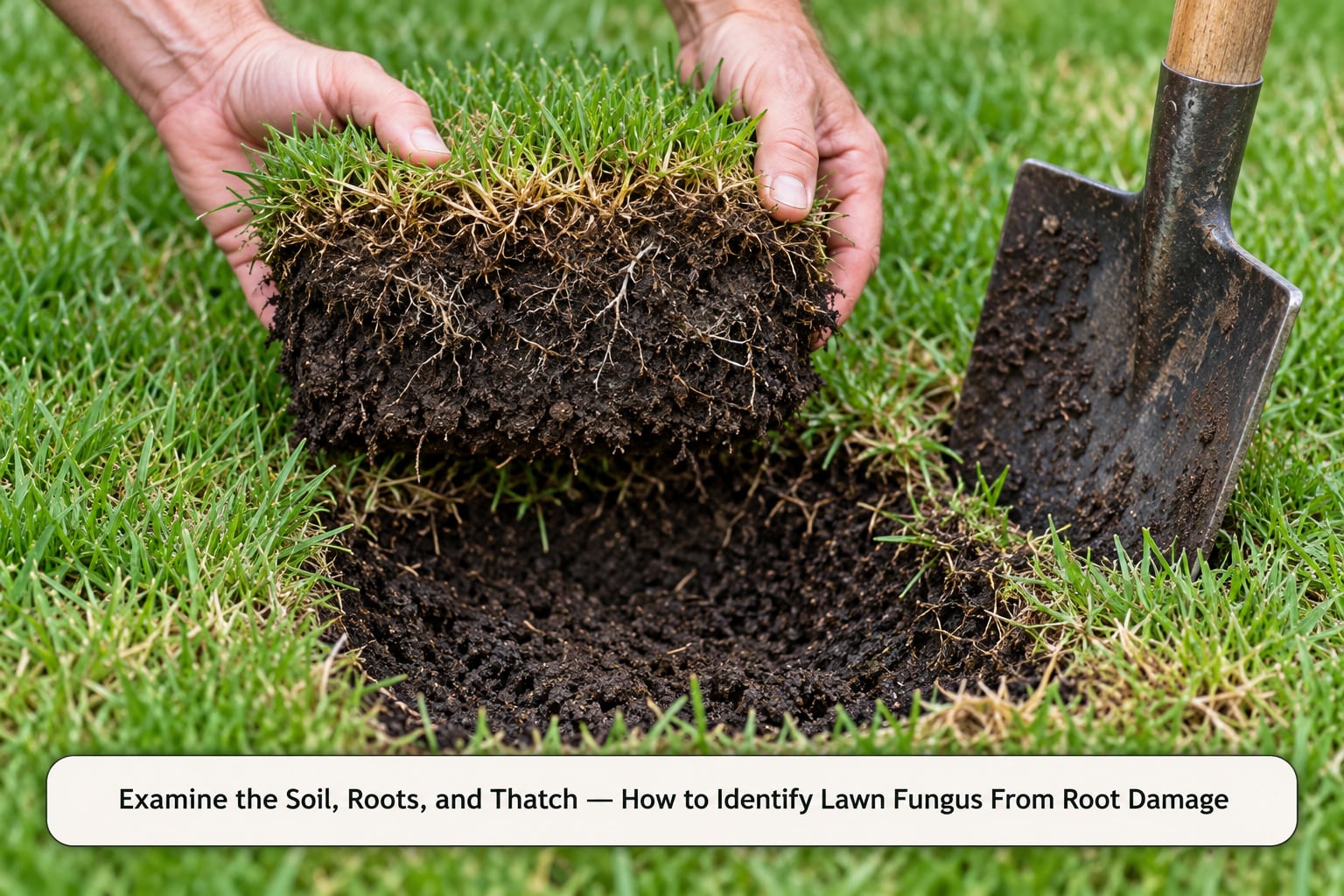
What you find tells you a lot. Healthy turf gives you fibrous white or cream roots and moist, crumbly soil that breaks apart in your hand. Black or mushy roots with a sour smell point at root rot, often driven by poor drainage or a heavy thatch layer. Turf that pulls up in a thin mat with almost no roots attached is classic grub damage, and the sod plug is often only about 1.5 inches deep.
While you are down there, squeeze a handful of soil. If it stays in a wet ball for minutes, drainage is your problem. Push a screwdriver into the ground: if it barely goes in, the soil is compacted and nothing you spray will fix it. Dog urine often shows up here too, as a dark green ring at the edge of a dead spot with faintly burned roots nearby.
7. Confirm the Likely Cause Before Treating
Put what you have seen against the table below before you decide anything.
| What you see | Fungus | Grubs | Dog urine | Drought or chemical |
|---|---|---|---|---|
| Shape | Widening circles, arcs, frog-eye rings | Irregular patches, often near edges and paths | Small round spots in the same few places | Straight strips, corners, sharp edges |
| Change week to week | Grows outward | Stays put | Stays put | Tracks the weather or the last treatment |
| Turf lifts up | Only with root rot, roots brown and soft | Pulls up easily as a thin sod mat | Lifts with healthy roots | Lifts with roots intact |
| Surface signs | Mycelium at dawn, powder, orange dust, pink threads | C-shaped white larvae with brown heads in the soil | Yellow halo, dark green ring at the edge | Nothing visible |
| Odor | Sour or rotten when root rot is involved | None | Sharp ammonia smell when fresh | None |
| Where it shows up | Low spots, shade, poor drainage, over-watered zones | Anywhere, often right at the lawn edge | Along dog paths and fence lines | South-facing edges and between sprinkler heads |
If two or more columns fit, treat it as a combination problem. Waterlogged soil plus a heavy thatch layer plus a susceptible grass variety is the disease triangle working in your favor, and fixing any one of those three usually matters more than any spray.
Bring a sample to your county extension office or a local turf specialist when the pattern does not resolve, when two diseases are overlapping, or when the affected area is large and spreading. Photos of the wide pattern and the blade close-up, plus the date it started and your grass type, make that conversation much faster.
Common Lawn Fungus Identification Mistakes
- Judging from a close-up of one brown blade. You cannot see pattern from a macro shot. Get the wide shot too, and look at the edge where dead meets healthy.
- Watering automatically because the grass is brown. Brown from drought and brown from root rot look similar from the sidewalk, and extra water makes the fungal case worse. Dig first.
- Spraying before you have an answer. A fungicide aimed at the wrong cause costs money and leaves the real problem untouched for another month.
- Mowing the affected area wet. Wet clippings and a wet deck carry spores into clean turf. Wait until the blades are dry, and bag clippings in the affected area for a few cuts.
- Diagnosing from a single morning. Mycelium shows for a few hours under heavy dew and then vanishes. Look across several mornings before you rule fungus out.
- Ignoring the soil under the problem. Compacted ground, standing water and a thatch layer thicker than half an inch keep the conditions in place. Fix those and the same lawn often stops recurring problems.
Frequently Asked Questions
Are all brown patches in a lawn caused by fungus?
No. Grubs, dog urine, drought stress, poor drainage, fertilizer burn and mower damage all produce brown patches. Fungus usually shows one or two extra tells: patches that widen over a couple of weeks, and growth on the blades such as mycelium at dawn, powdery coating or pink threads.
Can lawn fungus spread to other parts of the yard?
Yes, most fungal lawn diseases spread through spores moved by water, wind, mowing equipment, shoes and clippings. That is why wet mowing spreads disease quickly. Keep the deck clean, avoid mowing wet turf, and bag clippings from an infected area until new growth is clean.
Will grass recover after a fungal disease is identified?
Usually, if the roots and crown survived. Remove the cause first: correct drainage, water in the early morning, avoid excess nitrogen, and mow at a proper height. Once conditions are fixed, thin patches fill in on their own; larger bare areas need topdressing, aeration or overseeding with a species that suits your climate.
Is white or gray growth on grass always fungus?
Often, but not always. Fine cottony mycelium over the blades in early morning dew is fungal. A flat foamy gray or black crust that breaks apart in rain is slime mold, which is cosmetic and does no harm. Powdery mildew looks like dust on the leaf surface, while insect webbing stretches between blades and usually comes with visible mites.
Can I treat lawn fungus with a household product?
Home products cannot cure an established fungal disease. You can control the conditions that cause it, though, and that is where most of the recovery comes from: water early instead of at night, fix compacted or waterlogged soil, manage thatch, keep nitrogen moderate and mow to the correct height for your species.
When should I call a lawn professional instead of diagnosing it myself?
Call one when the patch keeps expanding after several weeks, when two problems appear to overlap, when the damage covers a large area, or when the roots look black and the lawn smells sour. A turf specialist or county extension office can also identify your grass type and disease from a fresh sample, which stops you treating the wrong problem.
Conclusion
Start by photographing the affected area, one wide shot and one close-up, before anything else. Then note whether the patch widened over the past two weeks, walk it between 6:00 and 8:00 in the morning to look for mycelium, and lift a shovel-width plug at the edge to check the roots.
That sequence takes about ten minutes and tells you whether you are dealing with fungus, grubs, urine or a soil problem. Once you know which, the fix is usually mostly cultural, and a fungicide is the last step rather than the first.