If you want to know how to aerate a lawn and when to do it, the short version is this: test your soil first, then aerate while the grass is actively growing and the soil is damp but not soggy. For most cool-season lawns that window is early fall, and for warm-season lawns like Bermuda and Zoysia it is late spring. A weekend of work fixes compacted soil that months of watering and fertilizer cannot.
Most of the deciding happens before you touch the equipment. Soil moisture decides whether the tines punch holes or just tear the turf, and the grass type decides which six weeks of the year will actually benefit your lawn. Get those two right and the rest is fairly mechanical.
Aeration is not glamorous work. The lawn often looks worse for two to three weeks while the soil plugs break down, and it takes roughly two to six weeks to see new growth. That is normal, and it is why timing matters so much.
Table of Contents
- What You Need
- Step-by-Step: How to Aerate a Lawn and When
- Check Whether Your Lawn Needs Aeration
- Choose the Right Aeration Method
- Prepare the Lawn
- Aerate the Lawn Evenly
- Apply Seed, Fertilizer, and Water
- Common Mistakes
- Frequently Asked Questions
- What month should you aerate your lawn?
- How often should you aerate grass?
- Is spike aeration worth it compared to core aeration?
- Can you aerate a lawn too much?
- Should I aerate before or after overseeding?
- Conclusion
What You Need
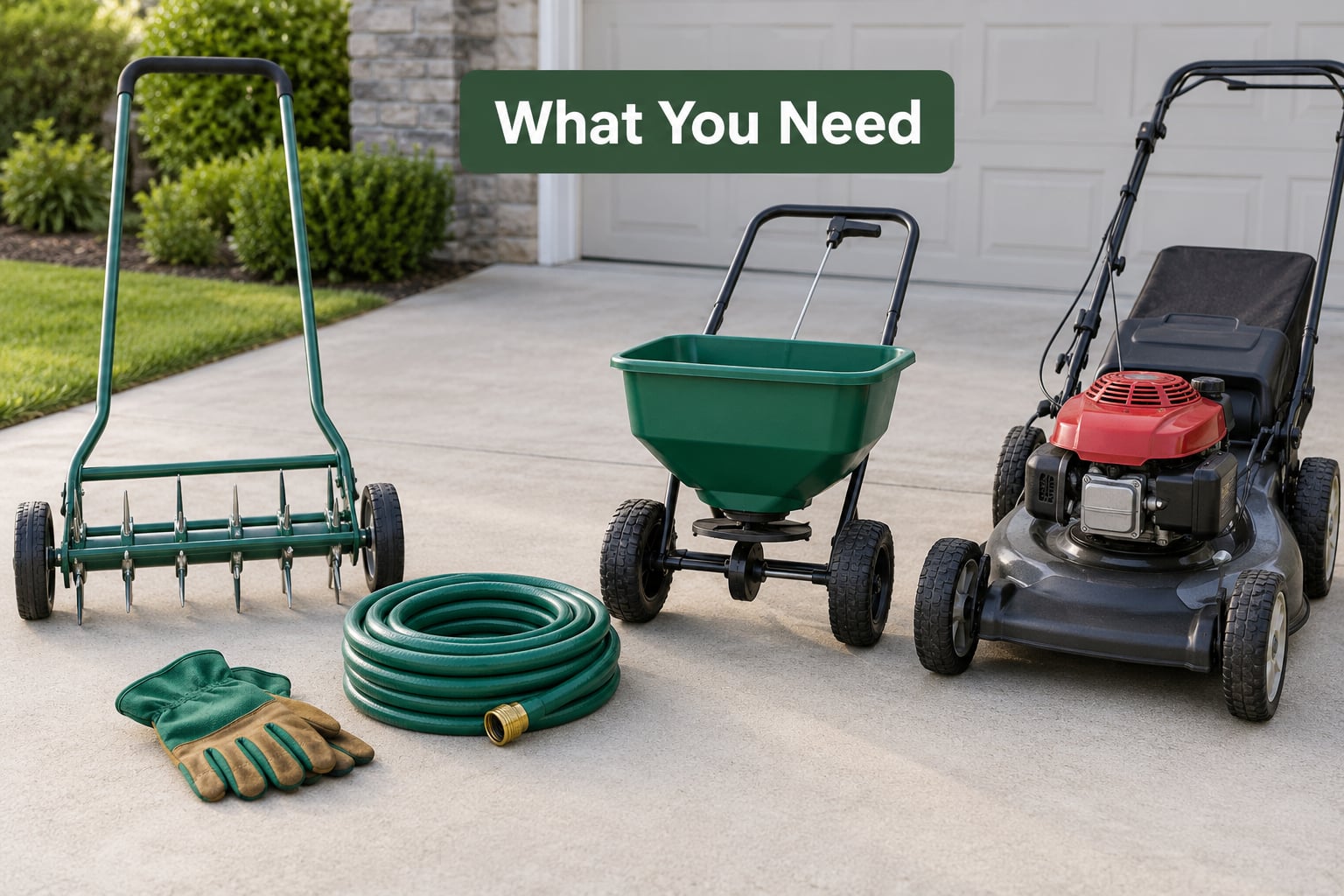
You do not need much. A shovel is the one thing that works for every lawn size, and most people start there.
- A way to aerate. A manual core aerator for small patches, a rolling plug aerator for most yards, a tow-behind or self-propelled machine for anything over roughly 5000 square feet, or a liquid aeration product applied with a hose-end sprayer or backpack sprayer.
- A mower. You will cut the lawn shorter before you start.
- A garden fork or long screwdriver for the compaction test, plus a ruler if you want to be precise about depth.
- A rake or leaf collector for clearing debris, and a hose or sprinkler for the aftercare pass.
- Optional materials: grass seed matching your existing turf, a lawn fertilizer, and topdressing compost or screened topsoil for heavy clay lawns.
- Safety gear: closed-toe shoes, gloves, and eye protection, especially if you are using a powered machine with spinning tines.
Renting a machine usually makes more sense than buying one unless you aerate every year or your property is more than an acre. Check rental machines carefully before you take one home, since tines wear down and a dull core aerator barely breaks the surface. Ask the rental desk how recently the tines were sharpened, and check them yourself in the parking lot.
Step-by-Step: How to Aerate a Lawn and When
Check Whether Your Lawn Needs Aeration
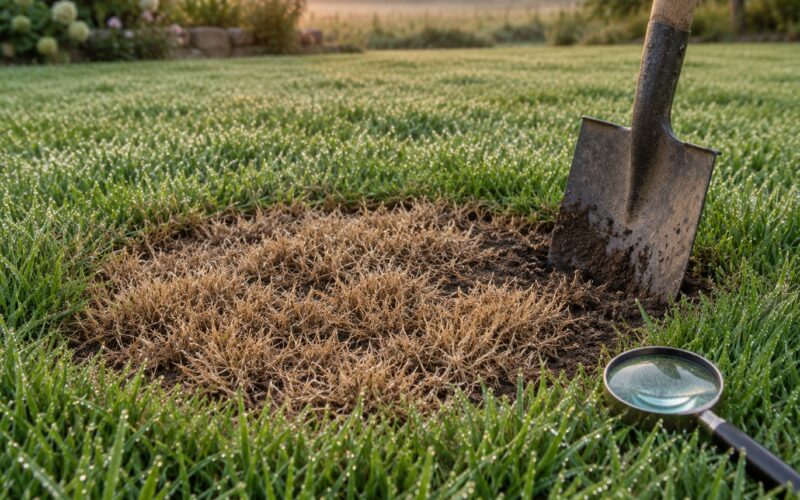
Push a long screwdriver straight down into the middle of the lawn. If it slides in with light pressure all the way to six inches, your soil is fine. If it stops at two or three inches or needs real force to get there, that spot is compacted and the aerator is worth the trip.
Other warning signs show up before the test. Water that puddles and beads instead of soaking in, shoes that sink into the turf, thin bare patches that refuse to green up, and weeds that outcompete the grass all point the same direction. A thatch layer thicker than half an inch is another signal, especially in warm-season lawns.
Not everything thin is compaction, though. Shade from buildings, a sprinkler head that has drifted out of alignment, grubs chewing the roots, or a fungal disease will all produce bare spots that aeration will not fix. Take a close look at the roots before spending a Saturday on it, and if you pull up grass and find white grubs, treat the pests first.
Choose the Right Aeration Method
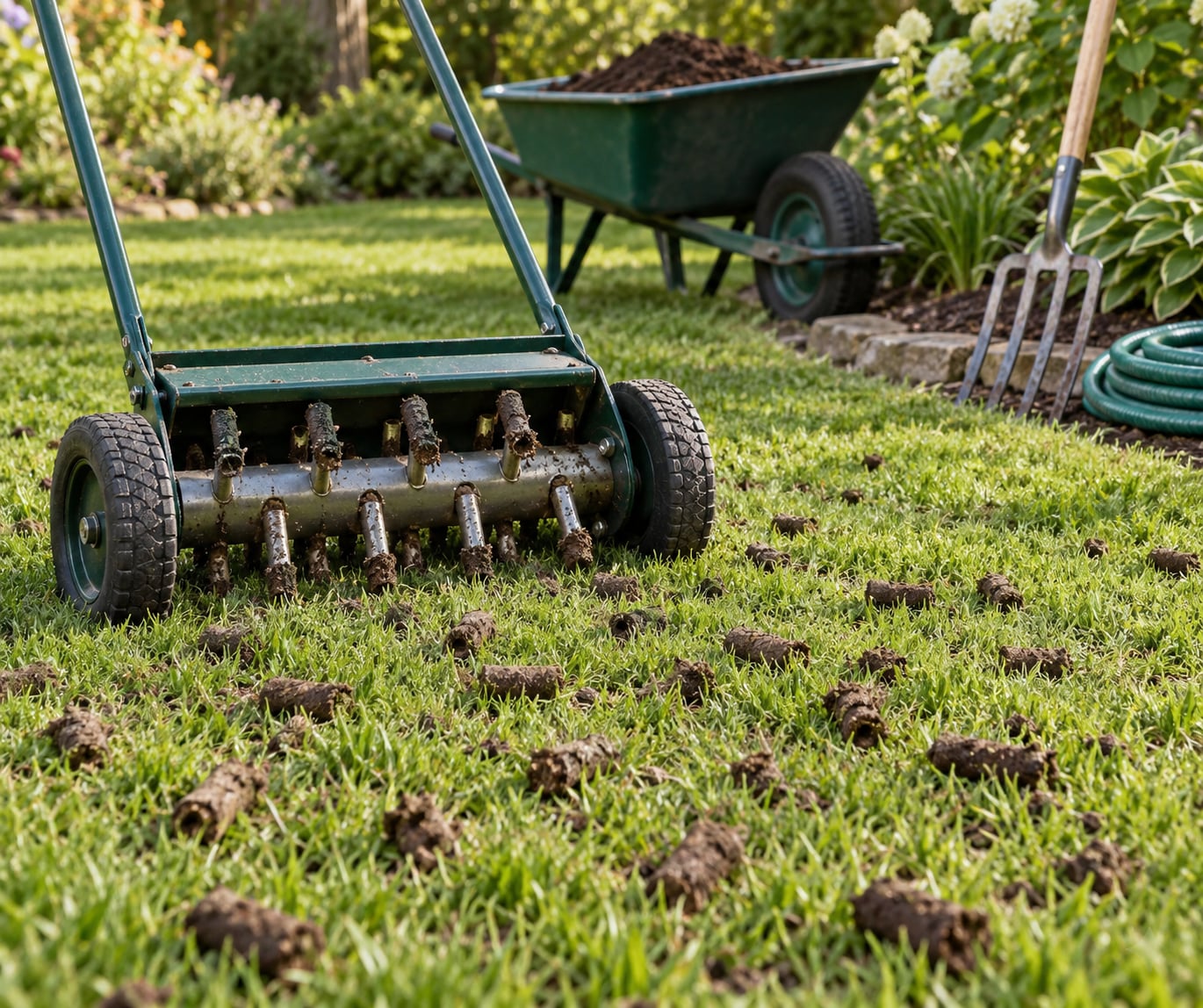
Core aeration pulls small plugs of soil out of the ground and leaves them on the surface. This is the real deal, because the open holes let air, water, and fertilizer reach the root zone, and the plugs break down into the lawn as they decompose.
Spike aeration pushes tines in and pulls nothing out. It is better than nothing for a small yard with light compaction, but it compacts the soil a little more each pass instead of relieving it. Spiked shoes that attach to your boots fall into the same category. For clay soil or a lawn with genuine compaction, use a core aerator.
Liquid aeration is the newer option. You apply a solution that loosens soil chemistry and helps water move through the profile. Results on compacted clay are inconsistent, and the regular crowd on lawn forums is skeptical, so treat it as a supplement rather than a replacement for pulling plugs.
Time to hire a lawn professional when the yard is more than about half an acre, the soil is heavy clay with severe compaction, or the lawn is new sod you cannot walk on much. Professionals also carry wider machines, which cut the job down to a fraction of the time.
Prepare the Lawn
Mow first, at roughly one inch lower than your usual height but not scalping the crowns. Shorter grass lets the machine reach the soil, and the clippings you collect keep the tines from clogging.
Water the lawn a day or two beforehand. The soil should be damp enough that a handful squeezes together and breaks apart when you poke it, which is easier to hit than the moist-not-soggy rule everyone repeats.
If it rained hard in the last day or two, wait. Working saturated soil tears the turf and makes compaction worse, and the machine leaves deep ruts behind it. Clear leaves, sticks, and any loose debris, and note sprinkler heads, irrigation boxes, and low spots so you can work around them.
Aerate the Lawn Evenly
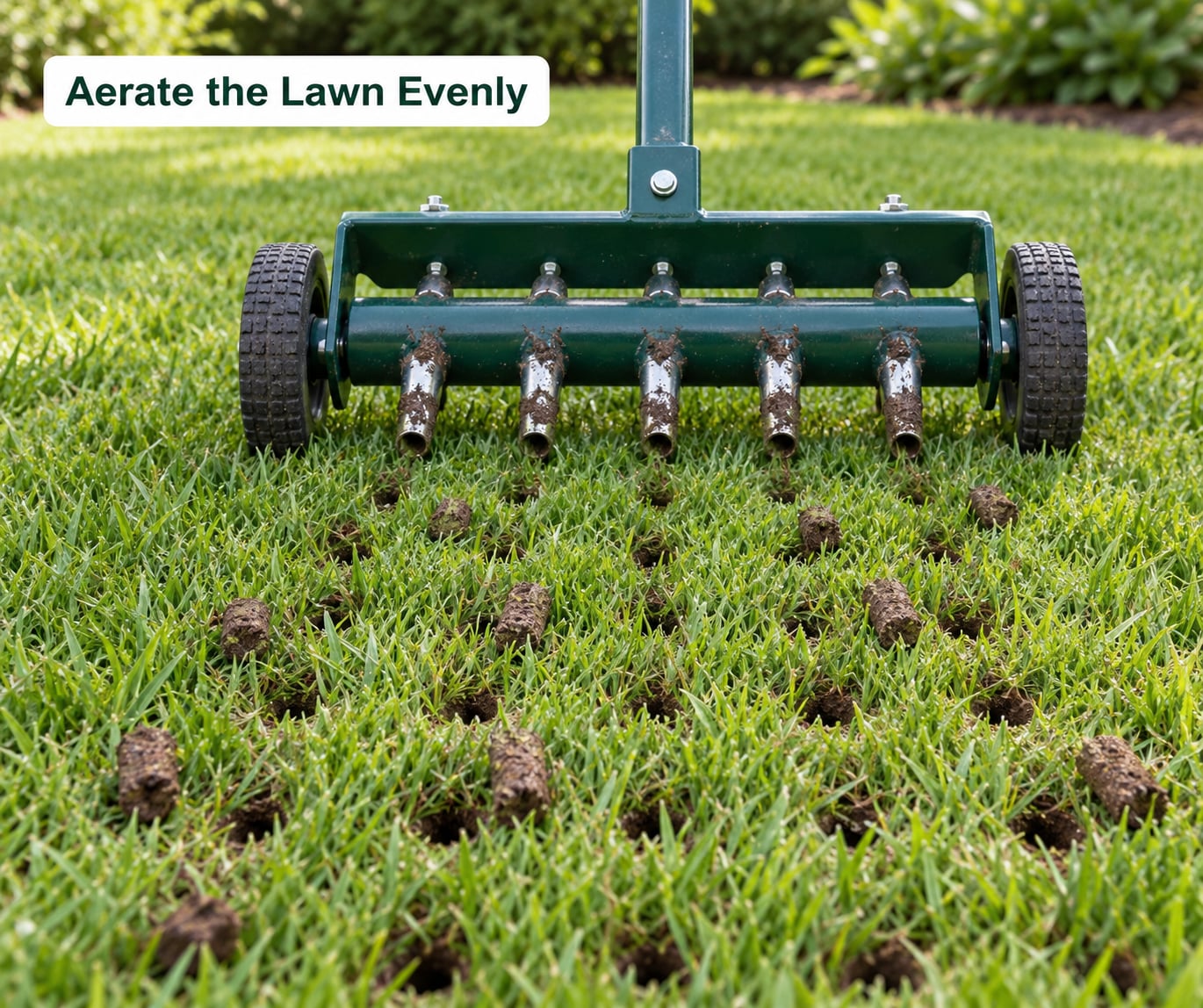
Drive the machine straight down one edge, pull it back to the starting point, and shift over by the width of the machine for the next pass. Keep the passes tight and slightly overlapping. A pattern of holes a few inches apart, like cored apples on a checkerboard, is what you want.
Then go back across the lawn at a right angle. The crosshatch pattern is the standard advice on lawn forums, and it does spread the holes more evenly than a single direction does. Walk at a steady pace, and slow down wherever the machine sounds heavy or you feel it bogging down.
Turn at the ends of rows the same way you turn a mower, in a wide arc rather than twisting the tines in place. On a lawn with one bad corner, run that area twice rather than running the whole lawn twice. Leave the plugs where they fall, since those same plugs will feed the grass.
Apply Seed, Fertilizer, and Water
Overseeding in the same trip works well. The holes are already open, so seed drops into the soil instead of sitting on top of it, which is exactly the seed-to-soil contact needed for germination. Water that day and keep it consistently damp until the seedlings come up.
Fertilizer follows the same logic. Apply it right after aerating while the ground is open, then water it in so it reaches the roots rather than sitting in the thatch.
Give the lawn about a quarter inch of water within a day or two, mainly to settle the plugs and close the holes around the seed. Stay off it for at least a week if you seeded, and keep foot traffic off the whole lawn for two to three weeks while the plugs break down. The plugs will fade on their own, usually within two to four weeks.
Common Mistakes
- Aerating bone-dry soil. The tines bounce off hard ground and tear the turf instead of punching through. Water a day or two ahead and check the soil with your hand first.
- Aerating right after heavy rain. Saturated soil ruts and tears. Wait until it drains but still feels damp.
- Skipping the prep work. Long grass, leaves, and debris clog the tines, so you end up punching holes in patches instead of covering the lawn.
- Choosing a spike aerator for a compacted lawn. Spikes push soil tighter instead of relieving it. Rent a core or plug machine for anything past light compaction.
- Leaving gaps between passes. Streaks of untouched turf are the giveaway that a job was rushed. Overlap slightly on every pass.
- Walking on the lawn too soon. You flatten new seed and crush plugs that were still settling. Give it two to three weeks.
- Blowing the plugs away. Some people rake them up and bag them, which throws away free organic matter. Let them sit and break down.
- Aerating a brand-new lawn. Wait a full season after seeding before aerating, and roughly three to four months for newly laid sod.
Frequently Asked Questions
What month should you aerate your lawn?
For cool-season grasses such as Kentucky bluegrass, tall fescue, and perennial ryegrass, aim for early fall, usually from late August through mid-October, while the grass is growing actively and the soil stays warm. Warm-season grasses like Bermuda and Zoysia do best in late spring, roughly May through June. In both cases, soil moisture decides the day.
How often should you aerate grass?
Most lawns do well with one pass a year in their best window. Lawns on heavy clay, yards with heavy foot traffic, and thin areas that keep failing need aeration twice a year, once in spring and again in fall. Sandy, low-traffic lawns can usually go two or three years between passes. If the screwdriver test still fails after aerating, repeat it sooner.
Is spike aeration worth it compared to core aeration?
For light compaction on a small lawn, a spike aerator gives you some benefit at low cost. For real compaction, especially in clay soil, it falls short, because spikes compress the surrounding soil and pull no plugs out, so there are no open holes for air, water, or seed. Core aeration is the standard for a reason and is what most rental machines do well.
Can you aerate a lawn too much?
Yes, but the damage is gradual rather than sudden. Repeated aeration in dry soil destabilizes the top layer, weakens the grass, and gives weeds and moss an opening. It also becomes pointless work once the soil is loose, since there is nothing left to relieve. Aerate when a compaction test says so, not on a fixed schedule you never recheck.
Should I aerate before or after overseeding?
Aerate first, then seed into the open holes during the same visit. The holes give the seed direct contact with moist soil rather than leaving it on the surface, which is where most wasted seed ends up. Water the lawn the same day and keep it damp until the new grass is established.
Conclusion
Start with the screwdriver. Two or three inches of resistance means you have a compaction problem worth fixing, and everything else on your lawn is probably a separate issue.
From there, pick a core aerator rather than a spike model, water the lawn a day ahead so the soil is damp, and mow short before you start. Aerate during the growth window for your grass type, run the crosshatch pattern, and leave the plugs alone. Water it in, seed into the holes if you need to fill thin spots, and stay off the lawn for a couple of weeks while it recovers.