If your AC runs but does not cool, the fan is moving air while the cooling part of the system has stopped working. Air only gets cold when three things happen together: warm indoor air flows across a cold evaporator coil, refrigerant is circulating, and the compressor is running. Break any one of those and you get exactly what you are seeing now, air with no chill to it.
Most of the time the culprit sits upstream of anything expensive. A thermostat sitting in fan mode, a filter that has turned into a felt mat, or a condenser fenced in by shrubs will do it every summer. The other half of the cases need a technician, and the trick is knowing where that line falls before you pay a diagnostic fee to be told something you could have checked for free.
Here is the short version of what to look at, in the order most people find the answer.
Table of Contents
- Why Does My AC Run but Not Cool?
- What Should the Air Be Doing When the AC Is On?
- Start With the Thermostat and Airflow
- Check for These Common Causes
- The Filter Is Dirty or the Vents Are Blocked
- The Thermostat Is Set Incorrectly or Needs Resetting
- The Outdoor Condenser Is Dirty or Poorly Vented
- The System Has a Refrigerant or Metering Problem
- The Compressor, Fan, or Electrical Parts May Be Failing
- How to Tell a Minor Problem From a Major Failure
- What You Can Safely Check Yourself
- When to Turn Off the AC and Call an HVAC Technician
- Frequently Asked Questions
- Why is my AC running but blowing warm air?
- Why is one AC vent blowing warm air while the others are cool?
- Is a dirty air filter the main reason an AC runs but does not cool?
- Can I keep using an air conditioner if it has a refrigerant leak?
- Will my AC cool again after the outdoor unit thaws?
- Conclusion
Why Does My AC Run but Not Cool?
The blower in your furnace or air handler makes noise. Air comes out of the vents. That is the part of the system you can hear, and it is the only part most people can see working. It tells you almost nothing about whether heat is actually being removed.
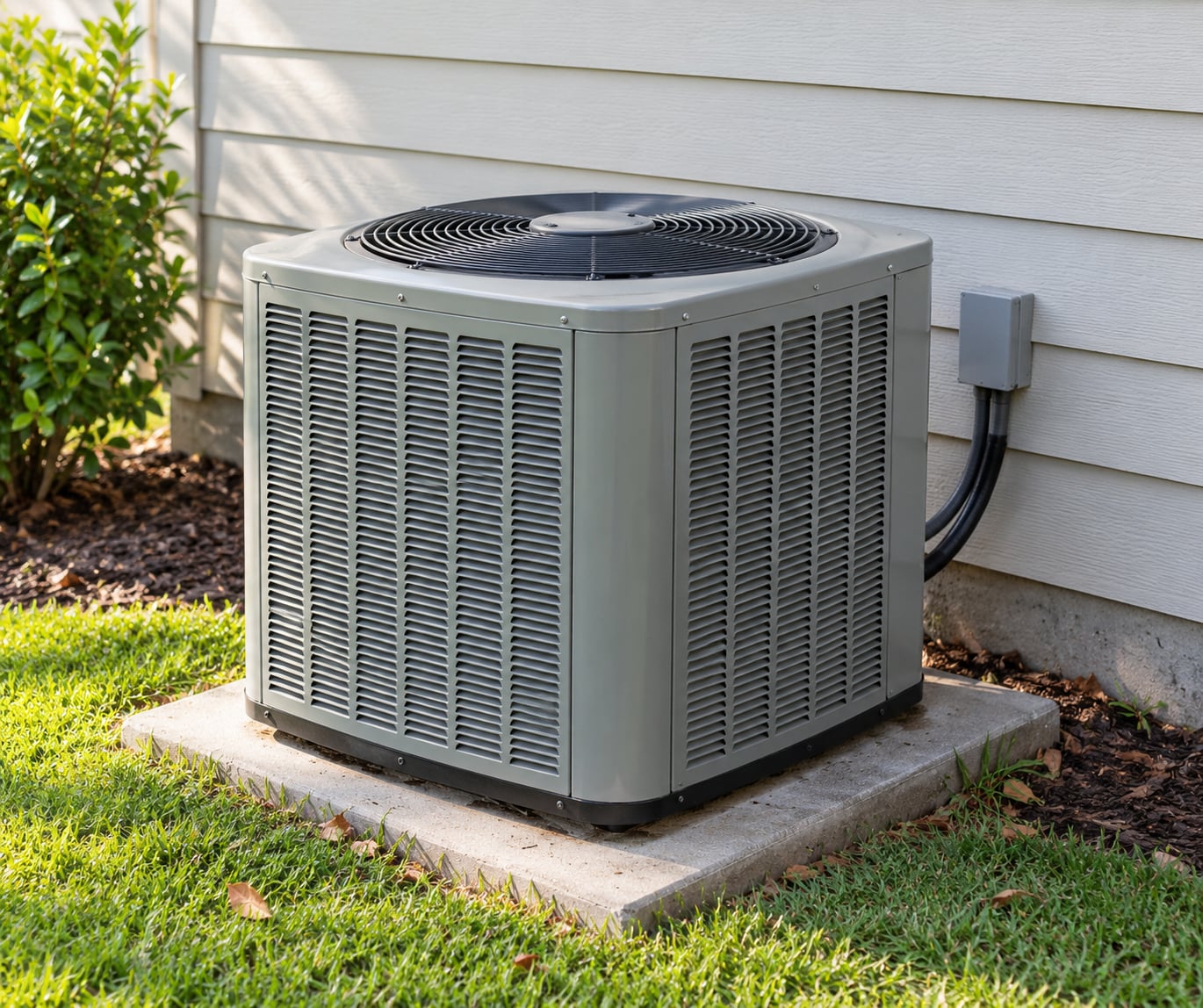
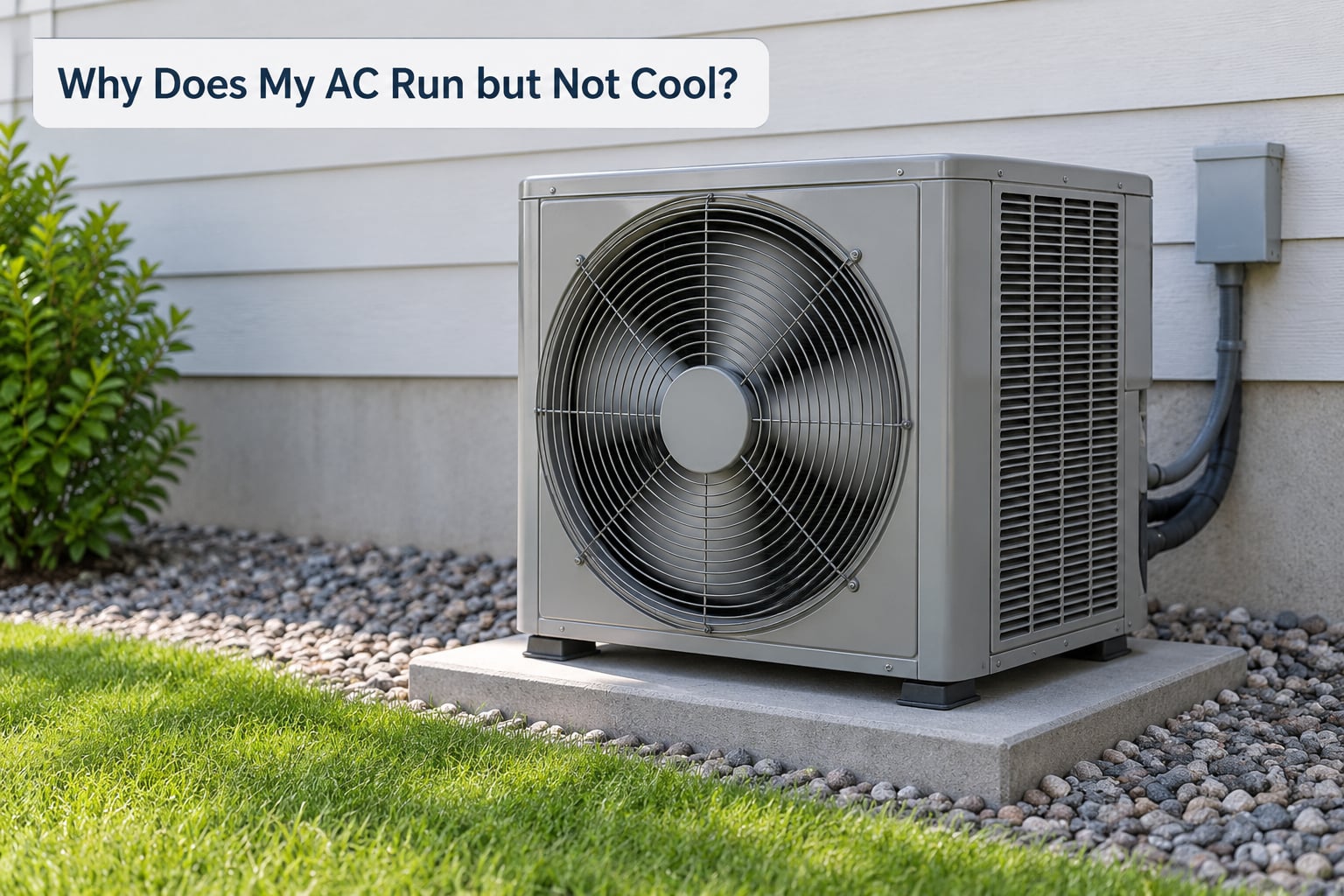
Look outside at the condenser unit. If the big fan on top is spinning, the outdoor side is running and the fault is somewhere in airflow or refrigerant. If that fan is standing still while the indoor blower is roaring, you have an electrical or compressor problem instead. That single observation splits the diagnosis in half and costs nothing.
From there the causes narrow fast. Restricted airflow, wrong thermostat settings, a dirty condenser, low refrigerant, and failing electrical parts cover nearly everything a homeowner runs into. Everything past that list is technician territory.
What Should the Air Be Doing When the AC Is On?
A healthy central system pulls room-temperature air through the return vent, drops it somewhere in the mid 50s to low 60s Fahrenheit at the registers, and holds the house near the set temperature for 15 to 20 minutes before starting the next cycle. On a mild day you may only feel a gentle flow. On a hot humid afternoon it should feel like a real drop within a few minutes of the compressor kicking on.
Expect a short delay before anything happens. Many systems wait three minutes before starting a cycle to avoid short-cycling, so flipping the thermostat and waiting fifteen seconds tells you nothing.
Signs the cooling half is actually working: the temperature at the thermostat drifts down within a few minutes, air from the vents is noticeably cooler than the room, the outdoor fan is spinning, and the unit shuts off on its own once the set temperature is reached.
Start With the Thermostat and Airflow
Confirm the system is set to COOL, not HEAT or FAN. Fan-only mode circulates room air at room temperature, which is the single most common explanation for an AC that runs perfectly and never cools a thing.
Set the fan to AUTO rather than ON. On a humid day an ON setting runs the blower continuously, which feels like the AC is working while the dehumidifying run never happens. Then set the temperature 3 to 5 degrees below the room reading so the system has something to chase.
Check for a schedule that has switched the system off, and replace the batteries if the screen is dim, blank or unresponsive. A blank thermostat is a symptom of dead batteries more often than a dead thermostat.
Check for These Common Causes
| Cause | Warning signs | Safe check you can make | Who fixes it |
|---|---|---|---|
| Thermostat in fan mode or wrong mode | Air moves at room temperature, no drop at the thermostat | Set mode to COOL, fan to AUTO, set point below room temp | You |
| Clogged air filter | Weak airflow, dust on vents, unit runs long cycles | Remove the filter and hold it up to a bright lamp | You |
| Closed or blocked supply vents | Some rooms cool, others do not | Open all registers and interior doors | You |
| Dirty or fenced-in condenser | Outdoor fan spins, air still warm, unit runs constantly | Look for leaves, grass clippings and shrubs around the unit | You, carefully |
| Frozen evaporator coil | Ice or water on indoor copper lines, blower shuts off, then restarts | Switch the system off and let it thaw fully | You for the thaw, technician for the cause |
| Low refrigerant from a leak | Hissing, ice forming on lines, never reaches set temperature | None. Guessing at a charge is not a diagnostic | Licensed technician |
| Capacitor, contactor or compressor failure | Outdoor fan not spinning, humming, clicking, burning smell | Listen and look only, from a safe distance | Licensed technician |
| Leaky or undersized ductwork | Cool at some vents, warm at others, house never holds temp | Compare register temperatures room to room | Technician or duct contractor |
The Filter Is Dirty or the Vents Are Blocked
A clogged filter is the most cited cause on homeowner forums, and the cheapest one to fix. When air cannot pass the filter, the coil behind it gets cold with no airflow moving over it. Moisture in that air freezes, ice covers the coil, and the system either shuts down on its safety switch or grinds through a long cycle with nothing to show for it.
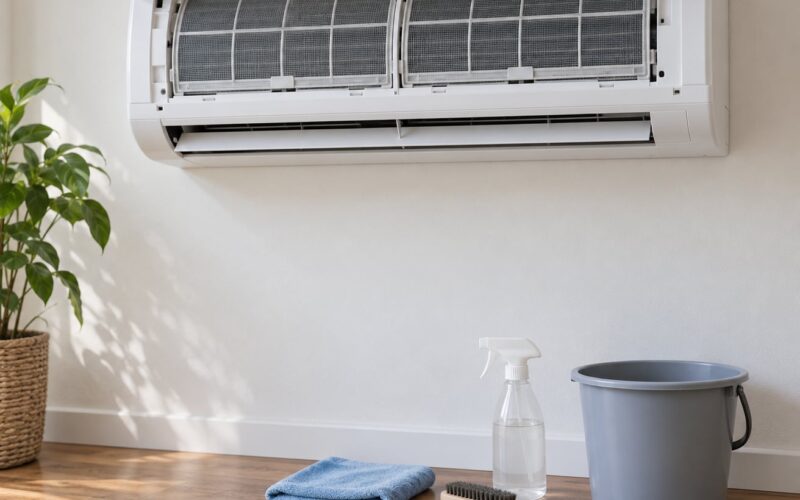
Take the filter out and hold it up to a lamp or a bright window. If you cannot see light through it, it is doing nothing but choking the system. Slide a new one in the same orientation and reset the filter timer if your system has one.
Also check the vents themselves. Furniture pushed against a return grille, closed interior doors and supply registers that got taped shut during painting all cut airflow without anyone noticing.
The Thermostat Is Set Incorrectly or Needs Resetting
Walk through the settings one at a time: mode, set temperature, fan speed, schedule. If your system supports separate heating and cooling schedules or an eco mode, a switch flipped weeks ago can strand the whole house in fan-only operation.
Give it a soft reset. Set the mode to OFF, leave it a minute, then switch to COOL with the fan on AUTO and the set point well below the room temperature. Homeowners on HVAC forums report this alone bringing a system back to life often enough that it is worth trying before anything else.
Do not open the thermostat’s wiring or move any jumper wires. That is where DIY advice turns into a short that needs an electrician.
The Outdoor Condenser Is Dirty or Poorly Vented
The condenser rejects heat, and it does that by pulling air in through its coil. Grass clippings, leaves, a climbing vine, a storage box shoved against the side, or shrubs grown right up to the unit can choke that airflow. The fan spins happily, the compressor runs at full tilt, and the house never cools.
Give the unit two to three feet of clear space on every side and overhead. Then you can clean it yourself: turn the system off at the thermostat, use a garden hose or a coil brush to rinse the fins from the inside out, and let it run before restarting. Never hit the coil with a pressure washer, which bends the fins and can wreck airflow permanently.
The System Has a Refrigerant or Metering Problem
Refrigerant is not a consumable that a system uses up. If it is low, there is a leak somewhere, and topping the system off just buys a few weeks before it drops out again. That is the repair homeowners are most frustrated by, because the bill goes up twice and the problem comes right back.
Warning signs include a hissing or bubbling sound near the outdoor unit, ice forming on the copper lines running to the indoor coil, a system that runs for very long cycles without ever hitting set temperature, and a house that cools unevenly while the unit keeps going. A technician confirms this by measuring superheat and subcooling, and finds the leak with an electronic sniffer or a dye charge before adding refrigerant.
Handling refrigerant is federally regulated for a reason. Adding or removing it requires EPA certification, and a gauge set is not something to borrow from a neighbor.
The Compressor, Fan, or Electrical Parts May Be Failing
If the indoor blower runs but the outdoor fan is stopped, the fault is electrical. A run capacitor stores the charge that starts the compressor and the outdoor fan motor, and it fails more often than most people expect, especially in older systems that run hard during a heat wave.
A humming outdoor unit with no fan movement usually means the capacitor. A fan that spins but a compressor that never kicks in points at the contactor or the compressor windings themselves. Clicking that repeats every few seconds is a contactor chattering without closing.
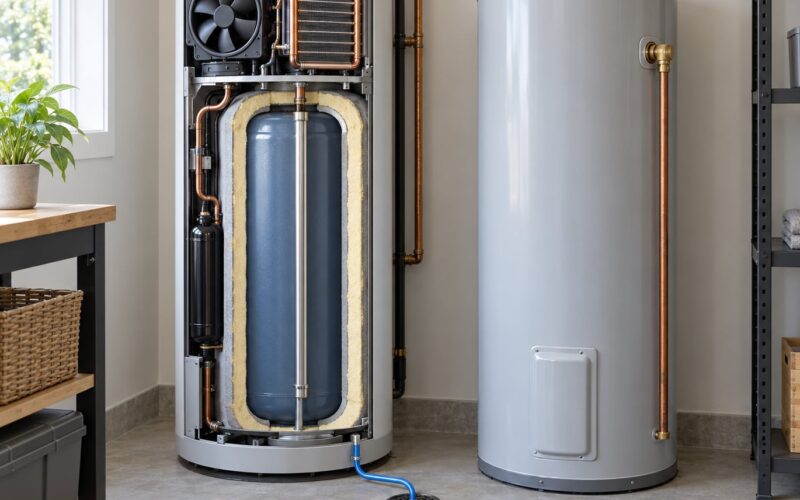
There is one more electrical item worth knowing about: a ductless mini split or a heat pump runs in cooling mode when the mode is set correctly, and a reversing valve stuck in heating position will move air that is barely cooler than room temperature.
How to Tell a Minor Problem From a Major Failure
Most of these symptoms are a weekend project. Cold air at one vent and warm air at the next usually means a closed register or undersized ductwork. A musty smell from the vents is moisture sitting on a coil or a drain that is not emptying. Clammy air that feels slightly cool points at humidity the system never got the chance to remove.
Long cycles with no result are less urgent than they look but often more structural. A unit that runs constantly and never reaches the set point is usually undersized for the house, short on airflow in the duct system, or facing a sizing problem that a repair will not solve. A unit that starts, cools briefly, then stops within five or ten minutes is short-cycling, which is a different fault with a different cause list.
Water dripping indoors from a vent means the condensate drain or pan is overflowing, usually because the coil is frozen or the drain line is clogged. That is worth fixing promptly because wet ceilings turn into drywall repair.
The signs that cross into serious territory: a burning electrical smell, any arcing or sparks, a refrigerant smell, a hissing that gets louder, a compressor that sounds like it is grinding, or ice that keeps coming back the moment you restart the system.
What You Can Safely Check Yourself
Work through this in order. Each step costs a few minutes and rules out the causes that account for most of the tickets.
- Reset the thermostat. Mode to COOL, fan to AUTO, set point 3 to 5 degrees below the room reading, batteries fresh if the display is dim or blank.
- Inspect the filter. Remove it and hold it to a light. Anything you cannot see light through gets replaced.
- Open every vent. All registers and return grilles, plus the interior doors between rooms.
- Look at the outdoor unit. Clear two to three feet of clearance, remove debris, look for ice on the lines, and confirm the fan spins.
- Give it time. Wait fifteen minutes after a restart before judging, since many systems hold off for a three-minute delay.
- Compare the vents. Cool at one register and warm at another is a duct or sizing problem, not a coil problem.
If it still runs but does not cool after these six steps, you have left the homeowner side of the line.
When to Turn Off the AC and Call an HVAC Technician
Switch the system to OFF and do not troubleshoot further if you notice a burning odor, sparks, or exposed wiring at the outdoor unit. Refrigerant is not something to trace and fix yourself.
Stop and call for service if you hear a hissing sound near the refrigerant lines, see a bulging or damaged line, or find a puddle of oily liquid under the condenser. Oil mixed with refrigerant means a leaking compressor seal.
Also stop if the outdoor unit makes grinding or scraping noises, if the compressor buzzes continuously without ever starting, or if the system stays warm after a full thaw and a clean filter. Ice that reforms within a few hours of restarting means something upstream is still starving the coil.
One more case worth a call rather than a DIY fix: a system that never reaches the thermostat setting in a properly maintained home. That is usually a sizing or duct problem, and it needs a technician to measure rather than a part to replace.
Frequently Asked Questions
Why is my AC running but blowing warm air?
Air is moving but no heat is being removed, which means the cooling loop has broken somewhere. The usual causes are a thermostat in fan mode, a clogged filter, a condenser blocked by debris, a frozen evaporator coil, or a compressor and capacitor that are not running at all. Checking the thermostat and the filter costs nothing and solves most cases. If air is still warm after both, call a technician.
Why is one AC vent blowing warm air while the others are cool?
That pattern points to airflow, not to a broken system. Furniture against a return vent, a closed interior door, a register that got shut during a paint job, or undersized ductwork feeding that branch can starve one room of cold air. The system is likely short-cycling because the thermostat near that room never gets cold enough. Compare register temperatures room to room before calling anyone out.
Is a dirty air filter the main reason an AC runs but does not cool?
It is the most common reason, and it is also the cheapest to fix. A clogged filter chokes airflow, the coil behind it ices over, and the system either shuts off on its safety switch or runs long cycles with weak air. Pull the filter out and hold it up to a lamp. If light does not pass through it, replace it and reset the filter timer if your system has one.
Can I keep using an air conditioner if it has a refrigerant leak?
You can run it, but you are wasting power and slowly risking the compressor. Refrigerant is not a consumable, so a low charge means there is a leak to find and repair. Signs include hissing at the outdoor unit, ice on the copper lines and long cycles that never reach the set temperature. Handling refrigerant requires EPA certification, so the repair itself belongs to a licensed technician.
Will my AC cool again after the outdoor unit thaws?
Sometimes, and that is the reason to try a thaw before you pay anyone. Switch the system to OFF and leave it off for several hours until the ice on the lines is fully gone, then restart it with a clean filter. If it freezes again within a few hours, airflow or refrigerant is starving the coil and the thaw only bought you time. Persistent icing needs a technician to find the underlying cause.
Conclusion
Start with the thermostat, then the filter. Confirm the mode is COOL, the fan is on AUTO and the set point sits below the room temperature, and swap out any filter you cannot see light through. Open the vents, clear two to three feet around the condenser, and give the system a full fifteen minutes to respond.
If it still runs but does not cool after that, and especially if the outdoor fan is not spinning or you find ice forming again within hours, call an HVAC technician. Knowing which of those two situations you are in before they arrive is the difference between a quick capacitor visit and a quote for a unit that did not need replacing.