If you want to know how to get pet stains out of carpet, the short version is this: soak up the liquid first, then treat the spot with an enzyme cleaner and give it time to work. A fresh accident takes about 20 minutes and a bottle of cleaner. An old dried stain takes longer, needs more product, and sometimes needs a professional.
The difference is almost always timing. Urine soaks past the carpet fibers into the foam padding underneath, where it dries and turns into a smell your dog still recognizes weeks later. Every minute of delay lets that happen. This guide walks through the exact steps, what to stock in your closet, and the handful of well-meaning products that quietly make the problem worse.
We keep this guide current for 2026, and the method below works on wall-to-wall carpet, area rugs and upholstery, with a few adjustments noted along the way.
Table of Contents
- What You Need
- Step-by-Step: How to Get Pet Stains Out of Carpet
- 1. Remove the Stain and Residue Immediately
- 2. Identify Whether the Stain Is Urine or Vomit
- 3. Flush the Area With Cool Water
- 4. Apply a Pet-Safe Enzyme Cleaner
- 5. Dry the Carpet and Check the Result
- Common Mistakes That Make Pet Stains Worse
- Frequently Asked Questions
- Can baking soda remove old pet stains from carpet?
- Is vinegar safe for removing pet stains from carpet?
- How long does carpet take to dry after a pet stain?
- Are enzyme cleaners safe for carpets and pets?
- When should I call a professional carpet cleaner for a pet stain?
- Conclusion
What You Need
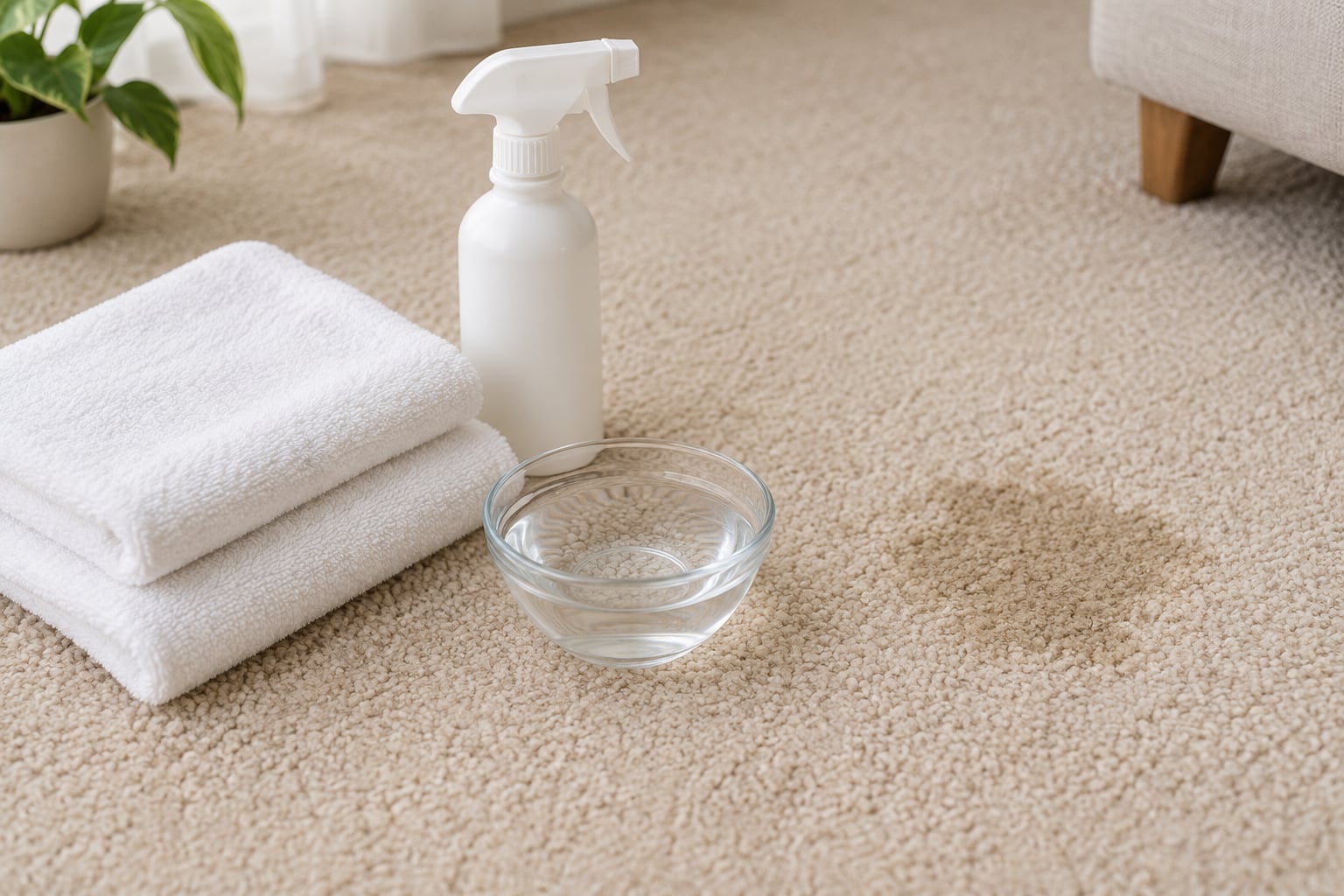
Nothing here is expensive or hard to find, and all of it is reusable across future accidents:
- Absorbent towels or white paper towels
- A bowl or spray bottle of cool water
- A carpet-safe enzyme cleaner labeled for pets and upholstery
- A stiff-bristled brush
- A plastic spoon or an old credit card
- Rubber gloves
Enzyme cleaners break down the protein and uric salts that make up urine. That is the whole reason they work and the reason baking soda or vinegar alone never fully does. Check that the label says it is safe for pets, carpets and upholstery, and follow its dwell time rather than guessing.
Keep bleach, ammonia, paint thinner and steam cleaners out of the equation. I will explain why further down, but the short version is that they either set the stain permanently or invite your pet to use the same spot again.
Before you apply anything, spend 60 seconds on a colorfastness test. Dampen a hidden corner or the edge of the rug with your solution, let it sit for a minute, then press a white cloth into it. If color transfers, stop and use a gentler approach. This matters most on wool, jute and sisal, which can bleed or felt.
Step-by-Step: How to Get Pet Stains Out of Carpet
Five steps, in this order. Fresh stains are dramatically easier than dried ones, so if the accident just happened, start working now and do not stop to go buy a better product.
1. Remove the Stain and Residue Immediately
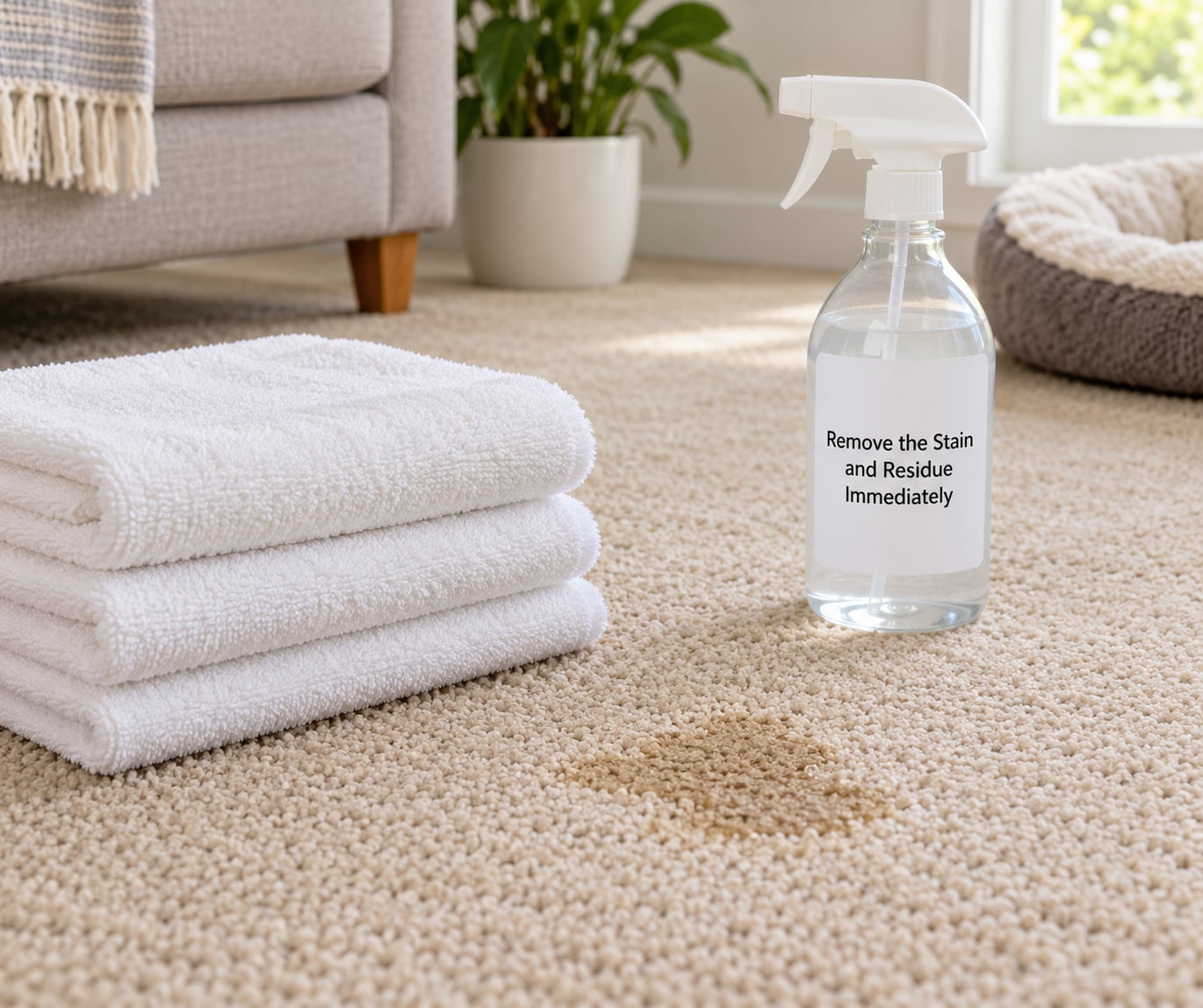
Press absorbent material firmly onto the wet spot and hold it down. Do not dab, and do not wipe side to side. Blotting pulls the liquid upward out of the fibers, while wiping drags it deeper and spreads it.
Work from the outside edge toward the center so you are not pushing contaminated liquid into clean carpet. For urine, that means laying several towels over the spot, standing on them, and shifting your weight to squeeze out what is underneath.
For solid material, scoop with a spoon or the edge of a card. Pick up clumps in one piece instead of rubbing them, because anything you break apart gets ground further into the pile and leaves more to clean later.
2. Identify Whether the Stain Is Urine or Vomit
Urine usually shows up as a damp darker patch, a yellow or brownish halo, and that sharp ammonia smell that gets stronger as it dries. Vomit often leaves visible food particles, mucus or a greasy film, and it can smell sour rather than sharp.
This matters because the pretreatment changes. Greasy residue from vomit blocks an enzyme cleaner from binding to what is underneath, so work a small amount of plain dish soap into that spot first, let it sit a few minutes, then rinse it out before you move to step 4. Keep that soap away from urine stains, though. Soap deactivates the enzymes you are about to apply.
3. Flush the Area With Cool Water
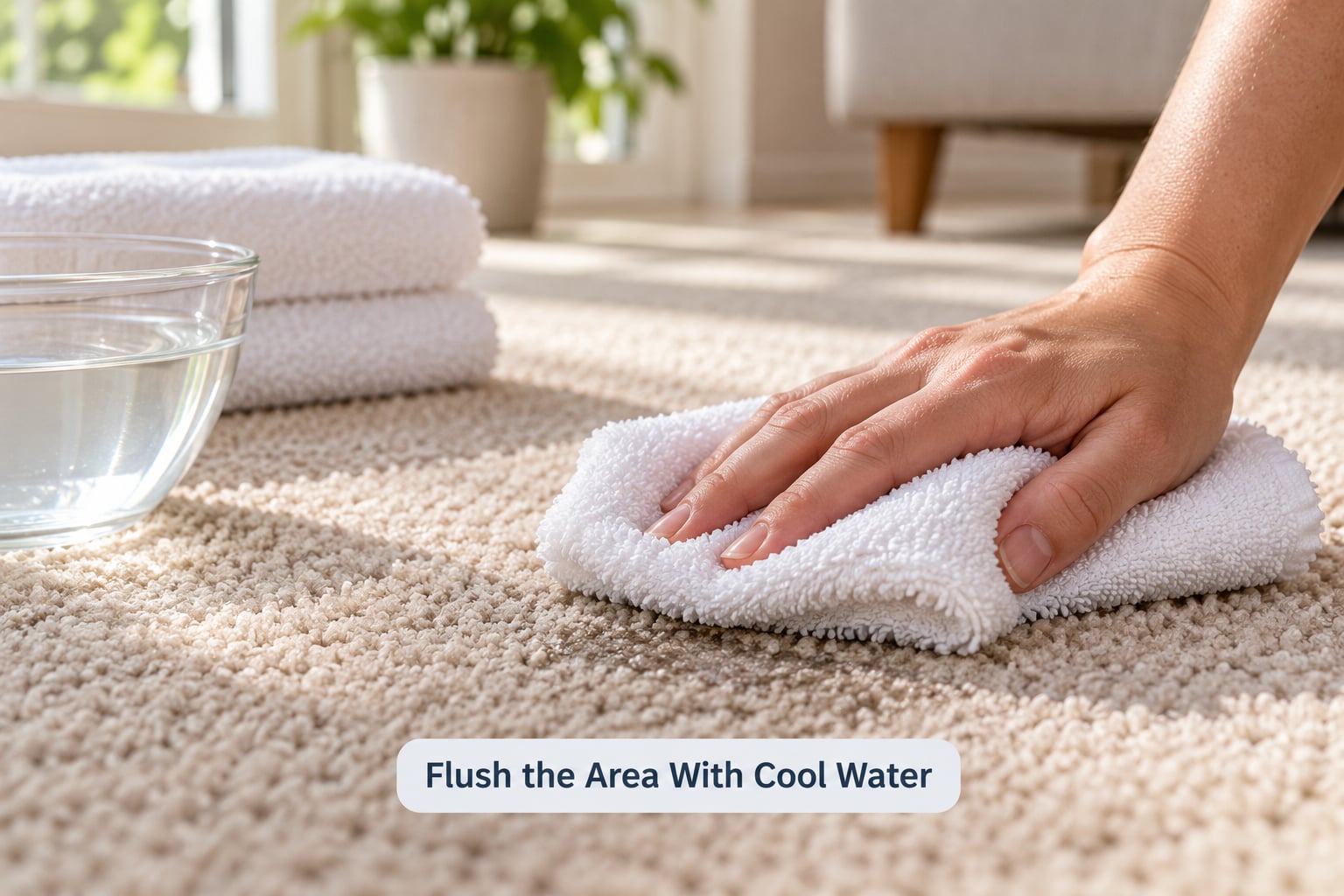
Dampen the affected fibers with cool water. Damp is the operative word: you want the area damp to the touch, not dripping. Flooding pushes urine deeper into the padding and risks mold and padding rot, which is a bigger problem than the stain you started with.
Blot with a clean towel, then drop that towel, grab a fresh one, and blot again. Each pass brings a little more trapped liquid and residue to the surface. Three or four towel changes is normal for a fresh accident.
Use cool or lukewarm water, never hot. Heat denatures the proteins in urine and can set them into synthetic fibers permanently, which is the opposite of what you want.
4. Apply a Pet-Safe Enzyme Cleaner
Follow the label. Apply enough to fully dampen the contaminated area, including the padding underneath, because that is where the odor lives rather than on the surface. A light mist over the top will not reach it.
Then leave it alone for the stated dwell time. Most enzyme cleaners need 15 to 60 minutes to digest what is there, and the single most common mistake is spraying and immediately blotting. You are starving the enzymes of the time they need.
Blot with a clean towel when the dwell time ends, and take the pet out of the room until the carpet is fully dry. Many enzyme products carry that keep-out instruction for a reason: some pets are drawn to the scent while the enzymes work.
5. Dry the Carpet and Check the Result
Lay clean towels over the damp area and press down to wick out what moisture remains. A fan pointed at the spot, open windows, or a running dehumidifier will speed things along. Good airflow does more than a heat gun, and heat is the one thing you do not want here.
Check the spot in daylight once it is dry. A faint mark can remain and still be a success. What should not remain is a strong odor, a damp feel, or a tacky residue. If any of those three are still there, the stain is not finished and you should treat it again.
Common Mistakes That Make Pet Stains Worse
Most failed attempts I have seen come down to one of these:
- Ammonia. It smells like urine to a dog, so it does not neutralize anything and it invites your pet to mark the same spot again. Use an enzyme cleaner instead.
- Bleach and harsh solvents. These can bleach the pile, damage the backing and kill the enzymes you need later.
- Hot water and steam. Heat sets urine protein into the fibers. Use cool water, always.
- Scrubbing. It works the stain deeper into the pile and spreads it. Blot, then brush gently with a stiff-bristled brush after the cleaner has dwelled.
- Reusing a dirty towel. You are just moving the contamination around. Change towels every pass.
- Leaving the carpet wet. Damp padding that never fully dries smells worse over time and can grow mold.
If accidents keep happening in one place, treat the spot thoroughly and then deal with the reason. For most dogs that means more bathroom breaks; for cats, clean litter boxes daily and rule out stress or a urinary complaint with your vet. A veterinarian is the right first call for anything that looks medical.
When an old stain will not respond, a low-water extraction method helps. Saturate the area, let it dwell, then step and rock your full weight on folded towels until the towels come up clean, then repeat. Keep the water volume low and dry fully between passes.
Frequently Asked Questions
Can baking soda remove old pet stains from carpet?
Baking soda helps with odor but it does not remove a urine stain. It sits on the surface and masks the smell for a while without breaking down the protein and uric salts that caused it. For an old mark, use an enzyme cleaner and give it its full dwell time. You can still finish with baking soda afterward to freshen the room.
Is vinegar safe for removing pet stains from carpet?
White vinegar diluted in cool water is generally safe on synthetic carpet and is fine for routine fresh accidents once you have blotted first. It will not touch an old urine stain, though, because it neutralizes smell rather than breaking down the residue. Skip vinegar on wool, jute and sisal, where acid can damage or discolor the fibers.
How long does carpet take to dry after a pet stain?
With blotting, airflow and a fan or open windows, most treated carpet dries in four to eight hours. Enzyme cleaner dwell time runs 15 to 60 minutes before you blot, and drying happens after that. If the spot is still damp after a full day, you applied too much water. Keep the pet out until it is completely dry to its touch.
Are enzyme cleaners safe for carpets and pets?
Yes, when you pick one labeled for pets, carpet and upholstery. The enzymes are non-toxic and break down urine proteins rather than leaving chemicals behind. Always spot-test for colorfastness in a hidden area first, and keep your pet off the treated carpet until it is fully dry. Never mix an enzyme cleaner with bleach or ammonia.
When should I call a professional carpet cleaner for a pet stain?
Call a professional when the odor returns after two or three careful treatments, when the stain has been there for months or years, or when liquid clearly reached the padding and subfloor. Professionals use sub-surface extraction and sometimes pad injection, which DIY methods cannot match. Valuable carpet, wool rugs and move-out situations with a security deposit at stake are also good reasons to call.
Conclusion
The first action is always the same: remove the residue, blot thoroughly with clean towels, flush with cool water, then apply a pet-safe enzyme cleaner and let it dwell. That sequence solves the majority of fresh pet stains without a machine.
For stains that are set in, years old, or layered from repeat accidents, bring in a professional. They can extract from the padding and subfloor where DIY tools cannot reach, and that is usually the difference between a faint mark and a permanent one.
Clean the spot properly and your pet is far less likely to return to it, since the scent that draws them back is what you just removed. If the accidents themselves keep happening, address the behavior or any health issue with your vet.